Lederhosen Shoes: Traditional vs Modern Styling Guide 2026
The Foundation of Alpine Tracht: Beyond the Leather Trousers
When discussing Bavarian and Alpine folk dress, the conversation overwhelmingly centers on the Lederhosen (leather trousers) or the Dirndl. Yet, any master of traditional European garments knows that an outfit is only as authentic as its foundation. Lederhosen shoes—properly known as Trachtenschuhe—are not mere accessories; they are structural elements of a living cultural heritage. As we navigate the styling landscapes of 2026, the tension between traditional preservation and modern interpretation has never been more pronounced.
Whether you are attending a formal Trachtenhochzeit (traditional wedding), participating in an Almabtrieb (alpine cattle drive), or simply seeking to wear your garments with cultural respect, understanding the nuances of Alpine footwear is essential. This guide dissects the anatomy, history, and modern styling protocols of lederhosen shoes, separating genuine heritage craftsmanship from mass-produced tourist kitsch.
Historical Origins: From Peasant Revolts to Royal Courts
To understand modern styling rules, one must first look to the historical origins of Alpine footwear. The earliest and most culturally significant predecessor to the modern lederhosen shoe is the Bundschuh. Dating back to the Middle Ages, the Bundschuh was a simple, heavy leather shoe tied around the ankle or calf with leather thongs. According to archives at the Tiroler Volkskunstmuseum, the Bundschuh became a potent political symbol during the German Peasants' War of 1524, representing the agrarian working class in stark contrast to the pointed, elongated shoes of the nobility.
The transition from the utilitarian Bundschuh to the refined Haferlschuh (the standard Bavarian lederhosen shoe today) occurred in the 19th century. As Alpine tourism boomed and the Bavarian royal house of Wittelsbach began championing rural folk dress as a symbol of national identity, the footwear evolved. Shoemakers developed a more structured, elegant last, incorporating side-lacing and sturdy soles suitable for both mountain terrain and royal hunting lodges. Today, institutions like the Trachteninformationszentrum in Benediktbeuern actively preserve these 19th-century patterns, ensuring that contemporary master cobblers maintain the exact specifications of regional variants.
The Core Footwear Types in Traditional Tracht
Not all lederhosen shoes are created equal. Regional geography and historical trade routes have birthed distinct styles, each with specific styling protocols.
1. The Haferlschuh (The Bavarian Standard)
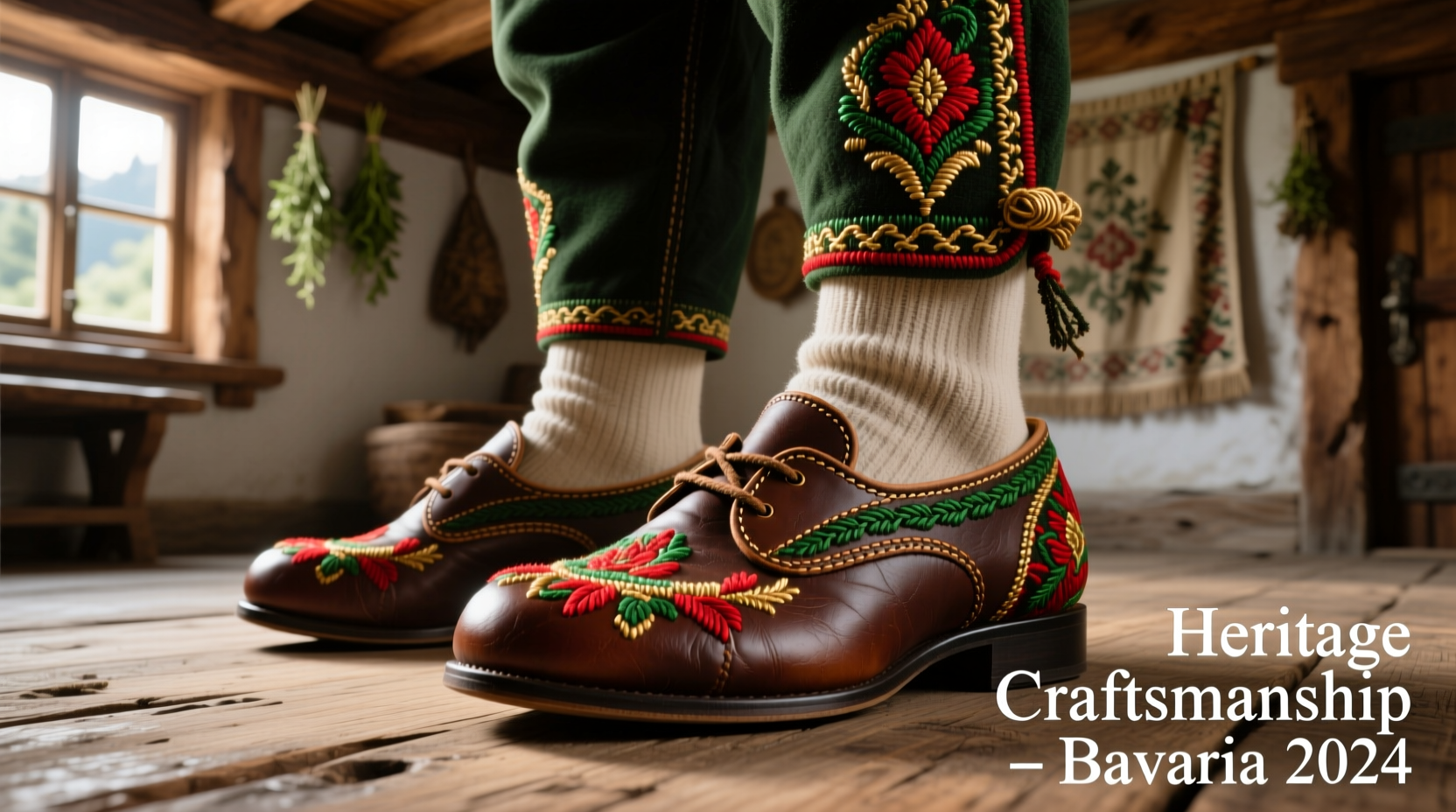
The quintessential partner to Bavarian Lederhosen. Characterized by its distinctive side-lacing (or occasionally front-lacing in specific regional variants like the Miesbacher), the Haferlschuh features a slightly upturned toe box and a robust heel. Authentic models are crafted from brushed deer leather (Hirschleder) or smooth cowhide (Rindsleder), designed to mold to the wearer's foot over years of use.
2. The Goiserer (The Upper Austrian Heavyweight)
Originating from Bad Goisern in the Salzkammergut region, the Goiserer is a masterpiece of shoemaking. It is entirely hand-welted and traditionally features a double-leather sole secured with wooden pegs and hobnails (Trachtennägel). It is heavier and more rugged than the Haferlschuh, making it the preferred choice for hunters, foresters, and those wearing heavy, rustic Bundlederhosen.
3. The Bundschuh (The Folkloric Revival)
While rarely worn as everyday Tracht today, historically accurate Bundschuhe are still crafted for specific folkloric societies (Trachtenvereine) and historical reenactments. They lack the structured heel of the Haferlschuh and are wrapped tightly around the foot and ankle, usually paired with rough linen wrappings or heavy wool socks.
Traditional vs. Modern Styling: A Comparative Breakdown
The modern Tracht scene is a spectrum. On one end, strict Trachtenvereine enforce rigid historical dress codes; on the other, the commercialized 'Wiesn' (Oktoberfest) scene embraces wild, contemporary mashups. Below is a framework for navigating lederhosen shoes in 2026, balancing cultural respect with personal style.
| Footwear Style | Cultural Context | Sole Construction | Price Range (EUR) | Styling Verdict |
|---|---|---|---|---|
| Classic Haferlschuh | Bavarian / Alpine Tracht | Wood-pegged / Stitched | €250 - €550 | The Gold Standard. Always appropriate, highly respected. |
| Goiserer | Upper Austrian / Salzkammergut | Hand-welted, Hobnailed | €400 - €850+ | Heritage Investment. Best with rustic, dark Lederhosen. |
| Budapester (Full Brogue) | Urban / Modern Business Tracht | Leather stitched / Rubber insert | €180 - €350 | Acceptable Crossover. Ideal for city weddings and office Tracht. |
| Mass-Market 'Tracht' | Oktoberfest Tourist Tents | Glued Synthetic Rubber | €50 - €120 | Avoid. Culturally hollow; poor durability and aesthetics. |
| Sneakers / Trainers | Modern Youth / Party Tents | Vulcanized Rubber | €80 - €200 | Highly Controversial. Rejected by traditionalists; common in party zones. |
The 'Sneaker' Debate: Where is the Line?
In recent years, a trend has emerged among younger demographics in Munich and Berlin: pairing high-end designer sneakers with tailored Lederhosen. From the perspective of cultural preservationists and institutions like the Bayerisches Nationalmuseum, this is a stark violation of Tracht etiquette. The visual weight and athletic silhouette of a sneaker completely disrupt the proportional harmony of the Alpine outfit. While you will undoubtedly see this in the commercial beer tents during Oktoberfest, it is considered a major faux pas at traditional events, church services, or rural festivals. For a modern, comfortable alternative that still respects the silhouette, opt for a high-quality, dark brown leather Budapester (brogue) with a slim profile.
Material and Construction: What Justifies the Price?
When investing in authentic lederhosen shoes, you are paying for specialized tanning processes and centuries-old cobbling techniques. Understanding these details is crucial for identifying genuine articles.
Hirschleder vs. Rindsleder
Hirschleder (Deer Leather): The undisputed king of Tracht materials. Deer leather is brushed to create a velvety, suede-like nap. It is incredibly breathable, water-resistant when properly treated, and softens beautifully with wear. Because deer hides are smaller and require meticulous sämisch (oil/brain) or specialized chrome tanning, Hirschleder shoes command a premium (€300+).
Rindsleder (Cowhide): A more affordable and highly durable alternative. Usually finished with a smooth or lightly grained surface, cowhide is easier to clean and polish, making it a popular choice for urban Tracht wearers and those attending events in unpredictable weather.
The Sole: Holzgenagelt (Wood-Pegged) vs. Glued
The true mark of a master cobbler is the sole attachment. Traditional Haferlschuhe and Goiserer are holzgenagelt—secured using hundreds of small wooden pegs that expand when exposed to moisture, creating a waterproof, flexible, and incredibly durable bond. Mass-produced shoes rely on industrial glues and thin rubber soles, which not only lack the authentic acoustic 'clack' on cobblestones but also trap sweat and degrade within a single season.
Socks and Styling Protocols: Completing the Silhouette
Lederhosen shoes cannot be styled in isolation; their relationship with hosiery is strictly governed by tradition. Bare ankles or modern dress socks are entirely inappropriate.
- Wadlstrümpfe (Calf Socks): The standard for formal and cooler weather. These are thick, ribbed wool or cotton-blend socks that reach just below the knee. They are traditionally grey, off-white, or dark green. The top of the sock should fold over neatly just once, sitting securely below the knee cap.
- Loferl (Calf Sleeves): A distinctly Bavarian summer staple. The Loferl consists of a separate calf-warmer (worn just below the knee) paired with a very short, invisible ankle sock (Füßling) worn inside the Haferlschuh. This creates the visual illusion of a full sock while providing ventilation in the summer heat. Pairing Loferl with Lederhosen and Haferlschuhe is the hallmark of a seasoned, culturally aware Tracht wearer.
'The integrity of the Tracht lies in its completeness. A masterfully tailored Lederhose is visually severed if grounded by inappropriate footwear or modern synthetic hosiery. The shoe and the sock must function as a single architectural unit.' — Archival notes on regional dress codes, Trachteninformationszentrum.
Care and Maintenance of Authentic Trachtenschuhe
Proper maintenance ensures your lederhosen shoes last for decades, developing a rich patina that tells the story of your attendance at countless Volksfeste.
- Brushing Hirschleder: Use a specialized brass or horsehair suede brush to lift the nap of the deer leather after every wear. This removes dust and restores the velvety texture.
- Conditioning: Never use silicone-based sprays or standard shoe polishes on brushed Hirschleder, as they will mat the fibers and darken the leather irreversibly. Use a dedicated Hirschfett (deer fat) or a high-quality, uncolored leather balsam.
- Drying: If your shoes become soaked from alpine rain, stuff them with untreated newspaper and let them dry at room temperature. Never place them near a radiator, as the intense heat will crack the leather and compromise the wooden pegs in the sole.
- Shoe Trees: Invest in unvarnished cedar shoe trees. The cedar absorbs moisture and odor from the wool socks, while maintaining the structural integrity of the toe box.
Final Verdict: Respecting the Living Tradition
As European folk dress continues to experience a global renaissance, the responsibility falls on the wearer to honor the garment's origins. The debate between modern and traditional styling of lederhosen shoes is ultimately about context. If you are navigating the commercialized party zones of a modern metropolis, the rules are undeniably relaxed. However, if you wish to participate in the true, living heritage of Alpine culture—attending a Schützenfest, a rural wedding, or a traditional Sunday church service—there is no substitute for a hand-pegged Haferlschuh, paired with proper wool Wadlstrümpfe. By investing in authentic craftsmanship, you are not just buying a pair of shoes; you are supporting a centuries-old lineage of Alpine artisans and ensuring the survival of a deeply respected cultural tradition.