Bavarian Dirndl: Modern Styling of a Classic Dress
From Farm to Festival
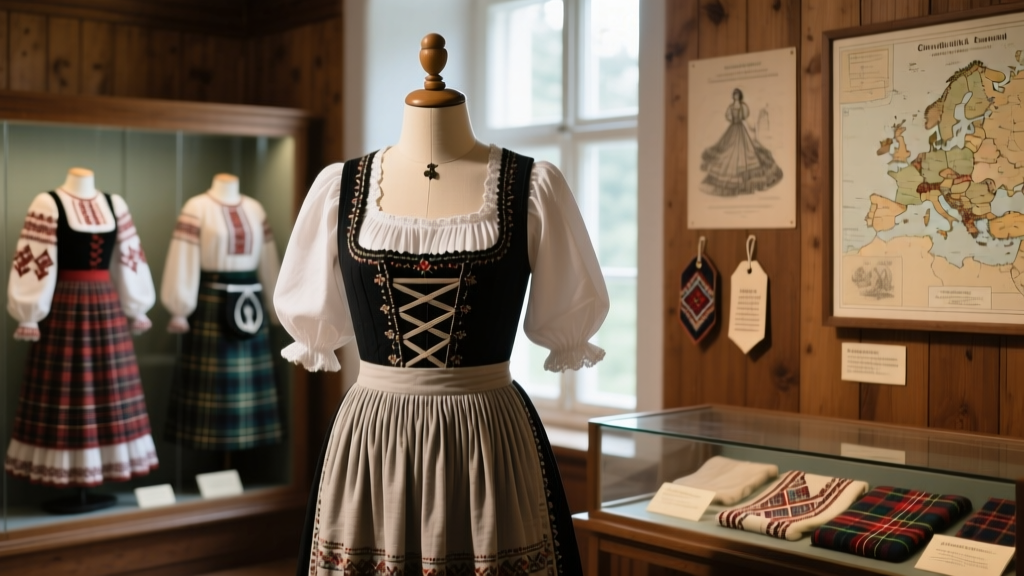
The dirndl — a dress consisting of bodice, blouse, full skirt, and apron — originated as practical workwear for Alpine women. Today it is one of the most recognizable folk garments in Europe, worn with pride at festivals and increasingly adopted as everyday fashion.
Components and Construction
A proper dirndl has four elements: the Mieder (fitted bodice), Bluse (white blouse worn underneath), Rock (full gathered skirt), and Schurze (apron). The apron bow placement signals marital status — left means single, right means married, center means virgin, and back means widowed.
Oktoberfest and Beyond
Oktoberfest has made the dirndl globally famous, but the garment is worn year-round in Bavaria and Austria. Different weights and fabrics suit different seasons — linen and cotton for summer, wool and velvet for winter.
Designer Dirndls
High-end dirndl designers like Lola Paltinger and Kinga Mathe create couture versions that sell for thousands of euros. These designer dirndls appear at society events, weddings, and red carpet occasions throughout the German-speaking world.