Bavarian Dirndl: Farm Wear to Festival

Bavarian Dirndl: Farm Wear to Festival
The dirndl is perhaps the most recognizable folk dress in Europe, instantly associated with Bavaria, Austria, and the convivial atmosphere of Oktoberfest. Yet its journey from rural Alpine workwear to global fashion phenomenon spans over two centuries of cultural evolution.
Etymology and Origins
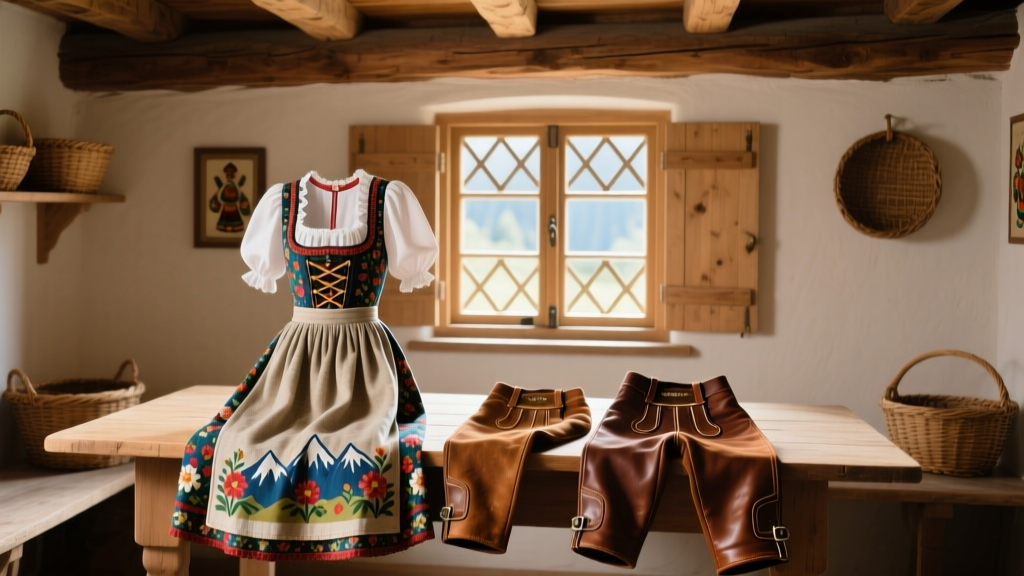
The word "dirndl" is a diminutive of "Dirn," a Bavarian-Austrian dialect term for a young woman. Originally, the Dirndlgwand simply meant "young woman's outfit." The garment emerged in the 18th century as practical clothing for Alpine farm women: a bodice, blouse, full skirt, and apron made from sturdy, washable fabrics.
Structure of the Dirndl
- Mieder (bodice): Fitted, often decorated with embroidery, lacing, or silver hooks
- Bluse (blouse): White cotton, worn beneath the bodice, with varying sleeve lengths
- Rock (skirt): Full, gathered skirt falling to the knee or mid-calf
- Schürze (apron): Tied at the front, its bow position carries meaning
The Apron Bow Code
In Bavarian tradition, the position of the apron bow signals the wearer's relationship status:
- Left side: Single and available
- Right side: Taken, engaged, or married
- Center front: Virgin (traditionally)
- Center back: Widowed
Oktoberfest and Beyond
Oktoberfest has transformed the dirndl into a fashion industry, with designers releasing annual collections ranging from traditional handcrafted pieces to modern interpretations in leather, denim, and couture fabrics. A high-quality dirndl from a traditional maker like Angermaier or Trachten Punk can cost several hundred euros.