Authentic German Female Outfits Beyond Dirndl

The Living Tapestry of German Tracht
When the global imagination conjures images of traditional European folk dress, the Bavarian dirndl almost exclusively dominates the visual landscape. However, the search for authentic German outfits female generations have preserved reveals a complex, highly regionalized tapestry of material culture that extends far beyond the beer tents of Munich. In Germany, traditional clothing is collectively referred to as Tracht. While the dirndl is a specific subset of Alpine Tracht, the broader German sartorial heritage encompasses the intricate lace bonnets of the Sorbian Spreewald, the heavy silver filigree of the Frisian islands, and the striking pom-pom hats of the Black Forest.
Understanding these garments requires moving past the commercialized, mass-produced costumes sold to tourists and examining the historical construction, regional protocols, and living artisan communities that keep these traditions alive today. This deep dive explores the anatomy, history, and cultural significance of women's traditional German dress.
Decoding the Dirndl: Anatomy and Alpine Etiquette
The dirndl originated in the 18th and 19th centuries as the practical workwear of Alpine servant girls and milkmaids in Bavaria and Austria. By the 1870s, it was adopted by the urban upper classes as a fashionable retreat into rustic romanticism, eventually evolving into the formal Trachtenmode seen today.
The Four Pillars of Construction
An authentic dirndl is not a single dress, but a meticulously coordinated ensemble of four distinct components:
- Dirndlbluse (Blouse): Traditionally made of white cotton or linen, featuring puffed sleeves, lace inserts, or subtle embroidery. The neckline can range from modest round cuts to deeper balconette styles, but it is always designed to frame the bodice.
- Mieder (Bodice): The structural heart of the outfit. Historically reinforced with reed or whalebone, modern bespoke Mieders use flexible steel boning and heavy canvas interlining. It is fastened with a specific sequence of hooks, horn toggles, or intricate silver chains laced across the front.
- Rock (Skirt): A heavily gathered, high-waisted skirt that traditionally falls to the ankle or mid-calf. It is crafted from wool, linen, or silk brocade, featuring deep, knife-pleated folds that allow for movement during traditional folk dances like the Schuhplattler.
- Schürze (Apron): Once a protective garment for laborers, the apron is now a canvas for silk, satin, or finely embroidered cotton. It is tied at the front waist, serving as the primary indicator of the wearer's social and romantic status.
The Apron Bow (Schleife) Protocol
The placement of the Schürze bow is a widely recognized cultural code in Southern Germany and Austria. While often treated as a fun trivia fact by tourists, it remains a respected tradition at formal Trachtenvereine (folk costume clubs) events:
- Tied on the Left: The wearer is single and open to courtship.
- Tied on the Right: The wearer is married, engaged, or in a committed relationship.
- Tied in the Center (Front): Historically indicated virginity, though this is largely archaic and rarely used today.
- Tied in the Back: The wearer is widowed, or in the case of a working waitress, simply tied back for practical mobility.
A Cartography of Couture: Regional Tracht Variations
To limit the definition of German outfits female artisans create to the Bavarian dirndl is to ignore the profound regional diversity of the country's 16 states. Each region's Tracht evolved in isolation, shaped by local climates, available textiles, and religious influences.
The Black Forest: The Bollenhut and Gutacher Tracht
In the Kinzig valley of the Black Forest (specifically the villages of Gutach, Kirnbach, and Hornberg), the traditional dress is crowned by the iconic Bollenhut. This striking, wide-brimmed straw hat is adorned with 14 large, crossed wool pom-poms. Unmarried women wear vibrant red pom-poms, while married women wear black. The hat itself can weigh up to two kilograms and requires the wearer to maintain strict posture. The accompanying dress features a black velvet bodice, a white puffed-sleeve blouse, and a vibrant, hand-painted silk skirt.
Lusatia: The Sorbian Spreewaldtracht
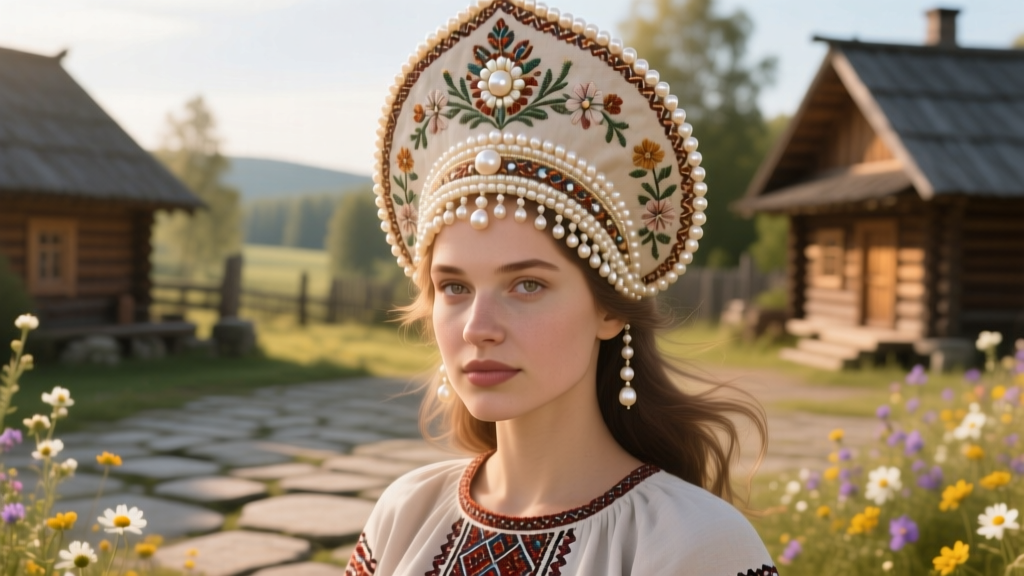
In the eastern state of Brandenburg, the Slavic Sorbian minority has preserved the Spreewaldtracht, a garment of breathtaking intricacy. The defining feature is the Stickhaube, an elaborate, heavily starched white linen bonnet featuring microscopic, hand-stitched embroidery and delicate lace. The dress itself relies on layers of white linen, pastel silk ribbons, and intricate beadwork. According to the Domowina (the central Sorbian cultural institution), the creation of a single festive Spreewald bonnet can take an artisan over 200 hours of specialized needlework.
The Northern Coast: Friesentracht
Contrasting sharply with the Alpine and Slavic traditions, the Friesentracht of the North Frisian islands reflects a harsh maritime environment and historical wealth from whaling and trade. The female outfit is characterized by dark, heavy wools and deep black velvets, designed to protect against coastal winds. The visual focal point is the immense, heavy silver filigree jewelry—breastplates, clasps, and buckles—worn over the bodice, alongside a small, lace-trimmed silk cap known as a Haube.
The Material Record: Textiles, Embroidery, and Artisanship
The true value of authentic Tracht lies in its material composition. Mass-market costumes rely on polyester blends and machine-appliquéd motifs. In contrast, master artisans (Trachtenmacher) utilize heritage techniques.
| Region | Primary Garment | Key Textiles | Distinctive Accessory |
|---|---|---|---|
| Bavaria / Alps | Dirndl | Raw Linen, Wool, Silk Brocade | Horn-button Mieder, Schürze |
| Black Forest | Gutacher Tracht | Velvet, Painted Silk | Bollenhut (Pom-pom hat) |
| Spreewald | Wendische Tracht | White Linen, Bobbin Lace | Stickhaube (Embroidered bonnet) |
| Friesland | Friesentracht | Heavy Wool, Black Velvet | Silver Filigree Breastplate |
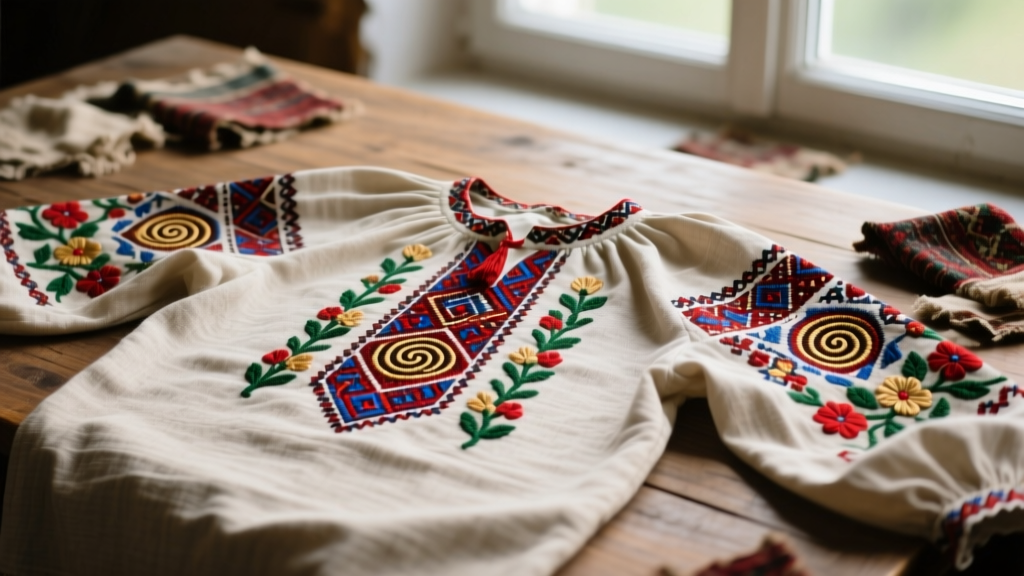
Embroidery in authentic German Tracht is never merely decorative; it is deeply symbolic. In Alpine regions, edelweiss, oak leaves, and gentian flowers are hand-embroidered using silk threads, often utilizing the Schattierstickerei (shadow embroidery) technique to create three-dimensional depth. In the Bayerisches Nationalmuseum in Munich, archival pieces from the 18th century demonstrate how metallic gold and silver threads were couched onto wool to denote the wealth and social standing of the wearer's family.
Market Realities: Sourcing and Pricing Authentic Pieces
For collectors, cultural enthusiasts, and those seeking genuine garments, understanding the pricing tiers of the Tracht market is essential. The disparity between a tourist-shop costume and a master-crafted garment is vast.
Mass-Market and Festival Wear (€80 - €180)
Often sold as 'Wiesn-Dirndls' around Oktoberfest, these garments are manufactured overseas using synthetic blends. They feature machine-stitched hems, plastic horn-imitation buttons, and lack structural boning in the bodice. While fun for a single festival, they hold no cultural or resale value.
Mid-Tier Trachtenmode (€300 - €700)
Produced by established heritage brands in Bavaria and Austria (such as Gössl or Angermaier), these outfits use natural fibers like cotton, linen, and virgin wool. The bodices are lightly boned for structure, and the embroidery is often done by specialized machines programmed with traditional regional patterns.
Bespoke and Meisterbetrieb (€1,500 - €4,000+)
Commissioning a garment from a certified Meisterbetrieb (master artisan workshop) is an investment in wearable art. The process involves multiple fittings, hand-dyed silks, custom-molded horn or silver buttons, and hundreds of hours of hand-embroidery. According to the Deutscher Trachtenverband (German Tracht Association), these artisans are vital to preserving the intangible cultural heritage of regional dress, ensuring that historical patterns are not lost to fast fashion.
Institutional Guardians and Cultural Respect
Wearing traditional German outfits requires a baseline of cultural respect. It is crucial to recognize that Tracht is not a 'costume' (Kostüm) to be worn for carnival or Halloween, but a living cultural garment (Gewand) that signifies regional pride, familial heritage, and community belonging. In many rural Bavarian and Swabian communities, women still wear their Sunday Tracht to church, weddings, and local brass band festivals.
By understanding the profound regional differences—from the delicate Sorbian lace of the east to the heavy silver of the northern coasts—we elevate our appreciation of German material culture. The true beauty of these garments lies not in their commercialized stereotypes, but in the meticulous, time-honored artisanship of the women and men who continue to stitch their regional histories into every seam.