Asian Costume Influence on European Folk

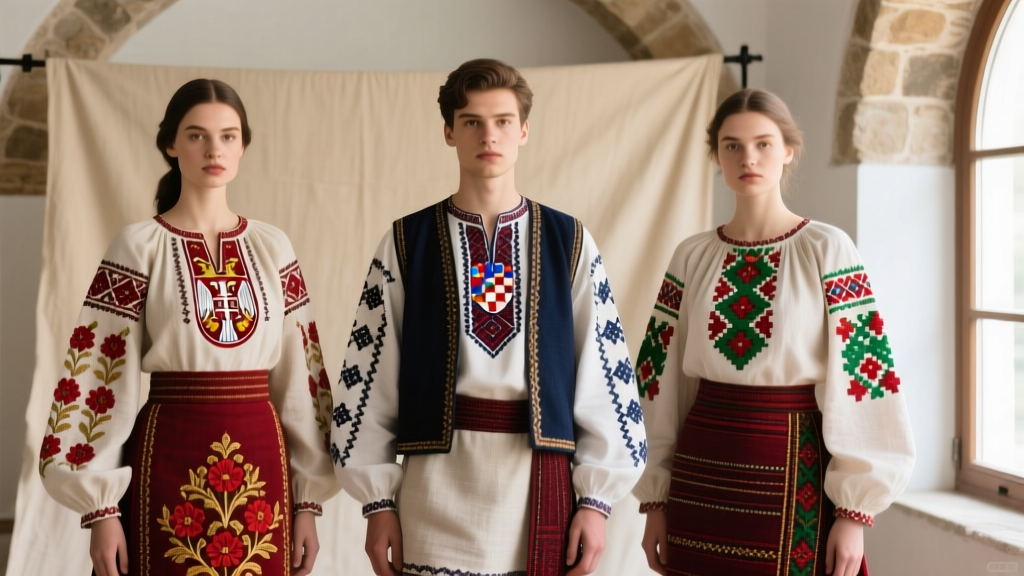
When examining the rich tapestry of European regional dress, it is a common misconception that folk textiles developed in total isolation. In reality, the historical intersection of trade routes, empires, and migrations created a profound material dialogue. Nowhere is this more evident than in the deep, enduring influences of the asian traditional costume on Eastern European and Balkan folk dress. Through the arteries of the Silk Road, the Mongol Empire, and later the Ottoman trade networks, the luxurious materials, structural silhouettes, and meticulous embroidery techniques of Central and East Asia fundamentally transformed the artisan traditions of Russia, the Baltics, and the Carpathian Basin.
For centuries, the indigenous base of European peasant clothing was homespun linen and wool. However, as trade routes expanded from the 13th to the 18th centuries, Asian textiles—particularly mulberry silks, damasks, and metallic brocades—began to filter into the upper echelons of Eastern European society. Over time, these luxury materials trickled down into regional folk costumes, becoming the cornerstone of festive and bridal wear. Understanding this cross-cultural exchange is vital for any serious collector, historian, or practitioner of traditional garment craftsmanship.
The Silk Road Loom: Where East Meets West in Folk Textiles
The most striking legacy of Asian textile mastery in Eastern Europe is the introduction and adaptation of complex silk weaving and metallic thread work. In regions like the Russian North and the Hungarian plains, local artisans began to incorporate imported Asian materials into their native dress. The kumach, a vibrant red cotton or silk fabric originally imported from Central Asia and India, became a staple in Russian peasant festive shirts and sarafans. The color red, deeply symbolic in both Asian and Slavic cultures representing beauty, protection, and vitality, was elevated by the superior dye-fastness and sheen of Asian-imported textiles.
Material Alchemy: Silk, Velvet, and Metallic Threads
Beyond basic fabrics, the integration of luxury fibers required a complete evolution of local needlework and loom techniques. Eastern European artisans had to learn how to handle slippery, high-tensile mulberry silks that behaved entirely differently from their native flax and sheep's wool. This material alchemy birthed entirely new regional specialties that defined the visual language of Eastern European folk dress for centuries.
The Anatomy of Zolotnoe Shitie (Gold Embroidery)
Perhaps the most exquisite example of this material alchemy is zolotnoe shitie, the traditional Russian goldwork embroidery. While Western Europe had its own ecclesiastical embroidery traditions, the specific technique of couching metallic threads over raised cardboard or birch bark foundations was heavily refined by exposure to Asian traditional costume techniques. Similar to the Indian zardozi and Chinese panjin goldwork, Eastern European artisans utilized threads made of fine gold or silver wire wrapped around a silk core.
Because these metallic threads were too fragile and precious to pass repeatedly through heavy velvet or brocade, artisans employed the couching method: laying the gold thread on the surface of the fabric and securing it with tiny, nearly invisible silk stitches. This allowed for the creation of dense, shimmering surfaces on the kokoshnik (the iconic crested headpiece of married women) and the hems of heavy velvet shubas (winter coats). The motifs, while adapting to local Slavic symbolism like the sun, the tree of life, and the peacock, retained the fluid, scrolling cloud bands and stylized florals characteristic of Central Asian and Persian design.
Structural Borrowing: From the Asian Kaftan to the Russian Sarafan
Beyond surface embellishments, the very architecture of Eastern European folk garments owes a debt to Asian tailoring. The quintessential Russian sarafan—often mistakenly assumed to be a purely indigenous Slavic pinafore—actually traces its etymological and structural roots to the Persian sarāpā and the broader Asian kaftan tradition. Originally, the sarafan was a front-opening, long-sleeved robe worn by men and women, heavily influenced by the Mongol and Tatar garments introduced during the Golden Horde era.
By the 17th century, as Western European fashions began to influence the Russian aristocracy under Peter the Great, the nobility abandoned the traditional front-opening robe. The garment was subsequently adopted by the peasantry and merchant classes, evolving into the sleeveless, high-waisted pinafore dress recognized today as the core of Russian folk dress. Similarly, the Hungarian szűr (a heavy, decorated shepherd's cloak) and the mente (a fur-lined, braided coat) feature the distinctive diagonal front closures and frogging (knotted cord fasteners) that are direct descendants of Ottoman and Central Asian military and nomadic dress.
Craftsmanship Comparison: Asian Traditional Costume vs. Eastern European Adaptations
| Feature | Asian Traditional Costume Origin | Eastern European Folk Adaptation |
|---|---|---|
| Garment Silhouette | Front-wrapping Kaftan / Hanfu robes with diagonal closures | Russian Sarafan (evolved into pinafore) / Hungarian Mente (frogged coat) |
| Metallic Embroidery | Zardozi (India) / Panjin (China) using wire-wrapped silk cores | Zolotnoe Shitie (Russia) utilizing couching over birch bark or felt |
| Primary Luxury Fiber | Mulberry Silk / Ramie / Fine Pashmina | Imported Silk Brocades blended with locally woven Linen and Wool |
| Motif Repertoire | Dragons, Lotus, Cloud Bands, Peonies | Stylized Florals, Sun Symbols, Peacocks, Tree of Life |
| Dyeing Techniques | Indigo vats, Madder root, Resist-dyeing (Batik/Ikat) | Adoption of Kumach (red madder-dyed cotton/silk) and local woad |
Sourcing and Preserving Heritage Textiles Today
For collectors, museums, and cultural enthusiasts, acquiring authentic Eastern European folk garments that exhibit these Asian-influenced craftsmanship techniques requires a discerning eye and an understanding of the current antiquities market. The fusion of local linen bases with imported Asian silks and goldwork creates highly sought-after pieces, but it also presents authentication challenges.
Price Guide for Authentic Heritage Pieces
- 19th-Century Russian Kokoshnik (Goldwork & Pearl): Authentic pieces from the Vologda or Nizhny Novgorod regions, featuring genuine zolotnoe shitie and river pearls, typically range from $1,200 to $4,500. Beware of 20th-century theatrical reproductions, which use synthetic gold threads (Lurex) and plastic pearls, usually priced under $150.
- Hungarian Brocade Vests (Mellény): Woven with metallic threads and featuring Asian-inspired floral damask patterns, antique 19th-century examples in good condition command between $400 and $1,800, depending on the integrity of the metallic warp threads.
- Antique Kumach Sarafans: A genuine 18th or early 19th-century sarafan made from imported Central Asian red silk or fine cotton, featuring hand-woven gold lace trim, can fetch $800 to $2,500 at specialized ethnographic auctions.
Authentication and Care Protocols
When examining a piece for Asian-influenced metallic threads, use a jeweler's loupe. Authentic historical gold threads will show a flat, hammered metal strip wrapped around a yellow or red silk core. Modern reproductions will reveal a uniform, electroplated synthetic core. Furthermore, because these garments were constructed using heavy, tensioned couching over organic foundations (like birch bark or stiffened linen), they should never be dry-cleaned or subjected to high humidity, which can cause the organic foundations to warp or mold. Conservation-grade storage in acid-free tissue, away from direct UV light, is mandatory to preserve the fragile metallic wrappings.
According to textile conservation guidelines from the Victoria and Albert Museum, the migration of Silk Road textiles into European folk traditions represents one of the most fascinating examples of global material culture exchange. Similarly, research from the State Historical Museum in Moscow highlights how peasant artisans meticulously deconstructed imported Asian luxury goods to repurpose the gold threads and silk panels, ensuring that the prestige of the East was woven permanently into the fabric of Slavic identity. For deeper study on the specific weave structures that traveled these routes, the Metropolitan Museum of Art provides extensive archaeological and historical analyses of Central Asian silks and their broader Eurasian impact.