Ceremonial vs Everyday Kimono: Tomesode & Komon in 2026
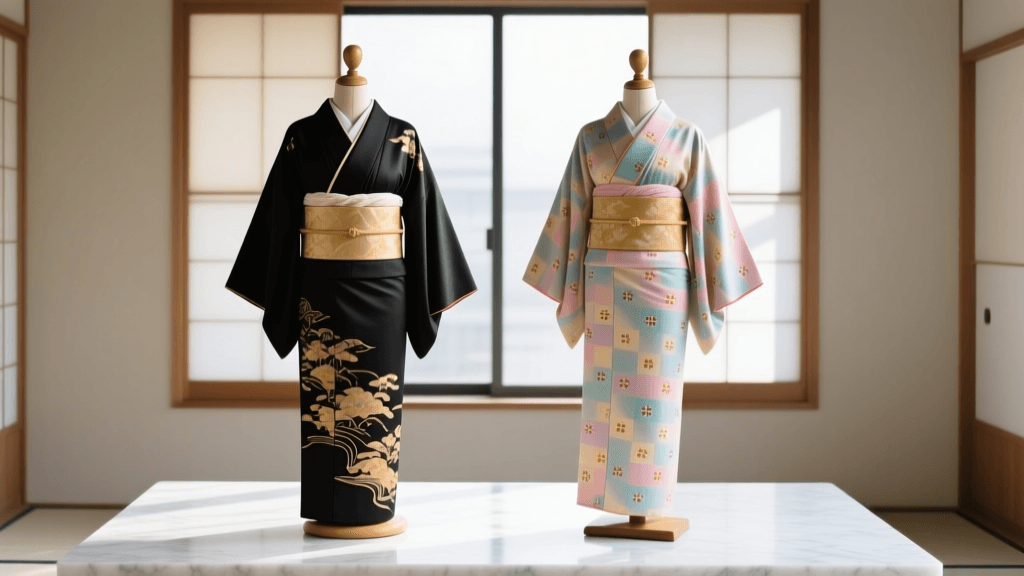
The Principle of TPO in Japanese Dress
The Japanese kimono is far more than a beautiful garment; it is a complex sartorial language governed by the strict principle of TPO (Time, Place, and Occasion). As we navigate the global fashion landscape in 2026, the appreciation for heritage textiles and sustainable, slow-fashion wardrobes has reached new heights. Enthusiasts and cultural practitioners alike are increasingly investing in traditional Japanese garments, yet navigating the hierarchy of formality remains a common challenge. At the very top of this hierarchy sits the ceremonial Tomesode, while the versatile and expressive Komon serves as the quintessential everyday staple.
Understanding the distinct boundaries between these two garment types is essential for anyone looking to build an authentic, respectful, and functional kimono wardrobe. According to the extensive archives and cultural exhibitions at the Victoria and Albert Museum, the evolution of kimono formality is deeply tied to historical sumptuary laws and the social structures of the Edo period, which still dictate modern dressing rules today. This guide will break down the construction, styling, and 2026 market dynamics of Tomesode and Komon kimono.
The Ceremonial Standard: Understanding Tomesode
The Tomesode is the most formal kimono worn by married women, and in its colored variations, it is also appropriate for unmarried women attending highly formal events. The word 'tomesode' translates roughly to 'fastened sleeve,' referring to the historical practice of sewing up the long, swinging sleeves of youth garments (furisode) upon marriage to signify maturity and social status.
Kurotomesode vs. Irotomesode
There are two primary categories of Tomesode:
- Kurotomesode (Black Tomesode): This is the absolute pinnacle of formality. It is exclusively worn by married women, typically the mothers of the bride and groom at weddings. It features a solid black background with five family crests (kamon) placed on the back, chest, and shoulders. The pattern (eba-moyo) is confined strictly to the lower hem and is designed to flow continuously across the seams.
- Irotomesode (Colored Tomesode): Featuring a solid colored background (such as deep plum, navy, or sage green), this garment can have one, three, or five crests. It is worn by both married and unmarried women for formal celebrations like award ceremonies, elite tea ceremonies, and weddings where the wearer is a close relative but not the mother.
Obi and Accessories for Tomesode
A Tomesode must be paired with a Fukuro obi, a formal, double-woven sash typically measuring 31 centimeters in width and 4.5 meters in length. In 2026, authentic Nishijin-ori (brocade weave) Fukuro obi featuring gold and silver threads remain highly sought after, with new artisan pieces starting around ¥250,000 ($1,700 USD). The obi is tied in a Niju-daiko (double drum) knot, which signifies joy and celebration. Footwear must consist of pristine white silk zori sandals and stark white cotton tabi socks. Any deviation in accessory color breaks the formal code.
The Everyday Staple: Embracing Komon
If Tomesode is the evening gown of the kimono world, the Komon is the everyday cocktail dress or smart-casual office wear. 'Komon' translates to 'small pattern' or 'fine pattern,' characterized by repeating motifs that cover the entire garment without a continuous hem design. As noted by cultural experts at Japan Guide, Komon kimono are the most common type of silk kimono found in modern Japanese wardrobes, favored for their versatility and expressive designs.
Variations of Komon
While all Komon share the trait of repeating patterns, regional dyeing techniques create distinct sub-categories:
- Edo Komon: Originating in the Edo period, these feature micro-patterns that appear solid from a distance. Historically worn by samurai to bypass strict sumptuary laws, a high-quality Edo Komon dyed on premium silk can function as semi-formal wear if adorned with a single family crest.
- Kyo Komon: Dyed in Kyoto, these feature larger, more vibrant, and expressive repeating motifs, often depicting seasonal flora, geometric shapes, or traditional auspicious symbols.
- Kaga Komon: Hailing from the Kanazawa region, these utilize the rich, earthy color palettes characteristic of Kaga Yuzen dyeing techniques, offering a slightly more subdued and elegant aesthetic.
Styling the Komon
Komon kimono are incredibly forgiving and allow for immense personal expression. They are typically paired with a Nagoya obi (a pre-folded, shorter obi designed for easier tying in the Otaiko knot) or a Hanhaba obi (a half-width, casual cotton or silk sash). Unlike the strict white requirements of Tomesode, Komon allows for patterned tabi socks, colorful obiage (sash scarves), and decorative obijime (braided cords). In 2026, mixing vintage Komon with modern, hand-woven artisan obijime is a massive trend among younger wearers in Tokyo and Kyoto.
Ceremonial vs Everyday: A Detailed Comparison
To help you navigate your purchasing or rental decisions in 2026, below is a structured comparison of the Tomesode and Komon kimono across critical wardrobe metrics.
| Feature | Tomesode (Ceremonial) | Komon (Everyday / Semi-Formal) |
|---|---|---|
| Formality Level | Highest (Black) / High (Colored) | Casual to Semi-Formal |
| Family Crests (Kamon) | 5 (Kuro) / 1, 3, or 5 (Iro) | None (Usually) |
| Pattern Placement | Lower hem only (Eba-moyo) | Repeating all over the garment |
| Standard Obi Type | Fukuro Obi (Brocade) | Nagoya Obi or Hanhaba Obi |
| Footwear Rules | White silk Zori, White Tabi | Colored/Patterned Zori or Geta, Colored Tabi |
| 2026 Avg. Vintage Cost | ¥30,000 - ¥80,000 ($200 - $550 USD) | ¥5,000 - ¥25,000 ($35 - $170 USD) |
| 2026 Avg. New Artisan Cost | ¥400,000+ ($2,700+ USD) | ¥80,000 - ¥150,000 ($550 - $1,000 USD) |
Wardrobe Integration and the 2026 Rental Market
Building a kimono wardrobe in 2026 requires a strategic approach. Because a single Tomesode is only worn a handful of times in a lifetime (unless one is a professional geiko or frequent attendee of high-society weddings), the modern consumer is heavily leaning into the rental market for ceremonial wear. Premium rental services in major Japanese cities now offer curated, stylist-matched Tomesode sets, complete with professional dressing (kitsuke), for around ¥15,000 to ¥25,000 per day.
Conversely, the Komon is where collectors and enthusiasts invest their capital. The second-hand and vintage kimono market has exploded, driven by sustainable fashion advocates. Buyers can acquire stunning, mid-century Showa-era Komon kimono at recycle shops in Kyoto's Shichijo district for a fraction of their original cost. When purchasing vintage Komon, it is vital to check the <1