LDS Temple Garment Materials & Modern Styles in 2026
The Evolution of Sacred Textiles: LDS Garments in 2026
For members of The Church of Jesus Christ of Latter-day Saints, the temple garment is a deeply sacred reminder of covenants made in the temple. While the spiritual significance and symbolic markings of the garment remain eternal and strictly protected, the physical construction, materials, and styles have evolved significantly to meet the practical needs of a diverse, global membership. As we navigate 2026, advancements in textile technology and a broader understanding of varied body types, climates, and lifestyles have resulted in the most versatile, comfortable, and accessible garment options in the history of the Church.
Historically, early temple garments were modeled after the long union suits of the 19th and early 20th centuries, crafted from heavy, woven cotton or wool. These provided modesty and warmth but were often cumbersome in hot climates or during physical labor. Over the decades, the Church authorized shifts in design, moving to two-piece sets and incorporating lighter knit fabrics. According to the Church's official Gospel Topics essay on Temple Garments, the garment serves as a personal and private reminder of covenants, and while the outward style has adapted to modern clothing norms, the core purpose remains unchanged. Today, the focus of garment design is on maximizing comfort, breathability, and durability without compromising the sacred nature of the clothing.
2026 Fabric Comparison Guide
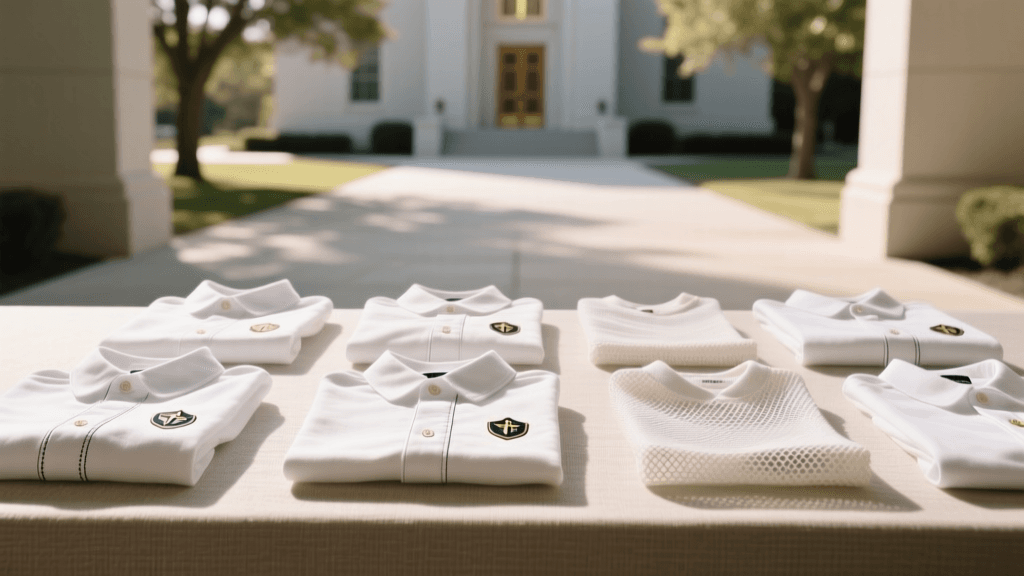
Choosing the right fabric is essential for daily comfort, especially as global temperatures fluctuate and active lifestyles demand more from everyday clothing. The 2026 catalog of authorized temple garments features a highly specialized range of textiles. Below is a comprehensive comparison of the primary materials available today.
| Fabric Type | Material Composition | Breathability | Stretch & Recovery | Best Climate / Use Case |
|---|---|---|---|---|
| Classic Cotton | 100% Combed Cotton | High | Low (May bag out) | Temperate climates, sensitive skin, everyday wear |
| Cotton/Poly Blend | 50% Cotton / 50% Polyester | Medium | Medium | Daily wear, frequent washing, travel |
| Modal/Spandex | 95% Modal / 5% Spandex | Very High | Excellent (4-way stretch) | Active lifestyles, form-fitting clothing, all-day comfort |
| Nylon Mesh | 100% Nylon Micro-Mesh | Maximum | High | Extreme heat, high humidity, tropical regions |
| Performance Active | Moisture-Wicking Synthetic Blend | High | Excellent | Athletics, outdoor labor, heavy sweating |
Deep Dive into Modern Materials
Modal and Spandex Blends: By 2026, modal has become a favorite among members who wear tailored or form-fitting professional attire. Derived from beech tree pulp, modal is exceptionally soft, resists shrinking, and holds dye well. The addition of spandex ensures the garment retains its shape throughout the day, preventing the sagging that was common with older 100% cotton models.
Nylon Mesh: For members living in tropical regions, the American South, or equatorial nations, nylon mesh is a lifesaver. The micro-mesh construction allows for maximum airflow while remaining completely opaque under normal lighting conditions. It dries incredibly fast, making it ideal for members who hand-wash their garments while traveling or living in high-humidity environments.
Performance Active: Recognizing the needs of athletes, military personnel, and outdoor workers, the Church has expanded its performance line. These garments utilize advanced capillary-action yarns that pull sweat away from the skin to the exterior of the fabric where it evaporates quickly. They also feature anti-odor treatments that are safe for the sacred markings.
Modern Style Updates and Inclusive Fit Options
The one-size-fits-all approach of the past has been entirely replaced by a nuanced, inclusive sizing and styling system. In 2026, authorized retailers like Deseret Book and official Church distribution centers offer a wide array of cuts designed to accommodate different body shapes, medical needs, and fashion preferences.
Women's Specific Designs
- Neckline Variations: Women can choose from crew, rounded, V-neck, and scoop necklines. The V-neck and scoop options are specifically designed to remain hidden under modern professional blouses and dresses.
- Sleeve Lengths: Cap-sleeve and short-sleeve options are standard, with cap-sleeves being highly popular for summer wear or under sleeveless tops where modesty layers are required.
- Maternity and Nursing: Specialized maternity bottoms feature expandable, soft-waistbands that grow with the wearer. Nursing tops with discreet, reinforced access panels have been a massive quality-of-life improvement for new mothers, allowing them to maintain their covenants comfortably during postpartum recovery.
Men's Specific Designs
- Athletic and Relaxed Fits: Men's tops now come in athletic cuts (tapered at the waist to prevent bunching under dress shirts) and relaxed cuts for a looser feel.
- Inseam Options: Bottoms are available in traditional, mid-thigh, and longer inseams to accommodate different heights and preferences, particularly for those who wear tailored trousers or shorts.
- Undershirt Styles: The traditional crew neck has been joined by deep V-necks, ensuring the garment remains invisible under unbuttoned collared shirts.
Adaptive and Sensory-Friendly Options
A major milestone in 2026 is the expanded availability of adaptive garments. For members with limited mobility, arthritis, or physical disabilities, garments with Velcro or magnetic closures at the shoulders and sides eliminate the need to raise arms overhead. Additionally, sensory-friendly options featuring flat-lock seams and ultra-soft, tagless modal fabrics are now widely available for members with autism or tactile sensitivities.
Sizing, Purchasing, and Global Accessibility
Getting the right fit is crucial; a garment that is too tight can cause skin irritation, while one that is too loose may wear out prematurely from friction. The Church's official Temple Preparation guidelines emphasize that garments should fit comfortably and appropriately for the member's body.
How to Measure in 2026
Most online portals now feature interactive sizing calculators. To get an accurate measurement:
- Chest/Bust: Measure around the fullest part of the chest, keeping the tape measure level.
- Waist: Measure around the natural waistline (the narrowest part of the torso).
- Hips: Measure around the fullest part of the hips.
- Inseam: Measure from the crotch seam down to the desired length on the inner leg.
If your measurements fall between sizes, experts generally recommend sizing up for woven cotton (which lacks stretch) and sizing true-to-measure for modal and spandex blends.
Where to Purchase
Temple garments can only be purchased by members who have received their own endowment. In 2026, purchasing is more streamlined than ever:
- Online Distribution Centers: The Church's official online store allows members to log in with their Church Account, verify their recommend status automatically, and order directly to their home.
- Deseret Book: Both physical and online Deseret Book stores carry a massive inventory of the latest styles, fabrics, and seasonal variations.
- Local Distribution Centers: For members who prefer to feel the fabrics before buying, local distribution centers near temples and chapels stock the most popular regional fabrics (e.g., mesh in tropical areas, thermal blends in colder regions).
Garment Care and Longevity
Modern fabrics require specific care to maintain their elasticity and protect the sacred markings from premature fading or damage.
- Washing Modal and Spandex: Always wash in cold water. Hot water breaks down the spandex fibers over time, leading to a loss of shape. Avoid bleach entirely, as it weakens the modal fibers.
- Drying: Air drying is highly recommended for all garment types to preserve the elasticity and prevent shrinkage. If using a dryer, select the lowest heat setting or an air-only tumble.
- Storing: Fold garments neatly in a dedicated drawer. Avoid hanging modal or cotton tops on wire hangers, as this can stretch the shoulders and distort the neckline.
Conclusion
The landscape of LDS temple garments in 2026 reflects a beautiful intersection of eternal covenants and modern innovation. By offering an expansive range of breathable fabrics, inclusive sizing, adaptive designs, and climate-specific options, the Church ensures that every member, regardless of their location, body type, or lifestyle, can wear the garment comfortably and confidently. Whether you opt for the classic reliability of combed cotton, the luxurious stretch of modal, or the extreme breathability of nylon mesh, today's garment options provide the perfect foundation for a life dedicated to faith, service, and temple worship.