Mormon Garments in 2026: Meaning, Purpose & Modern Traditions

Understanding the Sacred Meaning of LDS Temple Garments
Within the diverse tapestry of American religious textiles, few garments carry as much spiritual weight and cultural misunderstanding as the temple garments worn by members of The Church of Jesus Christ of Latter-day Saints (often referred to as Mormon garments). As of 2026, millions of devout Latter-day Saints across the Americas and the globe wear these undergarments daily. Far from being mere clothing, the 'garment of the holy priesthood' serves as a profound, tangible reminder of sacred covenants made within Latter-day Saint temples.
For cultural historians and textile enthusiasts, the evolution of the LDS garment offers a fascinating glimpse into how a 19th-century American religious movement adapted its sacred vestments for the modern era. While early iterations resembled the heavy, full-length cotton union suits of the 1800s, the garments of 2026 are marvels of modern textile engineering, designed to provide spiritual comfort alongside physical breathability and flexibility.
The Spiritual Purpose and Symbolism
To understand the garment, one must understand its purpose. According to the General Handbook of The Church of Jesus Christ of Latter-day Saints, the garment represents a commitment to live a righteous life and serves as a personal, private reminder of the covenants made with God. It is not viewed as a magical talisman that grants physical invulnerability; rather, it offers spiritual protection by helping the wearer resist temptation and maintain a mindset of devotion.
The Sacred Markings
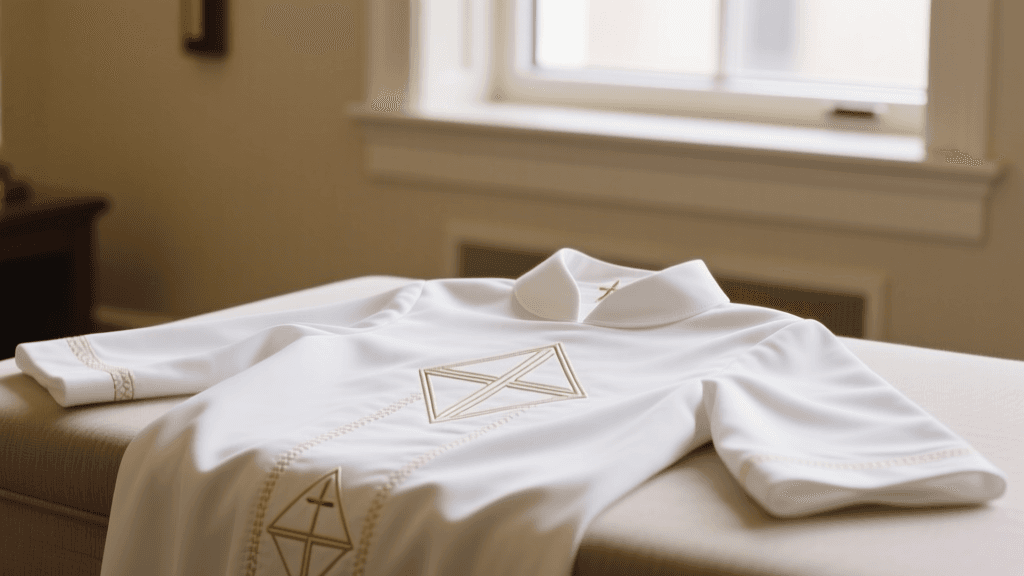
Woven or embroidered into the fabric of every traditional temple garment are specific markings, each rich with allegorical meaning tied to the temple endowment ceremony:
- The Square: Located on the right breast, symbolizing honor, integrity, and the four corners of the earth.
- The Compass: Located on the left breast, representing an undeviating course toward eternal life and the containment of one's desires within the bounds of righteousness.
- The Navel Mark: A small horizontal line near the abdomen, symbolizing the need for continuous spiritual nourishment and the cutting of the umbilical cord of worldly dependencies.
- The Knee Marks: Located on the lower hems of the bottoms, representing the importance of bowing the knee in prayer and reverence to God.
These markings elevate the garment from a simple undergarment to a piece of sacred regalia, requiring the wearer to treat it with the utmost respect.
Traditions and Daily Wearing Guidelines in 2026
The tradition of wearing the garment is a deeply personal discipline. Adult members who have participated in the temple endowment are instructed to wear the garment day and night throughout their lives. However, the Church provides practical guidelines for 2026 living, acknowledging the realities of modern life, athletics, and climate.
Exceptions for removal are permitted during activities where the garment would be damaged or cause undue physical hardship, such as swimming, showering, or participating in rigorous contact sports. Intimacy between married couples is also a recognized exception. The guiding principle is not legalistic perfection, but a sincere, continuous effort to keep the garment close to the body as a shield against the distractions of the secular world.
Modern Garment Styles and Fabric Innovations for 2026
One of the most significant sartorial shifts in recent years has been the Church's responsiveness to member feedback regarding climate, body type, and modesty requirements. In 2026, the distribution network offers a highly diversified catalog of styles. Women's garments, in particular, have seen extensive updates, featuring varied neckline cuts (such as scoop, V-neck, and camisole styles) and sleeve lengths (cap, short, and three-quarter) to accommodate modern outerwear fashions while ensuring the sacred markings remain properly placed and covered.
Textile innovations have also revolutionized the wearing experience. The introduction of advanced moisture-wicking synthetics and ultra-lightweight meshes has made wearing the garment in the humid climates of the American South or the tropical regions of Latin America far more comfortable.
| Garment Style | Fabric Composition | Best Use Case | Key Features |
|---|---|---|---|
| Ultra-Light Mesh | Nylon/Spandex Blend | Hot climates, summer months | High breathability, rapid moisture-wicking, sheer outer layer compatibility |
| Classic Cotton | 100% Combed Cotton | Everyday wear, sensitive skin | Traditional feel, highly durable, soft hand-feel, moderate warmth |
| Active Performance | Polyester/Spandex | Exercise, sports, hiking | Four-way stretch, sweat-resistant, anti-chafing flatlock seams |
| Maternity Support | Cotton/Spandex Blend | Pregnancy and postpartum | Expandable abdomen panel, reinforced support, adjustable comfort fit |
| Modest Cap-Sleeve | Modal/Cotton Blend | Professional wear, warm weather | Extended sleeve coverage, draped neckline options, silky drape |
How to Purchase and Care for Temple Garments
Unlike secular clothing, temple garments are not sold in department stores or secular retail boutiques. They are considered sacred items, and their distribution is strictly controlled by the Church to maintain their reverent nature.
Purchasing Requirements
To purchase garments in 2026, a member must possess a valid temple recommend, which is a small card signed by local ecclesiastical leaders verifying the member's worthiness and participation in the temple endowment. Members can purchase these items directly through Church Distribution Services, either in person at local distribution centers attached to temples and meetinghouses, or via the Church's secure online portal. The online store allows members to filter by specific measurements, fabric preferences, and style variations, ensuring a personalized and modest fit.
Respectful Care and Disposal
The traditions surrounding the care of the garment are just as important as the wearing of it. Garments are washed and dried using standard laundry methods, but they are handled with care. When a garment becomes worn, torn, or no longer usable, it cannot simply be thrown into the trash or donated to a thrift store in its entirety.
The strict tradition for disposal requires the member to carefully cut out the sacred markings (the square, compass, navel, and knee marks). These cut-out markings are then destroyed or disposed of privately and respectfully. The remaining fabric, now stripped of its sacred symbols, can be repurposed as cleaning rags or discarded in the regular waste stream. This meticulous disposal process underscores the deep reverence members hold for the symbols woven into the textile.
Conclusion
The Mormon temple garment remains one of the most unique and deeply meaningful religious garments in the Americas. As of 2026, the intersection of ancient symbolism and modern textile technology allows Latter-day Saints to honor their 19th-century pioneer heritage while navigating the demands of contemporary life. For those outside the faith, understanding the garment's true purpose—as a private, sacred reminder of divine promises rather than an object of superstition—fosters greater cultural respect and demystifies a core aspect of Latter-day Saint identity and daily tradition.