Hanfu vs Opera Xifu: 2026 Kunqu Costume Tailoring Guide
The Intersection of Hanfu and Theatrical Xifu in 2026
As the global Hanfu movement matures in 2026, enthusiasts and performers are increasingly looking beyond everyday historical recreation to the stylized, breathtaking world of traditional Chinese performing arts. Specifically, the intersection of authentic historical Hanfu and theatrical Xifu (opera costuming) has become a major focal point for advanced practitioners, cosplayers, and stage actors. According to UNESCO's Intangible Cultural Heritage registry, Kunqu Opera is one of the oldest and most refined forms of Chinese theater, and its costuming traditions heavily influence modern stage adaptations of Han clothing.
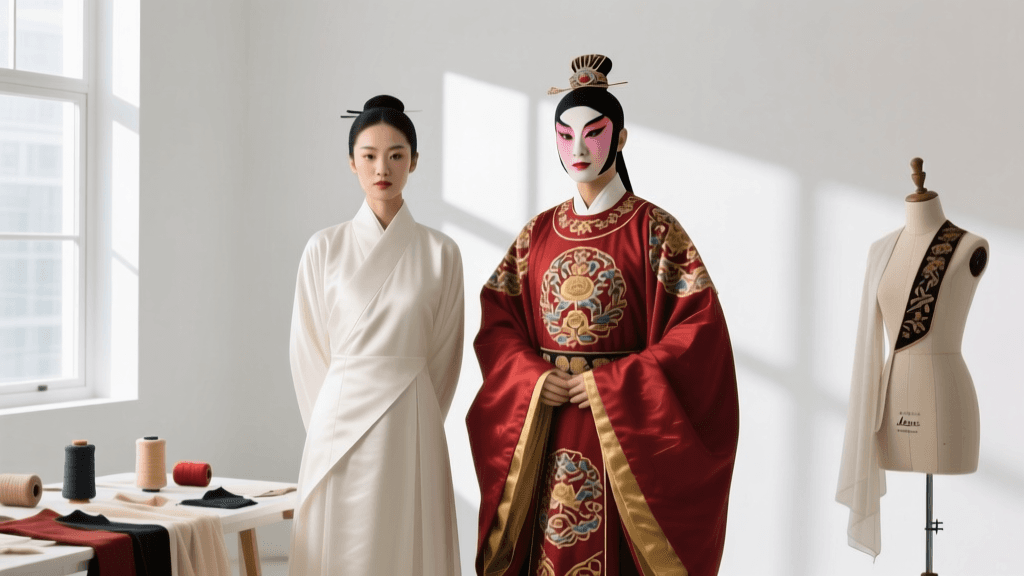
However, a common mistake among newcomers is confusing historically accurate Hanfu (such as Ming or Song dynasty garments) with theatrical opera costumes. While they share foundational roots, theatrical Xifu is deliberately exaggerated to convey character archetypes, social status, and emotional states to audiences sitting far from the stage. This comprehensive 2026 guide will decode the differences between historical Hanfu and Kunqu/Peking Opera Xifu, providing actionable tailoring advice for those looking to commission or craft stage-ready garments.
Key Differences: Historical Hanfu vs. Kunqu Opera Xifu
Understanding the structural and aesthetic deviations between everyday historical dress and theatrical wear is crucial for any 2026 commission. The table below outlines the primary distinctions.
| Feature | Historical Hanfu (Ming/Song) | Kunqu / Peking Opera Xifu |
|---|---|---|
| Silhouette | Natural drape, follows the body's lines, layered for modesty. | Exaggerated, structured, often padded at the shoulders and waist for a commanding stage presence. |
| Sleeves | Standard wide (Guangxiu) or narrow sleeves, ending at the hands. | Extended "Water Sleeves" (Shuixiu) made of white silk, ranging from 45cm to over 100cm past the hand. |
| Embroidery | Subtle, nature-inspired motifs, rank badges (Buzi), tonal threading. | High-contrast, stylized dragons, phoenixes, and clouds; heavy use of gold and silver couching. |
| Collar Angle | Strict 45-degree cross-collar (Jiaoling Youren), snug to the neck. | Slightly wider and lower to allow for facial expressions and heavy stage makeup visibility. |
| Fabric Weight | Lightweight silks, breathable linens, and ramie for daily wear. | Heavy brocades, stiff satins, and modern synthetic blends designed to catch stage lighting. |
The Anatomy of a Kunqu Stage Garment
To commission a proper opera-inspired garment, you must understand the specific archetypes of Xifu. As detailed in Britannica's comprehensive guide on Kunqu, the costumes are strictly codified based on the role type (Sheng, Dan, Jing, Chou).
The Xuezi (Scholar's Robe)
The Xuezi is the quintessential garment for the Xiaosheng (young male scholar) and Guimendan (young female) roles in Kunqu. It features a cross-collar, side slits, and a relaxed fit. In 2026, modern stage adaptations of the Xuezi for Hanfu enthusiasts often incorporate hidden internal waist ties to prevent the garment from gaping during vigorous movement, a flaw sometimes found in purely historical recreations.
The Shuixiu (Water Sleeves)
Water sleeves are the soul of Kunqu expression. They are not merely decorative; they are extensions of the actor's nervous system, used to express shyness, anger, grief, or joy. For a 2026 stage commission, the base sleeve is typically made of the same heavy brocade as the robe, while the attached Shuixiu is crafted from 10-momme to 16-momme white silk habotai or chiffon. The seam connecting the base sleeve to the water sleeve must be reinforced with internal cotton twill tape to withstand the violent snapping and flicking motions (touxiu and shuaixiu) inherent to the choreography.
2026 Tailoring Guide: Commissioning Your Opera-Inspired Hanfu
If you are commissioning a hybrid garment—historically rooted but optimized for stage performance or high-end theatrical Hanfu photography—precision in measurement and fabric selection is paramount.
1. Adjusting Measurements for the Stage
Stage movement in Kunqu involves the yuanbaobu (circular walking) and deep, grounded stances. Standard Hanfu measurements will result in tripping hazards on stage.
- Hemline Clearance: Measure the wearer in their stage shoes (which often have thick platform soles). The front hem of the robe must clear the floor by exactly 5 to 8 cm. The back hem can be 2 to 3 cm longer to create a dramatic trailing effect when turning.
- Shoulder Padding: Historical Hanfu relies on the natural slope of the shoulders. Theatrical Xifu requires a subtle 1.5 cm to 2 cm shoulder pad to give the performer a heroic, upright silhouette, especially under heavy stage lighting.
- Armhole Depth: Lower the armhole scye by 3 cm compared to standard historical patterns. This allows the performer to raise their arms above their head for sleeve-flicking choreography without pulling the entire bodice upward.
2. Fabric Innovations in 2026
While traditionalists insist on 100% mulberry silk or Song brocade (Songjin), the reality of modern stage performance demands durability and breathability. In 2026, the industry standard for mid-tier theatrical Hanfu is a digital jacquard silk-cotton blend (70% silk, 30% long-staple cotton). This provides the luminous sheen of silk on stage while the cotton core absorbs sweat and prevents the heavy embroidery from warping the fabric over time. For the inner lining, avoid synthetic polyesters; opt for cupro or bamboo silk, which offer excellent moisture-wicking properties during intense, hour-long performances.
3. Embroidery and Color Coding
Theatrical costumes rely on strict color coding. Yellow is reserved for imperial figures, red for loyalty and high status, and pale blue or pink for young scholars and maidens. When commissioning embroidery in 2026, you can choose between traditional hand-couched gold thread (which takes hundreds of hours and costs a premium) or modern laser-cut metallic appliqué, which offers a 90% visual match under stage lights at a fraction of the weight and cost.
Cost Breakdown and Sourcing in 2026
The market for theatrical Hanfu and Xifu has stratified significantly. Below is the 2026 pricing guide for commissioning a full-length robe (such as a Mang or highly embroidered Xuezi) from specialized ateliers in Suzhou and Hangzhou.
- Entry-Level / Enthusiast ($150 - $350): Machine-embroidered polyester or rayon blends. Suitable for amateur cosplay, short photo shoots, or beginner stage roles. Lacks the weight and drape required for professional water sleeve manipulation.
- Semi-Professional Stage ($800 - $1,800): Silk-cotton jacquard with a mix of machine and hand-embroidery. Features properly weighted, real silk water sleeves and reinforced internal tailoring. This is the sweet spot for university theater troupes and serious Hanfu performance groups in 2026.
- Master-Crafted Theatrical Xifu ($3,500 - $8,000+): 100% traditional Song brocade or heavy silk satin, featuring entirely hand-couched gold and silver bullion thread, custom-woven rank badges, and hand-painted silk linings. Commissioned by principal actors in professional Kunqu and Peking Opera companies.
Caring for Theatrical Silks and Embroidery
Theatrical garments are investments that require meticulous care. Never dry-clean a garment with heavy metallic couching, as the chemical solvents will strip the gold foil from the threads. Instead, spot-clean the interior lining with a damp cloth and mild silk detergent. After every performance, the garment must be hung on a wide, padded wooden hanger in a climate-controlled room (ideally 45-55% humidity) to prevent the silk from dry-rotting or the metallic threads from tarnishing. For long-term storage in 2026, wrap the garment in unbleached, acid-free cotton muslin—never plastic, which traps moisture and invites mold.
Conclusion
The fusion of historical Hanfu and theatrical Xifu represents one of the most exciting frontiers in Asian traditional garment culture today. By understanding the structural necessities of the Kunqu stage—from the exaggerated drape of the Xuezi to the kinetic physics of the Shuixiu—enthusiasts and performers can commission garments that are not only visually stunning but functionally masterful. Whether you are preparing for a professional stage debut or a high-concept editorial shoot, respecting the tailoring nuances of 2026 will ensure your garment moves, breathes, and performs as beautifully as it looks.