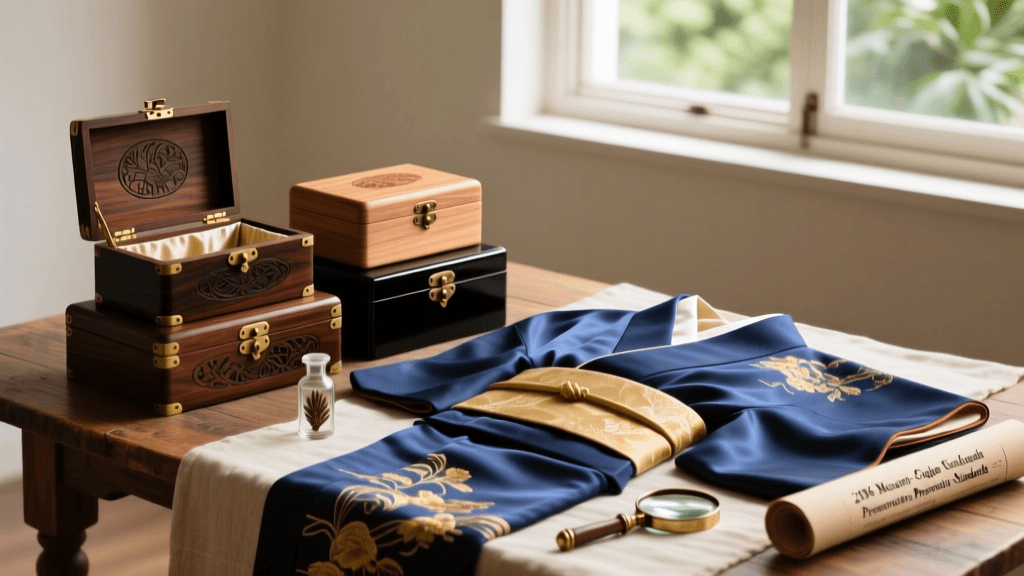
Astana Silk Road Textiles: 2026 Weave Reconstruction Guide
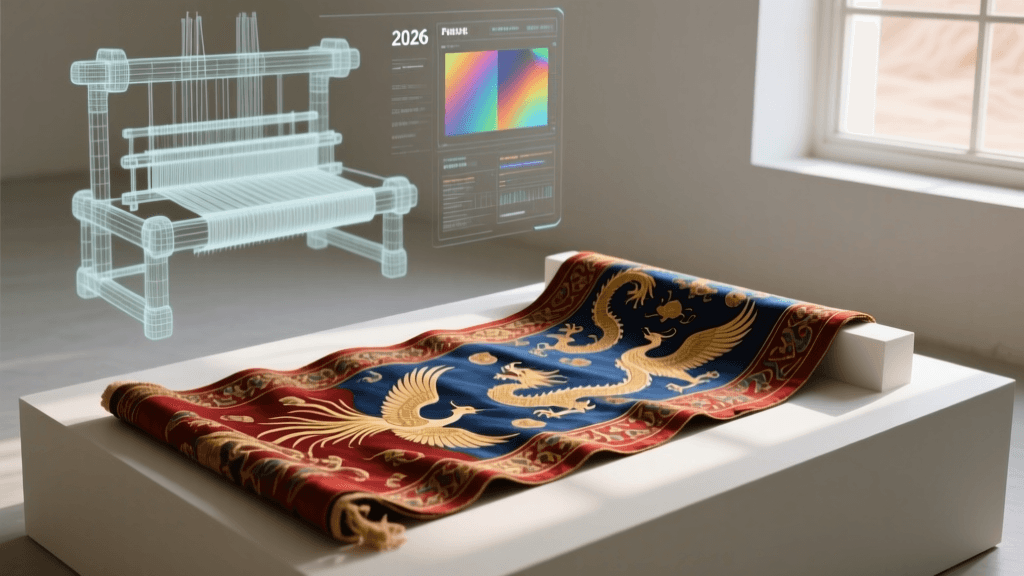
The Astana Tombs: A Silk Road Time Capsule
The Astana-Karakhoja tombs, located in the arid Turfan Depression of Xinjiang, represent one of the most vital archaeological sites for understanding Silk Road textile exchanges. Unlike the humid environments of southern China that rapidly degrade organic materials, the extreme desert climate of Turfan has preserved thousands of 7th-century Tang dynasty and Sogdian textile fragments. These artifacts reveal a breathtaking fusion of Han Chinese weaving techniques and Sasanian-inspired motifs, most notably the iconic 'pearl roundel' designs featuring facing ducks, boars, and lions.
For modern traditional garment makers, historians, and textile conservators, these fragments are not merely museum pieces; they are blueprints. As of 2026, the intersection of advanced archaeological imaging and digital weaving technology has made it possible to reconstruct these ancient fusion textiles with unprecedented accuracy. This guide explores the latest 2026 methodologies for analyzing, sourcing, and replicating Astana Silk Road textiles for contemporary traditional fashion and archival collections.
2026 Advances in Multispectral Imaging and Dye Analysis
Historically, analyzing the faded pigments of excavated silk required microscopic sampling, which risked damaging the fragile fibers. In 2026, non-invasive macro-X-ray fluorescence (macro-XRF) and high-resolution multispectral imaging have revolutionized how we 'read' degraded textiles. Conservators at the Xinjiang Institute of Cultural Relics and Archaeology now use portable 2026 multispectral scanners to map the chemical signatures of mordants and dyes without touching the artifact.
These scans have revealed that the vibrant reds in the Astana pearl roundels were primarily derived from madder root (Rubia tinctorum) utilizing an alum mordant, while the deep blues were achieved through vat-dyed indigo. Furthermore, the imaging has uncovered hidden structural details in the warp and weft intersections that are invisible to the naked eye, allowing digital archivists to map the exact thread count and twist direction (Z-twist vs. S-twist) of the original yarns. Researchers collaborating with the International Dunhuang Project have integrated these scans into open-access databases, providing global weavers with precise structural data for historical replication.
Decoding the Sogdian-Han Fusion Weave Structures
The most fascinating aspect of the Astana textiles is their structural hybridity. Traditional Chinese silks of the Han and early Tang periods were predominantly warp-faced compounds, where the warp threads dictate the pattern and color. Conversely, Sasanian and Sogdian weavers favored weft-faced compounds, which allowed for wider, more complex curvilinear motifs like the circular pearl roundels.
The Astana fragments showcase a transitional technology: Chinese weavers adapting their traditional draw-looms to produce weft-faced compound twills (samite) to satisfy the cosmopolitan tastes of Silk Road merchants. Understanding this structural shift is critical for any 2026 reconstruction effort, as attempting to weave a weft-faced Sogdian motif using a traditional warp-faced Han setup will result in distorted, elongated patterns.
Table: 2010s Physical Tracing vs. 2026 Digital Reconstruction Methods
| Feature | Traditional Physical Tracing (Pre-2020) | 2026 AI-Assisted Multispectral Mapping |
|---|---|---|
| Pattern Extraction | Manual graphing from high-res photographs | AI edge-detection from multispectral topography |
| Dye Identification | Destructive HPLC chemical sampling | Non-invasive macro-XRF elemental mapping |
| Weave Structure Analysis | Microscopic edge examination (risk of fraying) | Sub-surface optical coherence tomography (OCT) |
| CAD Integration | Manual point-paper drafting | Direct export to modern jacquard CAD software |
Practical Guide: Replicating the 'Pearl Roundel' on Modern Jacquard Looms
Recreating the Astana 'Pearl Roundel with Facing Ducks' motif requires a meticulous approach to both yarn selection and loom programming. The cultural exchange network documented by the UNESCO Silk Roads Programme highlights how these specific motifs traveled from Persia to Chang'an, making their accurate replication a matter of preserving global heritage.
Step 1: Yarn Sourcing and 2026 Market Pricing
To achieve the historical drape and luster of Tang dynasty samite, you must use high-grade mulberry silk. The 2026 standard for historical replication is 20/22 denier raw silk, graded 5A or higher. For the warp, use a tightly twisted organzine (S-twist) to provide structural integrity, while the weft should be a softer, loosely twisted tram silk to ensure the weft-faced pattern pops on the surface.
- Warp Yarn: 20/22 denier organzine, 600 TPI (twists per inch). Current 2026 wholesale pricing averages $95-$110 per kilogram.
- Weft Yarn: 20/22 denier tram silk, 150 TPI. Current pricing averages $85-$95 per kilogram.
- Dyeing: For historical accuracy, utilize natural madder and indigo. If colorfastness for daily wear is required, modern 2026 fiber-reactive dyes formulated to mimic the exact spectrographic values of natural madder (alizarin) are recommended.
Step 2: Digital Jacquard Setup and CAD Mapping
Modern electronic jacquard looms equipped with 2026 CAD systems like Pointcarré or NedGraphics allow weavers to translate the AI-mapped structural data directly into weave files. Because the Astana roundels are weft-faced compound twills, the CAD file must be configured to prioritize the weft float.
- Density Setup: Set the warp density to 45 ends per centimeter and the weft density to 90 picks per centimeter. This 1:2 ratio is essential for achieving the dense, tapestry-like feel of the original Sogdian-influenced silks.
- Harness Configuration: Utilize a minimum of 12,000 hooks for a standard 130cm width loom to ensure the curvilinear pearl borders remain perfectly circular rather than jagged.
- Bind Weave Selection: Use a 1/3 weft-faced twill for the background and a 3/1 warp-faced twill for the tie-down points. This prevents long weft floats from snagging while maintaining the visual dominance of the weft color.
Archival Storage and Maintenance for Replicas
Once the silk yardage is woven and fashioned into traditional garments, proper storage is paramount to prevent the silk proteins from degrading. The 2026 museum-grade conservation standards dictate strict environmental controls. Replicas intended for long-term archival storage or museum display must be kept in a climate-controlled environment at 20°C (68°F) with a relative humidity (RH) of exactly 50%.
Garments should never be hung on wire or wooden hangers, as the localized stress will distort the weft-faced weave over time. Instead, use padded, acid-free cotton hangers or store the textiles flat in archival-grade, unbuffered acid-free tissue paper. For garments that incorporate metallic threads—a common feature in high-status Astana reproductions—ensure the storage environment is free of sulfur compounds, which cause rapid tarnishing of silver and gold alloys.
Conclusion
The Silk Road was not merely a conduit for goods, but a vast network of technological and artistic exchange. The textiles of the Astana tombs stand as a testament to the ingenuity of weavers who adapted their ancestral techniques to embrace foreign aesthetics. By leveraging 2026 multispectral imaging, AI-assisted structural mapping, and precision digital jacquard technology, today's traditional garment makers can bridge a 1,300-year gap. Reconstructing these Sogdian-Han fusion silks is more than an academic exercise; it is a vibrant continuation of the Silk Road's enduring legacy in Asian textile traditions.