Jinbei vs Yukata: The Ultimate Japanese Summer Wear Guide
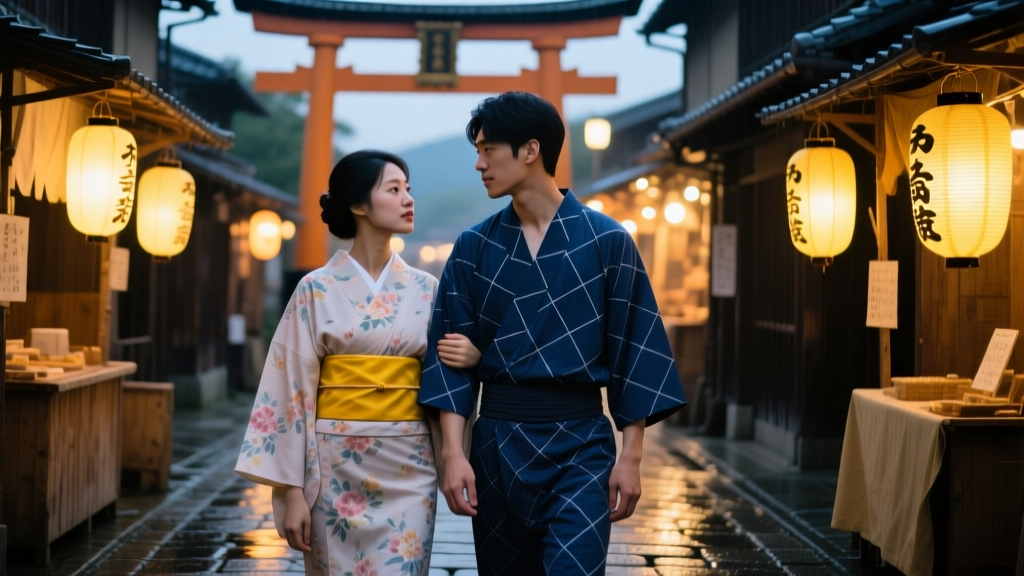
When planning for Japanese summer festivals (matsuri) or fireworks displays (hanabi taikai), the debate of jinbei vs yukata often dictates your wardrobe. While both are breathable, traditional garments rooted in Edo-period history, understanding the functional and stylistic nuances in the jinbei vs yukata comparison ensures you choose the right attire for the occasion. This guide breaks down the textile science, structural variations, and 2026 market trends to help you navigate Japanese summer wear with confidence and cultural awareness.
The Yukata: From Bathhouse to Festival Staple
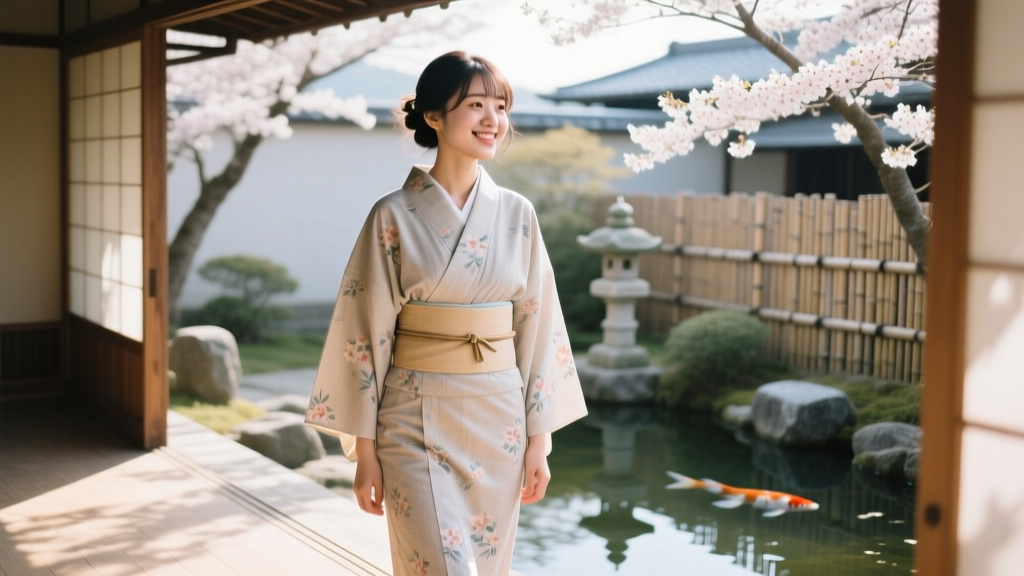
The yukata literally translates to 'bathing cloth'. Originating as the yukatabira in the Heian period (794–1185), it was initially a linen garment worn by nobility to protect their skin from steam in public baths. By the Edo period (1603–1867), as cotton cultivation expanded and public bathhouses became cultural hubs, the yukata evolved into everyday casual wear. Today, it is a one-piece, T-shaped wrap robe secured with an obi belt.
In 2026, the yukata remains the undisputed king of major summer festivals. Modern iterations range from fast-fashion polyester-cotton blends to artisanal chugata (medium-sized stencil dyeing) cottons that offer a retro-modern aesthetic. According to the Kyoto National Museum, the preservation of Edo-period dyeing techniques continues to influence contemporary yukata motifs, blending traditional flora with geometric abstraction to appeal to younger demographics.
The Jinbei: Artisan Loungewear Turned Streetwear
The jinbei is a two-piece garment consisting of a short-sleeved, side-vented top and matching shorts or cropped trousers. Its name derives from jimbei, a type of short jacket worn by Edo-period artisans and merchants. Originally strictly indoor loungewear designed to combat Japan's oppressive summer humidity, the jinbei has experienced a massive cultural shift.
Over the last decade, and accelerating into 2026, it has been embraced as acceptable streetwear for casual local festivals, convenience store runs, and neighborhood bon odori dances. The modern jinbei prioritizes extreme mobility and airflow. Unlike the restrictive wrap of a yukata, the jinbei's two-piece construction allows for unrestricted leg movement, making it the preferred choice for active summer events, carrying portable shrines (mikoshi), or simply lounging on a tatami mat.
Jinbei vs Yukata: Core Differences in Structure and Formality
When evaluating jinbei vs yukata for a humid August evening, the structural differences become immediately apparent. The choice between jinbei vs yukata ultimately hinges on mobility, formality, and the specific nature of your summer itinerary.
| Feature | Yukata | Jinbei |
|---|---|---|
| Structure | One-piece wrap robe | Two-piece (top and shorts) |
| Fastening | Obi belt (hanhaba or heko) | Himo (cotton drawstrings) |
| Formality | Smart-casual / Major Festivals | Casual / Loungewear / Local Events |
| Gender Norms | Worn by all genders | Historically male, now unisex |
| Footwear | Geta or Setta with Tabi | Setta, barefoot, or modern sandals |
Gender Norms and Modern Evolution
Historically, the yukata was worn by all genders, though modern marketing heavily skews toward women's fashion with vibrant floral prints. Men's yukata tend to feature subdued indigo, grey, or geometric patterns. The jinbei, conversely, was strictly male indoor wear until the late 20th century. Today, the jinbei is completely unisex, with women frequently wearing cropped, high-waisted jinbei shorts paired with modern sandals, reflecting a broader 2026 trend toward gender-neutral, utility-focused summer streetwear.
Fabric Science: Cotton, Hemp, and Weave Structures
The true differentiator in high-end summer garments is the textile weave. Standard entry-level garments rely on basic plain-weave cotton or synthetic blends, which can trap heat. For optimal climate control, Japanese textile artisans utilize specialized weaves.
Shijira-ori (Seersucker Weave)
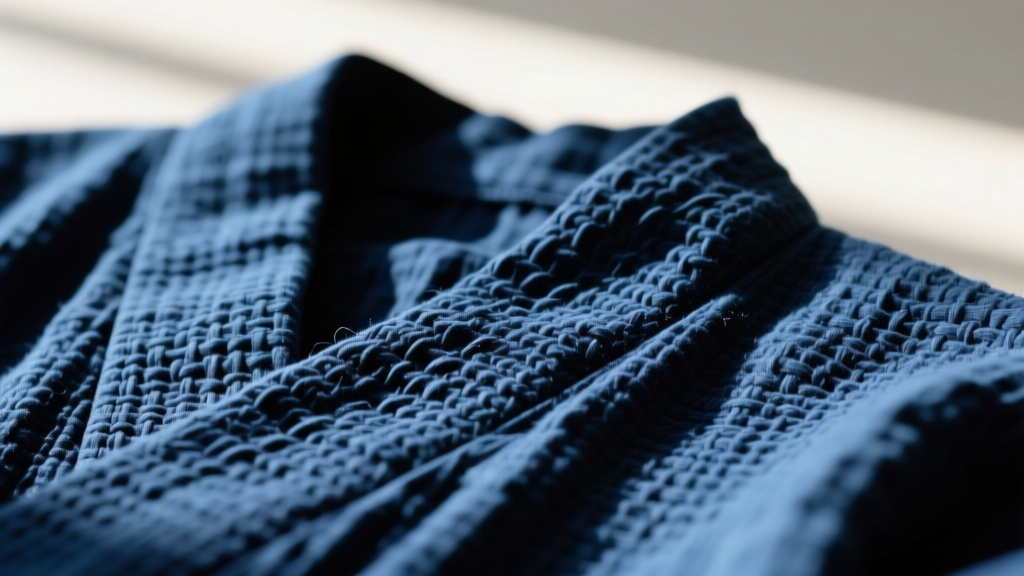
Originating from Tokushima Prefecture, shijira-ori features a deliberately puckered surface. This uneven texture reduces the fabric's contact area with the skin, promoting continuous airflow and preventing the garment from clinging to sweat. It is the gold standard for premium jinbei.
Omi-jofu (Hemp and Ramie)
While cotton is ubiquitous, high-end yukata and jinbei often incorporate asa (bast fibers like hemp and ramie). The Japan National Tourism Organization (JNTO) highlights Shiga Prefecture's Omi-jofu as a masterclass in summer textiles. Hemp fibers possess a natural stiffness that creates a physical barrier between the fabric and the skin, while offering superior moisture-wicking properties compared to cotton.
Chugata Dyeing
For yukata, the dyeing method affects breathability. Chugata uses rice paste resist dyeing, leaving the white cotton threads completely uncoated and highly absorbent, unlike surface-printed synthetic dyes that can stiffen the fabric and block air circulation.
The transition of the jinbei from private indoor wear to public streetwear represents one of the most significant shifts in modern Japanese casual fashion, prioritizing utility and climate adaptation over strict tradition.
— Kyoto Textile Archive, 2025 Report
Styling, Fastening, and Footwear
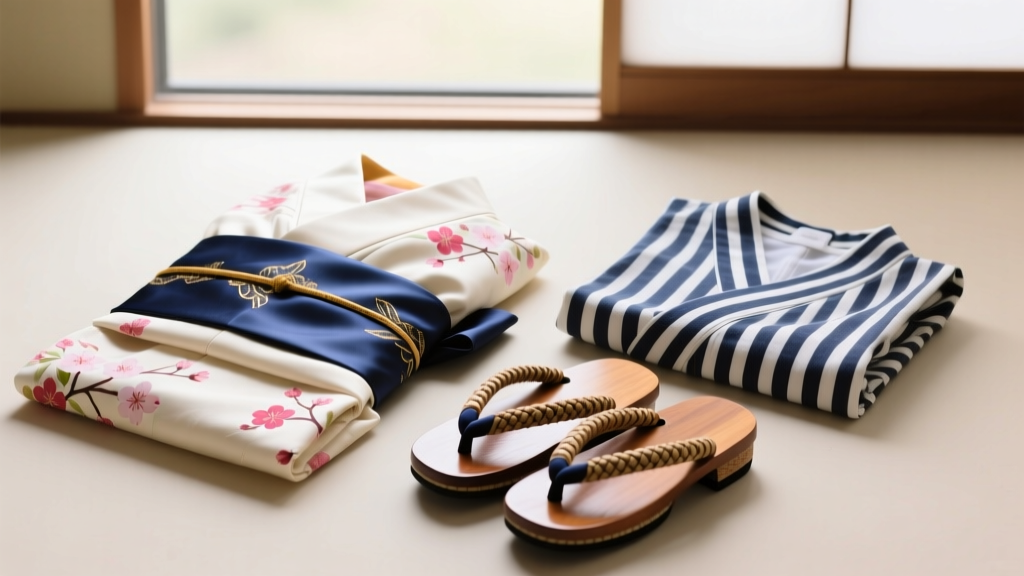
Securing the garments requires entirely different hardware. A yukata is wrapped left over right (right over left is strictly reserved for the deceased) and secured with a hanhaba obi (half-width belt). The most common knot for women is the bunko-musubi (bow knot), while men typically use the kai-no-kuchi (shell mouth) knot. The obi provides lower back support and creates a distinct, elegant silhouette, but it requires practice to tie correctly and can feel restrictive after hours of wear.
Conversely, the jinbei relies on himo—woven cotton drawstrings attached to the waist and side seams. Tying a jinbei takes seconds and requires zero technical skill. However, the himo can dig into the waist if the shorts are not sized correctly.
Footwear also diverges. Yukata are traditionally paired with geta (wooden clogs) worn with split-toe tabi socks, or setta (leather-soled sandals). Jinbei are highly versatile; while setta work well, it is entirely acceptable to wear bare feet in modern sport sandals or even minimalist sneakers with a contemporary jinbei set.
2026 Buyer’s Guide: Pricing and Market Tiers
In the ongoing jinbei vs yukata discussion among textile collectors, pricing is dictated by fiber origin, weave complexity, and dyeing methods.
Entry Tier (¥3,000 – ¥8,000 / $20 – $55 USD)
- Availability: Uniqlo, GU, Don Quijote, and Amazon Japan.
- Characteristics: Often polyester-cotton blends or basic printed cotton. Uniqlo's 2026 ultra-stretch jinbei line incorporates recycled synthetics for durability, though they lack the breathability of pure natural fibers. Ideal for tourists or single-use festival wear.
Mid Tier (¥12,000 – ¥25,000 / $80 – $170 USD)
- Availability: Specialty kimono shops, regional craft cooperatives, and dedicated online artisans.
- Characteristics: 100% domestic cotton and authentic shijira-ori weaves. These garments will last for decades, softening beautifully with each wash while maintaining their structural integrity.
Artisanal Tier (¥40,000+ / $270+ USD)
- Availability: Bespoke tailors and heritage textile houses.
- Characteristics: Hand-dyed Omi-jofu hemp yukata and custom-tailored jinbei. These are investment pieces, often featuring hand-stitched details, natural indigo (aizome) dyeing, and custom-fitted himo.
Frequently Asked Questions
What is the main difference in the yukata vs jinbei debate?
The primary difference in the yukata vs jinbei debate lies in structure and formality. A yukata is a one-piece wrap robe secured with an obi belt, suitable for smart-casual events and major festivals. A jinbei is a two-piece top-and-shorts set secured with drawstrings, designed for maximum mobility and casual lounging.
Is it easier to wear a yukata or a jinbei?
A jinbei is significantly easier to wear. It requires no specialized tying techniques, whereas a yukata requires learning how to properly wrap the fabric, adjust the hemline, and tie an obi knot securely without it unraveling during a long evening of walking.
Can foreigners wear jinbei to a summer festival?
Absolutely. Japanese summer festivals are highly inclusive. While a yukata is more traditional for major events like the Gion Matsuri, a jinbei is perfectly acceptable and often preferred for local, active neighborhood festivals where mobility and heat dissipation are required.
How do I wash and maintain cotton and hemp summer garments?
Both garments should be hand-washed or machine-washed on a delicate cycle using a mesh laundry bag and neutral detergent. Never use a tumble dryer, as high heat will shrink the cotton and warp the hemp fibers. Hang dry in the shade to prevent UV fading, particularly for natural indigo-dyed pieces.