What Is Hanfu? A Cultural Guide to Traditional Chinese Clothing

Defining Hanfu: Beyond the Misconceptions
When asking what is hanfu (汉服), one must first separate it from the globally recognized qipao (cheongsam). While the qipao is a 20th-century garment with Manchu and Western tailoring influences, hanfu represents the indigenous, historical clothing system of the Han Chinese people. Spanning over three millennia—from the legendary Yellow Emperor (circa 27th century BCE) to the mid-17th century Qing dynasty transition—hanfu is not a single uniform, but a complex, evolving sartorial language tied to philosophy, social hierarchy, and cosmology.
The Architectural Anatomy of a Hanfu Ensemble
Unlike Western tailoring, which relies on darts and seams to contour the body, traditional Han Chinese clothing is constructed from flat, geometric panels of fabric. This reflects a philosophical emphasis on harmony between the garment and the natural flow of the body.
Jiaoling Youren: The Sacred Right Lapel
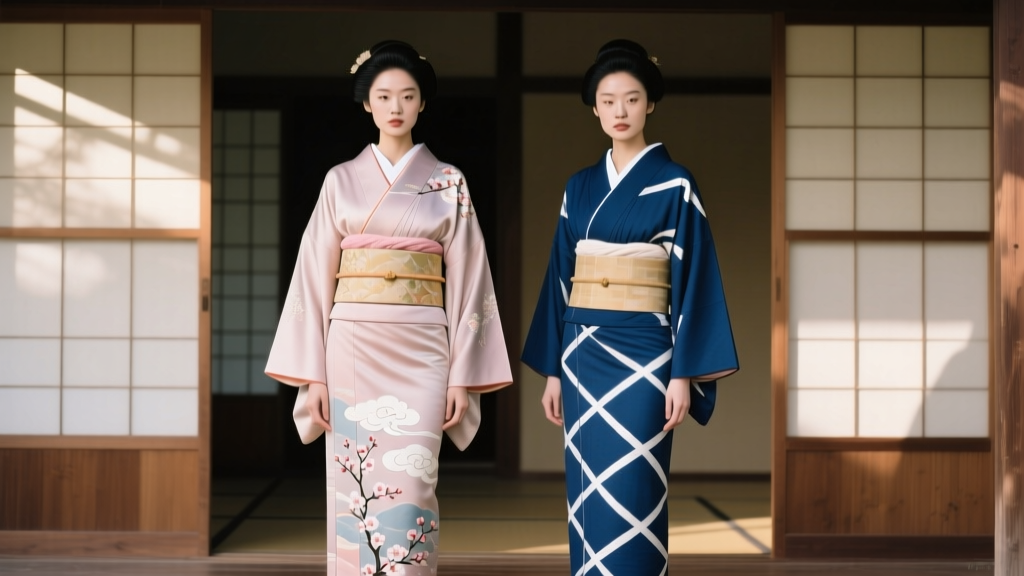
The most defining characteristic of hanfu is jiaoling youren (交领右衽), meaning 'crossed collar, right lapel.' The left side of the collar crosses over the right, securing on the wearer's right side. In traditional Chinese cosmology, the left represents life and the sun (yang), while the right represents death and the moon (yin). Wrapping the left over the right was a strict cultural protocol for the living; reversing this (zuoren) was strictly reserved for the deceased or considered a mark of foreign tribes. As noted by the Victoria and Albert Museum's Chinese textile archives, this lapel orientation remains a primary identifier for authentic historical garments.
Core Components: Yi, Chang, and Shang
A complete hanfu ensemble is modular, typically consisting of:
- Yi (衣): The upper garment, featuring open cuffs and a crossed collar.
- Chang (裳): A wrapped, pleated, or A-line skirt worn by all genders in antiquity.
- Shang (裤/袴): Trousers worn beneath the skirt or as standalone lower garments for labor and equestrian activities.
Garments are secured using fabric ties and sashes (yingluo or jidai) rather than buttons, allowing the clothing to drape fluidly and accommodate fluctuations in body weight.
Dynastic Evolution: A Chronological Breakdown
To truly understand what is hanfu, one must recognize its regional and temporal variations. The China National Silk Museum highlights how trade, climate, and shifting moral philosophies drastically altered the silhouette across major dynasties.
| Dynasty | Key Silhouette & Characteristics | Signature Garment |
|---|---|---|
| Han (202 BCE – 220 CE) | Deep, wrapping robes with curved hems; heavy, grounded silhouettes reflecting early Confucian solemnity. | Shenyi (Deep Robe) |
| Tang (618 – 907 CE) | Opulent, cosmopolitan, and heavily influenced by Silk Road trade. High-waisted skirts, wide sleeves, and sheer shawls. | Qixiong Ruqun (Chest-high skirt) |
| Song (960 – 1279 CE) | Slender, modest, and understated. Narrow sleeves and pleated skirts reflecting Neo-Confucian restraint. | Beizi (Parallel-collar overcoat) |
| Ming (1368 – 1644 CE) | Structured, voluminous, and highly decorated. Introduction of metal buttons and stand-up collars. | Mamianqun (Horse-face skirt) |
Fabric, Color, and the Language of Status
Historically, hanfu was woven from hemp, ramie, and kudzu for the common classes, while the elite wore various grades of silk. The color palette was strictly regulated by sumptuary laws. For instance, during the Tang dynasty, bright yellow was exclusively reserved for the Emperor, while purple and crimson denoted high-ranking officials. Commoners were often restricted to undyed, natural hues or muted plant-dyed colors like indigo and madder root.
One of the most revered techniques in hanfu construction is kesi (刻丝), or 'cut silk' tapestry. Unlike continuous brocade weaving, kesi involves weaving discontinuous wefts that create a carved, three-dimensional effect on the fabric. A single kesi dragon motif on a Ming dynasty robe could take an artisan over a year to complete. According to textile conservation records at the Asian Art Museum, these garments were so valuable they were often passed down as familial heirlooms or used as diplomatic gifts along the Silk Road.
Regional Variations and Climate Adaptations
Because the Han Chinese civilization spanned vast geographical regions, hanfu adapted to diverse climates. In the frigid northern plains, winter hanfu incorporated padded linings made from raw silk floss or animal down, layered beneath heavy woolen cloaks known as doupeng. Conversely, in the humid, subtropical southern provinces like Guangdong and Fujian, garments were constructed from highly breathable ramie and lightweight gauze silks (luo). The Southern Song dynasty saw the rise of ultra-thereal, multi-layered gauze robes that allowed for air circulation while maintaining the modest, layered silhouette required by court etiquette.
The Modern Hanfu Movement (Hanfu Yundong)
The question of what is hanfu was nearly lost to history following the 1644 Qing dynasty mandate, which forced Han Chinese men to adopt Manchu hairstyles and clothing under penalty of death. Women's hanfu survived in modified forms but eventually gave way to the qipao in the 1920s.
The modern revival, known as the Hanfu Yundong (Hanfu Movement), began in 2003 when a man named Wang Letian walked the streets of Zhengzhou in a self-made traditional robe. Today, it is a multi-billion-dollar cultural phenomenon driven by Gen Z and Millennial enthusiasts who view hanfu as a reconnection with pre-colonial Han identity.
Buying Guide: Sourcing and Pricing Authentic Hanfu
For collectors and cultural enthusiasts looking to purchase authentic hanfu, the market is segmented by craftsmanship and historical accuracy:
- Entry-Level / Mass-Produced ($30 – $80 USD): Typically made from polyester blends. While visually appealing for photography, they lack historical accuracy in drape and breathability. Often found on Amazon or AliExpress.
- Mid-Tier Artisan ($150 – $400 USD): Brands like Shisanyu and Chunging offer historically informed patterns using natural fibers (cotton, linen, rayon) and jacquard-woven trims. This is the sweet spot for serious enthusiasts.
- High-End Bespoke ($800 – $3,000+ USD): Commissioned pieces featuring genuine silk brocade, hand-embroidered panjin (gold thread) motifs, and meticulous historical pattern drafting based on museum relics.
Cultural Etiquette: Wearing Hanfu with Respect
Wearing hanfu today is an act of cultural preservation. When donning these garments, enthusiasts adhere to specific protocols to show respect for the tradition. Hair is typically styled up using jade, wood, or metal hairpins (zhan or buyao), as wearing hair completely down was historically associated with mourning or a state of undress. Furthermore, ensuring the collar is correctly crossed (left over right) is paramount.
Footwear is equally significant; traditional yunxie (cloud shoes) feature upturned toes and are constructed from layered cotton or silk, designed to glide gracefully over wooden floors and stone courtyards. Posture also plays a role in the presentation of hanfu. The wide sleeves (guangxiu) require deliberate, measured movements. Raising the arms too hastily disrupts the drape of the fabric. The traditional greeting—clasping the hands together in front of the chest, with the left hand wrapping around the right fist (for men, reversing for women in some contexts)—completes the silhouette, anchoring the garment in its original social context. By understanding these deep philosophical and historical roots, wearers transform hanfu from a mere costume into a living, breathing testament to Chinese heritage.