Types of Hanfu: A Deep Dive into Silk Weaves and Craftsmanship
When studying the types of hanfu (汉服), enthusiasts and historians often focus primarily on silhouettes, dynastic eras, and collar shapes. However, the true soul of traditional Chinese dress lies in its textile architecture. The drape, movement, and cultural weight of any hanfu garment are dictated by the centuries-old sericulture and weaving techniques used to create it. To truly understand the differences between a flowing Tang dynasty skirt and a structured Ming dynasty jacket, one must examine the fabric and craftsmanship that define them.
The Textile Architecture of Hanfu Silhouettes
Unlike Western historical tailoring, which relies on darts, corsetry, and complex pattern cutting to mold fabric to the human body, traditional hanfu is fundamentally flat-cut. The garment is constructed from rectangular panels of woven cloth. Because the fabric is not shaped by aggressive tailoring, the behavior of the textile—its weight, bias, and drape—becomes the primary mechanism for achieving the desired silhouette.
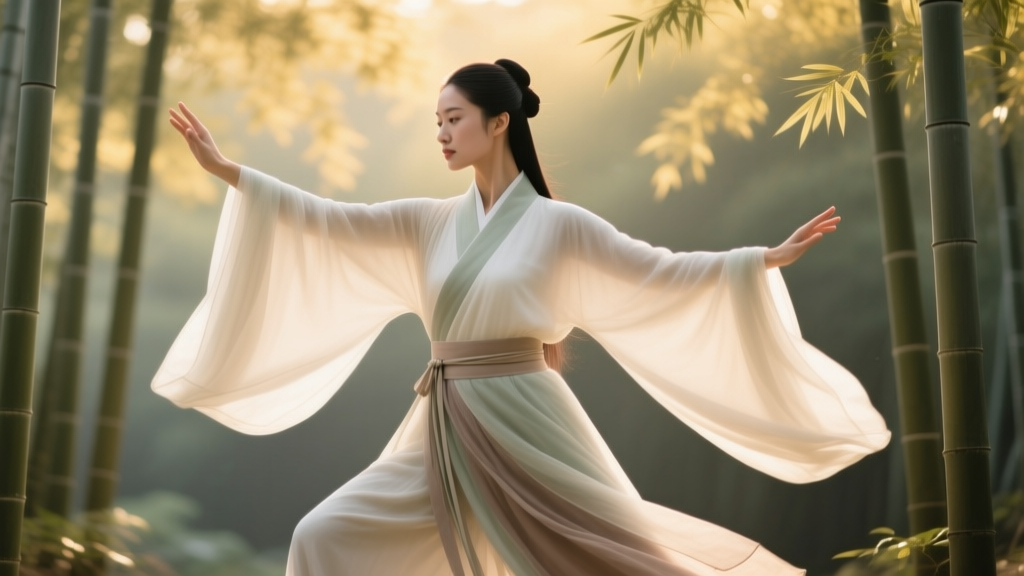
A lightweight, open-weave gauze will create the ethereal, floating effect required for a Tang dynasty Banbi (半臂, half-arm jacket), while a heavy, gold-woven brocade provides the stiff, dignified structure necessary for a Ming dynasty Aoqun (袄裙, lined jacket and skirt). Therefore, the various types of hanfu cannot be decoupled from the specific looms and regional weaving traditions that produced their textiles.
Dynastic Weaves: How Fabric Defines the Types of Hanfu
The evolution of Chinese silk weaving directly parallels the evolution of hanfu styles. Different dynasties favored distinct textile techniques, which in turn birthed new garment types.
Tang Dynasty Ruqun and Banbi: The Leno-Weave Luo Gauze
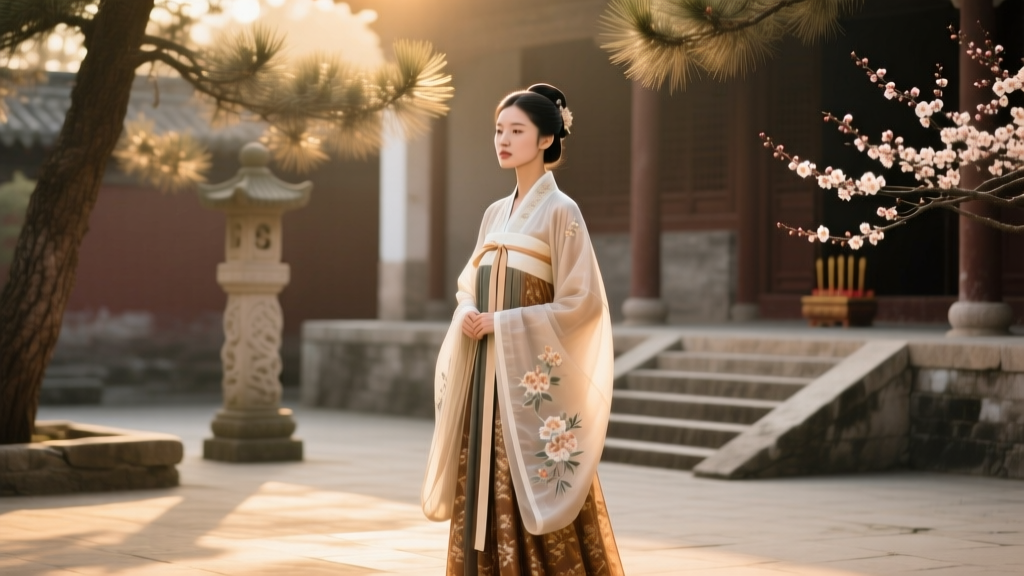
The Tang dynasty (618–907 CE) is renowned for its cosmopolitan flair and layered, volumetric styles. The quintessential summer garments of this era, such as the Ruqun (襦裙, top and skirt) and the sheer outer shawls, relied heavily on Luo (罗) silk. Luo is a complex leno-weave gauze where warp threads are twisted around each other, creating a stable, breathable, yet incredibly sheer mesh. Historical Luo weaving, particularly the intricate Hualuo (花罗, patterned gauze), required specialized drawlooms. The airiness of Luo allowed Tang women to wear multiple translucent layers, creating a mesmerizing optical depth that defined the era's aesthetic.
Song Dynasty Beizi: The Tapestry Mastery of Kesi
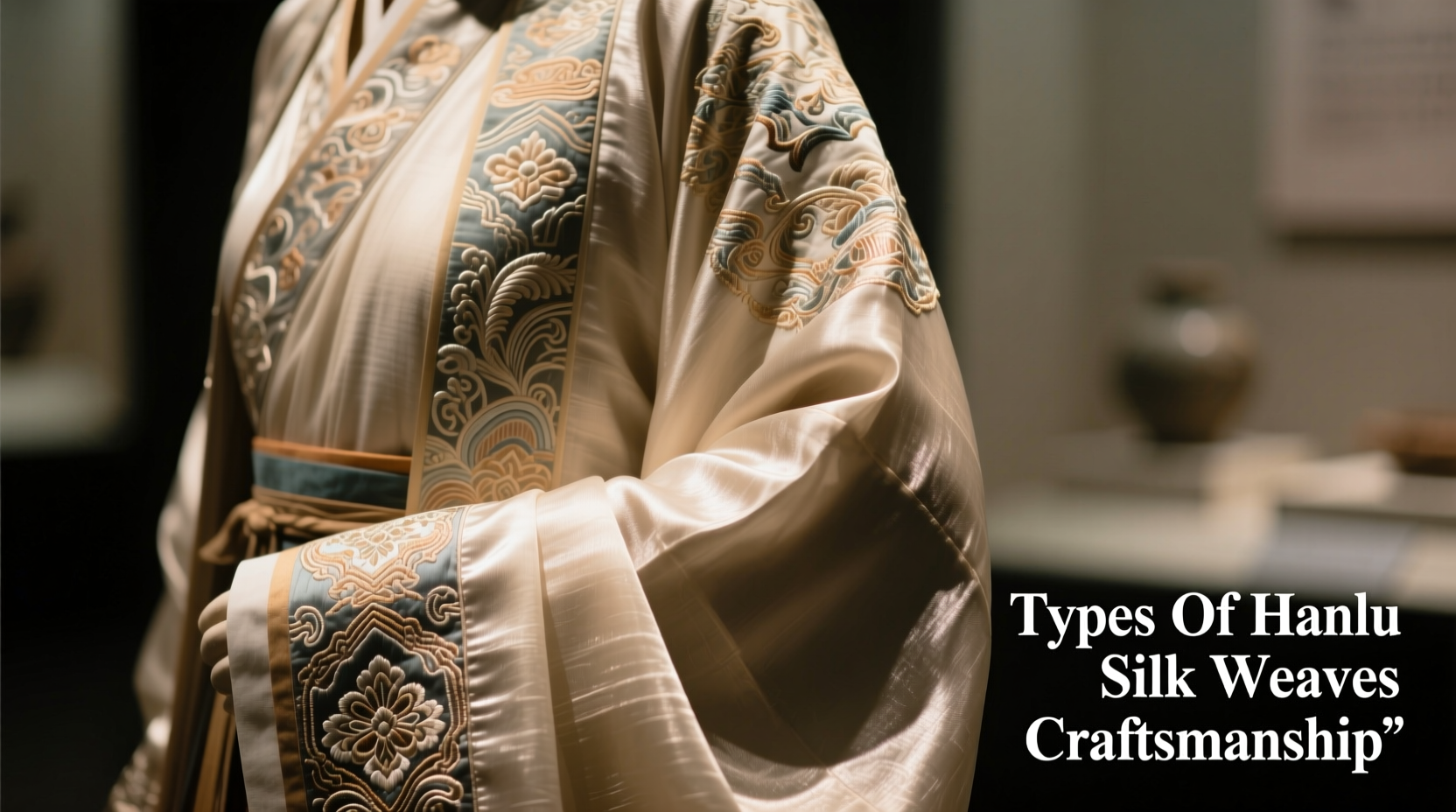
As the aesthetic shifted toward understated elegance during the Song dynasty (960–1279 CE), the Beizi (褙子, a long, side-slit outercoat) became highly popular. While the cut was relatively simple, the craftsmanship was often concentrated in the trim and decorative panels using Kesi (缂丝, cut silk). Kesi is a tapestry weave where the weft threads are packed tightly only where a specific color is needed, leaving tiny, unconnected slits (the 'cuts') between color blocks. This painstaking technique allowed artisans to 'paint' with silk thread, creating hyper-realistic floral and avian motifs that adorned the cuffs and collars of Song literati garments.
Ming Dynasty Aoqun: The Structural Weight of Yunjin Brocade
The Ming dynasty (1368–1644 CE) favored modesty, structure, and opulence, best exemplified by the Aoqun ensemble. The heavy, pleated Mamianqun (马面裙, horse-face skirt) and the structured, lined Ao jackets demanded fabrics with immense body and durability. This era saw the zenith of Yunjin (云锦, cloud brocade) from Nanjing. Yunjin is woven on massive, two-story drawlooms requiring two artisans to operate. The weft incorporates not just dyed mulberry silk, but flattened gold leaf, silver threads, and even iridescent peacock feather filaments. The resulting fabric is thick, stiff, and heavily ornamented, giving Ming-style hanfu its characteristic regal posture and architectural pleats.
The Philosophy of the Cut: Seams, Collars, and Alignment
Beyond the loom, the physical assembly of hanfu is governed by strict philosophical and cultural protocols. The craftsmanship of hanfu is measured by the precision of its seams and the alignment of its motifs.
- Jiaoling Youren (交领右衽): The cross-collar, wrapping right over left, is the most defining structural element of hanfu. The left lapel must always cross over the right. Craftsmanship is judged by the sharpness of the collar's V-shape at the nape of the neck and the exactness of the tie placements.
- Zhongfeng (中缝): The center back seam. Because historical looms produced narrow cloth (usually around 50-60 cm wide), garments were constructed by joining panels. The seam running directly down the center of the back represents moral integrity, uprightness, and the Confucian ideal of the 'Middle Way'.
- Dongcai (动裁): The dynamic cutting of fabric to ensure that woven patterns—such as dragons, phoenixes, or cloud motifs—align perfectly across seams, particularly at the shoulders and the center back. High-end artisanal hanfu will feature continuous motifs that flow unbroken across the Zhongfeng.
Modern Buyer’s Guide: Fabric Composition and Price Tiers
For modern practitioners and collectors, navigating the market requires an understanding of how historical fabrics translate to contemporary production. Below is a guide to the materials used in modern reproductions of various types of hanfu.
| Hanfu Type | Historical Fabric Ideal | Modern Mass-Market Substitute | Artisanal/High-End Material | Price Range (USD) |
|---|---|---|---|---|
| Tang Ruqun (Summer) | Luo (Leno Gauze) | Polyester Organza / Chiffon | 100% Mulberry Silk Luo / Xiangyunsha | $45 (Mass) - $350+ (Artisan) |
| Song Beizi (Outercoat) | Zhusi / Kesi Tapestry | Polyester Crepe / Cupro blends | Heavy Silk Crepe with Su Xiu Embroidery | $60 (Mass) - $450+ (Artisan) |
| Ming Mamianqun (Skirt) | Yunjin / Zhuanghua Brocade | Jacquard Polyester / Viscose blends | Authentic Silk Brocade / Metallic Zari | $70 (Mass) - $800+ (Artisan) |
| Ming Ao (Lined Jacket) | Thick Silk Satin / Damask | Cotton-Poly Blends / Faux Silk | Heavy Mulberry Silk with Pingjin (Gold Couching) | $80 (Mass) - $600+ (Artisan) |
Note: When purchasing high-end Ming dynasty styles, look for 'Zhuanghua' (妆花) weaving techniques, where the supplementary weft patterns are woven directly into the fabric, rather than printed or embroidered on top.
Preserving the Craft: Museums and Artisan Cooperatives
The survival of these complex weaving techniques is largely due to the dedication of state-sponsored institutes and cultural museums. For those wishing to study the authentic textiles that inform the types of hanfu, several institutions offer unparalleled resources.
The China National Silk Museum in Hangzhou is the premier institution for studying the evolution of Chinese textile techniques, housing extensive collections of excavated Tang and Song gauzes and brocades. Their research into the replication of ancient looms has been vital for modern hanfu artisans seeking historical accuracy.
Internationally, the Victoria and Albert Museum (V&A) holds a magnificent collection of Ming and Qing dynasty court textiles, providing high-resolution documentation of the intricate Kesi and Yunjin weaves used in historical garments. Additionally, the Metropolitan Museum of Art's Asian Art Department frequently exhibits structural analyses of traditional East Asian dress, highlighting the flat-cut construction and seam philosophies that distinguish hanfu from global contemporaries.
Ultimately, appreciating the types of hanfu requires looking past the silhouette and touching the cloth. Whether it is the whisper of Tang gauze or the armored elegance of Ming brocade, the fabric is the true historian, carrying the weight of Chinese craftsmanship through the centuries.