A Historical Guide to Traditional Women's Chinese Clothing

The Evolution of Hanfu: From Antiquity to the Ming Dynasty
When discussing traditional women's Chinese clothing, it is essential to recognize that China’s sartorial history is not a monolith. For over three millennia, the dominant dress system was Hanfu (汉服), the traditional attire of the Han ethnic majority. Far from a single garment, Hanfu encompasses a complex system of robes, skirts, and accessories that evolved dynamically across dynasties.
The Architecture of the Ruqun and Shenyi
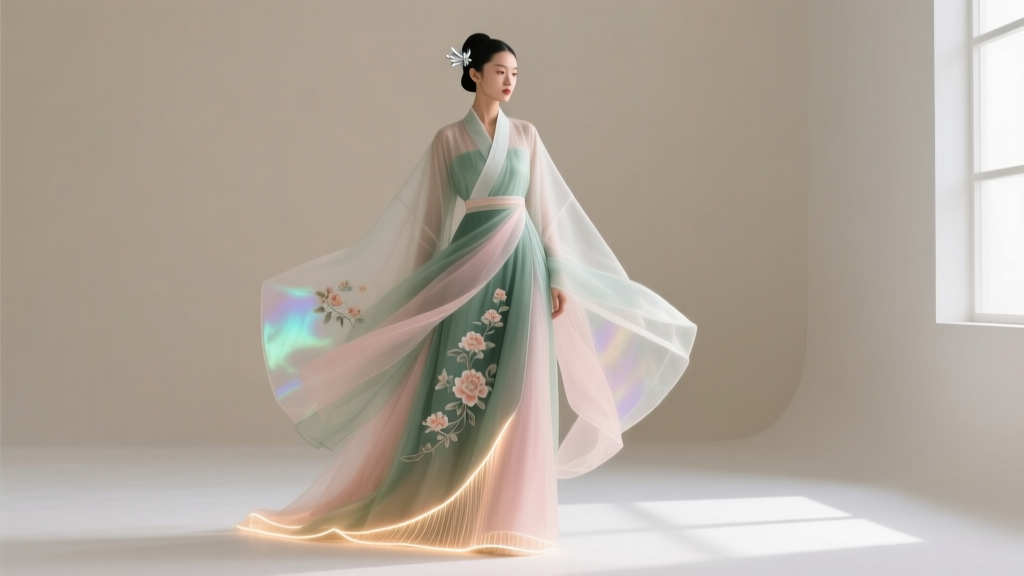
The foundational silhouette for women in ancient China was the Ruqun (襦裙), consisting of a short, cross-collared blouse (ru) tucked into a high-waisted, flowing skirt (qun). During the Tang Dynasty (618–907 CE), women’s fashion reached a zenith of cosmopolitan expression; skirts were tied exceptionally high, sometimes just below the armpits, and sheer silk gauze shawls (pibo) were draped over the arms.
Another critical garment was the Shenyi (深衣), or 'deep robe,' which seamlessly connected the upper and lower garments into a single piece while maintaining the visual separation of a two-piece suit. According to the Metropolitan Museum of Art's Asian Art archives, these garments were strictly governed by Confucian rites, utilizing specific geometric tailoring to reflect moral rectitude and cosmic harmony.
The Ming Dynasty Mamianqun
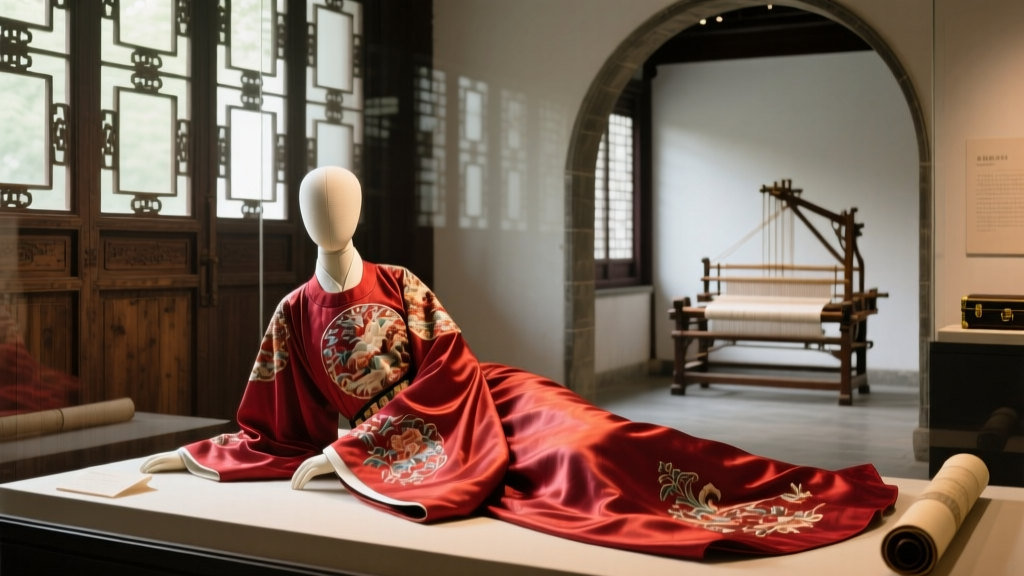
By the Ming Dynasty (1368–1644), the Mamianqun (马面裙), or 'horse-face skirt,' became the standard lower garment for women. Constructed with two flat, unpleated front and back panels (the 'horse faces') and heavily pleated side panels, this skirt allowed for ease of movement while maintaining a structured, regal silhouette. Today, the Mamianqun is experiencing a massive revival among young Chinese women, who pair these historically accurate woven skirts with modern blouses.
The Qing Dynasty Shift and the Birth of the Qipao
The sartorial landscape shifted dramatically in 1644 with the establishment of the Qing Dynasty by the Manchu people. The ruling class mandated the adoption of Manchu dress, leading to the widespread use of the Chenyi (衬衣), a long, loose-fitting, one-piece robe with a high Mandarin collar and wide sleeves.
The 1920s Shanghai Revolution
The modern Qipao (旗袍), also known in the West as the Cheongsam, was not a direct continuation of ancient Hanfu, but rather a 20th-century hybrid born in the cosmopolitan hub of Shanghai. In the 1920s and 30s, progressive women and students began tailoring the traditionally loose Manchu robe to fit the body's natural contours. By incorporating Western tailoring techniques—such as bust darts, set-in sleeves, and side slits—the Qipao became a symbol of modern femininity and liberation.
Authentic Qipao construction relies on Pankou (盘扣), intricate hand-knotted frog fasteners that serve both a functional and highly decorative purpose. The Victoria and Albert Museum's Asian collections note that the artisanal creation of a single bespoke Pankou knot can take a master tailor hours to complete, utilizing silk-wrapped copper wire and meticulous hand-stitching.
Comparative Analysis: Hanfu, Qipao, and the Tang Suit
To understand the landscape of traditional women's Chinese clothing, one must differentiate between the primary historical and modernized garments. The table below outlines their distinct characteristics.
| Garment Type | Historical Era of Origin | Key Silhouette & Features | Primary Cultural Context Today |
|---|---|---|---|
| Hanfu (Ruqun/Mamianqun) | Antiquity to Ming (c. 1644) | Cross-collar, wide sleeves, high-waisted pleated skirts, sash-tied. | Cultural festivals, Hanfu movement, historical reenactments, daily streetwear. |
| Qipao / Cheongsam | 1920s (Evolved from Qing) | Form-fitting, Mandarin collar, side slits, Pankou frog buttons. | Formal events, weddings, diplomatic functions, high fashion. |
| Tang Suit (Tangzhuang) | Late 20th Century (APEC 2001) | Loose-fitting jacket, Mandarin collar, front frog closures, brocade. | Lunar New Year celebrations, diaspora cultural events, casual winter wear. |
Sourcing Authentic Garments: Artisans, Fabrics, and Price Ranges
Acquiring authentic traditional women's Chinese clothing requires an understanding of regional textile specialties and market tiers. The price of these garments is heavily dictated by fabric composition, weaving techniques, and tailoring methods.
Heritage Fabrics and Regional Specialties
- Xiangyunsha (Gambiered Canton Gauze): Originating from Foshan, Guangdong, this silk is dyed using the juice of the shoulang yam and coated in iron-rich river mud. The result is a water-resistant, rustling fabric that feels like soft leather. It is a National Intangible Cultural Heritage and commands premium prices.
- Song Brocade (Song Jin): Hailing from Suzhou, this intricate, jacquard-woven silk features complex geometric and floral patterns. It is heavily utilized in high-end Mamianqun and formal Qipao.
- Shu Brocade: From Sichuan province, known for its vibrant colors and heavy, durable weave, historically used for cold-weather robes and accessories.
Market Pricing Guide (USD)
For collectors and enthusiasts, understanding the pricing tiers prevents overpaying for mass-produced synthetics disguised as heritage garments.
- Mass-Market Hanfu (Polyester/Basic Cotton): $30 – $80. Suitable for casual wear or costume events, but lacks historical accuracy in drape and weave.
- Artisan Hanfu (Authentic Ming-style Mamianqun in Silk Brocade): $150 – $450. Sourced from specialized domestic studios like Shisan Yu or Ming Huatang, featuring accurate historical patterning and metal-thread weaving.
- Bespoke Qipao (Hand-tailored, Xiangyunsha or Silk Brocade): $800 – $3,000+. True bespoke Qipao requires multiple fittings, hand-rolled hems (gunbian), and custom-knotted Pankou. The China National Silk Museum frequently highlights the immense labor hours required for such heritage tailoring.
Cultural Protocols for Wearing Traditional Chinese Dress
Wearing traditional garments carries profound cultural weight. To wear them respectfully, one must adhere to historical protocols that remain deeply significant in contemporary Chinese society.
'The right lapel over the left is the mark of the living and the civilized; the left over the right is the domain of the deceased and the barbarian.' — Confucian sartorial doctrine.
The Rule of Jiaoling Youren
When wearing Hanfu, the collar must always cross with the left side over the right side (from the wearer's perspective, the right lapel crosses over the chest first, and the left lapel folds over it). This is known as Jiaoling Youren (交领右衽). Reversing this (left lapel under, right lapel over) is strictly reserved for dressing the deceased for burial. Wearing it reversed in daily life is considered highly inauspicious and deeply offensive to cultural sensibilities.
Color Symbolism and Occasion
While modern fashion embraces all colors, historical context still influences garment selection. Crimson and gold remain the undisputed colors of matrimony and joy, heavily featured in wedding Qipao and Hanfu. Conversely, stark, unadorned white and rough hemp textures are historically associated with mourning. While a modern woman might wear a white silk Qipao to a summer gala without issue, understanding these historical roots provides a deeper appreciation for the intentionality behind traditional Chinese color theory.
The Living Heritage
Today, traditional women's Chinese clothing is not confined to museum glass. The Hanfu Yundong (Hanfu Movement), which began in the early 2000s, has successfully transformed these garments from historical relics into a vibrant, living streetwear culture. By understanding the construction, history, and protocols of these garments, wearers honor the artisans of the past while participating in a continuously evolving cultural narrative.