Traditional Qipao Styles: Comparing Shanghai and Beijing Cuts

The Evolution of the Silhouette: Defining the Traditional Qipao
The traditional qipao (often referred to as the cheongsam in Cantonese-speaking regions) is far more than a monolithic symbol of mid-century cinematic glamour. It is a complex, evolving garment rooted in the socio-political shifts of early 20th-century China. Emerging during the Republic of China era in the 1920s, the qipao represented a radical departure from the traditional two-piece *ao qun* (jacket and skirt) and the loose-fitting Manchu *changpao* (long robe). As women entered universities and the professional workforce, the garment evolved into a one-piece dress that symbolized modernity, egalitarianism, and national identity.
However, to view the traditional qipao as a single, uniform dress is a disservice to its rich sartorial history. As the garment gained popularity, distinct regional tailoring philosophies emerged. The two most prominent and historically significant variations are the Jingpai (Beijing style) and the Haipai (Shanghai style). Understanding the nuances between these regional cuts is essential for collectors, cultural historians, and anyone seeking to invest in an authentic piece of Asian sartorial heritage.
Jingpai vs. Haipai: A Tale of Two Tailoring Capitals
The divergence in qipao construction during the 1930s and 1940s was heavily influenced by the distinct cultural atmospheres of China's political and commercial capitals. While both styles share foundational elements—such as the mandarin collar, the asymmetrical side opening (*dajin*), and the side slits (*kaicha*)—their approach to the female form, fabric selection, and decorative restraint differs profoundly.
Beijing Style (Jingpai): Conservative Elegance
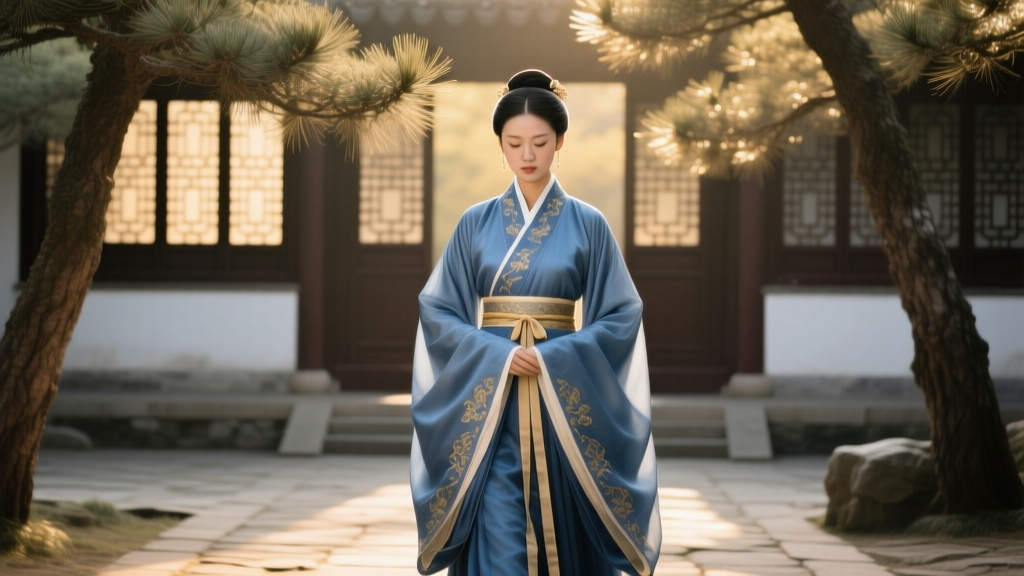
The Jingpai qipao reflects the conservative, imperial legacy of the northern capital. Tailors in Beijing prioritized modesty, structural rigidity, and a more linear silhouette. The Beijing cut is characteristically wider and straighter, designed to obscure the natural curves of the body rather than accentuate them. The sleeves are typically longer, often reaching the wrist or mid-forearm, and the side slits are kept deliberately low, rarely rising above the knee. The collars are heavily starched and rigid, standing high on the neck to project an air of aristocratic dignity. Embroidery in the Jingpai style is often dense, featuring auspicious motifs like dragons, phoenixes, and peonies, heavily influenced by traditional court dress.
Shanghai Style (Haipai): Cosmopolitan Curves
In stark contrast, the Haipai qipao was born in the cosmopolitan, treaty-port environment of 1930s Shanghai. Influenced by Western tailoring techniques and the vibrant jazz-age culture of the city, Shanghai tailors introduced three-dimensional cutting to the traditionally flat-patterned garment. The Haipai style features bust and waist darts, creating a fitted silhouette that celebrates the natural curves of the wearer. Side slits were raised to the mid-thigh or higher to facilitate movement and reveal glimpses of silk stockings, a daring fashion statement at the time. Sleeves were shortened to the elbow or even capped, and collars became lower and softer. The Haipai aesthetic favored lighter, flowing silks with subtle, Art Deco-inspired geometric prints or delicate floral watercolor patterns.
Comparative Matrix: Construction and Design Elements
To clearly delineate the structural differences between these two iconic varieties, refer to the comparative matrix below:
| Design Element | Jingpai (Beijing Style) | Haipai (Shanghai Style) |
|---|---|---|
| Silhouette & Cut | Flat-cut, straight, loose-fitting, concealing curves | 3D tailoring with darts, fitted waist, accentuates curves |
| Collar Structure | High, rigid, heavily starched, standing away from neck | Lower, softer, contoured closely to the jawline |
| Side Slits (Kaicha) | Low, typically ending at or just above the knee | High, often reaching mid-thigh or upper thigh |
| Sleeve Length | Long, reaching wrist or mid-forearm | Short, capped, or elbow-length (inverted trumpet) |
| Primary Fabrics | Heavy brocades, velvets, thick woven silks | Lightweight crepe de chine, chiffon, fine mulberry silk |
| Embellishment | Dense, traditional court-style embroidery | Minimalist piping, subtle woven patterns, Art Deco prints |
The Art of the Pankou: Beyond Simple Fasteners
A defining characteristic of any authentic traditional qipao is the absence of modern zippers. The garment is secured entirely by *pankou* (frog buttons), which serve as both functional fasteners and structural anchors for the asymmetrical *dajin* opening. According to textile archives at the China National Silk Museum, the creation of traditional pankou is a highly specialized craft.
Master artisans construct these knots using a thin copper wire core, which is tightly wrapped in bias-cut silk strips. This wire core allows the buttons to maintain their intricate shapes over decades of wear. While the simple straight knot (*yizikou*) is common for everyday wear, ceremonial and high-end qipao feature elaborate symbolic knots. The 'plum blossom' knot represents resilience, the 'swallow' knot signifies agility and grace, and the 'butterfly' knot denotes joy and romance. A single complex pankou can take a master artisan over three hours to hand-wrap and shape.
Fabric Composition: From Xiangyunsha to Song Brocade
The choice of textile dictates not only the drape of the qipao but also its cultural weight and seasonal appropriateness. Two of the most prestigious fabrics used in heritage qipao construction are Xiangyunsha and Song Brocade.
- Xiangyunsha (Gambiered Canton Gauze): Originating from the Guangdong province, this UNESCO-recognized intangible cultural heritage textile is a marvel of natural chemistry. Mulberry silk is repeatedly dipped in the tannin-rich juice of the *Dioscorea cirrhosa* tuber and then coated with iron-rich river mud from the Pearl River Delta. The resulting fabric features a glossy, dark brown exterior and a matte, black, crackled interior. It is naturally cooling, antibacterial, and highly prized for summer Haipai qipao.
- Song Brocade (Songjin): Hailing from Suzhou, this heavy, intricately woven silk features complex geometric and floral patterns. It is the fabric of choice for winter Jingpai qipao and formal wedding garments. The Victoria and Albert Museum notes that historical Song brocades often incorporated gold and silver threads, a technique still preserved by modern artisan cooperatives in Jiangsu province.
Sourcing Authentic Craftsmanship: Price Ranges and Artisans
Acquiring a genuine traditional qipao requires navigating a market flooded with mass-produced, synthetic imitations. True craftsmanship commands a premium, reflecting the dozens of hours required for flat-pattern drafting, hand-rolled hems (*shuihuai*), and pankou knotting. When evaluating the market, buyers should consider the following price tiers (in USD):
- Heritage Bespoke ($1,500 - $4,500+): Commissioning a qipao from a master tailor in Shanghai or Hong Kong involves multiple fittings. The tailor will take over 20 distinct body measurements to ensure the bias-cut silk moves flawlessly with the wearer. These garments are entirely hand-stitched and feature custom-woven silk and hand-knotted pankou.
- Artisan Ready-to-Wear ($350 - $900): High-end boutiques specializing in cultural preservation offer ready-to-wear pieces made from genuine mulberry silk and Xiangyunsha. While not custom-fitted, these garments maintain traditional construction methods, including hand-rolled edges and authentic wire-core fasteners.
- Mass-Market Imitations (Under $100): Buyers should exercise caution with garments in this tier. They frequently utilize polyester blends that trap heat, feature glued-on faux frog buttons, and employ hidden back zippers, fundamentally violating the structural integrity of the traditional qipao.
Cultural Protocols for Wearing and Preservation
Wearing a traditional qipao requires an understanding of both physical posture and cultural etiquette. The garment's tailored fit and high collar naturally encourage an upright, graceful posture; slouching can cause the stiff collar to dig into the jawline or disrupt the drape of the silk. Furthermore, because of the high side slits characteristic of the Haipai style, wearing a specialized silk slip or tailored trousers underneath is a strict cultural protocol to ensure modesty during movement.
Preservation of these garments is equally demanding. Heavy brocades should be stored flat to prevent the metallic threads from snapping under their own weight. Delicate silks, particularly Xiangyunsha, must be kept away from direct sunlight and harsh chemical dry-cleaning solvents, which can strip the natural tannin dyes. Instead, heritage conservationists at institutions like The Metropolitan Museum of Art recommend gentle surface cleaning and storing the garments in acid-free, unbleached cotton garment bags to allow the natural fibers to breathe.
The traditional qipao is not merely a dress; it is an architectural feat of textile engineering that maps the cultural and social evolution of modern China. To wear it is to participate in a living dialogue between historical reverence and contemporary elegance.