Chinese Dress: Hanfu & Qipao Guide

The Myth of a Single Garment
When enthusiasts, designers, and historians ask, "what is a traditional Chinese dress called?", the answer is rarely a single word. China’s sartorial history spans over three millennia, encompassing dozens of dynasties, diverse ethnic groups, and radical shifts in tailoring philosophy. To refer to a single "Chinese dress" is to overlook the profound regional and historical nuances of Asian textile heritage.
Broadly speaking, the global lexicon relies on three primary terms: Hanfu (the historical clothing of the Han ethnic majority), the Qipao or Cheongsam (the form-fitting, high-collared gown of the 20th century), and the Tangzhuang (a modern hybrid jacket). Understanding what a traditional Chinese dress is called requires examining the construction, cultural context, and living revival of each distinct garment.
Hanfu: The Ancient Han Identity (Pre-17th Century)
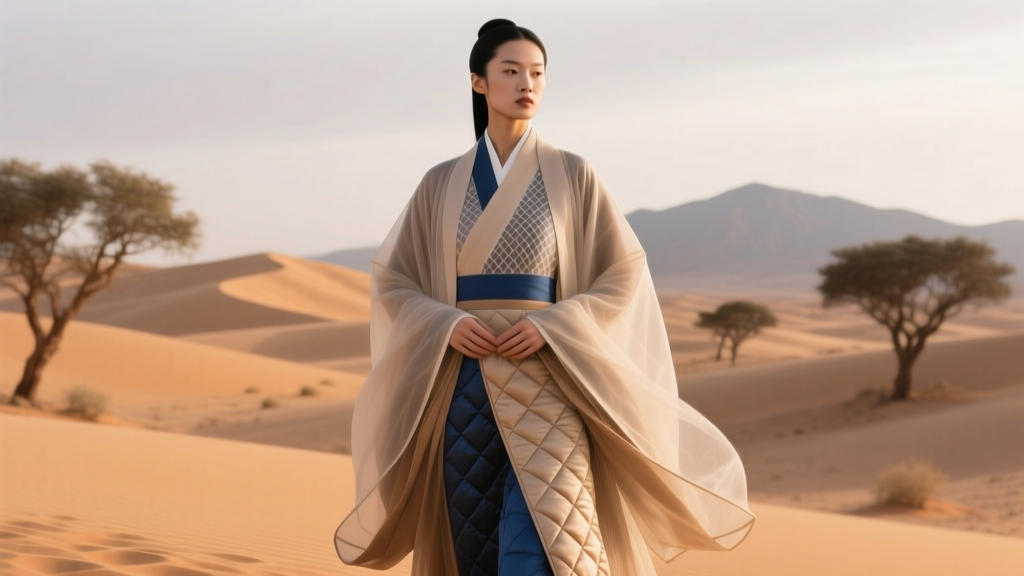
Before the Qing Dynasty (1644–1912) mandated Manchu dress codes, the Han Chinese population wore a diverse array of garments collectively known today as Hanfu (汉服), meaning "Han clothing." Hanfu is not a single dress, but a comprehensive system of robes, skirts, and undergarments characterized by fluid draping, wide sleeves, and the absence of buttons.
The Philosophy of Jiaoling Youren
The defining feature of Hanfu is the jiaoling youren (交领右衽), or "cross-collar, right lapel." The left side of the collar crosses over the right, forming a "y" shape at the neckline. In ancient Confucian philosophy, the left was associated with life and the civilized world, while the right was associated with death and "barbarian" cultures (who wore their lapels left-over-right). This structural detail was so vital that altering it was considered a profound cultural transgression.
Dynastic Silhouettes: Shenyi, Aoqun, and Mamianqun
Hanfu evolved dramatically across dynasties. During the Han and Wei dynasties, the Shenyi (deep robe) connected the upper and lower garments into a single, flowing piece. By the Song Dynasty, women favored the Beizi, a long, parallel-collared overcoat worn over skirts. However, it is the Ming Dynasty (1368–1644) that has most heavily influenced the modern Hanfu revival. The Ming Aoqun (jacket and skirt combination) features the iconic Mamianqun, or "horse-face skirt." This wrap-style skirt features flat front and back panels with heavily pleated sides, originally designed to allow ease of movement while riding, and is now a staple in contemporary Hanfu wardrobes.
Qipao and Cheongsam: The Modern Silhouette (1920s–Present)
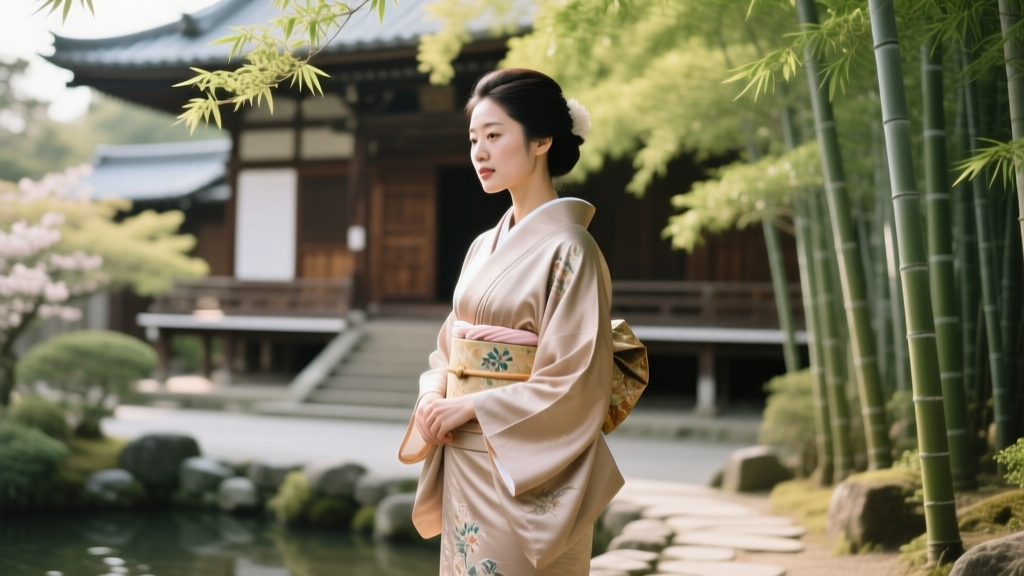
If Hanfu represents ancient antiquity, the Qipao (旗袍) represents China’s turbulent, glamorous entry into modernity. Known in Cantonese as the Cheongsam (长衫, meaning "long shirt"), this garment is what most Western audiences picture when they ask what a traditional Chinese dress is called.
From Banner Gowns to Shanghai Glamour
The Qipao’s origins lie in the chenyi, the loose, straight-cut robes worn by Manchu women of the Eight Banners during the Qing Dynasty. However, the modern Qipao was born in 1920s Shanghai. As Chinese women entered universities and the workforce, progressive tailors hybridized the traditional Manchu robe with Western sartorial techniques. They introduced darting, set-in sleeves, and side slits to create a form-fitting silhouette that celebrated the natural curves of the body, a radical departure from the modest, concealing layers of historical Hanfu.
Pankou and the Art of the Frog Button
A genuine Qipao is defined by its pankou (盘扣), or knotted frog buttons. These intricate, hand-rolled silk fasteners serve both a functional and decorative purpose, often shaped into auspicious motifs like plum blossoms, butterflies, or longevity knots. According to the Victoria and Albert Museum’s textile archives, the transition from purely functional pankou to the hidden side-zippers of the mid-20th century marked a shift toward mass production, though bespoke tailors in Hong Kong and Shanghai still insist on handcrafted frog closures for ceremonial gowns.
Tangzhuang: The Misunderstood Hybrid
Often spotted during Lunar New Year celebrations, the Tangzhuang (唐装) is frequently mistaken for ancient Tang Dynasty clothing. In reality, it is a modern invention. The name translates to "Tang suit," referencing the "Tang streets" (Chinatowns) of the diaspora. Structurally, it is based on the Manchu magua (riding jacket) of the late Qing era, updated with Western shoulder pads and lapels. It gained massive global prominence during the 2001 APEC summit in Shanghai when world leaders wore color-coordinated Tangzhuang jackets. While culturally significant to the modern diaspora, historians do not classify it as a historically accurate ancient garment.
Comparison Chart: Decoding the Terminology
| Garment Name | Era of Origin | Key Structural Features | Cultural Context |
|---|---|---|---|
| Hanfu | Antiquity to 1644 | Cross-collar, wide sleeves, sash-tied, no buttons | Han ethnic identity; currently experiencing a massive youth-led revival movement. |
| Qipao / Cheongsam | 1920s Shanghai | High Mandarin collar, form-fitting darts, side slits, pankou | Symbol of 1920s female emancipation; standard formalwear for weddings and diplomacy. |
| Mamianqun | Song/Ming Dynasties | Wrap skirt, flat front/back panels, pleated sides | Highly popular in modern streetwear; often paired with contemporary blouses. |
| Tangzhuang | Late 20th Century | Stand collar, frog buttons, loose boxy fit | Festive wear, Lunar New Year, diaspora cultural celebrations. |
Masterclass in Textiles: Beyond Basic Silk
To truly understand what a traditional Chinese dress is called, one must understand what it is made of. The value of a Qipao or Hanfu is intrinsically tied to its textile heritage.
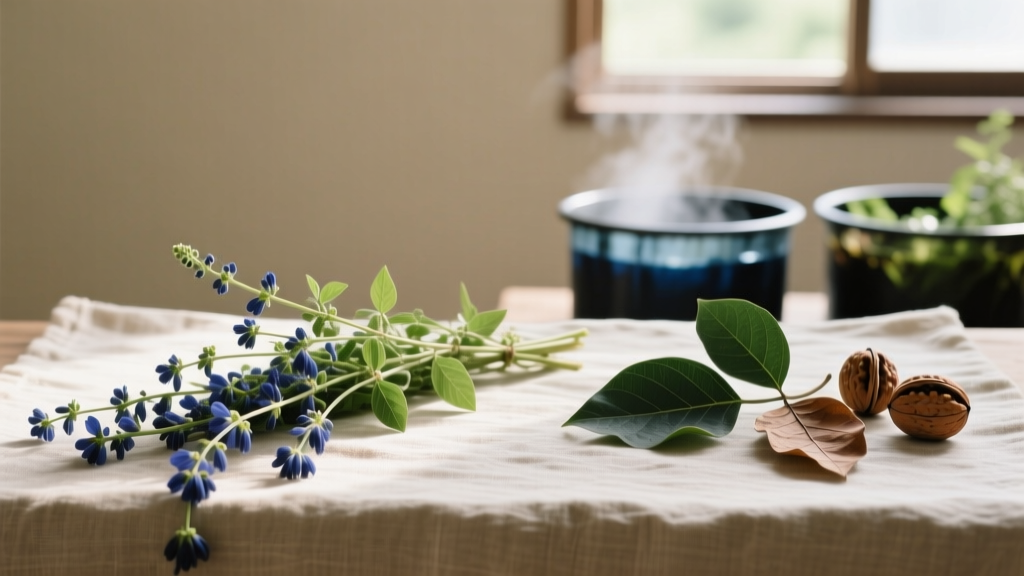
- Xiangyunsha (Gambiered Canton Gauze): An intangible cultural heritage textile from Guangdong. Silk is dyed with the juice of the Dioscorea cirrhosa tuber and coated with iron-rich river mud. The result is a dual-toned fabric—rich black on one side, earthy brown on the other—that is water-resistant, antimicrobial, and rustles like taffeta. Authentic Xiangyunsha costs between $150 and $300 per yard.
- Song Brocade (Songjin): Originating from Suzhou, this intricate woven silk features complex geometric and floral patterns. It is heavily structured, making it the premier choice for winter Mamianqun and formal Qipao jackets.
- Crepe de Chine and Charmeuse: For the fluid, draped silhouettes of Song Dynasty Hanfu or the body-hugging 1930s Qipao, high-momme silk crepe is preferred for its matte finish and elegant bias drape.
Sourcing and Pricing: A Buyer’s Framework
Whether you are sourcing a garment for a cultural event, a wedding, or historical reenactment, the market is highly stratified. Data from the China National Silk Museum and contemporary market analyses reveal distinct pricing tiers based on construction and material integrity.
The Hanfu Market
The modern Hanfu market is largely driven by specialized e-commerce brands. Entry-level garments made from polyester blends and basic jacquard weaves range from $45 to $90. These are suitable for casual wear and photography. Mid-tier brands offering accurate historical patterning, woven damask, and natural fibers range from $120 to $300. For museum-grade accuracy, bespoke ateliers like Minghuatang create custom Mamianqun using pure silk and gold-leaf weaving techniques, with prices starting at $800 and exceeding $2,500.
The Bespoke Qipao Experience
A true Qipao is not bought off the rack; it is engineered to the wearer’s body. In Hong Kong and Shanghai, master tailors take up to 26 distinct measurements. A custom-made Qipao using mid-range silk brocade and hand-rolled hems typically costs between $400 and $900. Antique Qipao from the 1930s, featuring pristine hand-embroidery and historical provenance, are highly sought after by collectors and can fetch $3,000 to $10,000+ at auction houses.
Cultural Protocols and Wearing Etiquette
Wearing these garments requires an understanding of cultural protocols. For Hanfu, the jiaoling youren (left over right) rule is paramount; wearing it right-over-left is strictly reserved for dressing the deceased in funeral rites. When wearing a Qipao to a traditional wedding, red is the mandatory color for the bride, symbolizing luck and prosperity, while guests should avoid wearing solid red or solid white (which is associated with mourning).
Furthermore, as noted by the Metropolitan Museum of Art’s Heilbrunn Timeline of Art History, historical Chinese garments were deeply regulated by sumptuary laws. While modern wearers are free to choose any color, understanding that motifs like the five-clawed dragon were once strictly reserved for the Emperor adds a layer of profound respect to how we engage with these textiles today.
"To ask what a traditional Chinese dress is called is to open a door to a civilization’s evolving relationship with the body, nature, and society. Hanfu speaks to the cosmos and philosophy; the Qipao speaks to modernity and the individual."
Ultimately, whether you are draping a Ming Dynasty Aoqun or stepping into a bespoke silk Cheongsam, you are participating in a living, breathing textile tradition that continues to evolve while honoring its profound ancestral roots.