Traditional Chinese Dress Female: A Historical Guide

Decoding the Silhouette: Core Principles of Han Dress
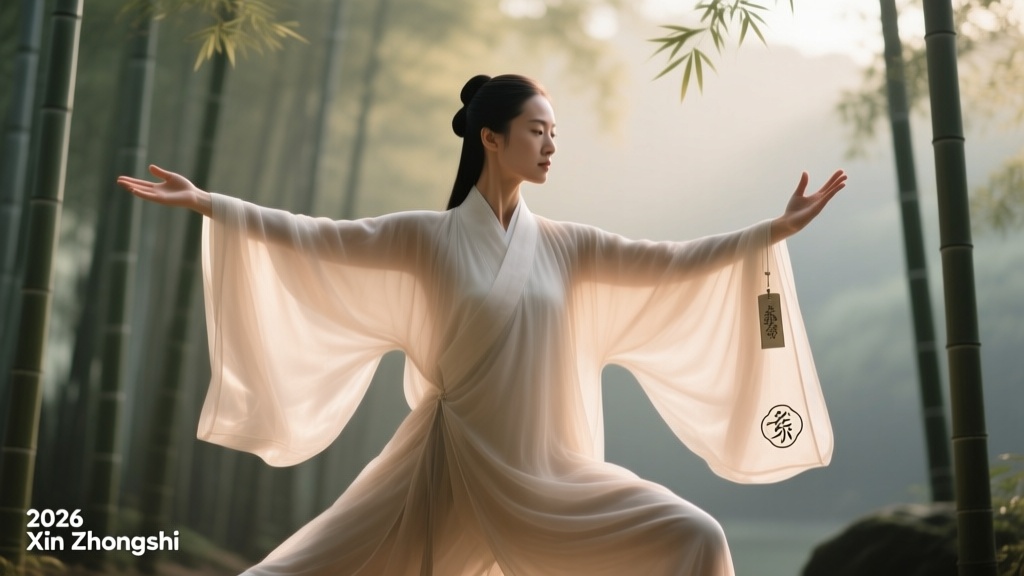
When exploring the rich tapestry of traditional Chinese dress female garments, it is essential to understand that these are not merely historical costumes, but living expressions of philosophy, social order, and aesthetic evolution. Unlike Western tailoring, which historically sought to sculpt the fabric to the body's three-dimensional form, traditional Chinese garment construction is rooted in flat-pattern cutting. This approach honors the integrity of the woven textile, allowing the fabric to drape naturally and flow with the wearer's movements.
The foundational principle of Han clothing (Hanfu) is jiaoling youren (交领右衽), meaning a cross-collar that wraps to the right. The left lapel crosses over the right, securing at the right waist. Historically, wrapping to the left was associated with mourning or non-Han ethnic groups, making the rightward wrap a profound marker of cultural identity and cosmic order (yang over yin). Furthermore, traditional garments eschew rigid buttons in favor of hidden ties and intricate knotted fasteners, maintaining an unbroken, harmonious surface.
Chronological Evolution of Women's Garments
The history of women's dress in China is not monolithic; it is a dynamic continuum shaped by dynastic shifts, trade along the Silk Road, and changing societal norms regarding modesty and mobility.
Han and Tang Dynasties: The Rise of the Ruqun
The Ruqun (襦裙), consisting of a short upper garment (ru) and a long wrapping skirt (qun), dominated early Chinese fashion. During the cosmopolitan Tang Dynasty (618–907 CE), female fashion reached unprecedented heights of vibrancy and structural daring. Influenced by Central Asian trade, Tang women adopted the Qixiong ruqun (齐胸襦裙), where the skirt was tied high above the bust, just under the armpits, creating an elongated, elegant silhouette. Garments were crafted from lightweight silk gauzes and adorned with bold, large-scale floral motifs, reflecting an era of immense wealth and relative gender freedom.
Song and Ming Dynasties: Modesty and the Aoqun
As Neo-Confucianism rose to prominence during the Song (960–1279 CE) and Ming (1368–1644 CE) dynasties, silhouettes became more structured and modest. The Aoqun (袄裙)—a longer, lined jacket worn over a skirt—became the standard. The Ming Dynasty is particularly celebrated for perfecting the Mamianqun (马面裙), or 'horse-face skirt.' According to textile archives at the China National Silk Museum, the Mamianqun features two flat, overlapping front and back panels with heavily pleated sides. This ingenious construction allowed for ease of movement while maintaining a rigid, dignified frontal appearance, often woven with zhi jin (woven gold) threads.
The Qing Dynasty and the Birth of the Qipao
The Qing Dynasty (1644–1912 CE), ruled by the Manchu people, introduced the Chenpao (long robe) and the Qizhuang system. However, the garment globally recognized today as the Qipao or Cheongsam is actually a product of 1920s Shanghai. It represents a radical synthesis: taking the basic structure of the Manchu robe and applying Western darting, set-in sleeves, and tailored waist suppression. As documented by the Victoria and Albert Museum, this 1930s iteration of the Qipao became a symbol of the modern, emancipated Chinese woman, featuring high Mandarin collars, form-fitting bodices, and daring side slits (kaiqi).
Anatomical Breakdown: Fabrics, Motifs, and Construction
The materiality of traditional Chinese dress is as significant as its cut. Silk remains the paramount fiber, but the weaving techniques dictate the garment's drape and cultural weight.
- Xiangyunsha (Gambiered Canton Gauze): A highly prized, sustainable silk from Guangdong, dyed with yam juice and river mud. It possesses a unique crackled texture, is naturally cooling, and rustles softly when worn.
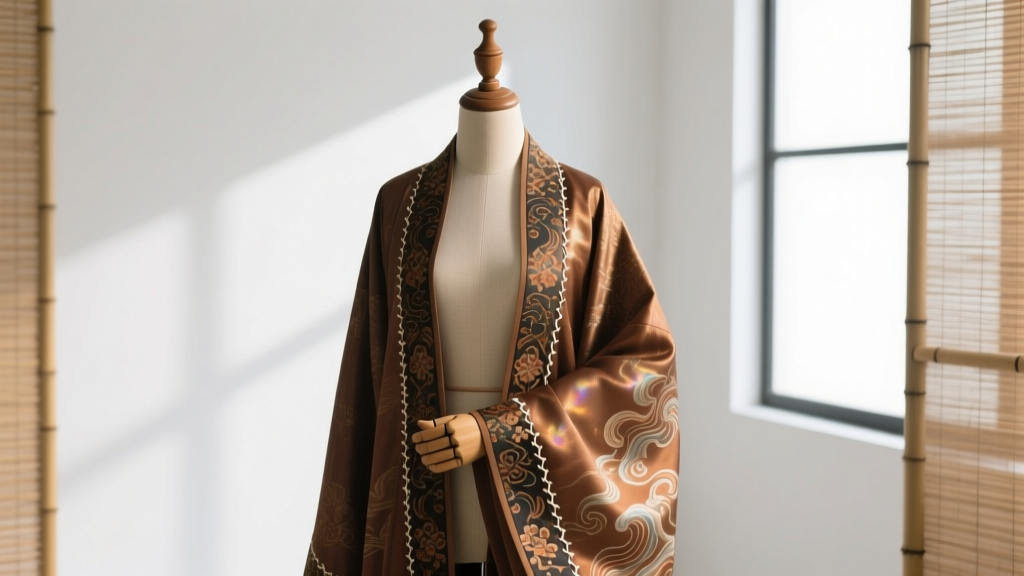
- Song Brocade (Song Jin): Originating from Suzhou, this fabric features complex, multi-colored weft patterns. It is heavy, lustrous, and typically reserved for formal jackets and outer robes.
- Kesi (Cut Silk): A tapestry weave where the weft threads are cut and turned back at the edge of a color block. Historically reserved for imperial dragon robes, today it is used for luxury Qipao panels and Hanfu borders.
Motifs are never merely decorative; they are visual prayers. The peony represents wealth and honor, the plum blossom signifies resilience in adversity, and the bat (fu) is a homophone for good fortune. In traditional female dress, the placement of these motifs is strictly governed by the garment's seams and the wearer's social rank.
Comparative Guide: Silhouettes and Sourcing
For collectors, historians, and enthusiasts looking to acquire authentic pieces, understanding the distinction between historical revivals and modern adaptations is crucial. The modern 'Hanfu Movement' (Hanfu Yundong) has spurred a massive revival, leading to distinct market tiers.
| Garment Style | Era of Origin | Key Structural Features | Modern Price Range (USD) |
|---|---|---|---|
| Ming-style Aoqun | 14th - 17th Century | Cross-collar or standing collar jacket, pleated Mamianqun skirt, wide sleeves. | $120 - $450 (Boutique) |
| 1930s Qipao | Republic Era | Western darts, set-in sleeves, pankou knots, high collar, knee-length hem. | $250 - $800 (Tailored) |
| Xiuhefu | Qing/Modern Synthesis | Two-piece jacket and skirt, heavily embroidered with gold/silver phoenix motifs. | $500 - $2,500+ (Bridal) |
| Tang-style Qixiong | 7th - 10th Century | Chest-high wrap skirt, sheer silk gauze shawls (pibo), wide short sleeves. | $80 - $250 (Mass/Artisan) |
Navigating the Modern Market: Artisans vs. Mass Production
The contemporary market for traditional Chinese dress is bifurcated. Mass-market e-commerce platforms offer visually appealing garments constructed from polyester blends and printed motifs rather than woven jacquards. While accessible ($40–$90), these lack the historical accuracy, breathability, and structural longevity required by serious practitioners.
For authentic acquisitions, buyers should look to specialized artisan cooperatives in Suzhou (for silk weaving and Qipao tailoring) and Hangzhou (the historical capital of silk). Bespoke Qipao makers in Shanghai and Hong Kong still employ the 'whole-cloth' cutting method for luxury clients, where a single length of brocade is manipulated without darts, relying entirely on the iron-work and steam-shaping of the master tailor. According to exhibitions at The Metropolitan Museum of Art, this mastery of fabric manipulation is what elevates Chinese dress from mere clothing to sculptural art.
'To wear Hanfu or a tailored Qipao today is not to engage in cosplay or historical reenactment; it is to participate in a continuous dialogue with millennia of aesthetic philosophy, reclaiming a sartorial heritage that adapts to the modern body while honoring ancient looms.' — Contemporary Textile Curator
Final Considerations for the Wearer
When styling traditional Chinese dress for contemporary settings, respect the garment's inherent proportions. A Ming-dynasty Mamianqun is designed to sit precisely at the natural waist and fall to the ankle; wearing it as a midi-skirt disrupts the pleat geometry. Similarly, a traditional Qipao requires specific undergarments to maintain its seamless silhouette. By understanding the deep historical context, regional weaving techniques, and structural anatomy of these garments, wearers can honor the profound legacy of traditional Chinese female dress with authenticity and grace.