Chinese Traditional Clothing: A Beginner Guide

Decoding the Terminology: What Is Traditional Chinese Clothing Called?
When enthusiasts, travelers, or fashion students first encounter the rich textile history of China, a common question arises: what is traditional Chinese clothing called? The answer is not a single word, but rather a fascinating timeline of evolving silhouettes, regional tailoring, and dynastic shifts. Unlike some cultures with a single universally recognized national garment, China’s sartorial heritage is broadly categorized into three distinct classifications that dominate modern discourse: Hanfu (historical Han Chinese dress), the Qipao/Cheongsam (20th-century modernized tailoring), and the Tangzhuang (a contemporary hybrid jacket).
Understanding the differences between these garments requires looking beyond the surface. From the sweeping sleeves of the Ming Dynasty to the figure-hugging silk of 1930s Shanghai, each garment tells a specific story of engineering, cultural identity, and artisanal craft. This beginner’s guide will break down the exact terminology, historical context, and construction details of China’s most iconic traditional wear.
Hanfu: The Ancient Roots of Han Chinese Dress
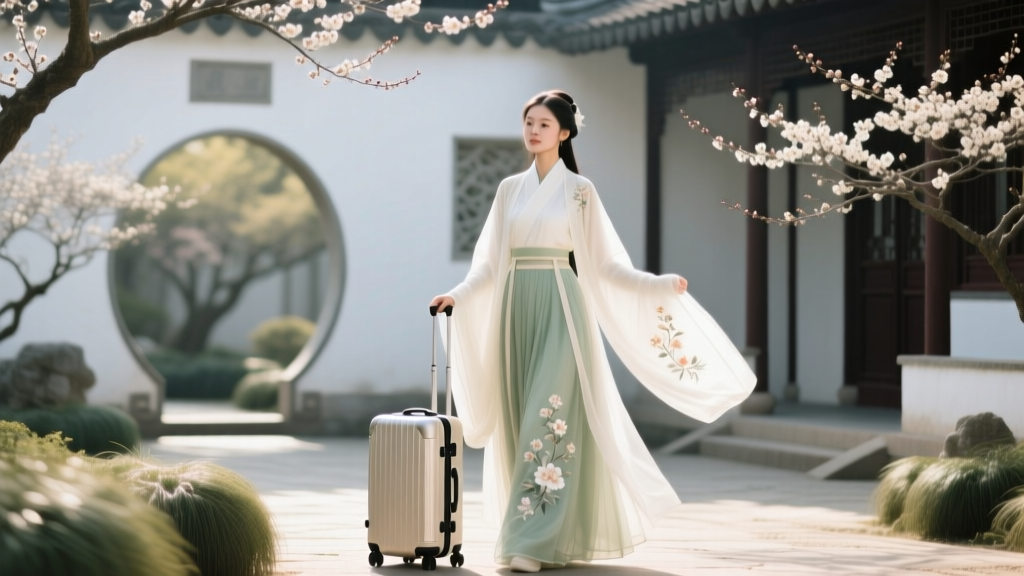
Hanfu (汉服) translates literally to 'Han clothing' and refers to the historical dress of the Han Chinese people, spanning from the Yellow Emperor era (circa 2700 BCE) up until the early Qing Dynasty (1644 CE). Hanfu is not a single uniform, but a vast system of garments that evolved over dozens of dynasties, with the Tang, Song, and Ming dynasties being the most heavily referenced in modern revivals.
Key Structural Components
Authentic Hanfu is defined by several strict structural rules that differentiate it from neighboring Asian garments like the Japanese kimono or Korean hanbok:
- Jiaoling Youren (交领右衽): The cross-collar, right-over-left lapel. The left side of the garment always crosses over the right and is tied at the right waist. (Reversing this is strictly reserved for dressing the deceased).
- No Buttons: Traditional Hanfu relies entirely on fabric ties and sashes (Xidai) rather than buttons or frog knots.
- Flat Cutting: The fabric is cut in straight lines and folded, rather than tailored to the body’s curves, creating a flowing, drape-heavy silhouette.
Popular Hanfu Styles for Beginners
If you are looking to purchase your first piece, you will likely encounter these specific historical styles:
- Mamianqun (Horse-Face Skirt): A Ming Dynasty staple featuring two flat panels at the front and back, with deep, structured pleats on the sides. It remains incredibly popular today for its compatibility with modern blouses.
- Ruqun: A classic combination consisting of a short upper garment (Ru) tucked into a high-waisted, flowing skirt (Qun). Highly popularized by Tang Dynasty murals.
- Shenyi (Deep Robe): A full-body robe where the top and bottom are cut separately but sewn together at the waist, symbolizing the unity of heaven and earth.
The Qipao (Cheongsam): A 20th-Century Silhouette
While Hanfu represents ancient history, the Qipao (旗袍)—known in Cantonese and Western contexts as the Cheongsam—represents China’s modern fashion awakening. To answer 'what is traditional Chinese clothing called' in a mid-century context, the Qipao is the undisputed answer. However, its origins are deeply tied to the Qing Dynasty’s Manchu rulers.
The word 'Qipao' translates to 'banner robe,' referencing the Changpao worn by the Manchu Eight Banners. Originally a loose, boxy, floor-length garment meant to conceal the figure, it underwent a radical transformation in 1920s and 1930s Shanghai.
Haipai (Shanghai) vs. Jingpai (Beijing) Tailoring
When shopping for a Qipao, it is vital to understand the two main regional schools of construction:
- Haipai (Shanghai Style): Influenced by Western flapper fashion, Haipai tailors introduced 3D darts, set-in sleeves, and side slits to create a form-fitting, body-conscious silhouette. This is the glamorous, high-collared dress recognized globally.
- Jingpai (Beijing Style): More conservative and traditional, the Beijing style retains a looser, A-line or straight cut, often featuring heavier, more elaborate embroidery and wider binding, prioritizing modesty and comfort over silhouette.
Authentic Qipao construction requires mastery of Pankou (frog fasteners) and intricate edge-binding (Gunbian). According to textile archives at the Victoria and Albert Museum, the integration of imported European textiles with traditional Chinese silk brocades during this era created a unique hybrid material culture that defined Shanghai's golden age of fashion.
The 'Tang Suit' (Tangzhuang): A Modern Misnomer
Many tourists in China are offered a 'Tang Suit' (Tangzhuang 唐装). Despite the name, this garment has absolutely nothing to do with the Tang Dynasty (618–907 CE). The name is a modern linguistic quirk; because overseas Chinese communities were historically known as 'Tang people' (living in Chinatowns, or 'Tang streets'), any clothing associated with them was dubbed 'Tang clothing.'
The modern Tangzhuang was actually popularized during the 2001 APEC Summit in Shanghai, where world leaders were photographed wearing matching silk jackets. Structurally, the Tangzhuang is a hybrid: it takes the Magua (a Qing Dynasty Manchu riding jacket) and alters it with Western set-in sleeves and shoulder pads. It is characterized by its stiff mandarin collar and prominent Pankou knot buttons. While culturally significant as modern ceremonial wear, historians and Hanfu revivalists are careful to distinguish it from true historical antiquity.
Comparative Guide: Hanfu vs. Qipao vs. Tangzhuang
To help you navigate your research or purchasing journey, refer to this structural and historical breakdown:
| Garment Name | Historical Era of Origin | Key Construction Features | Primary Modern Use |
|---|---|---|---|
| Hanfu | Antiquity to 1644 CE | Cross-collar, right lapel, flat cutting, fabric ties. | Cultural festivals, photography, daily street fashion. |
| Qipao / Cheongsam | 1920s (Modernized) | Mandarin collar, 3D darts, side slits, frog buttons. | Weddings, formal banquets, diplomatic events. |
| Tangzhuang | 2001 (Popularized) | Magua base, set-in sleeves, brocade fabrics, knot buttons. | Lunar New Year, political summits, elder wear. |
Where to Buy Authentic Garments and Price Expectations
Sourcing authentic traditional Chinese clothing requires knowing where to look and understanding the vast price disparities between mass-produced costumes and artisanal garments. The China National Silk Museum frequently highlights the immense labor required for heritage weaves like Xiangyunsha (mud-silk) and Song Brocade, which heavily influences pricing.
Hanfu Price Guide
- Entry-Level / Daily Wear ($40 – $90 USD): Made from polyester blends or basic cotton. Great for beginners testing the silhouette. Brands like Shisanyu and Zhongzheng offer reliable entry points.
- Mid-Tier / Historically Informed ($120 – $300 USD): Woven jacquards, accurate Ming Dynasty horse-face skirts with genuine metallic thread weaving, and proper tailoring.
- Heritage / Artisanal ($400 – $1,500+ USD): Hand-embroidered silk gauze, genuine Xiangyunsha dyeing processes, and bespoke tailoring based on museum replicas.
Qipao Price Guide
- Ready-to-Wear ($80 – $200 USD): Factory-made, often utilizing stretch brocades and machine-made Pankou. Suitable for occasional wear.
- Bespoke / Master Tailored ($500 – $2,500+ USD): True Haipai Qipaos are made-to-measure. A master tailor in Shanghai or Hong Kong will take over 20 distinct body measurements, hand-stitch the binding, and carve custom frog knots. According to the Metropolitan Museum of Art's Heilbrunn Timeline, the mastery of Chinese silk weaving and tailoring is a protected intangible cultural heritage, justifying the investment in bespoke pieces.
Cultural Etiquette for Beginners
Wearing traditional Chinese clothing comes with specific cultural protocols that demonstrate respect for the living tradition. The most critical rule in Hanfu is the direction of the collar. Always ensure the left side crosses over the right side (forming a 'y' shape from the viewer's perspective). In traditional Chinese cosmology, the left represents Yang (life, light, the living), while the right represents Yin (death, darkness). Wearing the right over the left is known as Zuoren and is strictly how the deceased are dressed for burial. Wearing it incorrectly in daily life is considered highly inauspicious and deeply offensive to cultural practitioners.
Additionally, when wearing a Qipao to a formal event, pay attention to the fabric motifs. Peonies symbolize wealth and honor, making them ideal for weddings and banquets. Plum blossoms represent resilience and are perfect for winter or academic events. Avoiding all-white garments (traditionally associated with mourning) unless specifically styled for a modern fashion context is also a safe guideline for beginners navigating cultural events.
Summary
So, what is traditional Chinese clothing called? It is Hanfu if you are looking to the ancient and imperial past; it is the Qipao if you are referencing the elegant, tailored modernism of the 20th century; and it is the Tangzhuang if you are observing contemporary ceremonial jackets. By understanding the distinct terminology, construction methods, and historical contexts of these garments, you can appreciate and participate in China’s sartorial heritage with accuracy, respect, and confidence.