Cheongsam Dress Buying Guide (2026)

The Anatomy of Authenticity: Deconstructing the Silhouette
When searching for a traditional cheongsam dress, buyers must first distinguish between modern, Western-tailored interpretations and authentic heritage garments. The true qipao (Mandarin) or cheongsam (Cantonese) of the 1930s and 1940s relies on pingmian jiancai (flat-pattern cutting). Unlike Western dressmaking, which uses darts to contour the bust and waist, traditional construction utilizes a single, continuous piece of fabric folded at the shoulder. This creates a graceful, columnar silhouette that drapes naturally over the body rather than restricting it, accommodating diverse body types with profound elegance.
An authentic garment is defined by four structural pillars:
- The Yuanbao Collar: Also known as the Shanghai collar, this stiffened, high-standing Mandarin collar is meticulously shaped to frame the jawline without choking the neck. It requires precise inner canvas structuring.
- Pankou (Frog Buttons): Far from mere fasteners, these hand-knotted silk closures are artisanal masterpieces. Traditional knots include the plum blossom, butterfly, and swallowtail designs. Authentic pankou are stuffed with cotton or wrapped around a copper wire core to maintain their sculptural shape over decades.
- Xiangbian (Piped Edging): The trim lining the collar, sleeves, and slits. Master tailors utilize techniques like gunbian (rolled piping) or yabian (inlaid contrasting borders) to highlight the garment's architectural lines.
- Kaiqi (Slits): Originally introduced for mobility, the side slits in a vintage garment typically begin at the knee or mid-thigh, secured by hidden interior snaps to prevent over-exposure when seated.
Regional Nuances: Haipai Elegance vs. Jingpai Modesty
To buy intelligently, one must understand the two dominant historical lineages of the dress. The Jingpai (Beijing style) favors conservative silhouettes, heavier brocades, and intricate, all-over embroidery, reflecting imperial modesty and scholarly restraint. Conversely, the Haipai (Shanghai style) emerged in the cosmopolitan hub of 1930s Shanghai. Haipai garments are celebrated for their daringly high slits, body-skimming fits, bold geometric Art Deco prints, and the integration of Western fabrics like lace and velvet. Most contemporary bespoke tailors in Hong Kong and Shanghai specialize in the Haipai tradition, which remains the most globally recognized iteration of the dress.
Mastering the Materials: Heritage Fabrics Explained
The soul of a traditional cheongsam dress lies in its textile. According to the China National Silk Museum, the preservation of heritage weaving techniques is intrinsically linked to the survival of the qipao. When commissioning or purchasing a piece, seek out these historically significant fabrics:
Xiangyunsha (Gambiered Canton Gauze)
Often referred to as "soft gold," this UNESCO-recognized intangible cultural heritage fabric originates from Guangdong province. Silk yarn is repeatedly dyed in the juice of the wild yam (Shuliang) and coated with iron-rich river mud, then sun-baked. The result is a dual-toned textile—glossy black on one side, rich ochre on the other—that is naturally cooling, water-resistant, and develops a beautiful, crinkled patina with age. It is the pinnacle of summer luxury.
Song Brocade (Songjin)
Originating from Suzhou, Song brocade features complex, multi-layered jacquard weaves with a matte finish and subtle metallic threads. Unlike the highly reflective Hangzhou silks, Song brocade absorbs light, making it ideal for formal evening wear and winter garments. Its structural rigidity holds the flat-pattern cut beautifully without requiring heavy lining.
Hangzhou Crepe de Chine
For a fluid, romantic drape, high-grade mulberry silk crepe from Hangzhou is unparalleled. Its slight pebbled texture and matte sheen make it an excellent canvas for traditional Su embroidery (Suxiu), where artisans split silk threads into fractions of a millimeter to create hyper-realistic floral motifs.
Where to Source: Bespoke Tailors and Heritage Boutiques
While mass-market e-commerce offers countless synthetic approximations, acquiring a genuine garment requires engaging with master tailors or specialized heritage boutiques. As documented by the Hong Kong Heritage Museum in their seminal exhibitions on the garment's evolution, the city remains the global epicenter of mid-century qipao craftsmanship.
Hong Kong: The Mid-Century Custodians
Hong Kong's tailoring district in Tsim Sha Tsui and Central houses multi-generational ateliers. Linva Tailor (established in 1946) and Ming's are legendary for preserving the 1950s and 60s Hong Kong silhouette—characterized by slightly padded shoulders, dartless bodices, and calf-length hemlines. Appointments are mandatory, and the process involves at least three fittings over four to six weeks.
Shanghai: The Haipai Revival
In Shanghai, the streets of Changle Road and Maoming South Road are lined with bespoke ateliers. Look for masters who advertise Haipai Qipao. Boutiques like Hanart and the tailors operating out of the historic Jinjiang Hotel specialize in sourcing vintage 1930s textiles and recreating the exact pankou knotting techniques of the Republican era.
Global and Online Sourcing
For international buyers unable to travel, platforms like Etsy host verified artisans based in Suzhou and Hangzhou who offer made-to-measure services. When shopping online, demand video consultations to inspect the fabric's drape and verify the hand-stitched nature of the xiangbian (piping). The Victoria and Albert Museum's extensive Chinese textile archives serve as an excellent visual benchmark for verifying the authenticity of historical brocade patterns when shopping for vintage pieces online.
Investment Tiers: 2026 Pricing Guide
The cost of a traditional cheongsam dress varies drastically based on construction methodology, textile rarity, and the artisan's lineage. Below is a comprehensive pricing framework for the 2026 market.
| Tier | Construction & Origin | Typical Fabrics | Estimated Price (USD) |
|---|---|---|---|
| Heritage Bespoke | Master Tailor (HK/SH), 100% flat-pattern, hand-stitched piping, custom copper-core Pankou. | Xiangyunsha, Antique Song Brocade, Heavy Su Embroidery. | $2,500 - $8,000+ |
| Boutique Made-to-Measure | Atelier RTW adjusted to measurements, machine-stitched piping with hand-finished knots. | High-grade Hangzhou Silk, Jacquard weaves, Lace. | $800 - $2,200 |
| Contemporary RTW | Standardized sizing, Western darting, factory-made frog buttons, serged seams. | Polyester blends, Rayon, Mass-market silk satin. | $120 - $450 |
| Vintage / Archival | 1930s-1960s originals, sourced from estate sales or curated vintage dealers. | Period-specific silks, early synthetic rayons, velvet. | $1,500 - $15,000+ |
"The qipao is not merely a garment; it is an architectural blueprint of the female form, requiring the tailor to act as both engineer and sculptor. A machine cannot replicate the tension of a hand-pulled silk knot." — Master Tailor, Changle Road, Shanghai.
Cultural Protocols: Wearing, Styling, and Archival Care
Purchasing the dress is only the beginning; wearing it with cultural fluency is paramount. Historically, the cheongsam was worn with specific undergarments. Because of the high side slits, a traditional chenqun (a lightweight, side-slit silk slip) is essential for modesty and to protect the outer silk from body oils. When styling, avoid Western stiletto heels; the garment's hemline and slit geometry are designed to be worn with low-heeled Mary Janes, embroidered cloth shoes, or modest kitten heels to maintain the correct visual proportion.
Archival Storage and Maintenance
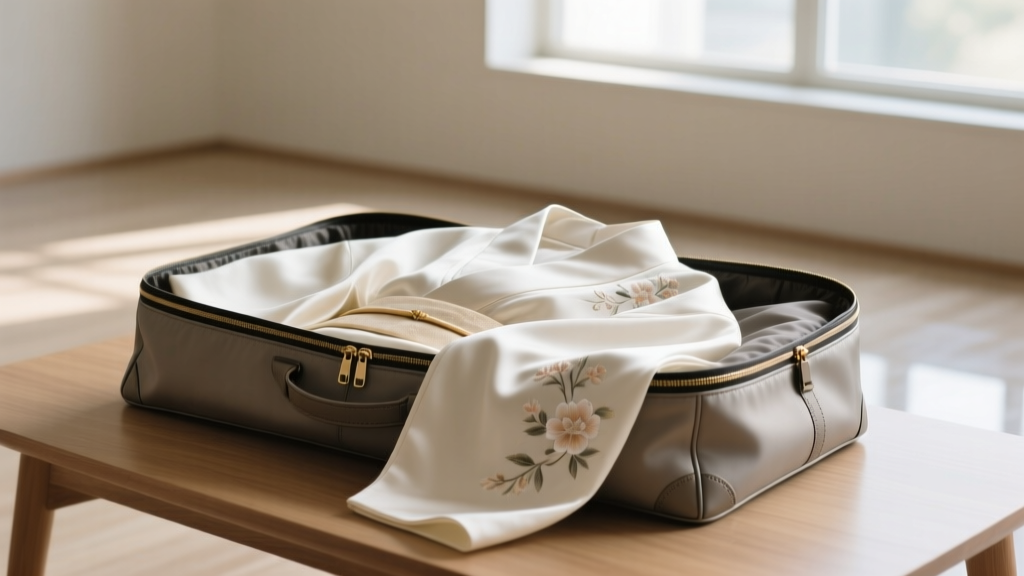
Never hang a heavy silk or brocade cheongsam on a wire or narrow wooden hanger. The flat-pattern cut places all the garment's weight on the shoulder seams, which will distort and tear over time. Instead, roll the garment loosely around acid-free tissue paper and store it in a breathable cotton garment bag in a climate-controlled environment. For cleaning, avoid modern dry-cleaning chemicals which strip the natural sericin from heritage silks; seek out specialists who practice traditional water-washing and steam-pressing techniques.
Investing in a traditional cheongsam dress is an act of cultural preservation. By prioritizing flat-pattern construction, heritage textiles, and master craftsmanship, you acquire not just a piece of clothing, but a wearable artifact of Asian sartorial history that will endure for generations.