Decoding Symbolism in Traditional Chinese Fashion for Women
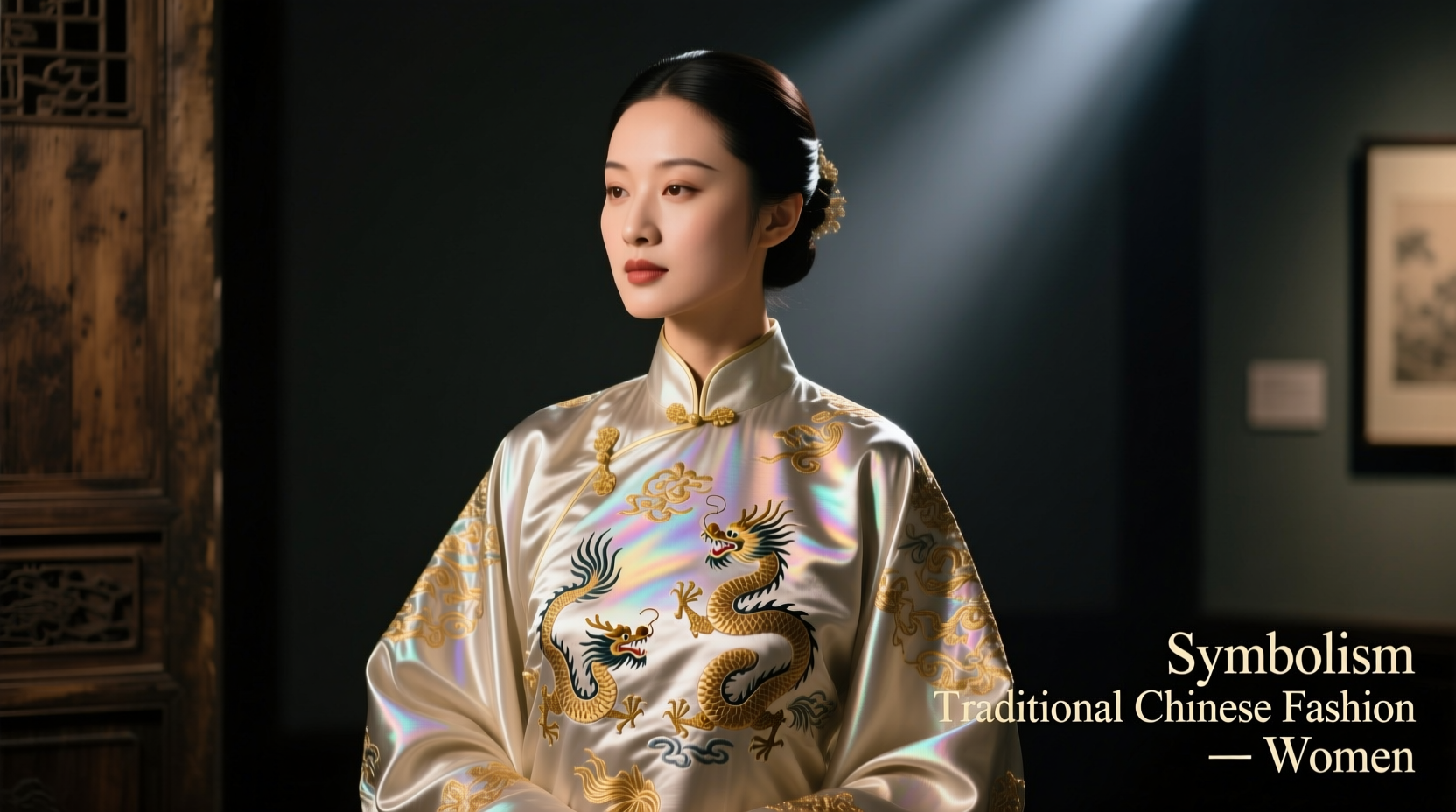
When exploring chinese fashion for women, it is impossible to separate the aesthetic beauty of the garments from their profound cultural and philosophical weight. Traditional Chinese dress is not merely a matter of seasonal trends or silhouette preferences; it is a complex sartorial language. Every fold, color, and embroidered motif serves as a visual text, communicating the wearer’s social standing, moral virtues, and alignment with the cosmos. For modern women embracing these heritage garments—whether the flowing lines of Hanfu or the tailored elegance of the Qipao—understanding this symbolism is essential for wearing these pieces with genuine cultural respect.
The Cosmology of the Cut: Heaven, Earth, and the Human Body
Unlike Western tailoring, which historically relied on darts, seams, and padding to mold fabric to the body’s three-dimensional curves, traditional Chinese garment construction is rooted in a philosophy of harmony and preservation. The fabric is treated as a sacred, complete entity. Using a flat-cutting method, garments like the Shenyi (deep robe) or Ruqun (jacket and skirt) are constructed from rectangular panels of woven silk or hemp, minimizing waste and preserving the integrity of the textile.
The most defining structural element in traditional Chinese women's dress is the Jiaoling Youren (交领右衽), or the crossed collar with the right lapel. In this design, the left side of the garment crosses over the right, securing at the waist. This is not an arbitrary stylistic choice; it is deeply tied to Yin and Yang cosmology. The left represents Yang (life, light, and the living), while the right represents Yin (death, darkness, and the spirit world). Covering the Yin (right) with the Yang (left) symbolizes the triumph of life and order over chaos.
The Mamianqun (Horse-Face Skirt): Architecture in Motion
No discussion of historical Chinese fashion for women is complete without the Mamianqun (马面裙), or 'horse-face skirt.' Originating in the Song Dynasty and reaching its zenith during the Ming Dynasty, this skirt is a masterclass in structural symbolism and functional design. The skirt consists of two flat, unpleated panels at the front and back (the 'horse faces'), flanked by heavily pleated side panels.
Weaving Prosperity: Zhuanghua and Regional Brocades
The flat front and back panels of the Mamianqun serve as a canvas for Zhuanghua (woven or embroidered embellishments). These panels are traditionally adorned with auspicious motifs that become visible when the wearer is standing still or walking forward. According to archives preserved by the China National Silk Museum in Hangzhou, the creation of these brocades—such as the famous Nanjing Yunjin (cloud brocade) and Suzhou Songjin (Song brocade)—required complex draw-looms operated by two weavers working in tandem. Today, an authentic, hand-loomed Song brocade Mamianqun can cost between $400 and $1,200 USD, reflecting the hundreds of hours of artisanal labor required to weave the real gold and peacock-feather threads into the silk warp.
A Lexicon of Auspicious Motifs
The embroidery found on traditional blouses, skirts, and Qipao collars relies heavily on rebus puzzles—visual puns where the name of the depicted object sounds like an auspicious word in Mandarin or regional dialects. Below is a guide to decoding the most prevalent motifs found in women's heritage garments.
| Motif | Native Term / Pinyin | Symbolic Meaning | Traditional Occasion |
|---|---|---|---|
| Peony | Mudan (牡丹) | Wealth, honor, and feminine beauty. Known as the 'King of Flowers.' | Weddings, Lunar New Year, coming-of-age ceremonies. |
| Plum Blossom | Meihua (梅花) | Resilience, perseverance, and purity, as it blooms in harsh winter snow. | Winter festivals, academic or career milestones. |
| Bat | Fu (蝠) | Good fortune. The word for bat (fu) is a homophone for good luck (fu). | Everyday wear, birthday celebrations (especially in groups of five). |
| Phoenix | Fenghuang (凤凰) | Empress energy, high virtue, grace, and the balance of Yin. | Bridal wear, highly formal state or cultural banquets. |
| Magnolia | Yulan (玉兰) | Purity, nobility, and sweet femininity. | Spring gatherings, daytime tea ceremonies. |
The Republican Shift: Qipao and the Geometry of Modernity
As China transitioned into the Republican era in the 1920s, the Qipao (or Cheongsam) emerged in Shanghai as a revolutionary garment for women. While it retained traditional symbolic motifs, its construction radically shifted. The Qipao adopted Western-style darts and set-in sleeves, moving away from flat-cutting to accentuate the natural silhouette. However, the symbolism evolved rather than vanished. The high, stiff Mandarin collar (Yuanling) symbolized modesty and upright moral character, while the daring side slits (Kaicha) represented a new era of female mobility, education, and participation in public life. The Metropolitan Museum of Art's 'China: Through the Looking Glass' exhibition extensively documented how the Qipao became a sartorial bridge, allowing Chinese women to navigate modernity while retaining a distinct cultural identity through traditional silk brocades and knotted Pankou (frog fasteners).
Sourcing Authentic Garments: A Buyer’s Framework
For those looking to integrate authentic, symbolically rich pieces into their wardrobe, navigating the market requires an understanding of fabrics, regional specialties, and price tiers. Mass-produced, synthetic 'costume' versions strip the garments of their cultural and material value.
Navigating the Market: Price Tiers and Artisan Cooperatives
- Entry-Level / Everyday Hanfu ($60 - $150 USD): Look for garments made from cotton-linen blends or basic polyester-mixed chiffon. While lacking the drape of pure silk, these are practical for daily wear and casual cultural festivals. Ensure the collar strictly follows the youren (left-over-right) rule.
- Mid-Tier Artisanal Mamianqun ($180 - $450 USD): Seek out skirts woven with jacquard looms using genuine mulberry silk blends. Brands partnering with artisan cooperatives in Zhejiang and Jiangsu provinces often offer machine-assisted but traditionally patterned brocades that capture the weight and swing of historical skirts.
- Bespoke & Heritage Textiles ($800 - $3,000+ USD): The pinnacle of Chinese fashion for women involves heritage textiles like Xiangyunsha (Gambiered Canton Gauze). Originating from Guangdong, this silk is dyed with the juice of the Dioscorea cirrhosa tuber and coated in iron-rich river mud, creating a rustling, waterproof, and deeply symbolic fabric that represents the harmony of earth and water. Custom Qipao or Hanfu made from authentic Xiangyunsha are investment pieces meant to be passed down as heirlooms.
Cultural Protocols: Wearing the Garments with Respect
Wearing traditional Chinese garments carries an inherent responsibility to respect the cultural protocols embedded within them. The most critical rule, as previously mentioned, is the Jiaoling Youren. Wearing a garment right-over-left (Zuoren) is a severe cultural faux pas, as this configuration is strictly reserved for dressing the deceased for burial. Furthermore, color symbolism remains highly relevant. While red (Hong) is universally recognized as the color of joy, luck, and warding off evil (essential for weddings and New Year), pure white and unadorned hemp-colored garments are traditionally associated with mourning and funerals. Modern interpretations have softened these rules, but when attending formal cultural events or visiting temples, opting for jewel tones, deep blues, or auspicious earth tones demonstrates a refined understanding of the culture.
Ultimately, engaging with traditional Chinese fashion for women is an exercise in wearing history. As noted by textile conservators at the Victoria and Albert Museum's Asian Collections, the survival of these garments and their motifs is a testament to the enduring power of Chinese material culture. By understanding the cosmology of the cut, the language of the loom, and the poetry of the embroidery, modern wearers do more than just dress beautifully—they become active custodians of a living, breathing heritage.