The Ultimate Guide to Qipao Shoes & Cheongsam Styling 2026
The Evolution of Cheongsam Footwear: From Shanghai to the Global Runway
The qipao (known as the cheongsam in Cantonese) is a masterpiece of sartorial engineering, celebrated for its mandarin collars, figure-skimming silhouettes, and intricate pankou (frog fasteners). However, a common styling misstep is treating the garment as an isolated piece. To truly honor and elevate this iconic Asian traditional garment, one must understand the critical role of qipao shoes in grounding the silhouette. As we navigate the fashion landscape of 2026, the styling of the cheongsam has evolved from strict historical replication to a dynamic dialogue between heritage and contemporary streetwear.
In 1920s and 1930s Shanghai, the birthplace of the modern qipao, footwear underwent a radical transformation. According to historical archives at the Victoria and Albert Museum (V&A), the influx of Western fashion and the rise of the 'Shanghai Calendar Girl' aesthetic introduced the high heel to Chinese women's fashion. Prior to this, women predominantly wore flat, embroidered cloth shoes. The introduction of the heel altered the posture and gait of the wearer, accentuating the side slits and the flowing drape of silk crepe de chine. Today, mastering qipao shoes requires an understanding of both this rich history and modern proportional aesthetics.
4 Essential Qipao Shoes Categories for Modern Styling
When building a wardrobe to support your qipao collection, versatility is key. The footwear you select must align with the garment's fabric weight, hemline, and the formality of the occasion. Here are the four primary categories dominating cheongsam styling in 2026.
1. Traditional Embroidered Cloth Shoes (Xiù Xié)
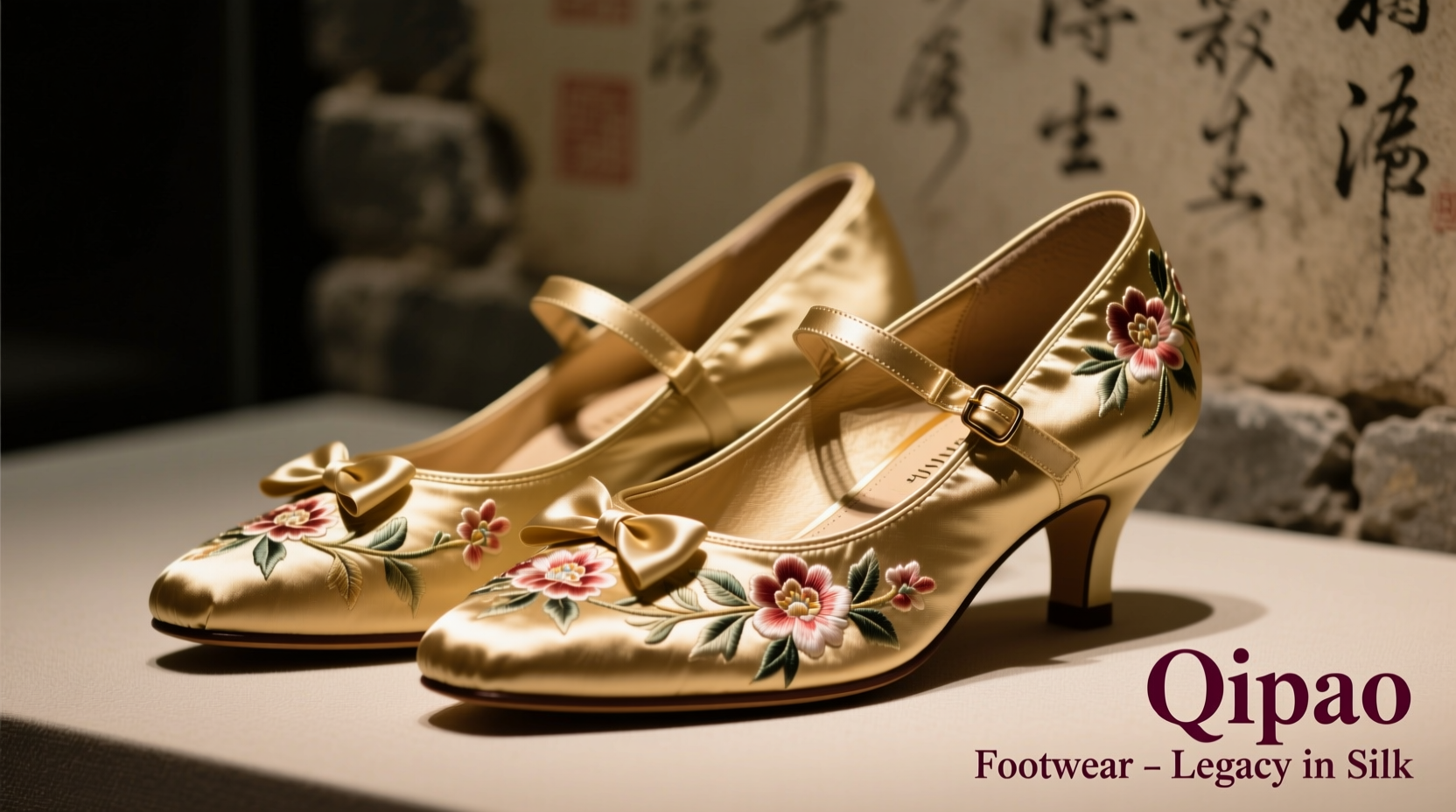
For floor-length, heavily brocaded, or velvet winter qipaos, traditional xiù xié (embroidered shoes) remain the most culturally resonant choice. Authentic artisan pairs feature the qian ceng di (thousand-layer sole), constructed by stitching dozens of layers of cotton cloth together, providing exceptional shock absorption and breathability. The uppers are typically silk satin, embroidered with motifs like peonies, cranes, or plum blossoms. Styling Tip: Reserve these for indoor events, tea ceremonies, or cultural festivals. Because the soles are flat and flexible, they pair best with ankle-grazing hemlines that allow the intricate toe embroidery to peek out gracefully.
2. The Classic Mary Jane & T-Strap Heels
The 1930s Shanghai revival look relies heavily on the Mary Jane or T-strap heel. This is the quintessential 'vintage' qipao shoe. In 2026, we are seeing a resurgence of block-heeled Mary Janes crafted in rich velvets, patent leathers, and even embroidered silks that echo the garment's textile. Styling Tip: A 2-to-3-inch block heel in a contrasting color (such as a deep oxblood leather paired with a navy floral qipao) creates a striking, vintage-inspired silhouette perfect for cocktail parties and gallery openings.
3. Contemporary Ankle Boots & Architectural Mules
For the modern fashion-forward wearer, pairing a midi-length qipao with sleek ankle boots or architectural mules bridges the gap between traditional elegance and avant-garde street style. The Bata Shoe Museum frequently highlights how cross-cultural pollination influences footwear; the qipao's side slit is ideally framed by a slim-fitting suede or leather sock boot. Styling Tip: Ensure the boot shaft is narrow enough to slide under the qipao's side slit without disrupting the garment's clean vertical line. Pointed-toe mules are excellent for transitional spring weather, offering a sharp, modern contrast to soft silk charmeuse fabrics.
4. Streetwear Sneakers for Everyday Qipao
The 'everyday qipao' movement has fully embraced sneaker culture. Pairing a relaxed-fit, cotton or linen qipao with minimalist leather sneakers or chunky 'dad' shoes is a dominant trend among young designers in Shanghai and Singapore. This styling choice democratizes the garment, stripping it of its 'formal-only' stigma and making it viable for daily commuting and casual weekend wear.
Fabric and Hemline: The Golden Rules of Proportion
The most critical factor in selecting qipao shoes is the hemline of the dress. The historical evolution of the qipao saw hemlines fluctuate wildly—from the floor-sweeping styles of the 1910s to the daring, knee-length cuts of 1960s Hong Kong cinema. Your footwear must balance the visual weight of the exposed leg and the drape of the fabric.
| Qipao Hemline | Historical Era Reference | Ideal Shoe Silhouette | Fabric Pairing Advice |
|---|---|---|---|
| Floor-Length / Ankle | 1910s - 1920s Traditional | Flat Xiù Xié, low kitten heels | Heavy brocade, velvet, winter wools |
| Midi / Calf-Length | 1930s Shanghai Glamour | T-straps, Mary Janes, sleek mules | Silk crepe de chine, rayon, lace |
| Knee-Length | 1950s Tailored Elegance | Classic pumps, slingback heels | Worsted wool, structured cotton |
| Mini / Above Knee | 1960s HK Mod / Modern | Knee-high boots, chunky platforms | Stretch blends, denim, bold prints |
Color Theory and Embroidery Matching
A frequent error in cheongsam styling is attempting to match the shoe exactly to the dominant base color of the dress. This often results in a flat, monochromatic look that overwhelms the eye. Instead, apply the Secondary Motif Rule. Examine the intricate embroidery or the secondary color within the pankou (frog buttons) and select a shoe that highlights that subtle accent color.
For example, if you are wearing a jade-green qipao embroidered with subtle gold and crimson plum blossoms, a crimson heel will draw the eye downward and create a cohesive, dynamic color story. Furthermore, the China National Silk Museum notes that traditional dyeing techniques yield complex, multi-tonal threads; leveraging these hidden hues in your footwear demonstrates a deep, respectful understanding of the garment's craftsmanship.
A Note on Cultural Protocol: When styling traditional garments like the qipao for events outside of East Asian cultural contexts, it is vital to approach the silhouette with respect rather than caricature. Avoid pairing authentic, heirloom-quality silk qipaos with overtly sexualized or costume-like footwear. The qipao is a living, evolving garment of profound cultural significance, representing decades of women's liberation and sartorial innovation in China. Treat your footwear choices as an extension of that dignity.
Where to Source Authentic and Artisan Footwear
Finding the right qipao shoes requires looking beyond standard fast-fashion retailers. Here is a guide to sourcing quality footwear, complete with expected price ranges for 2026:
- Artisan Cloth Shoes (Xiù Xié): Seek out heritage brands based in Suzhou or Beijing, or specialized online boutiques that partner with rural embroidery cooperatives. Expect to pay between $120 and $350 USD for hand-stitched, genuine silk uppers with thousand-layer soles.
- Vintage 1930s-1950s Heels: Antique markets and specialized vintage dealers in Shanghai and Hong Kong offer original T-straps and Mary Janes. Prices range from $150 to $500 USD, depending on condition and provenance. Always check the structural integrity of vintage shanks before wearing.
- Contemporary Designer Mules & Boots: Modern Asian footwear designers (such as those showcased at Shanghai Fashion Week) frequently release collections specifically scaled for the qipao's proportions. Budget $300 to $800 USD for architecturally sound, luxury leather pieces that will last a lifetime.
Final Thoughts on Personal Expression
Styling qipao shoes in 2026 is an exercise in balancing historical reverence with personal flair. Whether you are gliding across a ballroom floor in vintage-inspired Mary Janes, or navigating city streets in a relaxed linen cheongsam paired with minimalist sneakers, the key lies in understanding the garment's architecture. By paying close attention to hemline proportions, color theory, and artisanal construction, you ensure that your footwear does not merely support the qipao, but actively participates in the ongoing, beautiful evolution of Asian traditional dress.