How to Wear Qipao and Cheongsam in 2026
Beyond the Red Carpet: Reclaiming the Qipao and Cheongsam
For decades, Western fashion media reduced the qipao and cheongsam to mere red-carpet novelties or cinematic costumes. However, in 2026, a global resurgence of heritage dressing has reclaimed this garment as a versatile, living pillar of the contemporary wardrobe. To style it correctly, one must first understand its linguistic and historical duality. The term qipao (旗袍) originates from Mandarin and the northern regions, historically referencing the 'banner gown' worn by Manchu women during the Qing Dynasty. Conversely, cheongsam (長衫) is the Cantonese term popularized in Shanghai and Hong Kong, translating to 'long shirt.' Both terms now describe the iconic, form-fitting silhouette that emerged in the 1920s when Chinese feminists and students adopted a modified version of the male changshan to advocate for gender equality and educational rights.
Today, styling the qipao and cheongsam is not about playing dress-up; it is about integrating masterful garment construction into modern life. According to The Metropolitan Museum of Art's textile archives, the 1930s Shanghai era introduced Western darting and bias-cutting to the traditional straight-cut robe, creating the elegant, body-skimming silhouette we recognize today. Understanding this evolution is the first step in wearing the garment with the dignity and contemporary flair it demands.
The Anatomy of a Modern Silhouette
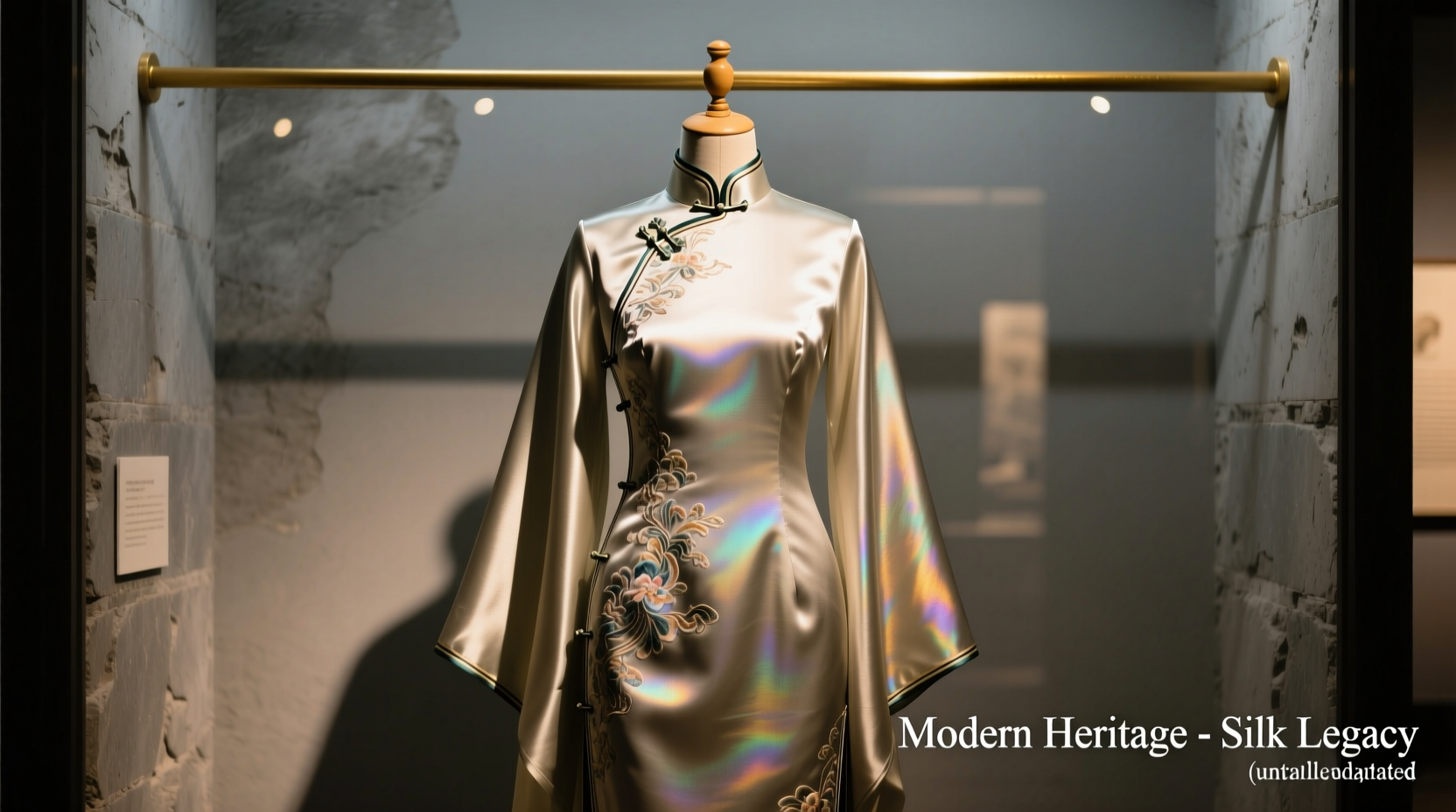
Before pairing your cheongsam with modern outerwear, you must appreciate the structural elements that define its elegance. A well-crafted qipao relies on four distinct architectural features:
- The Yuanling (Mandarin Collar): A stiff, stand-up collar that frames the jawline. In modern styling, a collar height of 3 to 4 centimeters is ideal for everyday wear, preventing neck restriction while maintaining the garment's regal posture.
- The Dajin (Overlapping Front Panel): The asymmetric curve that sweeps from the center of the collar across the chest to the side seam. This panel is traditionally outlined by guntiao (piping), which can be contrasted for a graphic, modern look or matched for subtle elegance.
- The Pankou (Frog Closures): Hand-knotted fabric buttons that serve as both functional fasteners and decorative motifs. While mass-market garments use machine-made polyester knots, heritage tailors craft bespoke pankou in shapes ranging from plum blossoms to geometric bars, often taking hours to knot by hand.
- The Kaicha (Side Slits): Originally designed for ease of movement and horseback riding, the side slits are now a masterclass in controlled reveal. For modern daywear, the slit should begin just above the knee, ensuring comfort while seated without compromising modesty.
Fabric Science: Choosing the Right Textile
The fabric dictates the garment's drape, seasonality, and formality. While heavy silk brocade (zhijin) remains the standard for winter weddings and galas, the 2026 styling ethos favors fluid, breathable textiles for everyday integration.
Xiangyunsha (Gambiered Canton Gauze): Often referred to as 'soft gold,' this heritage silk is dyed using the juice of the Shulang plant and iron-rich river mud. The result is a dark, lustrous fabric that is naturally antibacterial, water-resistant, and exceptionally cool in humid climates. A genuine Xiangyunsha qipao is an investment piece, often starting at $400 for the fabric alone, but it offers an unparalleled matte-crinkle texture that pairs beautifully with minimalist modern accessories.
Crepe de Chine and Matte Silk Blends: For office environments or gallery openings, a mid-weight silk crepe provides a fluid drape that moves with the body without clinging. Look for fabrics with a sand-washed finish to eliminate the high-shine 'costume' effect, grounding the garment in quiet luxury.
The 2026 Styling Matrix: Pairing Your Cheongsam
The most common styling error is treating the qipao as an isolated artifact rather than a foundational wardrobe piece. The modern approach relies on juxtaposition—pairing the garment's inherent femininity and structure with relaxed, contemporary, or avant-garde elements. Below is a strategic framework for integrating the cheongsam into various facets of modern life.
| Occasion | Outerwear Pairing | Footwear | Accessories & Styling Notes |
|---|---|---|---|
| Corporate / Office | Unstructured, oversized wool blazer (midi length) | Pointed-toe slingback kitten heels or polished leather loafers | Geometric jade studs; structured leather tote. Keep the collar unbuttoned at the top if the blazer lapel obscures it. |
| Casual Weekend / Market | Cropped vintage leather jacket or a chunky knit cardigan | Minimalist white leather sneakers or suede ankle boots | Canvas crossbody bag; silver cuff bracelets. Opt for a cotton-linen blend qipao with a lower collar for comfort. |
| Evening Gala / Dinner | Floor-length silk duster coat or a tailored tuxedo jacket | Velvet mules or architectural sculptural heels | Drop earrings featuring baroque pearls; a sleek, low chignon to highlight the pankou detailing. |
| Creative / Editorial | Sheer organza trench or deconstructed denim vest | Chunky platform Mary Janes or combat boots | Layered metallic necklaces worn *over* the collar; hair styled in a modern, wet-look bob. |
Navigating Tailoring and Price Points
Unlike Western tailoring, which relies heavily on darts and seams to create shape, traditional qipao construction utilizes the fabric's grain and strategic ironwork (stretching and shrinking the fabric with heat and moisture) to mold the garment to the body's curves. This requires immense artisanal skill. When budgeting for a qipao or cheongsam, understanding the tiers of production is vital.
1. Off-the-Rack & Fast Fashion ($50 - $150 USD)
Readily available online or in tourist districts, these garments are typically cut from polyester blends with machine-sewn, non-functional pankou and a standard invisible back zipper. While acceptable for a one-off event, they lack the structural integrity, breathability, and cultural authenticity of traditional construction. The side slits are often too high, and the collars are reinforced with cheap fusible interfacing that bubbles over time.
2. Made-to-Measure (MTM) ($300 - $800 USD)
Offered by specialized boutiques in global Chinatowns or heritage shops in Shanghai and Hong Kong. MTM involves selecting your fabric from the house's library and taking 15 to 20 specific body measurements. The pankou will be functional, and the garment will feature proper inner lining and hand-finished hems. This is the sweet spot for a high-quality, durable wardrobe staple.
3. Heritage Bespoke ($1,500 - $5,000+ USD)
As documented by institutions like the Victoria and Albert Museum's Chinese textile collections, true bespoke qipao-making is a master-apprentice discipline. A bespoke tailor will create a unique paper pattern exclusively for your posture, shoulder slope, and spine curvature. The edges are finished with hand-rolled xiangbian (piping), and the closures are intricately knotted. This tier is reserved for heirloom pieces, utilizing rare textiles like hand-embroidered Suzhou silk or authentic Xiangyunsha.
The Fitting Protocol: What to Tell Your Tailor
If you are commissioning a made-to-measure or bespoke cheongsam, clear communication regarding modern wearability is essential. Traditional tailors may default to a very tight, restrictive fit and high collars based on 1960s Hong Kong cinema aesthetics. To ensure your garment fits into a 2026 lifestyle, request the following:
- Ask for 'Ease' in the Ribcage: You should be able to sit down, eat a full meal, and breathe deeply without the side seams pulling. Request an extra half-inch of ease across the midsection.
- Adjust the Slit Height: Specify that the kaicha (slit) should begin exactly one inch above the top of your kneecap when standing. This allows for dynamic movement while preserving modesty when sitting.
- Soften the Interfacing: Ask for a soft, woven interfacing in the collar rather than a rigid plastic one. This allows the collar to hug the neck comfortably without chafing the jawline.
- Consider a Hidden Zipper: While traditionalists insist on a fully buttoned side closure, adding a discreet invisible zipper along the side seam beneath the armhole makes dressing and undressing significantly easier, protecting the delicate pankou from daily wear and tear.
Cultural Etiquette and Contemporary Respect
As the qipao and cheongsam gain traction in global fashion, it is crucial to navigate the line between cultural appreciation and caricature. Historically, Encyclopædia Britannica's historical overview of the qipao notes that the garment was a symbol of modernity, intellect, and liberation for Chinese women in the early 20th century. It was worn by teachers, writers, and aviators—not merely as formalwear, but as a daily uniform of empowerment.
To honor this living tradition, avoid purchasing garments featuring hyper-sexualized cuts, overly theatrical dragon or phoenix motifs for casual wear, or cheap, shiny synthetic fabrics that mimic historical brocades. Instead, lean into the sophisticated, intellectual roots of the garment. Choose subtle botanical embroidery, abstract geometric prints, or solid, textured matte fabrics. Pair the garment with respect for its origins, acknowledging the artisans who continue to keep the complex techniques of pankou knotting and bias-draping alive in a rapidly mechanized fashion industry. By treating the qipao and cheongsam as a masterwork of textile engineering rather than a costume, you participate in the ongoing, evolving story of Asian sartorial excellence.