Styling a Chinese Traditional Outfit: Modern Wear Guide 2026
The Renaissance of Chinese Sartorial Heritage
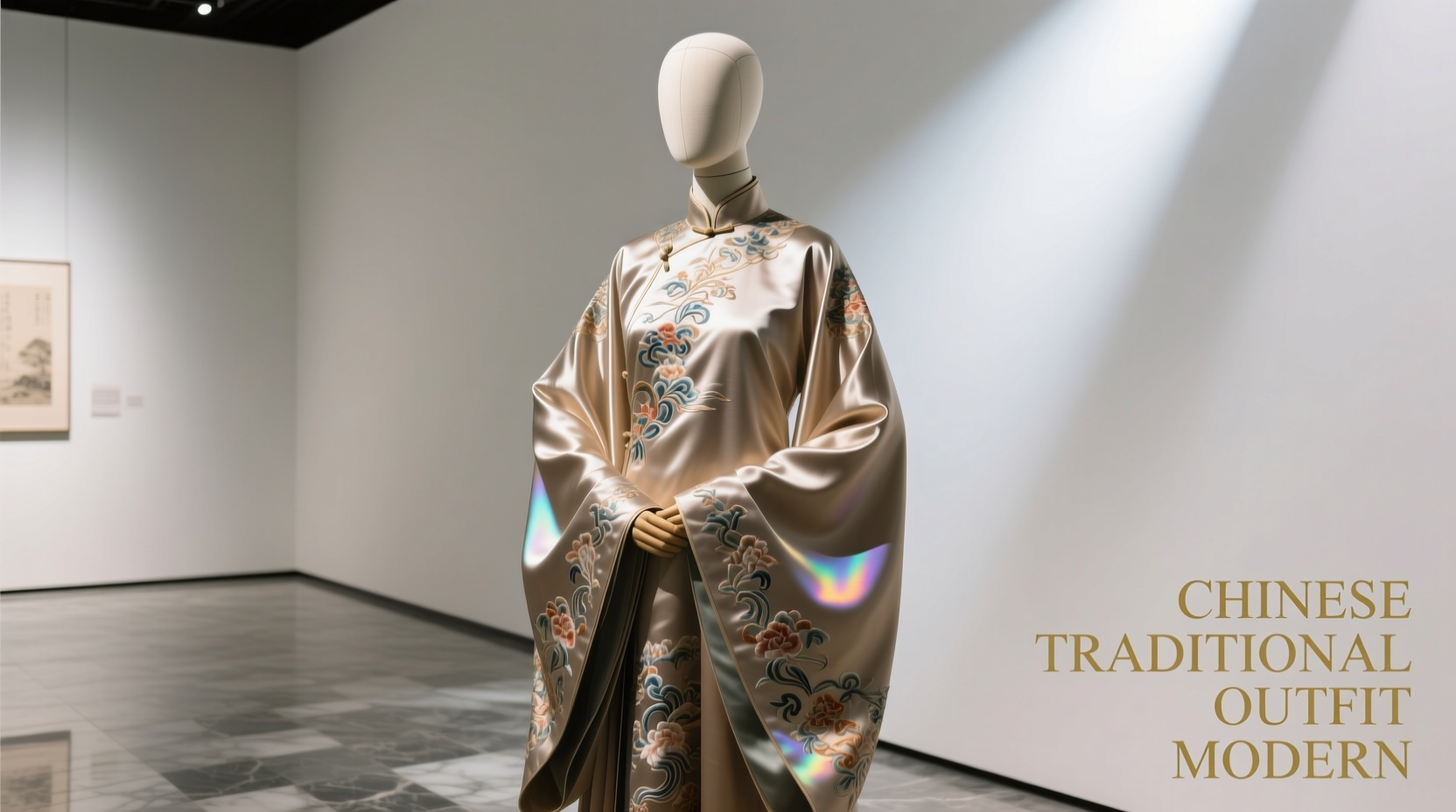
The global fashion landscape is currently witnessing a profound appreciation for historical garments, with the chinese traditional outfit moving from ceremonial closets into everyday streetwear and high fashion. This shift is largely driven by the Hanfu Yundong (Hanfu Movement), a cultural renaissance among Chinese youth aiming to reclaim and modernize pre-Qing dynasty sartorial traditions. However, integrating these historically rich garments into a contemporary wardrobe requires more than just slipping on silk; it demands an understanding of structural silhouettes, fabric behavior, and cultural protocols.
Whether you are looking to incorporate a flowing Hanfu skirt into your autumn rotation, tailor a qipao for modern professional settings, or blend Tang suit elements into minimalist streetwear, this 2026 styling guide provides actionable frameworks for wearing Chinese heritage garments with authenticity, respect, and modern flair.
Decoding the Core Garments: Construction and Context
To style these garments effectively, one must first understand their foundational architecture. Unlike Western tailoring, which relies on darts and 3D shaping to contour the body, traditional Chinese garments historically utilize flat-cutting techniques, creating elegant, unbroken lines that drape dynamically with movement.
Hanfu (汉服): The Art of Layering
Hanfu encompasses the historical dress of the Han Chinese, spanning over three millennia. The defining feature of the classic Hanfu upper garment is the jiaoling youren (cross-collar, right lapel), where the left side of the garment crosses over the right. For modern styling, the most versatile piece is the Mamianqun (horse-face skirt) from the Ming Dynasty. Constructed with two flat, unpleated front and back panels flanked by deeply pleated sides, the Mamianqun offers a structured yet fluid silhouette that pairs exceptionally well with modern tops.
Qipao / Cheongsam (旗袍): Tailored Elegance
Originating in the 1920s as a symbol of female emancipation, the qipao evolved from a loose, A-line garment into the form-fitting silhouette popularized in 1960s Hong Kong. Key construction elements include the mandarin collar (standing collar), side slits for mobility, and intricate pankou (knotted frog buttons). Modern iterations often blend traditional flat-cut front panels with subtle Western darts for a customized fit without sacrificing the iconic continuous shoulder line.
Tang Suit (唐装): Structured Heritage
Despite its name, the modern Tang suit does not originate from the Tang Dynasty. It is a contemporary hybrid derived from the Qing dynasty magua (riding jacket) and Western tailoring, popularized globally during the 2001 APEC summit. Characterized by its stiff, structured shoulders and prominent frog closures, the Tang suit is best approached as a statement outerwear piece in modern styling.
Garment Comparison & Modern Styling Matrix
| Garment | Historical Anchor | Modern Styling Pairing | Investment Range (USD) |
|---|---|---|---|
| Mamianqun (Horse-face Skirt) | Ming Dynasty | Chunky knit turtleneck, leather Chelsea boots | $45 - $600+ |
| Ruqun (Cross-collar Top & Skirt) | Tang/Song Dynasties | Worn open as a duster coat over a slip dress | $60 - $350 |
| Qipao (Short/Tea-length) | 1920s-1960s | Cropped denim jacket, minimalist white sneakers | $120 - $1,500+ |
| Tang Suit Jacket | Qing/Modern Hybrid | Layered over a crisp white poplin shirt and tailored trousers | $80 - $400 |
The 'Xin Zhong Shi' (New Chinese Style) Framework
The most dominant trend in 2026 is Xin Zhong Shi (New Chinese Style), which extracts specific cultural motifs and integrates them into contemporary, Western-style silhouettes. This approach is ideal for those who want to honor Chinese heritage in corporate or casual settings without wearing a full historical ensemble.
Strategic Motif Integration
- The Pankou Button: Swap standard plastic buttons on a modern wool blazer or cardigan for hand-tied silk frog buttons. This subtle nod to the qipao elevates basic knitwear instantly.
- The Standing Collar: Incorporate the mandarin collar into modern silk blouses or lightweight linen shirts. It frames the face beautifully and eliminates the need for complex neckwear or ties.
- Song Dynasty Color Palettes: Move away from the stereotypical bright reds and golds. Authentic historical palettes favor low-saturation, nature-inspired tones such as yuebai (moon white), qingshan (cyan-green), and xiangse (elephant gray). These muted tones integrate seamlessly into modern capsule wardrobes.
Climate-Appropriate Fabric Swaps
Historical garments were designed for specific regional climates and eras. Wearing heavy, synthetic brocades in the summer is both uncomfortable and historically inaccurate for everyday wear. According to textile archives at the China National Silk Museum, traditional weaving techniques offer highly breathable options for modern climates.
Summer: Xiangyunsha and Cupro
For warm weather, seek out Xiangyunsha (gambiered Guangdong silk). This intangible cultural heritage fabric is dyed with薯莨 (shuliang) yam juice and coated with river mud, resulting in a rustling, water-resistant, and incredibly cooling textile. It is the pinnacle of luxury summer qipao fabrics. For a budget-friendly alternative, modern cupro or Tencel blends mimic the drape and cooling properties of traditional silk linings.
Winter: Wool Blends and Song Brocade
In colder months, replace traditional thin silks with Song Jin (Song brocade) woven with wool blends, or opt for a Mamianqun crafted from heavy, pleated tweed. The structural integrity of the horse-face skirt holds up beautifully in heavy winter fabrics, providing both warmth and a striking architectural silhouette.
Accessorizing with Cultural Integrity
The wrong accessories can inadvertently reduce a profound cultural garment to a costume. The goal of modern styling is juxtaposition—anchoring historical pieces with contemporary, grounded accessories.
Footwear Grounding
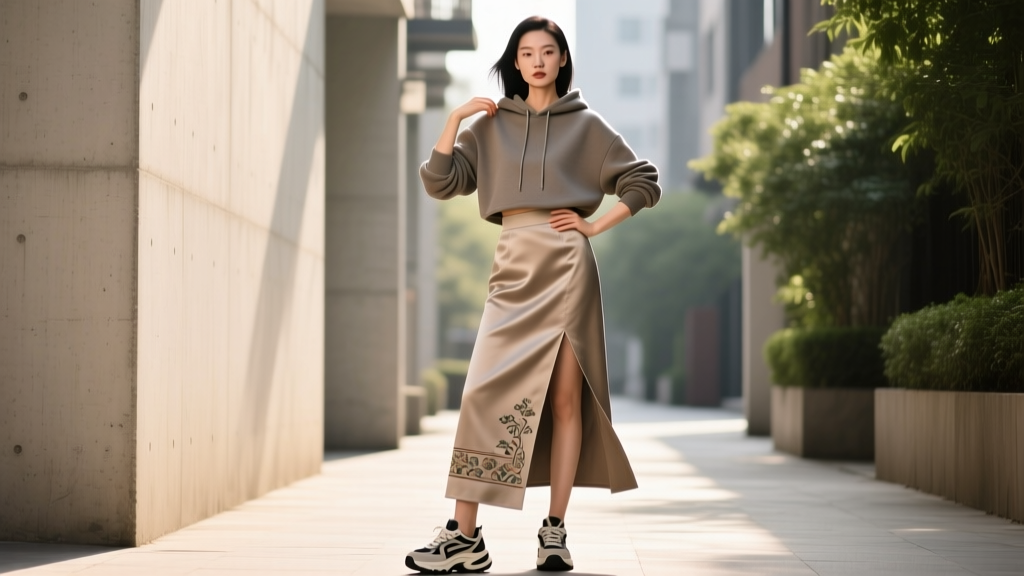
Avoid traditional cloth shoes or theatrical opera boots for everyday wear. Instead, ground a flowing Hanfu skirt with chunky leather loafers, sleek Chelsea boots, or even minimalist leather sneakers. The visual weight of modern footwear prevents the outfit from looking like a historical reenactment and firmly places it in a contemporary urban context.
Hair and Jewelry
While elaborate buyao (dangling hairpins) and jade hair sticks are beautiful, they are reserved for formal events and festivals. For daily wear, opt for a single, high-quality jade or nephrite hair stick holding a modern messy bun, or minimalist gold ear cuffs inspired by the organic shapes of traditional ruyi (cloud) motifs. The Victoria and Albert Museum's Asian collections provide excellent reference points for the subtle elegance of historical Chinese jade and metalwork, emphasizing quality over quantity.
Sourcing Authentic Pieces: A Buyer's Guide
The market is flooded with cheap, mass-produced 'costume' versions of Chinese garments. To build a wardrobe with longevity and cultural respect, focus on specialized artisans and reputable hubs.
- Hanfu Artisans: Look for brands based in Chengdu and Hangzhou that specialize in Ming and Song dynasty reproductions. Expect to pay between $80 and $250 for a high-quality, authentic Mamianqun with proper woven motifs (rather than printed polyester).
- Qipao Tailors: True qipao tailoring is an endangered craft. Seek out bespoke tailors in Shanghai or Hong Kong who still practice traditional shoufeng (hand-rolled seams) and custom pattern drafting. A bespoke, hand-finished qipao in authentic mulberry silk typically starts at $600 and can exceed $2,000 depending on the complexity of the embroidery.
- Vintage Markets: The Metropolitan Museum of Art's Asian Art archives showcase the impeccable tailoring of mid-century qipaos. Sourcing vintage 1950s-1970s qipaos from reputable antique textile dealers offers a sustainable way to own a piece of history, often featuring hand-stitched hems and genuine silk brocades that are no longer commercially produced.
Cultural Protocols: Appreciation in a Globalized World
Wearing a chinese traditional outfit as a non-Chinese individual, or as a member of the diaspora reconnecting with heritage, requires mindfulness. The Hanfu Movement is deeply tied to cultural identity and historical reclamation. When styling these garments, avoid mixing them with elements of other distinct Asian cultures (such as pairing a Hanfu skirt with a Japanese obi belt or Korean gat hat), as this flattens distinct cultural histories into a monolithic 'Oriental' aesthetic.
Furthermore, understand the context of the jiaoling youren (left over right collar). In Han Chinese tradition, crossing the right lapel over the left is historically associated with mourning or specific non-Han ethnic groups. Ensuring your garment is worn with the correct lapel orientation is a small but profound sign of respect for the living culture and the artisans who keep these traditions alive.
Final Thoughts on Modern Integration
Styling a Chinese traditional outfit for the modern era is an exercise in balancing historical reverence with personal expression. By understanding the architectural brilliance of the Mamianqun, the emancipatory history of the qipao, and the subtle elegance of the Xin Zhong Shi movement, you can integrate these magnificent garments into your daily life. Focus on impeccable fabrics, respectful styling pairings, and an appreciation for the centuries of sartorial evolution woven into every seam.