Hufu Clothing: Tang Dynasty Silk Road Fashion Guide
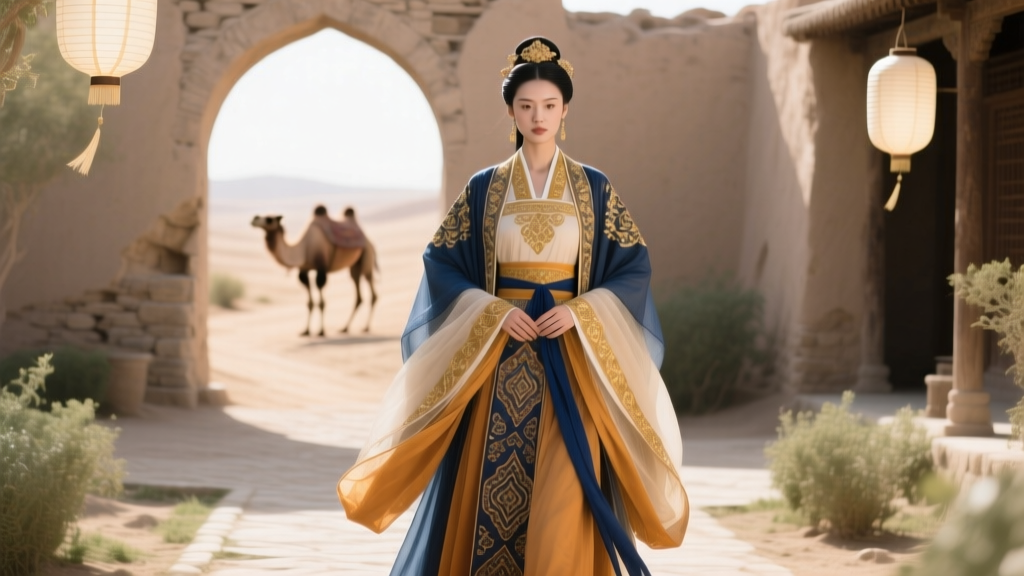
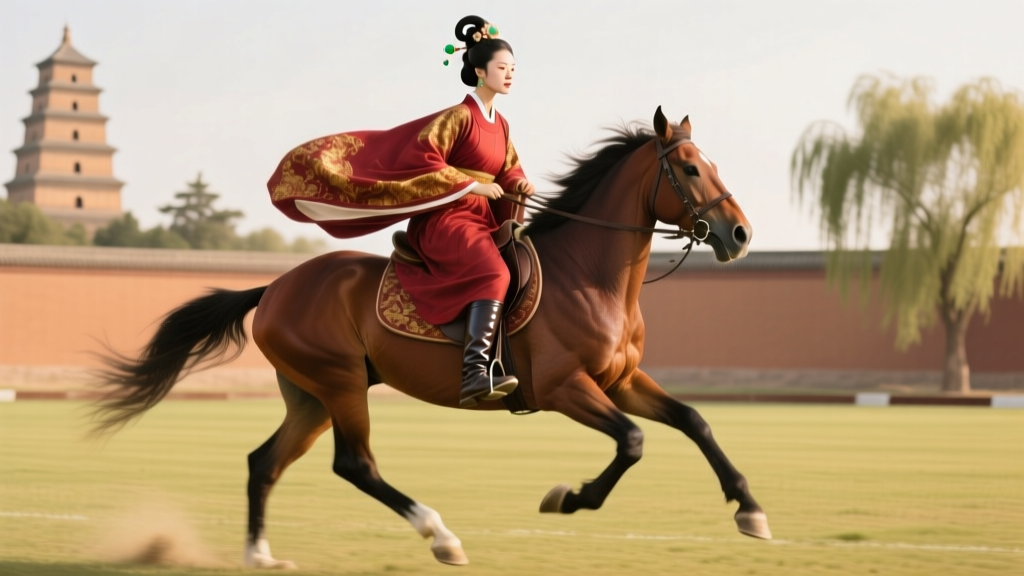
When examining the vibrant textile history of the Tang Dynasty (618–907 CE), few sartorial shifts are as fascinating as the adoption of hufu clothing. Originally worn by nomadic tribes and foreign merchants along the Silk Road, these garments radically altered the silhouette of traditional Chinese dress. Far from a mere passing trend, this integration of foreign silhouettes represented a profound cultural synthesis, reflecting the capital city of Chang'an's status as a cosmopolitan hub where Sogdian, Turkic, and Han traditions collided. Today, historians and historical fashion enthusiasts alike study these garments to understand how mobility, trade, and gender norms were woven into the very fabric of Tang society.
Decoding the Hufu Meaning in Historical Context
To truly understand this sartorial revolution, we must first address the hufu meaning. The term is a compound of two characters: 'Hu' (胡) and 'Fu' (服). Historically, 'Hu' was a broad, somewhat pejorative exonym used by Han Chinese to describe non-Han ethnic groups residing to the north and west, encompassing Xiongnu, Xianbei, Turkic, and Sogdian peoples. 'Fu' simply translates to clothing or attire. Therefore, the literal translation is 'clothing of the Hu people.'
However, by the High Tang period, the term evolved from an ethnic marker into a distinct stylistic category. According to the University of Washington Silk Road Project, the embrace of these foreign styles was so widespread that 'Hu' became synonymous with the exotic, the fashionable, and the modern. Aristocratic women cross-dressed in these garments to play polo, while men adopted the tailored cuts for military and equestrian utility. The hufu meaning thus shifted from 'barbarian dress' to a symbol of elite, cosmopolitan sophistication.
The Anatomy of Hufu Clothing
Unlike the flowing, voluminous robes of traditional Hanfu, this foreign-inspired attire prioritized structure, tailored fits, and equestrian mobility. The wardrobe was defined by several key components that differentiated it from indigenous Han styles.
The Fanling Pao (Lapel Robe)
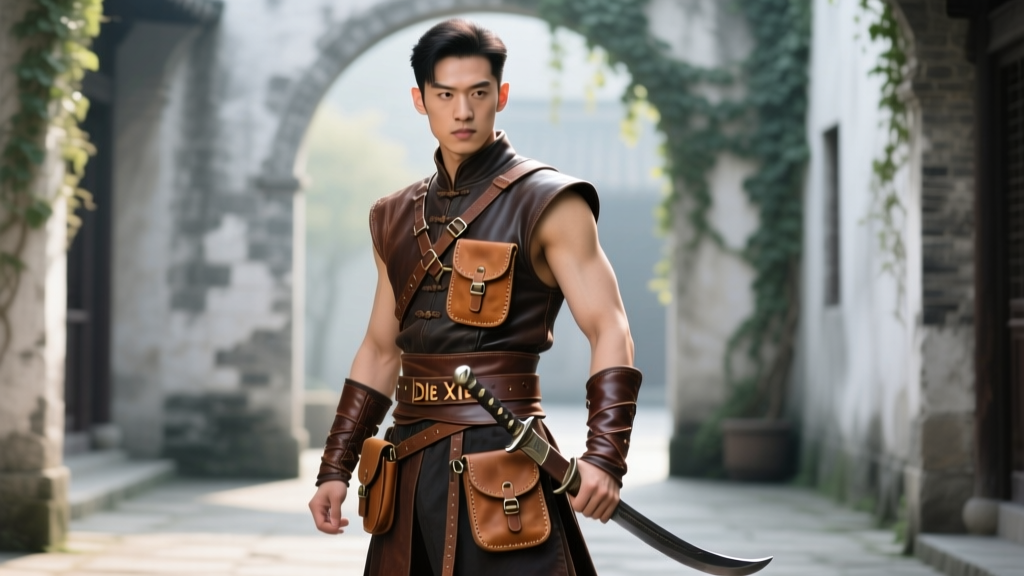
The cornerstone of this wardrobe was the Fanling Pao (翻领袍), or lapel robe. While traditional Han robes featured a cross-collar (jiaoling) that always wrapped left over right, these foreign robes often featured a round collar (yuanling) that could be unfastened and folded down into a V-shaped lapel. This design allowed for greater ventilation and ease of movement. The sleeves were notably narrower and tapered at the wrist, preventing them from catching on reins or weaponry, a stark contrast to the wide, sweeping sleeves of courtly Hanfu.
The Die Xie Belt (Utility Belt)
Functionality was paramount, best exemplified by the Die Xie (蹀躞) belt. Crafted from thick leather and fastened with elaborate bronze or silver buckles, this belt featured a series of hanging rings and vertical straps. Originally designed by nomadic horsemen to carry essential survival and combat tools—such as flint, whetstones, curved daggers, and coin pouches—the Tang elite adopted it as a status symbol. The number and material of the hanging plaques were strictly regulated by sumptuary laws, with jade and gold reserved for high-ranking officials.
Xue (Leather Boots)
Footwear underwent a massive transformation. Traditional Han attire relied on soft, woven hemp or silk slippers (lu) that offered little protection for outdoor terrain. The introduction of Xue (靴)—rigid, knee-high leather boots with thick soles—revolutionized Chinese footwear. These boots provided the necessary ankle support and stirrup grip required for horseback riding and became a mandatory component of both military uniforms and fashionable streetwear in Chang'an.
Weimao and Mo'e (Accessories)
Accessories completed the look. The Weimao (帷帽) was a wide-brimmed horse-riding hat with a sheer veil hanging down to protect the wearer from dust and sun. Meanwhile, the Mo'e (抹额), a decorative forehead band often studded with pearls or jade, was adopted from northern tribes to keep sweat from the eyes during vigorous physical activity.
Hufu vs. Traditional Hanfu: A Structural Comparison
Understanding the mechanical differences between indigenous and foreign dress highlights why the latter was so highly adopted for active lifestyles. Below is a comparative matrix detailing the structural divergence.
| Feature | Traditional Hanfu (Pre-Tang) | Hufu / Tang Assimilated Styles |
|---|---|---|
| Collar Style | Cross-collar (Jiaoling), strictly left-over-right | Round collar (Yuanling) or folded lapel (Fanling) |
| Sleeve Cut | Wide, flowing, often floor-length | Narrow, tapered, fitted at the wrist |
| Fastening | Fabric sashes and ties | Leather belts with metal buckles and clasps |
| Footwear | Soft woven slippers (Lu) | Rigid leather riding boots (Xue) |
| Primary Use Case | Courtly ceremonies, sedentary elite life | Equestrian sports, military, travel, street fashion |
Sogdian Textiles and the Pearl-Roundel Motif
The silhouette was only half the story; the textiles told the other. The Silk Road facilitated the import of Sogdian weavers and their advanced loom technologies. While traditional Chinese weaving was warp-faced (where the longitudinal threads dictate the pattern), Sogdian weavers specialized in weft-faced compound twills, known in the West as samite. This technique allowed for denser, more vibrant, and highly complex geometric patterns.
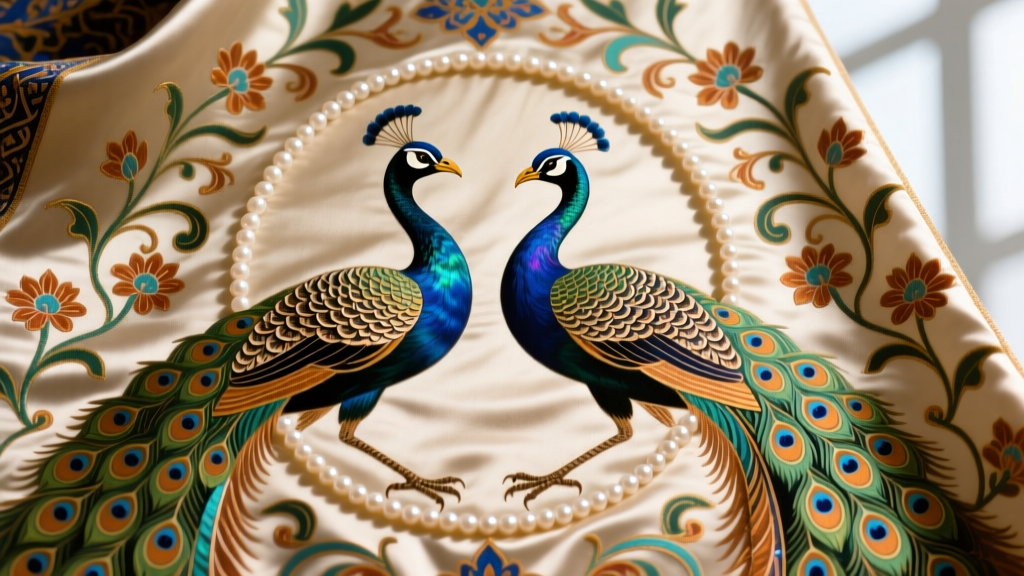
The most iconic motif introduced through this trade was the pearl-roundel (lianzhuwen). As documented by The Metropolitan Museum of Art, these circular borders made of pearl-like dots enclosed confronting animals—such as peacocks, boars, or winged horses (senmurvs). Tang weavers quickly reverse-engineered this technique, blending the Sogdian pearl-roundel with indigenous Chinese floral scrolls and lotus motifs, creating a hybrid textile language that defined the High Tang aesthetic. Archaeological finds from the Astana Cemetery in Turfan reveal these hybrid silks in remarkable condition, showcasing the brilliant crimsons, indigos, and gold threads used in elite garments.
Sourcing Authentic Hufu Reproductions in 2026
For modern historical reenactors, cosplayers, and textile collectors, sourcing accurate hufu clothing requires navigating a specialized market. As of 2026, the historical Hanfu movement has expanded deeply into Tang Dynasty minority and foreign-adjacent styles, driven by AI-assisted pattern reconstructions from the Dunhuang Academy's digital mural archives.
Where to Buy and What to Expect
Authentic reproductions are primarily sourced from specialized Taobao ateliers and independent historical tailors on Etsy. Brands like Shiyang Xiao and Tanghua Weaving lead the market in screen-accurate samite reproductions.
- Entry-Level (Digital Print Poly-Silk): Priced between $80 and $150 USD. These offer the correct Fanling Pao silhouette and pearl-roundel patterns but lack the structural weight and breathability of true samite.
- Mid-Tier (Jacquard Woven Brocade): Priced between $180 and $300 USD. These utilize modern jacquard looms to mimic weft-faced twills, offering a heavy drape suitable for autumn and winter wear.
- Museum-Grade (Hand-Loomed Mulberry Silk Samite): Priced from $450 to over $1,200 USD. Commissioned pieces that utilize natural plant dyes (madder root, indigo) and genuine gold-leaf thread wrapping, often accompanied by a hand-tooled leather Die Xie belt with solid bronze hardware.
When purchasing, always verify the collar construction. Many mass-market 'Tang' costumes incorrectly use modern Mandarin collars; true historical garments must feature a flat, round collar that sits flush against the collarbone, or a properly structured folded lapel.
Frequently Asked Questions
What is the exact hufu meaning in historical texts?
In classical Chinese texts, the hufu meaning literally translates to 'clothing of the Hu (foreign/nomadic) people.' However, in the context of Tang Dynasty poetry and court records, it refers specifically to the tailored, equestrian-inspired garments imported from Central Asia and the Western Regions, characterized by narrow sleeves, leather boots, and round collars. It represents a specific stylistic category rather than a single uniform.
Did women wear hufu clothing in the Tang Dynasty?
Yes, and this is one of the most unique aspects of Tang fashion. Aristocratic women frequently adopted these male, foreign-inspired garments for leisure activities like horseback riding, hunting, and playing polo. Murals in the Tomb of Princess Yongtai and the Mogao Caves vividly depict women wearing round-collared robes, leather boots, and riding hats. This cross-dressing was celebrated as a sign of the era's progressive gender norms and cosmopolitan confidence, rather than a subversion of societal rules.
How is hufu different from standard Hanfu?
Standard Hanfu is defined by its use of flat-pattern cutting, resulting in flowing, unstructured garments with wide sleeves, cross-collars, and fabric sashes. In contrast, hufu clothing features elements of three-dimensional tailoring. It includes structured armholes, tapered sleeves, rigid leather belts with metal hardware, and closed footwear (boots). While Hanfu prioritized elegant drape and ritualistic modesty, these foreign styles prioritized mobility, weather resistance, and equestrian utility.
Is the Yuanlingpao considered Hanfu or Hufu?
The Yuanlingpao (round-collared robe) occupies a fascinating middle ground. It originated as a foreign garment (hufu) introduced via the Silk Road. However, because it was so thoroughly adopted, adapted, and regulated by the Tang imperial court, it eventually became assimilated into the broader Hanfu canon. By the Song and Ming dynasties, the round-collared robe was considered standard indigenous official attire, completely shedding its 'foreign' origins.