Short Qipao Styling: The Ultimate Occasion & Event Guide

The Evolution of the Hemline: From 1920s Shanghai to Modern Silhouettes
The qipao (known in Cantonese as the cheongsam) is one of the most recognizable garments in global fashion history. While the traditional iteration is famously floor-length or calf-grazing, the short qipao represents a fascinating intersection of heritage tailoring and contemporary Western event dressing. To understand the short qipao, one must look to the Haipai (Shanghai Style) tailoring tradition of the 1930s, which first introduced Western darting and form-fitting silhouettes to Chinese dress. As global hemlines rose during the mid-20th century, so too did the qipao's hemline, eventually giving way to the modern cocktail-length and mid-thigh adaptations we see today.
Today, the short qipao is not merely a truncated version of its ancestor; it is a meticulously re-engineered garment. Because the hemline is raised, master tailors must adjust the garment's center of gravity, the placement of the kaicha (side slits), and the structural piping to ensure the dress maintains its architectural elegance. As documented in exhibitions like The Metropolitan Museum of Art's exploration of Chinese fashion, the modernization of the qipao reflects a dynamic dialogue between Eastern sartorial heritage and globalized event culture.
Decoding the Anatomy of a Short Qipao
Wearing a short qipao to a formal or semi-formal event requires an understanding of its unique construction. The garment relies on a delicate balance of modesty and structure, particularly when the hemline is shortened.
The Collar (Li Ling) and Fasteners (Pankou)
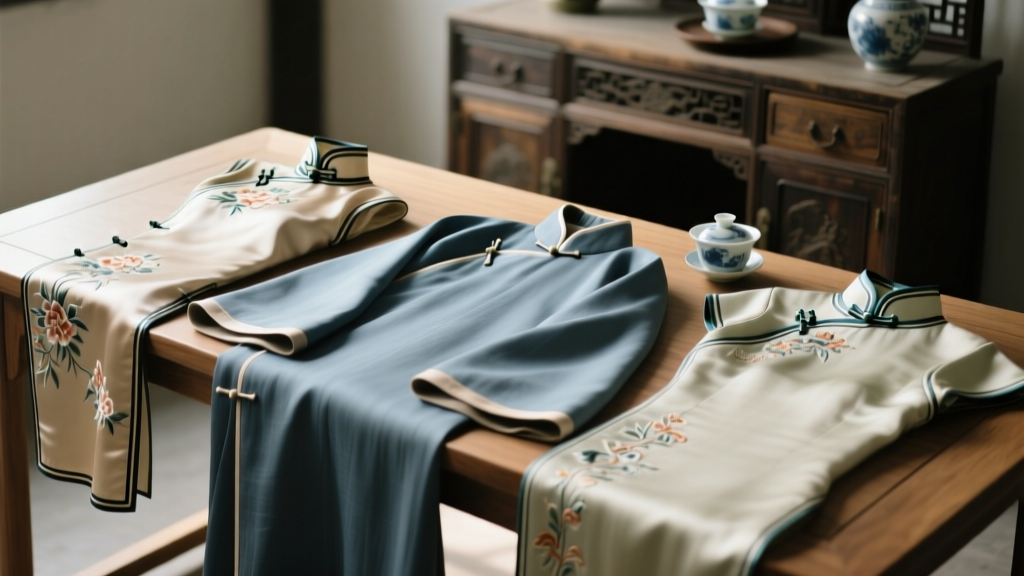
The defining feature of any qipao is the li ling (standing mandarin collar). On a short qipao, the high collar serves a vital stylistic purpose: it balances the exposure of the legs, adhering to the traditional Chinese sartorial rule of highlighting only one area of the body at a time. The collar is secured by pankou (knotted frog fasteners). For modern events, artisans often craft hua pan (flower knots), shaping the silk cords into plum blossoms, butterflies, or geometric motifs that act as subtle jewelry at the neckline.
Managing the Slit (Kaicha) and Piping (Xiangbian)
Traditional qipaos feature high kaicha (side slits) to allow for movement. However, on a short qipao, a high slit would render the garment unwearable for formal events. Expert tailors solve this by lowering the slit's apex to mid-thigh or eliminating it entirely, replacing it with hidden kick-pleats. The hem and slits are framed by xiangbian (piping). A short qipao destined for a cocktail party might feature a single, contrasting silk piping (dan xiang), while a wedding banquet garment might utilize intricate double or triple piping (gun xiang) to visually anchor the shorter hemline.
The Occasion Matrix: Where and When to Wear
The versatility of the short qipao makes it a staple in the modern event wardrobe. Below is a strategic guide for styling this garment across various cultural and social occasions.
| Occasion | Recommended Fabric | Color Palette | Styling & Accessory Notes |
|---|---|---|---|
| Wedding Banquet (Jingjiufu) | Heavy Silk Brocade, Velvet | Crimson, Burgundy, Rose Gold | Pair with gold hairpins and low block heels. Avoid dragon/phoenix motifs unless you are the bride; opt for peony or swallow embroidery. |
| Cocktail Hours & Galas | Crepe de Chine, Silk Charmeuse | Emerald, Navy, Onyx, Jewel Tones | Statement drop earrings, sleek updo, and strappy heels. A tailored tuxedo blazer draped over the shoulders adds modern avant-garde flair. |
| Lunar New Year & Festivals | Jacquard, Xiangyunsha (Gambiered Silk) | Festive Red, Plum, Tangerine | Jade bangles, flat embroidered silk shoes, and a wool mandarin-collar coat for winter layering. |
| Gallery Openings & Semi-Formal | Linen-blend, Matte Silk Crepe | Sage, Slate, Ivory, Monochromes | Minimalist gold jewelry, leather ankle boots, and a structured clutch. Keep the pankou knots simple and geometric. |
Fabric Selection and Seasonal Styling
The choice of textile dictates the formality and seasonal appropriateness of a short qipao. For high-end events, connoisseurs seek out Xiangyunsha (gambiered Canton gauze). This heritage fabric is dyed using yam juice and river mud, resulting in a dark, rustling silk that is water-resistant and uniquely textured. A genuine Xiangyunsha short qipao is a statement of profound cultural appreciation and luxury.
For winter weddings and holiday galas, silk velvet or heavy Song brocade provides warmth and structural rigidity, ensuring the short hemline does not flare awkwardly. In contrast, summer garden parties and outdoor daytime events call for breathable mulberry silk crepe or high-quality linen blends. When styling for cooler weather, the short qipao pairs exceptionally well with opaque textured tights and a tailored Magua-inspired cropped jacket, maintaining the silhouette's integrity while providing necessary insulation.
Sourcing and Price Tiers: What to Expect
Investing in a short qipao requires navigating a market that ranges from fast-fashion approximations to master-crafted heirlooms. Understanding these tiers ensures you purchase a garment that respects the tradition's complexity.
- Entry-Level / Ready-to-Wear ($50 - $150 USD): Typically made from polyester blends or rayon. The pankou are often machine-stitched or glued, and the garment relies heavily on Western princess seams rather than traditional shaping. Suitable for casual festive parties or single-use events.
- Boutique / Artisan ($300 - $800 USD): Crafted from genuine silk or high-grade crepe. These garments feature hand-rolled hems, authentic silk-thread pankou, and proper Haipai darting. Brands in this tier, often based in Shanghai, Hangzhou, or specialized global boutiques, offer excellent quality for weddings and formal galas.
- Bespoke / Master Tailor ($1,200 - $4,500+ USD): The pinnacle of qipao craftsmanship. A master tailor will use guihu (traditional iron-shaping techniques) to mold the fabric to the body's curves using heat and moisture, minimizing the need for disruptive darts. Clients can select heritage textiles and commission custom xiangbian (piping) patterns. This is an investment piece meant to be passed down through generations.
Cultural Etiquette and Wearing Protocols
When wearing a short qipao, it is crucial to approach the garment with cultural respect, avoiding the reductive exoticization that has historically plagued its representation in Western media. The qipao is a living, evolving symbol of Chinese modernity and female emancipation, not a costume.
"The modern qipao, whether floor-length or cocktail-short, remains a testament to the ingenuity of Chinese tailors who seamlessly merged indigenous aesthetics with global modernity." — Archives of the Victoria and Albert Museum's Asian Collections.
For non-Chinese individuals invited to a cultural event where a short qipao is appropriate, the key is to focus on the garment's craftsmanship and elegance. Avoid pairing the dress with overly theatrical makeup, chopsticks in the hair, or stereotypical accessories. Instead, treat the short qipao as you would a high-end European cocktail dress: with sleek, contemporary styling, refined posture, and a deep appreciation for the artisanal labor woven into every knotted button and silk-threaded seam. By honoring the structural brilliance of the Haipai tailoring tradition, you elevate the garment from mere clothing to a celebrated piece of wearable art.