Shenyi Hanfu Guide: Styling Ancient Robes for Events
The Philosophy and Construction of the Shenyi
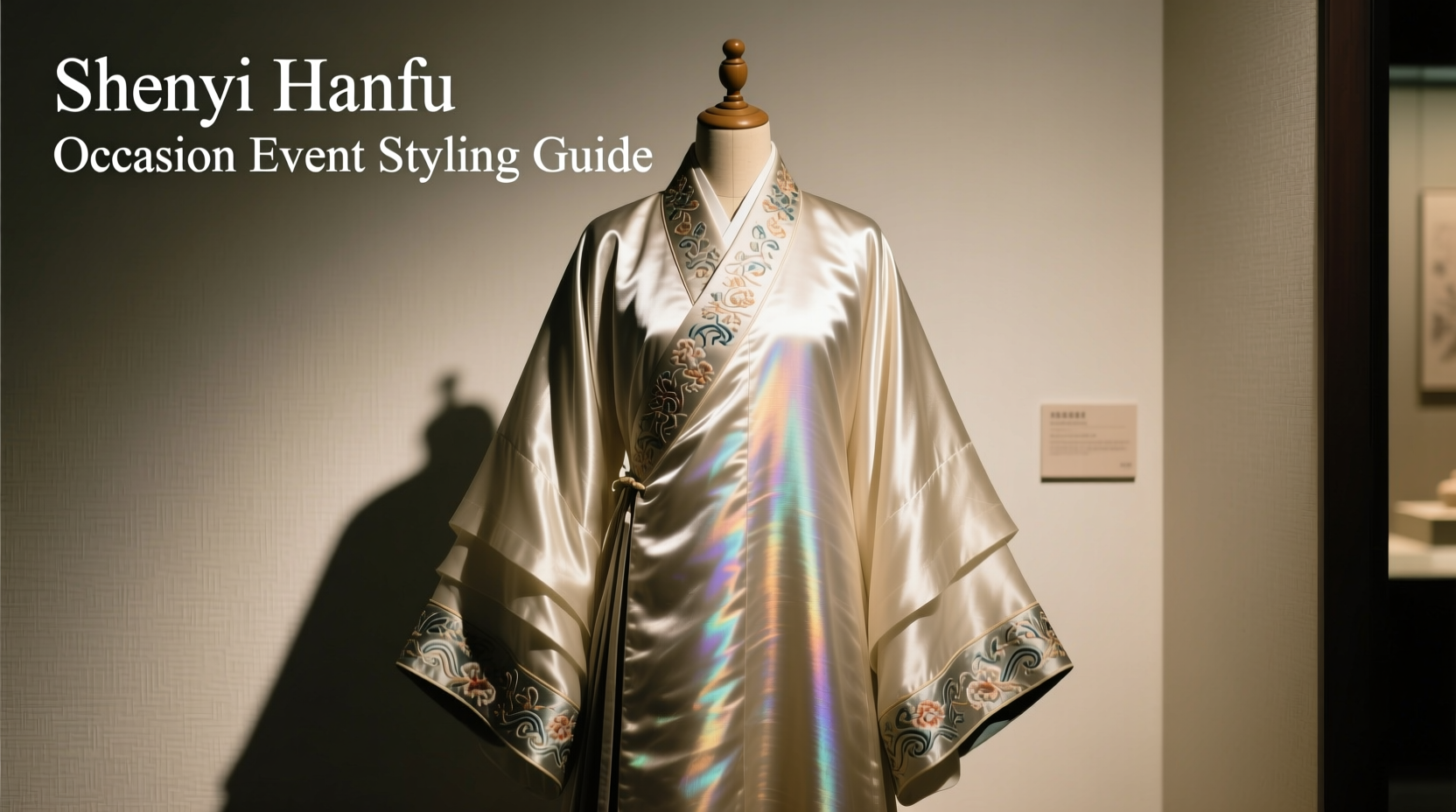
The shenyi (深衣), translating literally to 'deep clothing,' is one of the most historically significant and philosophically profound garments in the Hanfu tradition. Originating in the pre-Qin period and reaching its zenith during the Han Dynasty (202 BCE – 220 CE), the shenyi is defined by its unique construction: the upper garment (yi) and lower skirt (chang) are cut separately but sewn together to form a single, continuous robe. This design was intended to 'deeply' cover the body, reflecting the Confucian virtues of modesty, propriety, and social harmony.
Every structural element of the shenyi carries cosmological weight. According to the Book of Rites (Liji), a traditional shenyi is constructed from exactly twelve fabric panels (shier fu), representing the twelve months of the year. The collar is round to symbolize heaven, while the hem is squared to represent the earth. Furthermore, the garment strictly adheres to the jiaoling youren protocol—the left lapel crosses over the right. Reversing this (right over left) is a cultural taboo reserved exclusively for dressing the deceased, making correct wrapping a vital point of cultural respect for modern wearers.
Quju vs. Zhiju: Choosing the Right Silhouette
When selecting a shenyi hanfu for an event, you will primarily encounter two historical silhouettes: the Quju (curved hem) and the Zhiju (straight hem). Understanding the distinction is crucial for matching the garment to the formality and historical aesthetic of your occasion.
| Feature | Quju (Curved Hem) | Zhiju (Straight Hem) |
|---|---|---|
| Historical Peak | Western Han Dynasty | Eastern Han Dynasty |
| Silhouette | Wraps spirally around the body; hem flares outward. | Falls straight down; more relaxed and structured. |
| Formality | Highly formal, ceremonial, elegant. | Semi-formal to formal, scholarly, dignified. |
| Best Modern Occasion | Weddings, coming-of-age rites, stage performances. | Graduations, tea ceremonies, ancestral worship. |
Appropriate Occasions for Shenyi Hanfu
While modern Hanfu enthusiasts often wear lighter garments like the ruqun for daily streetwear, the shenyi is inherently formal. Its weight, structured draping, and historical gravity make it the premier choice for significant life milestones and solemn cultural events.
Guanli, Jili, and Coming-of-Age Ceremonies
The Guanli (capping ceremony for men) and Jili (hair-pinning ceremony for women) are traditional coming-of-age rites experiencing a massive revival in contemporary China. The shenyi is the undisputed garment of choice for these ceremonies. Its twelve-panel construction represents the wearer's transition into a responsible adult who understands the cyclical nature of time and their duties to society. For a Jili, a beautifully embroidered Quju shenyi in deep crimson or indigo conveys the solemnity of the transition.
Traditional Han Dynasty Weddings and Betrothals
Modern Chinese weddings often feature bright red Qing-era or Western-style gowns. However, couples seeking an authentic Han Dynasty wedding aesthetic (Hanli) turn to the shenyi. Historically, Han wedding attire did not use bright red; instead, it utilized Xuan (a deep, near-black blue) and Xun (a dark, earthy red-orange) to symbolize the union of heaven and earth. A groom might wear a straight-hem Zhiju shenyi with a formal cap, while the bride wears a layered, sweeping Quju shenyi. This color protocol offers a striking, historically accurate alternative to modern wedding norms.
Academic Milestones and Ancestral Worship
University graduations and formal academic conferences are increasingly popular venues for the shenyi, particularly the Zhiju style, which projects a scholarly, dignified aura reminiscent of Han Dynasty academics and officials. Similarly, for Jili (sacrificial or ancestral worship rites) held during the Qingming Festival, the shenyi's modest coverage and subdued, respectful color palettes (such as unbleached linen, slate grey, or deep navy) align perfectly with the solemnity of honoring one's lineage.
Fabric, Color Protocols, and Modern Pricing
The material of your shenyi dramatically alters its drape, historical accuracy, and price point. While the China National Silk Museum highlights the historical dominance of hemp, ramie, and early silks for these robes, modern reproductions offer a wider spectrum of textiles.
- Entry-Level / Mass Market ($60 – $150 USD): Typically made from polyester blends or cotton-poly mixes. These are durable and easy to clean, making them suitable for large group ceremonies, student graduations, or theatrical performances. However, they lack the breathability and historical drape of natural fibers.
- Mid-Tier / Enthusiast Grade ($200 – $450 USD): Crafted from high-quality linen, ramie, or viscose-rayon blends. Linen and ramie are historically accurate for summer or everyday formal wear in antiquity. These fabrics offer excellent breathability and a beautiful, structured drape that respects the geometric lines of the shenyi.
- High-End / Artisan Silk ($600 – $1,800+ USD): Woven from genuine mulberry silk, silk brocade, or heavy silk crepe. Often featuring custom embroidery (such as cloud motifs or the zhuyao jade patterns) and hand-finished seams. These are investment pieces reserved for weddings, high-level diplomatic cultural events, or serious collectors.
Styling and Accessorizing the Shenyi
Wearing a shenyi requires a holistic approach to styling. Because the garment itself is voluminous and visually heavy, accessories should be refined and historically grounded.
Hair and Headwear: For men, the shenyi is traditionally paired with a guan (cap) or a jin (head cloth), securing the hair in a topknot. For women, hair is typically styled in elegant, swept updos secured with zan (hair sticks) made of wood, jade, or bone. Avoid overly flashy, modern metallic hairpieces; opt for materials that reflect antiquity.
Jade Pendants (Pei Yu): One of the most vital accessories for a formal shenyi is the pei yu, a complex assembly of jade pendants tied to the waist belt. Historically, the clinking sound of the jade regulated the wearer's walking pace, ensuring a slow, dignified, and measured gait. Today, a simplified jade tassel or a single carved bi-disc pendant tied to the waist sash adds immense cultural authenticity to the ensemble.
Footwear: Avoid modern leather shoes or sneakers. The shenyi should be paired with traditional lu (shoes with upturned toes) or simple, flat cloth boots. Because the hem of the shenyi is designed to cover the feet entirely when standing still, the footwear is only visible in motion, making traditional woven or cloth shoes essential for maintaining the illusion of the era.
Sourcing and Verifying Authentic Garments
As the global interest in Hanfu grows, so does the market for inaccurate 'costume' versions. When sourcing a shenyi, prioritize vendors who provide historical references for their patterns. Institutions like the Victoria and Albert Museum's Asian textile archives and various academic publications on Han Dynasty textiles serve as excellent benchmarks for verifying collar shapes, sleeve widths, and hem constructions.
When purchasing online, look for specialized Hanfu ateliers that offer 'custom sizing' (the shenyi's proportions, particularly the waist-to-hem ratio, must be tailored to the individual to achieve the correct historical drape). Avoid platforms selling 'ancient Chinese robes' that feature Qing Dynasty frog buttons or modern zippers; a true shenyi relies entirely on fabric ties (ying) and the tension of the wrap to stay closed. By understanding the deep philosophical roots and strict construction rules of the shenyi, modern wearers can honor this magnificent garment, ensuring it is worn with the dignity and respect it has commanded for over two millennia.