Sexy Hanfu Guide 2026: Sheer Silks & Tang Dynasty Elegance

When contemporary fashion enthusiasts and cultural reclamationists search for 'sexy hanfu,' they are often unknowingly seeking the revival of one of the most liberal, cosmopolitan, and aesthetically daring periods in Chinese history: the Tang Dynasty (618–907 AD). However, the modern internet is flooded with cheap, mass-produced polyester costumes that fetishize and distort traditional dress. True sensuality in Hanfu is not about artificial exposure; it is rooted in the masterful manipulation of sheer silks, the elegant drape of the Qixiong Ruqun (chest-high skirt), and the sophisticated tailoring of the modern Xin Zhongshi (New Chinese Style) movement.
This deep dive explores the authentic fabrics, historical silhouettes, and artisanal craftsmanship that define alluring, culturally respectful Hanfu in 2026. Whether you are a collector, a stylist, or a heritage enthusiast, understanding the textile science behind these garments is essential for distinguishing between fast-fashion appropriation and genuine sartorial elegance.
The Historical Roots of Sensual Elegance: Tang Dynasty Court Dress
To understand the appeal of form-accentuating and sheer Hanfu, we must look to the Tang Dynasty. Unlike the conservative, high-collared silhouettes of the later Ming and Qing dynasties, Tang court fashion was heavily influenced by Silk Road exchanges, resulting in a culture that celebrated the female form with unprecedented freedom.
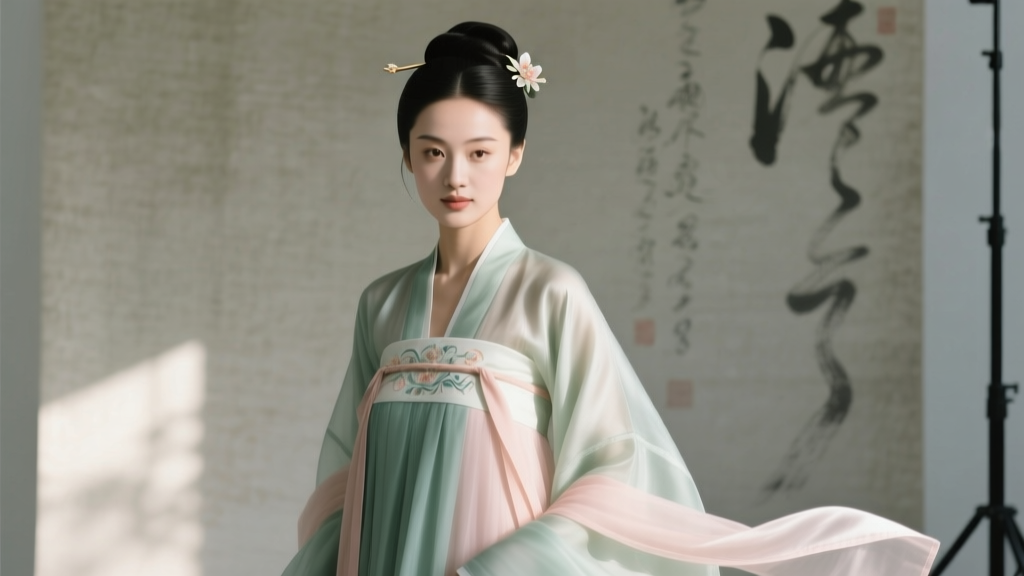
The quintessential 'alluring' garment of this era is the Qixiong Ruqun (齐胸襦裙). This silhouette features a skirt tied high above the bust, often paired with a short, sheer jacket (Shan) and a long, flowing silk shawl (Pibo) draped loosely over bare shoulders and arms. According to the Metropolitan Museum of Art's Heilbrunn Timeline of Art History, Tang dynasty women enjoyed significant social mobility, and their clothing reflected this liberation through lower necklines, sheer layering, and vibrant, unrestrictive draping. The sensuality of the Qixiong Ruqun lies in its fluid movement and the delicate interplay of opaque skirts with translucent, skin-grazing silk gauzes.
The Science of Sheer: Decoding Luo and Sha Silks
The 'sexy' element of authentic Hanfu relies heavily on transparency and drape, achieved through highly specialized silk weaving techniques. The two most prominent sheer fabrics are Luo (罗) and Sha (纱).
Luo (Gauze with Twisted Warps)
Luo is a marvel of ancient textile engineering. Unlike standard plain weaves, Luo involves twisting adjacent warp threads around each other before the weft thread is passed through. This creates a stable, breathable mesh with a beautiful, subtle texture. According to the China National Silk Museum in Hangzhou, the traditional Luo loom is incredibly complex, requiring specialized heddles to twist the threads in real-time. Today, authentic Hualuo (patterned gauze) is woven on modified Jacquard looms, but the structural integrity of the twisted warp remains. It is sheer, yet structurally sound, making it perfect for sheer Shan (tops) and Pibo (shawls) that cling sensually to the skin without tearing.
Sha (Plain Weave Gauze)
Sha is a lighter, more fluid plain-weave silk. It lacks the textured mesh of Luo but offers a glass-like transparency and a liquid drape. High-grade Sha is often used for summer Hanfu, providing a cooling effect while creating a misty, ethereal silhouette that hints at the body beneath.
Xiangyunsha (Gambiered Canton Gauze)
For a darker, more luxurious sensuality, modern designers are turning to Xiangyunsha (香云纱). This intangible cultural heritage fabric from Guangdong is dyed with the juice of the薯莨 (Dioscorea cirrhosa) yam and coated with iron-rich river mud. The result is a dual-toned silk—deep brownish-black on one side, earthy terracotta on the other. It is slightly stiff but molds to the body's heat, offering a sleek, body-conscious drape that is highly prized in 2026's high-end fusion wear.
| Fabric Type | Weave Structure | Drape & Transparency | Best Garment Application | Approx. Price (per meter) |
|---|---|---|---|---|
| Hualuo (Patterned Gauze) | Twisted warp with Jacquard patterns | Structured sheer; textured mesh | Sheer outer Shan, Pibo shawls | $80 - $150 USD |
| Su Sha (Plain Gauze) | Tight plain weave, fine threads | Liquid drape; high transparency | Summer Qixiong layers, sleeves | $40 - $90 USD |
| Xiangyunsha | Plain weave, mud/yam dyed | Sleek, molds to body; opaque | Form-fitting Mamianqun, corsets | $120 - $300+ USD |
Silhouette Architecture: Tailoring the Form
Beyond sheer fabrics, the 'sexy' aesthetic in modern Hanfu is achieved through architectural tailoring that respects historical roots while accommodating contemporary tastes.
The Modern Mamianqun (Horse-Face Skirt)
Historically a Ming Dynasty garment, the Mamianqun has been radically reimagined for 2026. Traditional horse-face skirts are voluminous and floor-length. However, the Xin Zhongshi (New Chinese Style) movement has introduced the 'slit' Mamianqun. By increasing the depth of the side pleats and adding subtle thigh-high slits beneath the overlapping front panels, designers create a garment that flashes the leg during movement. When paired with a fitted, Western-style corset or a cropped traditional Ru, it creates a striking, body-conscious silhouette that is both powerful and alluring.
The Beizi and the Illusion of Depth
The Song Dynasty Beizi (a long, open-front coat) is traditionally worn as an outer layer. In contemporary sensual styling, a sheer, floor-length Beizi made of Luo silk is worn over a fitted, modern slip dress or a cropped Qixiong top. The open front creates a vertical line that elongates the torso, while the sheer fabric provides a veil of modesty that is inherently more captivating than outright exposure.
The Ethics of Sensuality in Cultural Dress
It is vital to address the cultural sensitivity surrounding the term 'sexy hanfu.' The Hanfu revival movement (Hanfu Yundong) has fought hard to establish these garments as respected cultural heritage rather than exotic costumes. Mass-market retailers often produce 'lingerie Hanfu'—garments made of cheap nylon lace, featuring historically inaccurate cutouts and micro-miniskirts. These items strip the clothing of its cultural context and reduce a rich civilization's history to a caricature.
True elegance lies in craftsmanship. The Victoria and Albert Museum's extensive Asian textile archives demonstrate that historical Chinese sensuality was conveyed through the luxury of the material, the poetry of the drape, and the meticulousness of the embroidery—not through the removal of fabric. When investing in alluring Hanfu, prioritize artisans who use natural fibers, traditional flat-cutting techniques, and historically grounded motifs.
Buyer’s Guide: Sourcing Authentic Alluring Hanfu in 2026
If you are looking to build a wardrobe that captures the sensual elegance of Tang and Song aesthetics, here is a framework for sourcing authentic pieces.
- Avoid 'Costume' Keywords: When shopping on platforms like Taobao or specialized Hanfu boutiques, avoid terms like 'cosplay,' 'lingerie,' or 'clubwear.' Instead, search for Tangzhuang Qixiong (Tang chest-high skirt), Zhenzhi Luoshan (Authentic gauze shirt), or Xin Zhongshi Gaoding (New Chinese Style high-end).
- Check the Fiber Content: Authentic sheer Hanfu must be 100% Mulberry Silk (Sangcan Si). Polyester gauze does not breathe, clings unflatteringly to sweat, and lacks the luminous sheen of real silk.
- Examine the Seam Allowance: Traditional Hanfu is flat-cut, meaning the fabric is cut in straight lines to preserve the integrity of the woven silk. Form-fitting 'sexy' Hanfu that uses Western darts and princess seams is a modern fusion. Both are valid, but you must know what you are paying for. High-end fusion pieces will feature hand-rolled hems (Shougun Bian) and invisible stitch work.
Price & Sourcing Matrix
| Garment Category | Material & Craft | Expected Price Range (USD) | Sourcing Notes |
|---|---|---|---|
| Sheer Luo Shan (Top) | 100% Silk Gauze, hand-embroidered | $150 - $350 | Look for Suzhou-based artisan cooperatives. |
| Xin Zhongshi Corset Ru | Silk Brocade with Western boning | $120 - $280 | Independent designers on Xiaohongshu (RED). |
| Slit Mamianqun | Heavy Silk Crepe or Xiangyunsha | $200 - $500+ | Requires custom tailoring for proper pleat alignment. |
Ultimately, the allure of Hanfu lies in its ability to make the wearer feel like a living piece of art. By embracing the sheer mastery of Luo silk, the historical bravery of the Tang silhouette, and the meticulous tailoring of modern fusion, you can achieve a deeply sensual aesthetic that honors the profound legacy of Asian textile craftsmanship.