Qixiong Ruqun Hanfu: A Beginner's Guide to Tang Dress
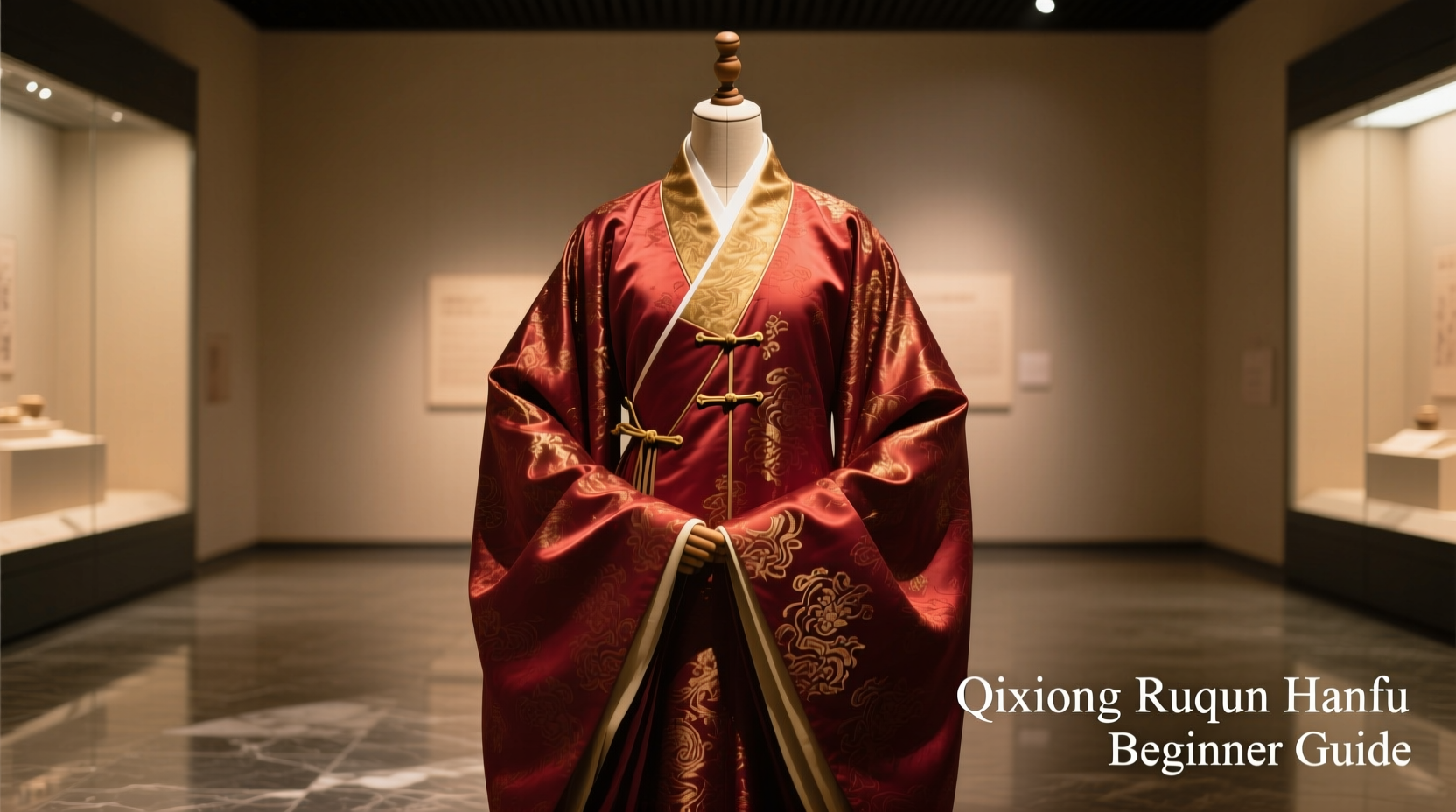
The Hanfu revival movement has brought ancient Chinese clothing back into the global spotlight, and few silhouettes are as instantly recognizable—or as frequently misunderstood—as the Qixiong Ruqun Hanfu. Translating literally to 'chest-high jacket and skirt,' this elegant ensemble is the quintessential representation of women's fashion during the Tang Dynasty (618–907 CE). For beginners stepping into the world of traditional Asian garments, the Qixiong Ruqun offers a breathtaking entry point, blending cosmopolitan history with flowing, romantic aesthetics. However, wearing and purchasing this garment requires an understanding of its unique structural engineering, cultural roots, and modern market realities.
The Allure of the Tang Dynasty Silhouette
To understand the Qixiong Ruqun Hanfu, one must first understand the era that birthed it. The Tang Dynasty is widely regarded as a golden age of Chinese art, culture, and global trade. According to the Metropolitan Museum of Art's Heilbrunn Timeline of Art History, the Tang capital of Chang'an was a cosmopolitan metropolis where Silk Road merchants, diplomats, and artisans from Central Asia, Persia, and India converged. This cross-cultural exchange profoundly influenced Tang fashion, introducing new weaving techniques, vibrant color palettes, and a sense of sartorial freedom for women that was unprecedented in Chinese history. Tang women enjoyed remarkable social mobility—they rode horses, played polo, and managed businesses—and their clothing reflected this dynamic lifestyle, favoring wide sleeves, bold patterns, and commanding silhouettes.
Defining the Qixiong Ruqun vs. Other Hanfu
Beginners often confuse the Qixiong (chest-high) with the Qiyao (waist-high) or Gaoyao (natural high-waist) Ruqun. The defining characteristic of the Qixiong is that the skirt's waistband is tied entirely above the bust line, resting securely on the upper chest. This creates an elongated, statuesque lower body silhouette that was highly prized in Tang aesthetics, which favored voluptuous, commanding figures. It is crucial for beginners to recognize that the Qixiong is not merely a 'high-waisted skirt' in the modern sense, but a specific historical cut that fundamentally alters the wearer's center of gravity and posture.
Anatomy of the Garment: Beyond the Basics
A complete Qixiong Ruqun ensemble is not merely a two-piece outfit; it is a layered system of garments that work together to create the iconic Tang look. Understanding these components is vital for accurate styling and purchasing.
- Shan (衫) or Ru (襦): The upper blouse. While earlier and later dynasties heavily favored cross-collars (Jiaoling), Tang women frequently wore parallel-collars (Duijin) or round-collars, often featuring wide, sweeping sleeves that allowed for ease of movement and revealed intricate inner layers.
- Qun (裙): The chest-high skirt. Historically, these were constructed using multiple trapezoidal panels of fabric sewn together (known as Poqun), creating a natural flare without the bulk of heavy pleating. Interlocking color panels, or Jiansequn, were wildly popular among the elite.
- Pibo (披帛): A long, lightweight silk shawl draped over the shoulders and arms. The Pibo is a direct result of cross-cultural exchange, heavily influenced by Sogdian and Central Asian garments brought via the Silk Road.
- Banbi (半臂): An optional half-sleeve vest worn over the Shan but under the skirt ties, adding a layer of contrasting color and helping to anchor the ensemble.
A crucial note on collar etiquette: While the foundational rule of Hanfu is Jiaoling Youren (left collar over right, symbolizing life and civilization over death), the Tang-era parallel collar (Duijin) does not cross, thus bypassing this rule. However, if you choose a cross-collared Shan to wear beneath your Qixiong skirt, you must strictly adhere to the left-over-right protocol.
The Engineering of the Chest-High Skirt
The most common hurdle for beginners wearing the Qixiong Ruqun Hanfu is gravity. Tying a heavy skirt above the bust presents obvious structural challenges, leading to the infamous 'slipping skirt' phenomenon that plagues many first-time wearers.
Historical vs. Modern Anti-Slip Solutions
Historically, Tang women utilized specific knotting techniques, such as the double-loop friction knot, and often relied on the layered tension of the Banbi vest to keep the skirt secured. Furthermore, the skirts were often tied tightly beneath the armpits rather than directly over the apex of the bust, utilizing the ribcage's natural taper for support. In the modern Hanfu market, manufacturers have introduced practical updates for daily wear. Many contemporary Qixiong skirts feature hidden silicone anti-slip strips sewn into the inner waistband. Some also include a secondary set of inner ties (often made of cotton for grip) that anchor the skirt to the upper garment before the decorative outer silk ties are fastened. When dressing, always ensure the inner ties are pulled taut and crossed at the back before bringing the outer ties to the front, and tie the final knot slightly off-center to distribute weight evenly.
Buyer’s Matrix: Navigating the Modern Hanfu Market
Purchasing your first Qixiong Ruqun can be overwhelming due to the sheer volume of options on platforms like Taobao, AliExpress, and specialized Western Hanfu boutiques. Below is a framework to help you evaluate quality, historical accuracy, and price.
| Tier | Price Range (USD) | Fabric Composition | Best Use Case |
|---|---|---|---|
| Entry-Level | $35 - $65 | Polyester chiffon, basic digital print jacquard | First-time buyers, casual festivals, photography |
| Mid-Tier | $80 - $160 | Silk-rayon blends, woven brocade, textured organza | Hanfu gatherings, daily wear, historical accuracy |
| Artisan/Custom | $250 - $600+ | 100% Mulberry silk, real gold-thread Suzhou brocade | Collectors, formal ceremonies, museum-grade display |
Fabric Composition and Seasonal Wear
When selecting fabrics, consider the season and the drape required for the Pibo. The Victoria and Albert Museum notes that historical Chinese silk weaving achieved unparalleled complexity during the Tang era, utilizing weft-faced compound twills to create vibrant, durable textiles. Today, mid-tier buyers should look for 'Tian Si' (natural silk blends) or high-density jacquard weaves that mimic this historical weight. Avoid overly stiff polyesters for the Qun, as they will not flare correctly and will increase the likelihood of the skirt slipping down. For summer, lightweight chiffon or raw silk for the Shan is ideal, while winter calls for lined velvet or heavy brocade paired with a woolen Banbi.
Cultural Etiquette and Styling Protocols
Wearing the Qixiong Ruqun Hanfu today is an act of cultural appreciation and participation in the living Hanfu Yundong (Hanfu movement). To honor the garment's origins, attention to styling is paramount.
'Clothing in the Tang Dynasty was not merely functional; it was a canvas for expressing the empire's openness, wealth, and the wearer's individual poetry.' — Adapted from studies on Tang material culture and the Asian Art Museum's Silk Road archives.
Hair and Makeup: The chest-high silhouette demands an elaborate updo to balance the proportions. Tang women favored tall buns adorned with gold combs and silk ribbons. For makeup, the traditional Huadian (forehead decal) and Mianye (small dimple-like dots at the corners of the mouth) are beautiful, historically grounded additions that elevate the beginner's look from costume to cultural dress.
Posture and Movement: Because the skirt is tied at the chest, your range of motion in the torso is slightly restricted. Embrace this by adopting a more deliberate, graceful gait. When sitting, gently gather the excess fabric of the skirt and the Pibo to prevent crushing the pleats or sitting awkwardly on the ties. By understanding the structural nuances, historical roots, and modern market realities of the Qixiong Ruqun Hanfu, beginners can confidently step into this magnificent tradition, wearing a piece of Tang Dynasty poetry woven into silk.