Qipao vs Hanfu: A Deep Dive into Fabric and Craftsmanship

The Tailoring Philosophy: Flat Cutting vs. Contour Mapping
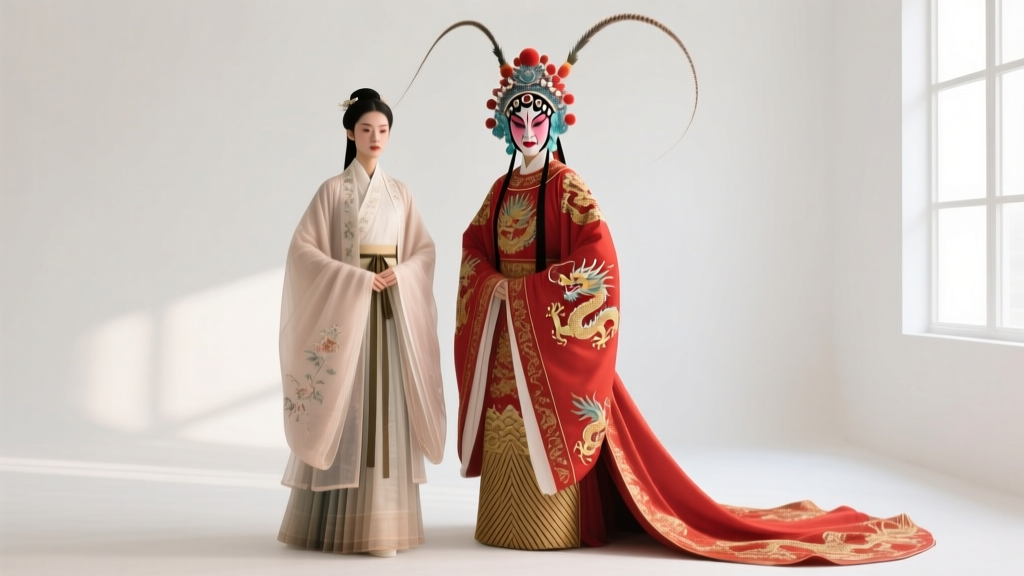
When examining the qipao vs hanfu debate through the lens of master craftsmanship, one must first understand the fundamentally different tailoring philosophies that govern each garment. Hanfu, the traditional clothing of the Han Chinese with a history spanning over three millennia, is rooted in the philosophy of pingmian jiancai (flat cutting). This two-dimensional approach treats the fabric as a sacred, unbroken canvas. Garments like the Shenyi (deep robe) or the Ruqun (jacket and skirt) are constructed without shoulder seams, utilizing the full width of the silk loom. The fabric is folded, draped, and tied, allowing the natural drape of the textile to conform to the human body rather than forcing the body into a sculpted silhouette. The defining jiaoling youren (crossed collar, right over left) relies on precise geometric angles and wide, flowing sleeves that require master-level fabric yield calculations.
Conversely, the modern qipao (cheongsam), which crystallized in 1920s and 1930s Shanghai, represents a radical shift toward three-dimensional contour mapping. While early Republican-era qipao retained the flat-cut, tubular silhouette of Manchu banner robes, the Haipai (Shanghai-style) qipao integrated Western darting, bias cutting, and set-in sleeves (zhuangxiu). Master tailors in Shanghai began mapping the human form, introducing subtle bust and waist darts, and utilizing guisun (underarm gussets) to allow for mobility despite the garment's form-fitting nature. The transition from flat cutting to 3D tailoring marks the most significant structural divergence between these two iconic garments.
Textile Traditions: Weaving the Threads of History
Hanfu Silks: Shu Brocade and Xiangyunsha
The revival of Hanfu in the 21st century has sparked a renaissance in heritage weaving techniques. According to the China National Silk Museum, historical Hanfu relies heavily on complex jacquard weaves like Songjin (Song Brocade) and Shujin (Shu Brocade from Sichuan). These textiles feature warp-faced weaves where the pattern is integrated directly into the fabric structure, creating a durable, reversible textile with a subtle, matte luster.
Perhaps the most prized textile in premium Hanfu craftsmanship is Xiangyunsha (Gambiered Canton Gauze). Originating from Guangdong, this silk is dyed using the tannin-rich juice of the Dioscorea cirrhosa tuber and then coated in iron-rich river mud. This botanical and chemical reaction creates a distinctive dual-toned fabric: a rich, dark brownish-black on one side and a warm terracotta on the other. The process requires over a dozen steps and months of sun-drying, resulting in a crisp, rustling silk that is naturally antimicrobial and highly breathable, making it the pinnacle of Hanfu summer textiles.
Qipao Textiles: Republican-Era Jacquards and Velvets
The qipao demands fabrics that possess structural memory and fluid drape to support its tailored silhouette. During the golden age of the 1930s, Shanghai tailors favored Zhangzhou silk velvet and heavy crepe de chine. The velvet, woven with a complex loop-pile technique that is sheared to create plush, light-catching patterns, provided a luxurious depth that complemented the qipao's high Mandarin collar. Today, bespoke qipao artisans frequently utilize heavy silk brocades and digital-printed silk satin, but the most revered masters still seek out vintage Republic-era geometrical Art Deco prints and hand-woven Kesi (silk tapestry) for their most exclusive commissions.
Embellishment and Surface Ornamentation Techniques
Su Embroidery and Woven Motifs in Hanfu
Hanfu ornamentation is often woven directly into the fabric or applied as expansive, narrative embroidery. The Victoria and Albert Museum's Asian textile archives highlight the historical prominence of Su Xiu (Suzhou embroidery) in formal Han garments. Characterized by split-silk threads—where a single silk filament is divided into up to 48 microscopic strands—Su embroidery allows for photorealistic gradients in depicting cranes, peonies, and dragons. On the Mamianqun (horse-face skirt), embroidery is strategically placed on the flat front and back panels (mamen), while the pleated sides remain unadorned to preserve the fabric's kinetic movement.
Piping (Gunbian) and Pankou Knots in Qipao
If Hanfu relies on expansive embroidery, the qipao masters the art of linear geometry and micro-craftsmanship. The defining ornamental feature of the qipao is Gunbian (piping). Master tailors cut bias strips of contrasting silk, sometimes as narrow as two millimeters, and hand-stitch them along the collar, lapels, and side slits (kaicha). Complex qipao feature double or triple piping, requiring hundreds of hours of invisible hand-stitching to ensure the fabric lays perfectly flat against the body's curves.
Equally critical are the Pankou (frog buttons). Far from mere fasteners, these hand-knotted silk cords are sculpted into intricate motifs like plum blossoms, swallows, or the Ruyi scepter. A master knot-maker uses a combination of hard-wiring (inserting copper wire into the silk tube) and soft-stuffing (filling the silk tube with cotton) to create three-dimensional, structural knots that serve as the jewelry of the garment.
Construction Details and Sourcing Guide
For collectors and enthusiasts navigating the 2026 bespoke market, understanding the construction markers of authenticity is vital. Below is a comparative framework for evaluating master-level craftsmanship in both traditions.
| Feature | Hanfu (Heritage Construction) | Qipao (Haipai Bespoke) |
|---|---|---|
| Cutting Method | Pingmian jiancai (2D flat cutting, no shoulder seams) | 3D contour mapping, bust/waist darts, bias cuts |
| Collar Structure | Jiaoling youren (crossed, right over left, unstructured) | Yuanling or Liling (Mandarin collar, heavily interfaced) |
| Fasteners | Hidden ties (xi), sashes, and jade toggle belts | Hand-knotted Pankou (frog buttons), hidden side zippers |
| Primary Silk Types | Xiangyunsha, Song Brocade, Luo (gauze) | Zhangzhou Velvet, Crepe de Chine, Heavy Satin |
| Bespoke Price Range | $400 – $1,500+ (depending on Xiangyunsha yardage) | $800 – $3,000+ (Shanghai/HK master tailors) |
When sourcing authentic Hanfu, buyers should seek out artisan cooperatives in Hangzhou and Suzhou that specialize in wooden-loom brocade weaving. For Xiangyunsha, verify the origin of the mud-dyeing process, as authentic Guangdong production carries a distinct, earthy scent and a characteristic crackling sound when manipulated. The Metropolitan Museum of Art's Asian Art archives provide excellent visual references for historical textile patterns to help buyers distinguish between authentic heritage reproductions and mass-market, digitally printed polyester imitations.
For the qipao, true bespoke craftsmanship is found in the remaining heritage ateliers of Shanghai's Changle Road and Hong Kong's Central district. A master tailor will conduct at least three fittings, utilizing a muslin toile to perfect the guisun (gusset) placement, ensuring the armhole allows for full range of motion without pulling the delicate silk piping. The hallmark of a master-crafted qipao is that the pattern of the fabric flows continuously across the side seams and darts, a technique known as pattern matching, which requires significantly more yardage and expert cutting.
Caring for Heritage Garments
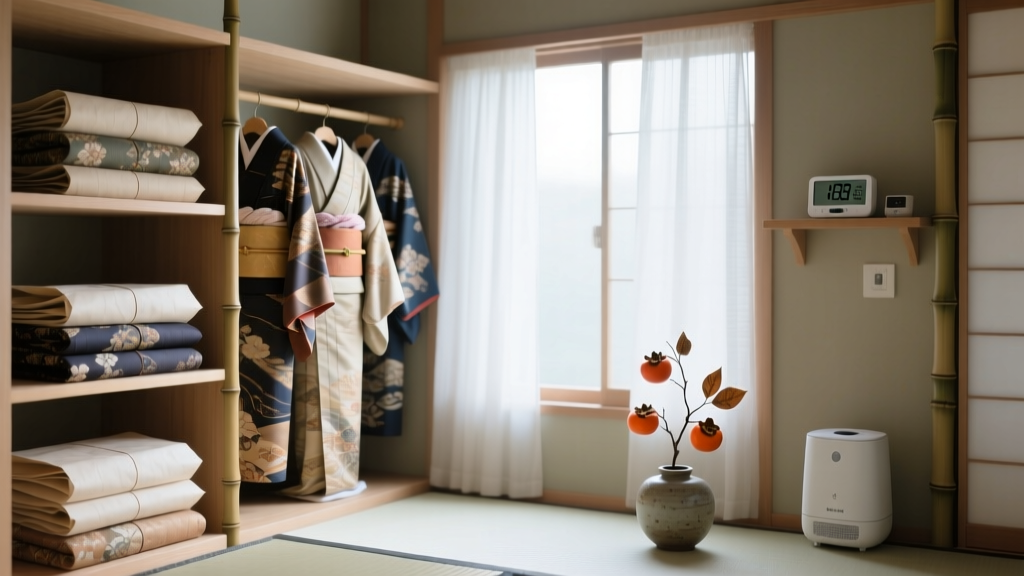
The longevity of these garments relies on meticulous care. Hanfu woven from Luo (open-work gauze) or Xiangyunsha should never be dry-cleaned with harsh chemicals, as this strips the natural botanical coatings. Instead, they should be gently hand-washed in cool water with a pH-neutral silk detergent and dried in the shade. Qipao, particularly those structured with heavy interfacing in the collar and hem, require professional wet-cleaning by specialists who understand how to reshape the bias-cut silk and re-stiffen the collar without damaging the delicate Pankou knots. Storing both garments flat, rolled around acid-free tissue paper rather than hung on wire hangers, preserves the structural integrity of the silk fibers for generations to come.