Qipao Pronunciation & Care: Preserving Silk Cheongsams
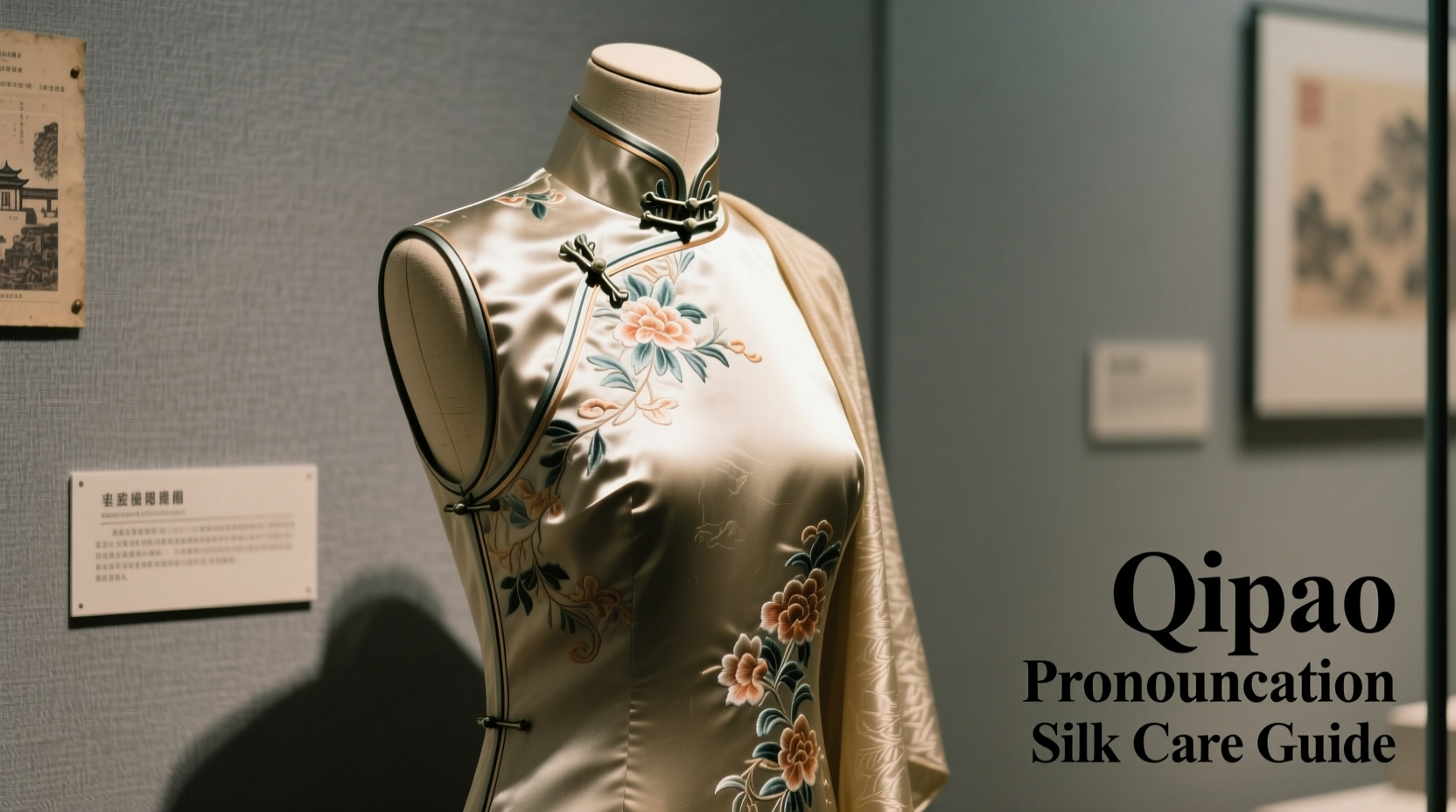
For vintage textile collectors and contemporary wearers alike, the journey of preserving a traditional Chinese garment begins long before the first wash. It begins with language. Understanding the correct qipao pronunciation and its regional linguistic variations is not merely an exercise in cultural respect; it is the foundational step in identifying the garment’s specific tailoring lineage, fabric origin, and structural requirements. Misidentifying a Shanghainese bias-cut silk as a generic Cantonese cheongsam often leads collectors to apply generalized 'silk care' methods that can irreversibly damage heritage textiles.
This comprehensive care and maintenance guide bridges the gap between linguistic accuracy and textile conservation, providing actionable, expert-level protocols for preserving the intricate construction and delicate fibers of Asia’s most iconic garment.
The Linguistics of the Dress: Qipao Pronunciation and Regional Origins
To properly care for a garment, you must first know how to identify its regional roots, which are encoded in its name. The Western habit of flattening all Chinese traditional dresses into a single category obscures the distinct tailoring and fabric traditions that dictate how the garment must be maintained.
Mandarin, Cantonese, and Shanghainese Distinctions
- Qipao (Mandarin): Pronounced /tɕʰǐ pʰɑ̌ʊ/ (chee-paow). Historically referring to the 'banner gown' worn by Manchu women during the Qing Dynasty (1644–1912), the modern qipao evolved in the 1920s and 1930s. Garments identified strictly as qipaos often feature heavier brocades, structural linings, and distinct northern tailoring influences that require specialized dry-cleaning solvents.
- Cheongsam (Cantonese): Pronounced /tsʰœ̌ːŋ sɐ́m/ (chuhng-saam). Originally denoting a men's long gown, this term was adopted by Westerners via Hong Kong and Guangzhou. Cantonese iterations frequently utilize specialized regional silks like Xiangyunsha, which demand highly specific, non-alkaline washing protocols.
- Zansae (Shanghainese): The localized Wu dialect term for the form-fitting, bias-cut dresses popularized in 1930s Shanghai. These garments are defined by their fluid draping and delicate crepe de chine silks, requiring meticulous storage to prevent the bias grain from warping.
By mastering the correct qipao pronunciation and asking sellers or tailors for the specific regional terminology, you can accurately trace the textile's origin, unlocking the correct conservation methodology.
Fabric Identification by Name: Why Terminology Dictates Care
The intangible cultural heritage of Chinese silk weaving is vast. Knowing the native name of the fabric is critical, as English translations often fail to capture the chemical and physical properties of the textile.
Xiangyunsha (Gambiered Canton Gauze) Maintenance
Originating from the Pearl River Delta, Xiangyunsha is a legendary silk dyed using the juice of the Dioscorea cirrhosa tuber and coated with iron-rich river mud. Recognized by the UNESCO Intangible Cultural Heritage registry, this fabric is celebrated for its crisp, leathery texture and natural cooling properties.
Care Protocol:
- Never use alkaline detergents. The mud-coating process relies on a delicate chemical reaction between tannins and iron. Alkaline soaps will strip the finish and cause the silk fibroin to degrade.
- Use pH-balanced cleansers. Wash by hand in cool water (under 30°C) using a pH 5.5 to 6.5 specialized silk wash.
- Avoid direct sunlight. While the dye is relatively colorfast, UV exposure can brittle the mud-coated fibers. Always air-dry in deep shade.
Song Brocade (Songjin) and Velvet Protocols
Songjin, originating from the Song Dynasty (960–1279), is a heavy, intricately patterned brocade often used for formal, winter-weight qipaos. Because of its complex supplementary weft threads and metallic yarns, water washing is strictly prohibited.
Care Protocol:
- Hydrocarbon Dry Cleaning Only. Standard perchloroethylene (perc) solvents used in commercial dry cleaning can dissolve the natural sericin (silk gum) holding the metallic threads in place. Request a specialist who uses hydrocarbon or liquid silicone solvents.
- Surface Dusting. Between wears, use a soft horsehair brush to gently sweep the brocade in the direction of the weave to dislodge particulate matter that can act as an abrasive on the fibers.
The Anatomy of the Pan Kou: Cleaning Hand-Knotted Fasteners
The pan kou (frog fasteners) are the signature closures of the qipao, hand-knotted from silk cords and often featuring a core of cotton, paper, or wire to maintain their rigid, floral, or geometric shapes. These fasteners are highly vulnerable to moisture.
If a pan kou is submerged in water, the inner core can expand, warp, or develop mildew, permanently ruining the structural integrity of the knot. Furthermore, the tight twisting of the silk cord makes it nearly impossible to rinse out detergent residue.
Spot-Cleaning Technique:
- Unfasten all pan kou before any cleaning process to relieve tension on the silk cords.
- For surface stains, use a micro-steamer held at least six inches away to gently lift the dirt.
- Dab the area with a lint-free microfiber cloth lightly dampened with distilled water.
- Allow to air dry completely before refastening to prevent the silk from stretching out of its knotted shape.
Storage Architecture: Preserving the 1930s Bias Cut
The evolution of the qipao in 1930s Shanghai introduced the Western concept of the bias cut to traditional Chinese tailoring. While this allowed the silk to cling fluidly to the body, it also made the garment highly susceptible to gravity-induced stretching and permanent creasing along the grainline.
According to textile conservation guidelines outlined by institutions like the Victoria and Albert Museum's Asian Collections, folding a bias-cut silk qipao for long-term storage will result in irreversible fiber breakage along the fold lines.
The Rolling Method:
- Acid-Free Interleaving: Lay the qipao flat on a sheet of unbuffered, acid-free tissue paper. Do not use buffered tissue, as the alkaline calcium carbonate can react negatively with vintage silk dyes.
- Padding the Collar: The stiffened Mandarin collar (often reinforced with buckram or heavy interfacing) should be stuffed with a small roll of acid-free tissue to maintain its cylindrical shape and prevent crushing.
- Roll, Don't Fold: Gently roll the garment around a cardboard tube (covered in washed, unbleached muslin) starting from the hem and moving toward the collar.
- Climate Control: Store in a dark, climate-controlled environment maintaining a relative humidity (RH) of 45% to 55%. Fluctuations in humidity cause the silk fibers to expand and contract, weakening the tension of the hand-stitched seams.
Terminology, Fabric, and Cleaning Matrix
Use this quick-reference chart to match your garment's linguistic and regional identification to the correct maintenance protocol.
| Native Term (Pronunciation) | Regional Origin | Primary Material | Washing Protocol | Storage Rule |
|---|---|---|---|---|
| Qipao (chee-paow) | Northern / Beijing | Heavy Brocade, Wool | Hydrocarbon Dry Clean | Padded Hanger, Breathable Cover |
| Zansae (Shanghainese) | Shanghai | Crepe de Chine, Bias-cut Silk | pH-Neutral Hand Wash | Roll on Acid-Free Tube |
| Cheongsam (chuhng-saam) | Guangdong / HK | Xiangyunsha, Linen | Cool Water, No Alkaline Soap | Flat Storage, Shade Dry |
| Songjin (soong-jeen) | Suzhou / Jiangnan | Song Brocade, Metallic Threads | Spot Clean / Specialist Solvent | Interleaved Flat Storage |
Professional Conservation vs. Standard Dry Cleaning
Knowing when to hand a garment to a standard dry cleaner versus a professional textile conservator is vital for preserving the financial and historical value of your collection. Standard dry cleaning costs for a specialized silk qipao typically range from $40 to $85 USD. However, commercial pressing machines used by standard cleaners operate at high heat and pressure, which can crush the three-dimensional texture of Xiangyunsha and flatten the intricate knots of the pan kou.
If your garment is a pre-1940s vintage piece, features severe shattering (silk degradation), or includes rare Metropolitan Museum of Art-recognized embroidery techniques like Kesi (silk tapestry), bypass the dry cleaner entirely. Seek a certified textile conservator. Professional conservation stabilization, which involves custom dyeing support fabrics and applying microscopic stitching to halt fiber loss, typically starts at $300 to $500 USD but is essential for museum-grade preservation.
Ultimately, the preservation of the qipao is an act of cultural stewardship. By respecting the precise qipao pronunciation and understanding the deep regional histories embedded in its fabrics and fasteners, collectors and wearers ensure that this masterwork of Asian sartorial engineering survives for future generations.