Qipao Men Style Guide 2026: Changshan and Tangzhuang

The 'Qipao Men' Search: Decoding Traditional Menswear
When exploring global heritage fashion trends for 2026, the search term qipao men frequently surfaces among enthusiasts of Asian traditional clothing. However, a crucial point of cultural and historical clarification is required before building a wardrobe. The qipao (also known as the cheongsam in Cantonese) is historically and fundamentally a women’s garment, evolving from the Manchu chenyi of the Qing Dynasty into the form-fitting, iconic silhouette of 1920s Shanghai.
Therefore, when menswear enthusiasts search for 'qipao men,' they are typically seeking the male equivalents that share the same iconic design DNA: the stiff mandarin collar (liling), the intricate knotted frog fasteners (pankou), and the rich silk or linen textiles. In traditional Chinese sartorial culture, these male garments are the changshan (long gown) and the magua or tangzhuang (jackets). Understanding this distinction is the first step toward wearing these garments with cultural respect, historical accuracy, and modern sartorial flair.
Terminology and Historical Lineage
To style these garments correctly, one must understand their origins. According to the Metropolitan Museum of Art's Asian Art Department, the Qing Dynasty (1644–1911) established strict sumptuary laws that dictated the cut, color, and motifs of court and daily wear. The foundational male garments of this era were the changshan (a long, straight-cut shirt reaching the calves) and the magua (a waist-length riding jacket worn over the gown).
The modern tangzhuang (Tang Suit) is actually a contemporary hybrid. It gained massive global prominence during the 2001 APEC Summit in Shanghai, when world leaders were photographed in brightly colored, brocade jackets. While marketed as 'traditional,' the modern tangzhuang incorporates Western tailoring techniques, such as shoulder seams and darts, which were entirely absent in historical flat-pattern Chinese cutting. In 2026, the most sophisticated menswear approaches blend the historical flat-cut drape of the authentic changshan with the structured convenience of the modern tangzhuang.
Anatomy of the Garment: Collars, Knots, and Cuts
The Mandarin Collar (Liling)
The defining feature of these garments is the standing band collar. Unlike Western collars that fold over, the liling stands upright, framing the neck and elongating the torso. In 2026 styling, a well-fitted liling should allow exactly one finger's width of space between the collar and the neck to ensure comfort without sacrificing the garment's architectural silhouette.
The Art of Pankou (Frog Fasteners)
Instead of buttons, these garments utilize pankou—hand-woven knotted cords that serve as both functional fasteners and symbolic jewelry. Artisans at the China National Silk Museum preserve the techniques of creating complex pankou shapes. While the standard straight knot (zhi pan) is common for daily wear, formal garments may feature intricate shapes like the plum blossom, butterfly, or longevity knot. When purchasing, always inspect the pankou; high-quality garments feature tightly wound, hand-stitched silk cords, whereas mass-market versions use glued synthetic loops that fray easily.
Flat-Pattern Cutting vs. Western Tailoring
Authentic historical garments are cut using a flat-pattern method. The front, back, and sleeves are often cut from a single continuous piece of fabric with no shoulder seams. This creates a distinctive, relaxed drape that requires the wearer to maintain good posture to look its best. Modern adaptations often introduce Western shoulder seams for a sharper, more structured fit.
Fabric Matrix: Choosing the Right Textile for 2026
Selecting the appropriate fabric is critical for transitioning these garments from 'costume' to 'contemporary menswear.' The Victoria and Albert Museum's Chinese Textiles collection highlights the historical importance of silk brocades and damasks, but modern styling requires a more nuanced approach to textiles.
| Garment Type | Traditional Name | Best For | 2026 Fabric Recommendation | Price Range (USD) |
|---|---|---|---|---|
| Long Gown | Changshan | Formal events, weddings, gallery openings | Raw silk, heavy linen, matte wool blends | $180 - $550 |
| Riding Jacket | Magua | Layering, semi-formal evening wear | Silk-velvet, subtle jacquard, textured cotton | $220 - $700 |
| Modern Jacket | Tangzhuang | Festivals, smart-casual heritage styling | Cotton-linen slubs, herringbone wool | $90 - $300 |
Expert Tip: Avoid high-shine polyester brocades, which are heavily mass-produced for tourist markets and stage performances. Opt for matte finishes, slubbed linens, or raw silks that absorb light and integrate seamlessly with a modern minimalist wardrobe.
2026 Styling Frameworks: How to Wear Traditional Menswear Today
Integrating the changshan or tangzhuang into a modern wardrobe requires balancing proportion, texture, and formality. Here are three actionable styling frameworks for the contemporary man.
Framework 1: The Minimalist Tangzhuang (Smart Casual)
For a sophisticated weekend or dinner look, pair a matte, charcoal-grey linen tangzhuang with dark, raw selvedge denim. The contrast between the ancient pankou fasteners and the rugged, utilitarian nature of raw denim creates a striking visual tension. Complete the look with minimalist leather Chelsea boots or clean, white leather sneakers. Keep the jacket unbuttoned at the bottom two fasteners to allow for ease of movement and a relaxed drape.
Framework 2: The Winter Changshan (Elevated Formal)
The changshan is an exceptional alternative to the standard overcoat or suit for winter events. Choose a mid-weight wool or heavy raw silk changshan in deep navy or forest green. Layer it over a fine-gauge merino wool turtleneck. The high collar of the turtleneck complements the liling without competing with it. Pair with tailored wool trousers and leather loafers. This silhouette echoes the intellectual, scholarly aesthetics of the 1920s Chinese literati, updated for modern climate and comfort.
Framework 3: The Avant-Garde Magua (Streetwear Edge)
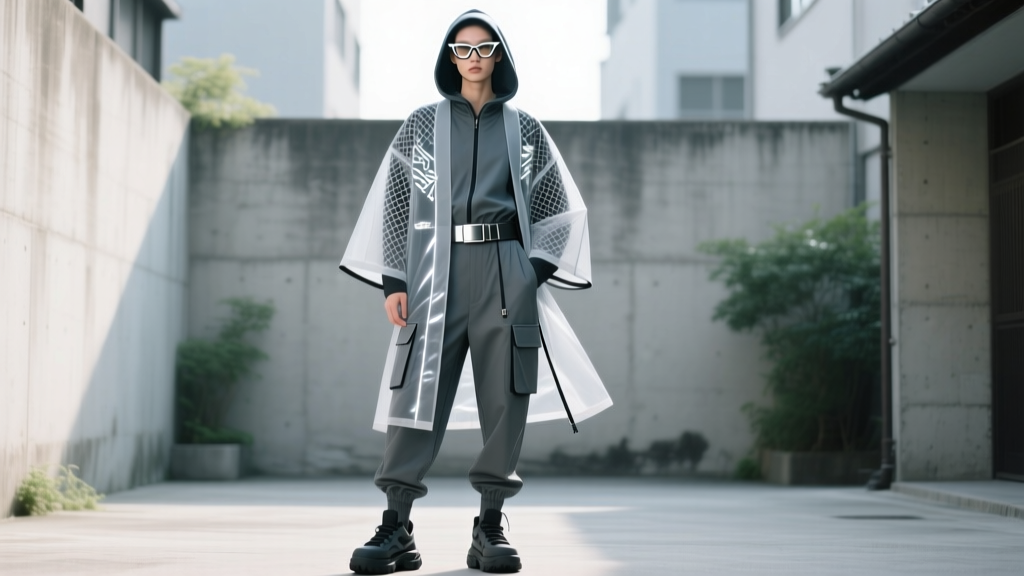
For fashion-forward streetwear, the waist-length magua functions similarly to a bomber jacket or a Harrington. Select a magua in a textured cotton or subtle tonal jacquard. Wear it over a heavyweight, boxy graphic tee or a relaxed-fit hoodie, allowing the hood to rest outside the mandarin collar. Pair with wide-leg pleated trousers and chunky derbies. This approach treats the heritage garment as a structural piece of outerwear, honoring its origins as a practical riding jacket.
Sourcing and Investment Guide
When investing in these garments, provenance and construction quality are paramount. Off-the-rack options from fast-fashion retailers often feature incorrect lapel wrapping and synthetic pankou.
- Bespoke Tailors in Shanghai and Hong Kong: For an authentic, made-to-measure changshan, expect to pay between $300 and $800. Tailors in these regions still employ master artisans who hand-roll the pankou knots.
- Contemporary Heritage Brands: Brands focusing on 'Neo-Chinese' (Xin Zhongshi) aesthetics offer modernized cuts with Western shoulder seams, typically ranging from $150 to $400.
- Vintage Markets: Authentic mid-century magua jackets can be found in high-end vintage archives, often featuring incredible hand-embroidery, though they require careful preservation.
Cultural Etiquette: The Rule of the Lapel
The most critical rule when wearing any traditional Chinese garment—whether a historical changshan or a modern adaptation—is the direction of the lapel. This concept is known as jiaoling youren (交领右衽). The left side of the garment must always cross over the right side, with the fasteners securing on the wearer's right side.
In traditional Chinese culture, wrapping the left over the right represents the living, the civilized, and the harmonious order of the universe. Conversely, wrapping the right over the left is strictly reserved for dressing the deceased for burial. When buying modern interpretations or 'qipao men' adaptations from Western fast-fashion brands, always check the lapel direction; many mass-produced items get this wrong due to a lack of cultural literacy. Ensuring your garment follows jiaoling youren is the ultimate sign of respect for the living tradition of Asian sartorial heritage.