What Is a Qipao Dress? Regional Variations and Substyles

When fashion historians, collectors, and modern enthusiasts ask, 'what is a qipao dress?', the answer requires looking far beyond a single, monolithic silhouette. Known in Cantonese as the cheongsam (long dress) and in Mandarin as the qipao, this iconic garment is a masterclass in sartorial evolution. Originating from the loose, floor-length changpao worn by Manchu women during the Qing Dynasty (1644–1912), the qipao was radically reimagined in the 20th century. Today, it stands as a living testament to Chinese craftsmanship, feminist history, and regional textile traditions.
To truly understand the qipao, one must examine its distinct regional substyles. The garment's construction, fabric choice, and tailoring philosophy shift dramatically depending on whether it was born in the cosmopolitan alleys of Shanghai, the imperial shadow of Beijing, or the humid, pragmatic climate of Canton.
The Haipai (Shanghai) Revolution: Tailoring the Modern Form
The Shanghai-style qipao, or Haipai, is the silhouette most frequently recognized globally. Emerging in the 1920s and peaking in the 1930s, this style was championed by progressive female students and socialites who sought a garment that reflected modern femininity and bodily autonomy.
Anatomy of the Shanghai Silhouette
Unlike traditional Chinese garments which relied on flat-pattern cutting and geometric draping, the Shanghai qipao incorporated Western tailoring techniques. Artisans introduced darts, set-in sleeves, and gussets to create a form-fitting, three-dimensional shape that followed the natural curves of the body.
- The Collar: The yuanbao ling (ingot collar) is a stiff, high Mandarin collar that frames the jawline, often reinforced with interfacing to maintain its rigid posture.
- The Pankou: These intricate, hand-knotted frog fasteners are both functional and decorative. Master artisans spend hours crafting motifs like the plum blossom, butterfly, or longevity knot using silk-wrapped copper wire.
- The Kaicha (Slits): Side slits were raised to the knee or upper thigh in the 1930s, a daring departure from modesty norms that allowed for greater mobility and revealed glimpses of silk stockings and high heels.
'The Shanghai qipao of the 1930s was not merely clothing; it was an architectural negotiation between Eastern textile traditions and Western structural tailoring.' — Metropolitan Museum of Art, Asian Art Department
Jingpai (Beijing) Grandeur: Imperial Echoes and Heavy Brocades
While Shanghai embraced Western tailoring, the Beijing-style qipao (Jingpai) remained deeply rooted in traditional Han and Manchu aesthetics. The Jingpai silhouette is inherently more conservative, prioritizing the opulence of the textile over the contours of the wearer's body.
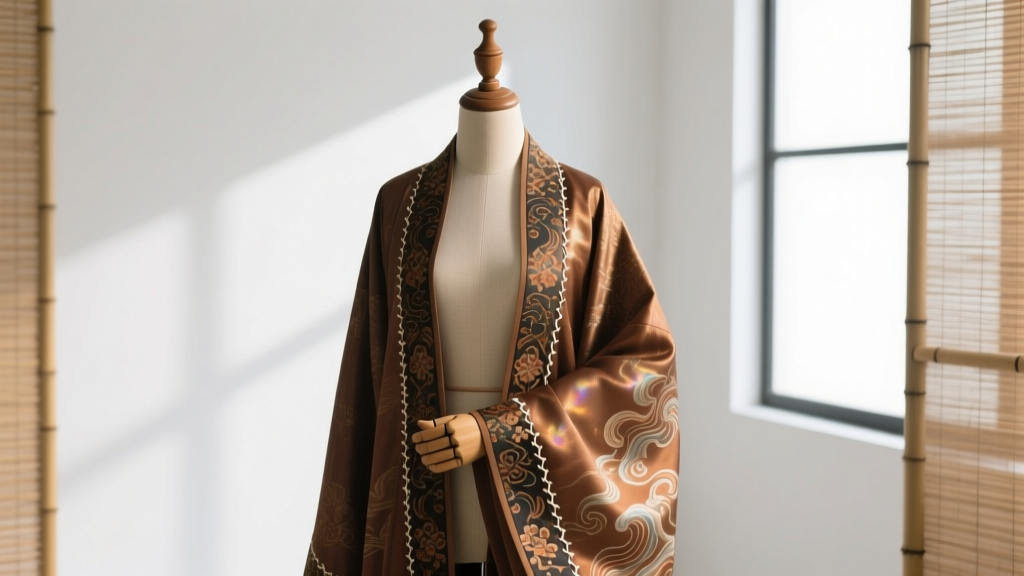
Jingpai qipaos are characterized by a looser, A-line or straight cut that obscures the figure. The construction relies on traditional flat-cutting, meaning the fabric is cut in straight lines without darts, allowing the garment to drape naturally. The true value of a Beijing-style qipao lies in its surface ornamentation. Artisans utilize heavy silk brocades, velvets, and kedi (cut silk) tapestries. Embroidery is dense and symbolic, often featuring imperial motifs such as dragons, phoenixes, peonies, and bats (symbolizing good fortune).
The slits on a Jingpai qipao are typically lower, and the sleeves are often wider and longer, echoing the aristocratic mangpao (dragon robes) of the Qing court. It remains the preferred substyle for formal state banquets, traditional weddings, and cultural performances where modesty and heritage are paramount.
Yuepai (Cantonese) Pragmatism: Climate and Contemporary Fusion
In the southern Lingnan region, encompassing Guangdong and Hong Kong, the Yuepai (Cantonese style) evolved to combat subtropical heat and humidity. The Cantonese qipao is defined by its pragmatism, breathability, and innovative use of regional textiles.
The Magic of Xiangyunsha
The most prized textile in the Yuepai tradition is Xiangyunsha (gambiered Canton gauze). Recognized as an intangible cultural heritage, this silk is dyed using the juice of the Dioscorea cirrhosa (shoulang) tuber and coated with iron-rich river mud from the Pearl Delta. The resulting fabric is dark, lustrous, slightly crisp, and highly resistant to moisture and wrinkles—making it the ultimate luxury textile for humid climates. According to the China National Silk Museum, the complex sun-baking and mud-coating process can take weeks, resulting in a fabric that rustles softly and cools the skin.
Cantonese qipaos also feature shorter hemlines, cap sleeves or sleeveless cuts, and lower, more relaxed collars. In mid-century Hong Kong, the Yuepai style adapted further into everyday workwear, utilizing practical cottons and linens, eventually influencing the 'kung fu' aesthetic seen in global cinema.
Comparative Matrix: Regional Qipao Substyles
| Feature | Haipai (Shanghai) | Jingpai (Beijing) | Yuepai (Cantonese) |
|---|---|---|---|
| Silhouette & Fit | Form-fitting, darted, 3D tailoring | Loose, straight/A-line, flat-cut | Relaxed, practical, varying lengths |
| Primary Textiles | Mulberry silk, crepe, lace, rayon | Heavy brocade, velvet, tapestry | Xiangyunsha, linen, cotton |
| Collar & Slits | High stiff collar, high thigh slits | Moderate collar, low calf slits | Lower/softer collar, moderate slits |
| Ornamentation | Minimalist, fabric-led, piping | Dense embroidery, imperial motifs | Subtle, texture-led, functional |
| Cultural Context | 1930s modernity, cosmopolitan chic | Imperial heritage, formal statecraft | Subtropical pragmatism, daily wear |
Sourcing and Bespoke Pricing: A Buyer's Framework
Acquiring an authentic qipao requires navigating a market that ranges from mass-produced costumes to master-level bespoke tailoring. For those seeking a genuine cultural garment, understanding the pricing tiers and construction markers is essential. The Victoria and Albert Museum's Asia Collections frequently highlight the importance of examining the interior finishing and the hand-knotting of the pankou as markers of true artisan quality.
Price Tiers and Fabric Composition
- Off-the-Rack / Fast Fashion ($40 – $120 USD): Typically made from polyester blends or low-grade synthetic brocades. The pankou are often machine-made or glued. The flat pattern cutting results in poor fit across the bust and shoulders. Suitable for casual wear or costumes, but lacks cultural longevity.
- Mid-Tier Boutique & RTW ($150 – $450 USD): Features genuine mulberry silk, crepe de chine, or linen. Construction includes basic Western darts and finished interior seams. The pankou are usually hand-knotted but feature simpler designs. Brands like Shanghai Tang or specialized regional boutiques occupy this space.
- Master Bespoke / Artisan ($800 – $3,500+ USD): The pinnacle of qipao craftsmanship. Involves multiple fittings, traditional flat-pattern cutting combined with subtle structural shaping, and hand-rolled hems. Textiles include authenticated Xiangyunsha or vintage Song brocade. A single master-crafted pankou button can take three hours to knot. In cities like Hong Kong and Shanghai, master tailors (often referred to as shifu) require a minimum of 40 hours of labor per garment.
Care and Preservation Protocols
Proper maintenance of a silk or brocade qipao is critical. Never machine wash or wring the garment. Silk crepes and Xiangyunsha should be spot-cleaned or gently hand-washed in cool water with a pH-neutral silk detergent. Heavy Jingpai brocades must be dry-cleaned by specialists familiar with metallic threads and delicate embroidery. Always store the qipao flat or rolled in acid-free tissue paper within a cedar chest; hanging heavy silk garments on wire hangers will distort the bias cut and permanently stretch the shoulder seams.
Ultimately, the qipao is not a static relic of the past. It is a dynamic, regional canvas that continues to evolve, honoring the distinct histories of Shanghai's modernity, Beijing's grandeur, and Canton's innovation.