Decoding the Qipao Collar: Regional Variations & Styles

The Architectural Significance of the Qipao Collar
The qipao collar, known in traditional Chinese tailoring as the yuanling (round standing collar) or gao ling (high collar), is far more than a mere neckline. It is the architectural keystone of the cheongsam, dictating the wearer's posture, framing the facial structure, and serving as a canvas for intricate artisan detailing. While Western fashion often treats collars as secondary design elements, the qipao collar demands absolute precision. A deviation of even half a centimeter in height or pitch can alter the garment's entire silhouette and the wearer's comfort.
Historically evolving from the loose, high-collared robes of the Manchu Qing Dynasty, the modern qipao collar underwent radical transformations throughout the 20th century. Today, understanding the regional variations of the qipao collar is essential for collectors, bespoke enthusiasts, and cultural historians alike. From the sleek, jazz-age silhouettes of Shanghai to the structured, imperial echoes of Beijing, the collar tells a story of regional identity, tailoring philosophy, and cultural evolution.
Regional Substyles: A Tale of Three Cities
The construction, height, and ornamentation of the qipao collar vary significantly based on regional tailoring traditions. These substyles reflect not just aesthetic preferences, but the socio-cultural climates of their respective cities during the golden eras of cheongsam tailoring.
Shanghai (Haipai): The 1930s Silhouette
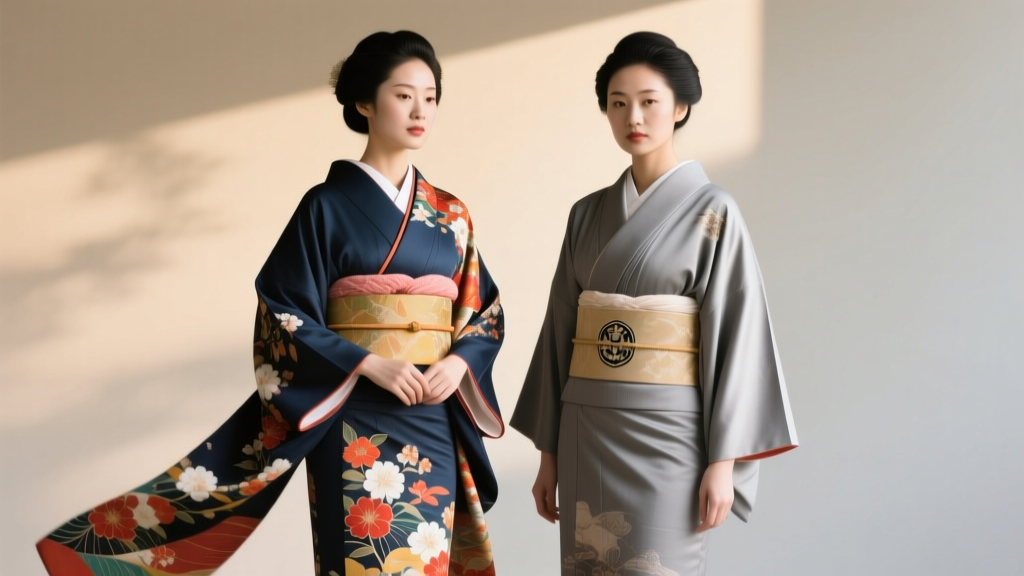
The Shanghai style, or Haipai, represents the quintessential 1930s golden era of the qipao. As documented by the Shanghai History Museum, the Shanghai collar was designed to complement the modern, liberated woman of the Republic era. Characterized by a lower stand—typically measuring between 3 cm and 4.5 cm—the Haipai collar sits softly against the neck. Tailors utilized lightweight silk organza or lightly starched cotton as interfacing, allowing the collar to follow the natural curve of the cervical spine. This lower, softer collar was specifically engineered to highlight the jawline and accommodate the fashionable Western-inspired bobbed hairstyles and pearl necklaces of the era.
Beijing (Jingpai): Imperial Echoes and Structured Elegance
In contrast, the Beijing style, or Jingpai, retains a more conservative and structured aesthetic, heavily influenced by the city's imperial history and colder northern climate. The Beijing qipao collar is notably higher, often ranging from 5 cm to 7.5 cm. To maintain this height without collapsing, Jingpai tailors employ rigid interfacing, historically crafted from multiple layers of cotton stiffened with wheat paste. The higher collar restricts neck movement, enforcing an upright, dignified posture. Furthermore, the Beijing collar serves as a primary anchor for elaborate pankou (hand-knotted frog buttons), which often extend from the collar base down across the chest in intricate floral or geometric motifs.
Hong Kong and Cantonese Tailoring: The Mid-Century Shift
During the 1950s and 1960s, as master tailors from Shanghai migrated to Hong Kong, a new hybrid substyle emerged. Cantonese tailoring integrated Western pattern-making techniques, such as bust darts and set-in sleeves, into the traditional cheongsam. The Hong Kong qipao collar was adapted for a faster-paced, cosmopolitan lifestyle. Tailors adjusted the 'collar pitch'—the angle at which the collar band meets the shoulder seam—to allow for greater forward head mobility. The collars were often finished with wider, more pronounced gunbian (bias piping) to provide structural durability for daily wear in a bustling urban environment.
Collar Height Matrix: Proportions and Protocol
Selecting the correct qipao collar height is a matter of anatomical harmony and occasion. A collar that is too high for a short neck will obscure the jawline and cause fabric bunching, while a collar that is too low for a long neck may look disproportionate. Below is a structural guide used by master tailors to harmonize collar height with the wearer's proportions.
| Collar Substyle | Height Measurement | Best Suited For | Styling & Protocol Notes |
|---|---|---|---|
| Low Stand (Shanghai) | 2.5 cm - 4.0 cm | Shorter necks, evening wear, modern fusion styling | Allows for statement earrings; ideal for silk charmeuse and lightweight crepes. |
| Standard Stand | 4.0 cm - 5.5 cm | Average neck lengths, versatile day-to-night wear | The most universally flattering height; accommodates standard single-piping finishes. |
| High Stand (Beijing) | 5.5 cm - 7.5 cm | Longer necks, formal ceremonies, winter brocades | Requires rigid interfacing; restricts head turning; traditionally paired with up-dos. |
| Ultra-High (Historical) | 8.0 cm+ | Editorial fashion, historical reenactment, avant-garde | Rare in modern bespoke; heavily restricts movement; requires custom neck slopers. |
Deconstructing the Craft: Interfacing, Piping, and the 'Smile'
To truly appreciate the qipao collar, one must understand the hidden mechanics beneath the silk. The collar's ability to stand gracefully without choking the wearer relies on three critical construction elements: interfacing, piping (gunbian), and the center-front curve.
The Evolution of Interfacing
Historically, the stiffness of a qipao collar was achieved through natural means. Artisans layered fine cotton muslin, applying a stiffening paste made from rice or wheat starch, which was then ironed under heavy pressure. While this created a beautiful, breathable structure, it was highly susceptible to moisture and sweat. Modern bespoke tailors, as noted in textile preservation studies by the Tsinghua University Art Museum, have largely transitioned to using bias-cut horsehair canvas or high-grade silk organza. These materials provide structural memory and resilience against humidity while maintaining the organic drape required for a comfortable fit.
The Art of Gunbian (Piping)
The edge of the qipao collar is almost always finished with gunbian, a meticulous bias-tape piping technique. The piping serves a dual purpose: it reinforces the collar's edge against fraying and stretching, and it provides a visual frame for the face. Master tailors cut the piping on a strict 45-degree bias to ensure it curves smoothly around the neck without puckering. 'Double piping'—two parallel lines of contrasting silk tape—is a hallmark of high-end Haipai tailoring, requiring immense skill to keep the lines perfectly equidistant around the collar's tight curves.
The 'Smile' Curve
Perhaps the most closely guarded secret of the master tailor is the 'smile'—the subtle, concave curve at the center front of the collar where the two sides meet. A qipao collar is never drafted as a perfectly straight rectangle. If it were, it would gap away from the throat when the wearer moves. The 'smile' ensures that the collar hugs the hollow of the throat, creating a seamless, gap-free closure that is both aesthetically pleasing and culturally modest.
Bespoke Pricing and Artisan Sourcing
Acquiring an authentic, well-constructed qipao requires navigating a market that ranges from mass-produced tourist garments to museum-quality bespoke pieces. The collar is often the first area where poor craftsmanship reveals itself; cheap, fusible interfacing will bubble and warp after a single dry cleaning.
- Off-the-Rack / Fast Fashion ($50 - $150 USD): Typically features a standardized 4 cm collar with fused polyester interfacing. The pankou buttons are often machine-stitched or glued. Suitable for casual wear or costumes, but lacks structural longevity.
- Made-to-Measure ($300 - $800 USD): Offered by reputable boutiques in cities like Singapore, London, and New York. Collars are measured to the client's exact neck circumference and height preference. Interfacing is usually sewn-in cotton or organza, and piping is hand-finished.
- Full Bespoke / Master Tailor ($1,200 - $3,500+ USD): Found in heritage ateliers along Shanghai's Changle Road or Hong Kong's Central district. The collar is drafted via a custom neck sloper, accounting for the client's cervical curvature and shoulder slope. Features hand-rolled piping, hand-knotted silk pankou, and premium horsehair canvas interfacing.
Cultural Preservation and Modern Wearability
The qipao collar remains a potent symbol of Chinese sartorial heritage. Exhibitions such as China: Through a Looking Glass at The Metropolitan Museum of Art have highlighted how the structural evolution of the cheongsam collar mirrors the broader narrative of East-meets-West modernity. Today, contemporary designers are experimenting with deconstructed collars, asymmetrical stands, and detachable collar pieces to adapt the garment for modern, dynamic lifestyles.
'The collar of the qipao is not merely a boundary between the garment and the skin; it is the threshold where traditional discipline meets the individual's unique anatomy. To tailor the collar is to sculpt the wearer's dignity.'
— Master Tailor proverb, Shanghai Garment Guild archives
Whether you are commissioning a bespoke Jingpai brocade for a winter wedding or sourcing a vintage 1930s Haipai silk cheongsam from an archival dealer, paying close attention to the qipao collar will reveal the true quality, origin, and soul of the garment. Understanding these regional substyles ensures that the rich, living tradition of Asian garment-making is preserved, respected, and worn with profound cultural literacy.