Qipao Chinese Dress: Regional Variations
The Evolution of the Qipao Chinese Silhouette
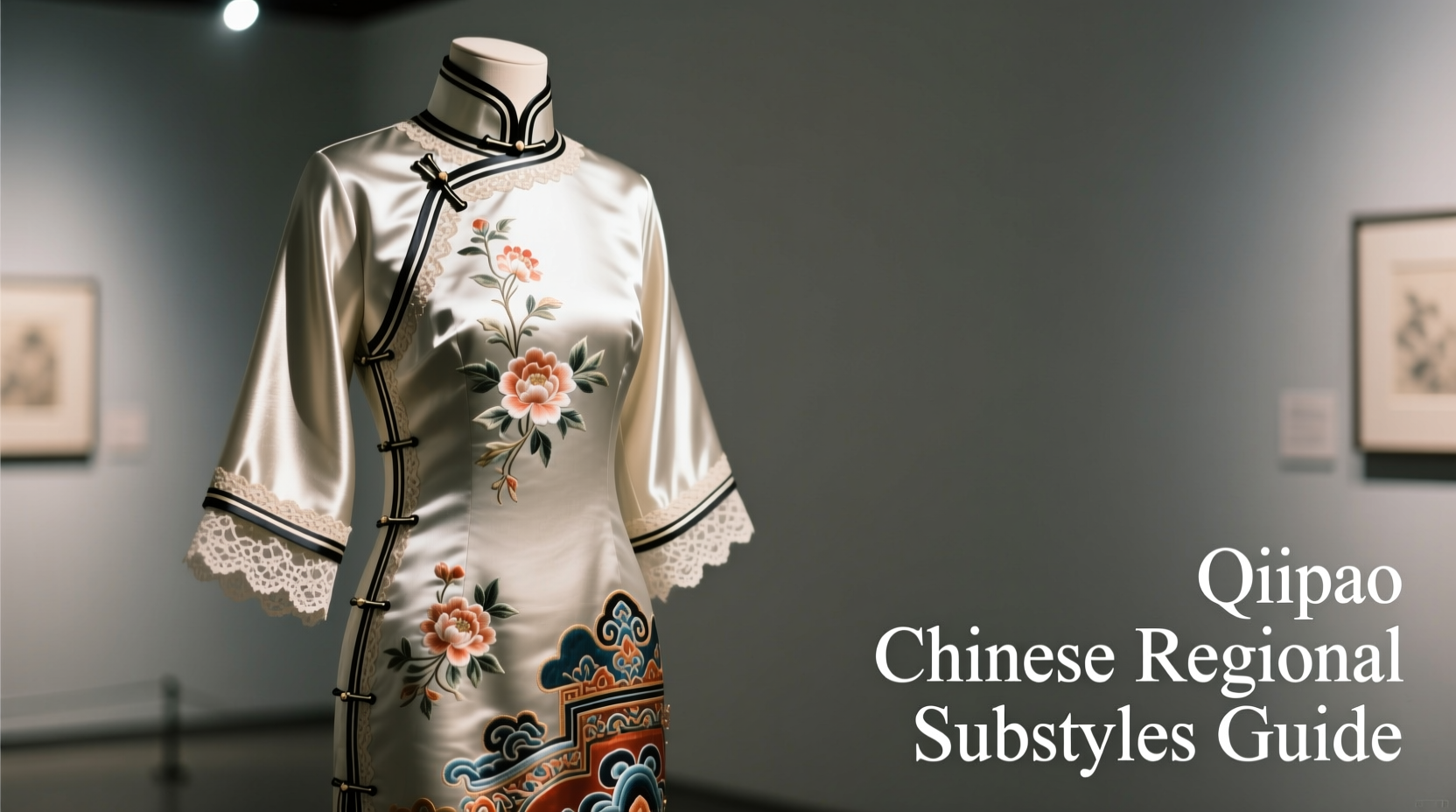
The qipao (often referred to in Cantonese as the cheongsam) is arguably the most globally recognized silhouette in Asian sartorial history. However, treating this garment as a monolith ignores the rich, highly localized tailoring traditions that define it. When collectors and cultural enthusiasts seek an authentic qipao Chinese dress, they are actually navigating a complex matrix of regional substyles, each reflecting distinct climates, historical influences, and philosophies of the female form. From the Manchu origins of the qizhuang to the feminist-driven sartorial revolution of 1920s Shanghai, the garment has continuously morphed to reflect the socio-political landscape of its wearer.
According to the Metropolitan Museum of Art's Heilbrunn Timeline of Art History, the modernization of Chinese dress in the early 20th century was not merely a fashion trend, but a visual declaration of modernity and gender equality. Today, understanding the regional variations of the qipao Chinese garment is essential for anyone looking to commission, collect, or respectfully wear this living piece of cultural heritage.
Shanghai Haipai vs. Beijing Jingpai: A Tailoring Dichotomy
The most critical distinction in traditional qipao Chinese tailoring is the geographic and philosophical divide between Shanghai's Haipai (Shanghai style) and Beijing's Jingpai (Capital style). This dichotomy represents the tension between Western-influenced modernism and traditional imperial conservatism.
The Haipai (Shanghai Style) Revolution
Emerging in the cosmopolitan hub of 1920s and 1930s Shanghai, the Haipai qipao is the silhouette most familiar to Western audiences. Shanghai tailors, exposed to European fashion, abandoned traditional flat-cutting techniques. Instead, they introduced Western 3D tailoring concepts: bust and waist darts, set-in sleeves, and shoulder padding. The result was a form-fitting, hourglass silhouette that celebrated the natural curves of the body. Haipai qipaos typically feature higher side slits (often reaching the mid-thigh) to accommodate movement and showcase hosiery, paired with a rigid, high Mandarin collar (yingling) stiffened with cotton or horsehair interfacing. Fabrics leaned toward lightweight silk crepes, imported French lace, and geometric Art Deco prints.
The Jingpai (Beijing Style) Conservatism
In contrast, the Jingpai qipao maintains strong ties to traditional Han and Manchu tailoring philosophies, which prioritize the fabric's natural drape over the body's anatomical contours. Beijing artisans utilize 2D flat-cutting, meaning the front and back panels are cut from a single continuous piece of fabric without shoulder seams or darts. This creates a looser, more forgiving, and modest silhouette. The side slits are significantly lower, usually stopping just above the knee, and the sleeves are often wider and cut in a traditional raglan or extended-shoulder style. Jingpai garments heavily favor opulent, heavy textiles such as Song brocade (Songjin) and intricately embroidered silks, reflecting the capital's imperial legacy. As noted by the Victoria and Albert Museum's Asian Collections, these heavier textiles require specialized flat-cutting to prevent the stiff fabrics from buckling at the seams.
Southern Adaptations: Lingnan and Nanyang Substyles
As the qipao Chinese dress migrated southward, the subtropical and tropical climates necessitated drastic structural adaptations. The Lingnan style, originating in the Guangdong province and Hong Kong, prioritized breathability and practicality. Tailors lowered the collar height to prevent chafing in high humidity, shortened the sleeves to cap or sleeveless lengths, and utilized breathable cotton-linen blends or lightweight Xiangyunsha (Gambiered Canton Gauze).
Further south, the diaspora communities in Southeast Asia (the Nanyang region) developed hybrid substyles. In Singapore and Malaysia, the qipao frequently crossed over with the Nyonya Kebaya, resulting in garments featuring sheer, embroidered organza panels, batik silk skirts, and intricate beadwork that reflected a synthesis of Chinese tailoring and indigenous Malay craftsmanship.
Anatomy of Authentic Construction: Beyond the Surface
To evaluate the authenticity and quality of a qipao Chinese garment, one must look beyond the primary textile and examine the structural hardware and finishing techniques. True artisanship is found in the micro-details.
- Pianjin (Edge Binding): Authentic qipaos feature meticulous edge binding along the collar, cuffs, and side slits. In high-end Haipai garments, this binding is cut on the bias and applied by hand using a technique called gunbian, creating a seamless, rolling edge that frames the garment without puckering.
- Pankou (Frog Fasteners): More than mere closures, pankou are knotted silk buttons that serve as auspicious talismans. Master artisans use the gui-ba-si technique, wrapping silk thread around a copper wire core to create intricate motifs like plum blossoms, swallows, or the endless knot. A single complex floral pankou can take an artisan up to six hours to knot by hand.
- Xiangyunsha (Gambiered Canton Gauze): Exclusive to Southern styles, this UNESCO-recognized intangible cultural heritage fabric is dyed using the juice of the薯莨 (shuliang) yam and coated in iron-rich river mud. The resulting textile is rust-colored, water-resistant, and produces a distinctive, satisfying rustling sound (xiangyun translates to 'fragrant clouds') when the wearer moves.
Regional Substyle Comparison Chart
| Substyle | Primary Region | Tailoring Method | Collar & Slit | Signature Fabrics |
|---|---|---|---|---|
| Haipai | Shanghai / Jiangnan | 3D Western (Darts, set-in sleeves) | High rigid collar; High thigh slits | Silk crepe, lace, velvet |
| Jingpai | Beijing / Northern China | 2D Flat-cut (No darts, continuous shoulder) | Moderate collar; Low knee slits | Song brocade, heavy embroidered silk |
| Lingnan | Guangdong / Hong Kong | Hybrid (Relaxed darts, shortened bodice) | Low collar; Moderate slits | Cotton, linen, Xiangyunsha |
| Nanyang | Singapore / Malaysia | Adapted (Sheer overlays, modular styling) | Mandarin or open-neck; Ankle length | Batik silk, sheer organza |
Sourcing and Pricing: Buying an Authentic Garment
The market for qipao Chinese dresses is heavily stratified, ranging from mass-produced tourist souvenirs to museum-grade bespoke commissions. Understanding these tiers is crucial for buyers seeking cultural authenticity.
1. Ready-to-Wear (RTW) & Commercial Boutiques ($50 - $200 USD)
Brands like Shanghai Tang offer accessible, modernized interpretations. While the fabrics are generally genuine silk, the construction relies on industrial serging and fused interfacings rather than hand-rolled hems. These are suitable for casual wear or modern office environments but lack heirloom value.
2. Mid-Tier Bespoke & Independent Artisans ($350 - $900 USD)
Found in specialized ateliers in Shanghai's Former French Concession or Hong Kong's Central district. Here, clients undergo a multi-step fitting process. Tailors use traditional paste-based interfacings (rather than modern chemical glues) for the collar, ensuring it softens beautifully to the wearer's neck over time. Hand-stitched pianjin and semi-custom pankou are standard at this level.
3. Master Artisan & Heritage Commissions ($1,500 - $6,000+ USD)
Reserved for国家级 (National-level) intangible cultural heritage inheritors. A master-crafted Jingpai or Haipao qipao involves over 100 distinct manual steps. The Xiangyunsha fabric alone can cost upwards of $300 per yard. These garments feature entirely hand-sewn seams (using the an-feng or hidden stitch technique), ensuring no thread is visible on the exterior. According to archives at the Shanghai History Museum, this level of craftsmanship mirrors the golden era of 1930s Shanghai tailoring, where a single dress was considered a lifelong investment.
Cultural Protocols for Wearing and Preserving
Wearing a qipao Chinese dress requires an understanding of cultural etiquette and physical posture. The garment is designed to enforce a specific grace: the high collar and tailored bodice naturally encourage the wearer to keep their shoulders back and chin slightly elevated.
"The qipao is not merely a covering; it is an architectural framework that dictates the poetry of the wearer's movement. To slouch in a well-made Haipao is to fight the garment's very intention." — Master Tailor Chu, Shanghai Bespoke Guild.
Undergarments and Modesty: Traditional qipaos are worn with seamless, high-waisted slip dresses or specialized shapewear. Because the side slits can open widely when sitting or walking, modesty protocols dictate the use of flesh-toned silk slip shorts. Preservation: Never hang a heavy Jingpai brocade qipao on a wire or thin wooden hanger, as the weight of the fabric will distort the flat-cut shoulder seams. Garments should be stuffed with acid-free tissue paper and stored flat in breathable cedar boxes to protect the silk proteins from humidity and light degradation. For Xiangyunsha garments, avoid dry cleaning; the traditional mud-dye process requires gentle hand-washing in cool water to maintain the textile's structural integrity and distinctive patina.