The Princess Hanfu Dress: A Fabric & Craftsmanship Deep Dive
Decoding the 'Princess Hanfu Dress': Commercial Fantasy vs. Historical Reality
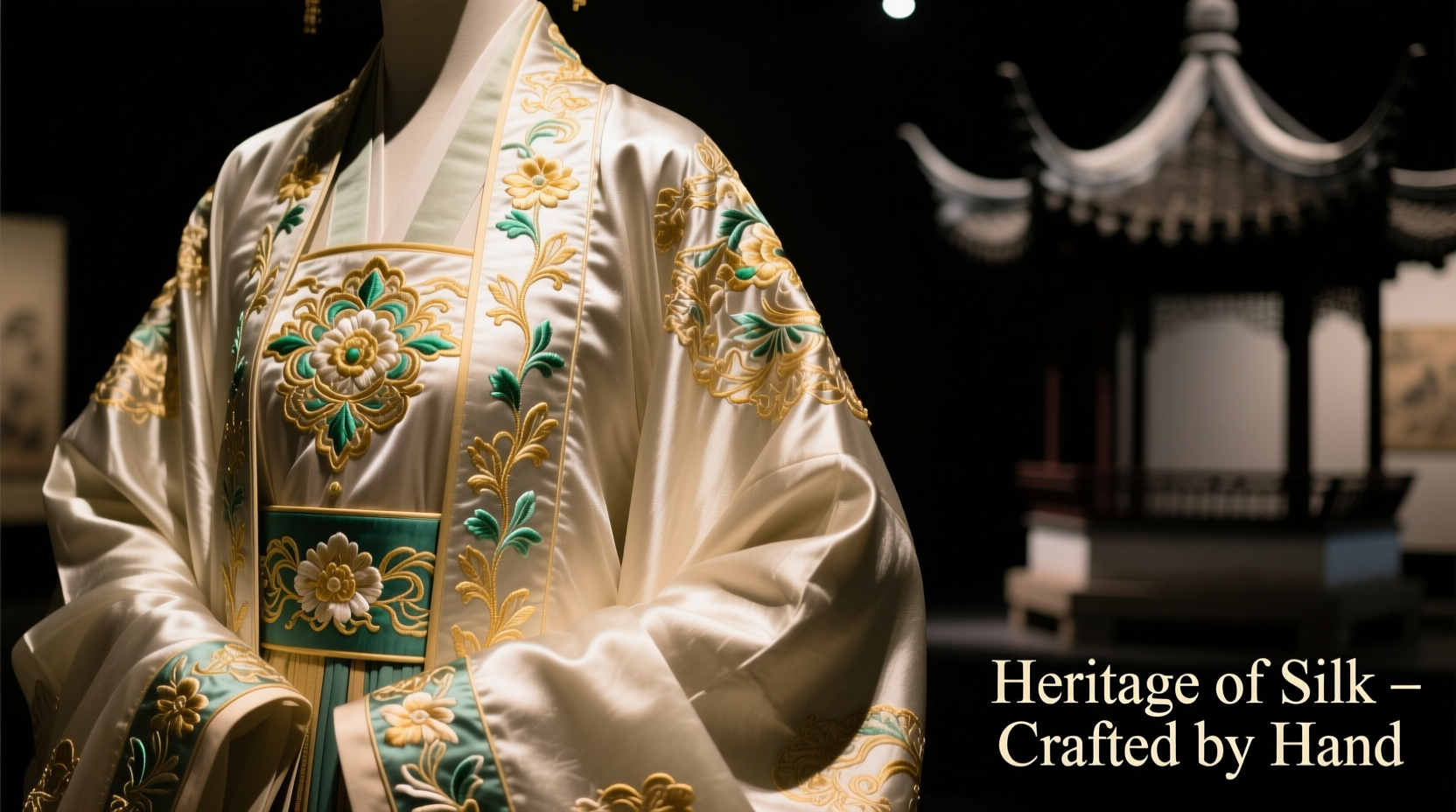
When global fashion consumers and modern enthusiasts search for a 'princess hanfu dress,' they are typically envisioning the lavish, multi-layered, and heavily embroidered garments worn by royalty and high nobility in imperial China. However, in the lexicon of traditional Chinese dress (Hanfu), there is no single garment known as a 'princess dress.' Instead, this popular search term serves as a modern commercial shorthand for historical court attire—specifically the ethereal, gossamer silks of the Tang Dynasty and the structured, opulent brocades of the Ming Dynasty. To truly understand the 'princess' aesthetic, one must look past mass-produced polyester costumes and examine the profound textile engineering, mathematical pleating, and artisanal embroidery that define authentic royal-grade Hanfu.
The Tang Dynasty Influence: Gossamer Silks and the *Da Xiu Shan*
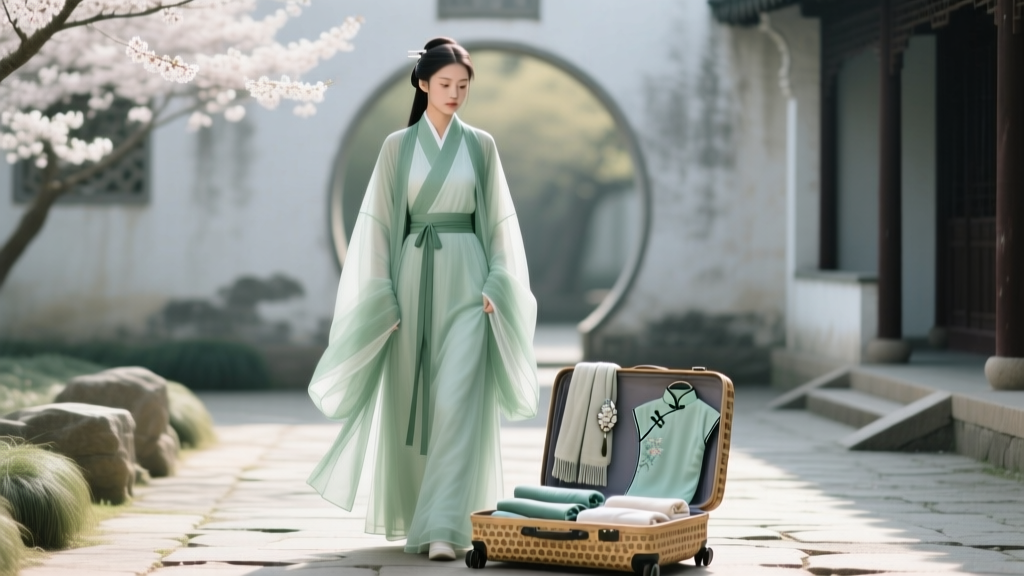
The flowing, fairy-like silhouette often associated with the 'princess hanfu dress' draws heavy inspiration from the Tang Dynasty (618–907 CE), a golden age of Chinese cosmopolitanism and textile innovation. The quintessential royal garment of this era was the *Da Xiu Shan* (large-sleeved shirt), worn over a *Qixiong Ruqun* (chest-high pleated skirt).
Leno Weave and the Mastery of *Luodi*
The translucent, layered look of Tang court dress was achieved through *Luodi*, a specialized leno weave silk gauze. Unlike standard plain weaves, leno weaving involves twisting adjacent warp threads around the weft, creating a stable, sheer fabric with a delicate, net-like structure. Authentic Tang-style gauze is woven on specialized drawlooms and dyed using botanical pigments like safflower (for crimson) and indigo. The craftsmanship lies in the fabric's ability to hold complex, multi-layered drapes without collapsing, creating a voluminous yet weightless 'royal' aura that modern synthetic organzas simply cannot replicate.
Ming Dynasty Royalty: The Architecture of the *Mamianqun*
If the Tang Dynasty represents the ethereal princess, the Ming Dynasty (1368–1644 CE) represents the regal, structured empress. The cornerstone of Ming noblewomen's formalwear—and the most highly sought-after garment in the modern Hanfu revival—is the *Mamianqun*, or 'horse-face skirt.' When consumers seek a heavy, ornate 'princess skirt,' they are almost always looking for a historically accurate Mamianqun.
The Mathematics of the Horse-Face Skirt
The Mamianqun is a marvel of structural engineering. It is constructed from two identical, overlapping trapezoidal panels of fabric. The skirt features four flat, unpleated sections (the 'horse faces' or *guangmen*) at the front and back, flanked by heavily pleated side panels (*zhe*). This design allowed noblewomen freedom of movement while maintaining a rigid, columnar silhouette when standing still. Crafting an authentic Mamianqun requires precise mathematical calculations; the pleats must be heat-set and stitched at the waistband to ensure they fan out perfectly during movement but snap back into a flat plane when stationary. According to the Metropolitan Museum of Art's archives on Ming court dress, the structural integrity of these skirts was paramount, often utilizing heavy silk satins and stiffened waistbands to support the weight of elaborate woven motifs.
'The Mamianqun is not merely a skirt; it is an architectural garment. The tension between the flat, heavily ornamented front panels and the kinetic energy of the hidden side pleats represents the pinnacle of Ming textile engineering.' — Curatorial notes on Chinese textile structures.
Mastery in Thread: Royal Weaving and Embroidery Techniques
The true value of a royal-grade Hanfu dress lies in its surface ornamentation. Historically, sumptuary laws dictated exactly which weaving and embroidery techniques could be worn by princesses and noblewomen. Today, these techniques are preserved as Intangible Cultural Heritage.
| Technique | Origin / Hub | Visual & Structural Effect | Artisan Time & Price Range (Per Meter) |
|---|---|---|---|
| Nanjing Yunjin (Cloud Brocade) | Nanjing, Jiangsu | Opulent, raised patterns using gold leaf thread and peacock feathers. Extremely dense and heavy. | Requires 2 weavers; yields 5cm/day. $800 - $3,000+ USD |
| Suzhou Kesi (Cut Silk Tapestry) | Suzhou, Jiangsu | Seamless color transitions with tiny slits between color blocks. Reversible and painterly. | 1 artisan; yields 2-3 sq cm/day. $1,200 - $5,000+ USD |
| Su Xiu (Suzhou Embroidery) | Suzhou, Jiangsu | Hyper-realistic, multi-layered stitching. Threads split into 1/48th of original thickness. | Months per garment. Garments range $2,500 - $15,000+ USD |
| Zhuanghua (Brocade Weaving) | Sichuan / Nanjing | Continuous supplementary weft patterns. Excellent for large, repeating royal motifs (dragons, phoenixes). | Loom operated. $150 - $600 USD |
The UNESCO Standard: Nanjing Yunjin
For a true 'princess' aesthetic, nothing surpasses Nanjing Yunjin, or Cloud Brocade. Recognized by UNESCO as an Intangible Cultural Heritage of Humanity, Yunjin weaving requires a massive, 4-meter-high wooden drawloom operated simultaneously by two master weavers. The top weaver acts as the 'programmer,' pulling specific warp threads to create the pattern, while the bottom weaver passes the shuttle, incorporating real gold foil threads and spun peacock feather yarns. A genuine Yunjin *Mamianqun* is heavy, light-catching, and historically reserved for the highest echelons of imperial society.
Sourcing Authentic Craftsmanship: A Buyer's Guide
Navigating the modern Hanfu market requires a discerning eye to differentiate between theatrical costumes and authentic cultural garments. Here is a practical framework for investing in royal-grade Hanfu.
Tier 1: Commercial 'Costume' Grade ($30 - $80 USD)
Often labeled as 'princess hanfu' on fast-fashion platforms, these garments are constructed from polyester jacquard and machine-embroidered tulle. While accessible, they lack the drape, breathability, and historical accuracy of true silk. The pleats on Mamianqun skirts at this tier are often heat-pressed poorly and will lose their structure after washing.
Tier 2: Mid-Tier Artisan Silk Blends ($150 - $400 USD)
Produced by reputable Hanfu brands (such as Shisan Yu or Ming Huatang), these garments use silk-cupro blends or 100% mulberry silk. The weaving is done on modern jacquard looms but follows historical motif proportions. Embroidery is machine-assisted but hand-finished. This tier offers the best balance of historical silhouette, durability, and price for serious enthusiasts.
Tier 3: Heritage & Bespoke Couture ($1,500 - $10,000+ USD)
This tier involves commissioning garments directly from artisan cooperatives in Suzhou or Nanjing. Buyers can select specific *Kesi* tapestry panels for the skirt's flat 'horse face' sections and commission hand-embroidered *Xiapei* (stoles) featuring traditional 'gold couching' (*Pan Jin*) techniques. These garments are museum-quality and serve as wearable heirlooms.
Preserving the Loom: Cultural Institutions and Living Heritage
The survival of these intricate craftsmanship techniques relies heavily on institutional support and a new generation of textile engineers. The Victoria and Albert Museum's Asian textile collections and the China National Silk Museum in Hangzhou play vital roles in preserving fragmented Ming and Tang textiles, allowing modern weavers to reverse-engineer lost loom techniques. When you invest in an authentic, high-craftsmanship Hanfu dress, you are not merely buying a beautiful garment; you are participating in the economic sustenance of living heritage, ensuring that the drawlooms of Nanjing and the embroidery frames of Suzhou continue to operate for generations to come.
Ultimately, the 'princess hanfu dress' is more than a fairy-tale aesthetic. It is a testament to centuries of Chinese material science, mathematics, and artistic devotion. By understanding the profound craftsmanship behind the *Luodi* gauzes and *Mamianqun* pleats, wearers can approach these garments with the deep cultural respect and historical appreciation they truly command.