Styling the Pink Cheongsam: 2026 Wedding & Event Guide
The Cultural Resonance of Pink in Chinese Sartorial History
While red remains the undisputed color of luck and matrimony in Chinese culture, the pink cheongsam (qipao) occupies a deeply nuanced space in the wardrobes of modern Asian women. Historically, pink was associated with youth, romance, and the arrival of spring. According to the Victoria and Albert Museum's Asian collections, the evolution of the qipao silhouette in the 1920s and 1930s Shanghai saw an explosion of pastel hues, moving away from the rigid, dark fabrics of the Qing dynasty toward softer, more expressive tones. Today, a pink cheongsam is not merely a fashion statement; it is a culturally resonant garment chosen for specific milestones where joy, elegance, and feminine grace are celebrated without the overwhelming intensity of traditional crimson.
Selecting the Perfect Shade for Your Event
The terminology of color in Chinese textiles is highly specific. Choosing the correct shade of pink is the first step in event planning, as different hues carry distinct cultural weights and seasonal appropriateness.
| Shade Name | Native Term | Best Suited Events | Cultural Meaning |
|---|---|---|---|
| Lotus Pink | Lianfen | Daytime Tea Ceremonies, Spring Weddings | Purity, harmony, and gentle grace |
| Peach Blossom | Taohua | Engagement Parties, Lunar New Year | Romance, vitality, and warding off negativity |
| Dusty Rose | Chenhui | Evening Galas, Winter Banquets | Mature elegance, sophistication, and subtlety |
| Fuchsia | Yanghong | Stage Performances, High-Energy Receptions | Joy, theatricality, and bold confidence |
Anatomy of the Modern Qipao: Construction and Fit
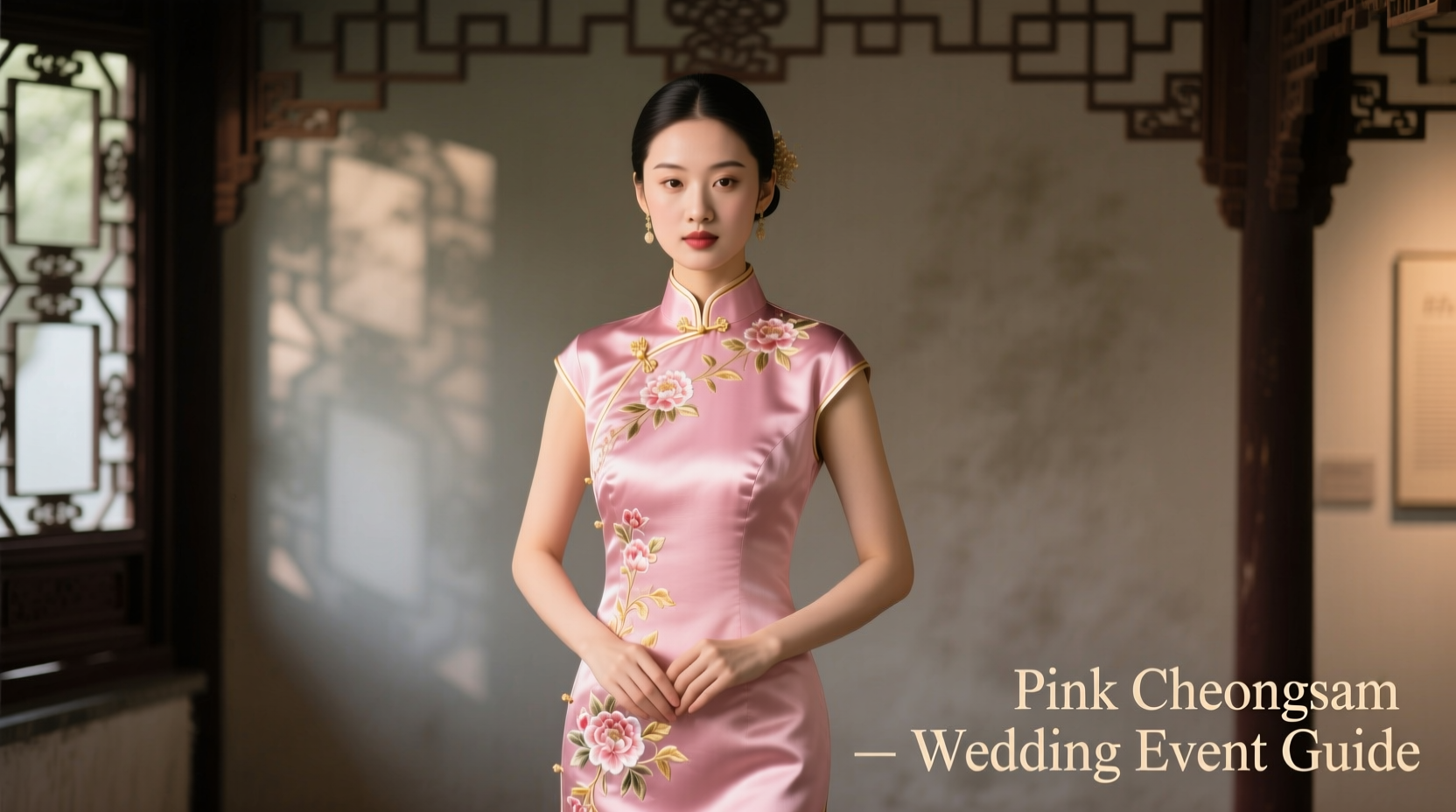
To wear a pink cheongsam with cultural respect, one must understand its architectural construction. The garment is defined by its dajin (the large front flap that wraps across the chest) and the yuanling or li (the mandarin collar). The collar's height is a critical variable for event planning: a towering 5cm collar conveys strict formality suited for state dinners or traditional wedding rites, while a softer 2cm collar or a modern Mandarin-V hybrid offers comfort for lengthy tea ceremonies.
Unlike Western dresses that rely heavily on bust and waist darts, the traditional qipao utilizes a flat-pattern cutting method that respects the natural grain of the silk. However, modern bespoke tailors integrate subtle 3D darting to accommodate diverse body types while maintaining the iconic columnar silhouette. Equally vital are the pankou (frog buttons). In high-end bespoke pieces, these are not merely functional fasteners but intricate works of art. For a pink cheongsam, artisans often craft pankou in the shapes of blooming plum blossoms, butterflies, or intertwined lotus stems, using contrasting silk threads or metallic cording. The side slits, or kaiqi, dictate the garment's mobility and modesty. For seated events, a moderate slit ending just above the knee prevents the fabric from riding up uncomfortably, while floor-length evening gowns may feature dramatic thigh-high slits to facilitate walking.
Fabric Weight and Seasonality: A Practical Matrix
The China National Silk Museum highlights the importance of matching textile weight to the season and formality of the event. A pink cheongsam crafted from the wrong fabric can look costumed rather than couture.
- Spring and Summer (Crepe de Chine and Silk Charmeuse): Lightweight, breathable, and featuring a subtle drape. Ideal for outdoor garden weddings and daytime banquets. These fabrics often feature digital or hand-painted floral motifs that complement the pastel base.
- Autumn (Silk Brocade / Zhijin): Woven with metallic threads, brocade provides structure and a luxurious sheen. A dusty rose brocade is perfect for indoor evening receptions and autumnal Lunar New Year celebrations, offering warmth and visual weight.
- Winter (Velvet / Sizhirong and Heavy Wool Blends): Velvet absorbs light, giving pink a rich, jewel-toned depth. Often lined with quilted silk or faux fur, winter cheongsams are essential for December galas and cold-weather wedding banquets.
Occasion Playbook: From Tea Ceremonies to Evening Galas
The Traditional Tea Ceremony (Jing Cha)
When serving tea to elders during a wedding, modesty and ease of movement are paramount. Opt for a Lotus Pink (Lianfen) cheongsam with an A-line or slight flare silhouette. Avoid mermaid tails or restrictive pencil hems, as you will be kneeling or bowing frequently. The kaiqi (slits) should be conservative, and the fabric should possess enough stretch or ease across the shoulders to allow you to lift heavy teapots without straining the seams.
Pre-Wedding Photoshoots (Jingzao)
Many couples opt for a Dusty Rose cheongsam for outdoor architectural photoshoots. The muted pink photographs beautifully against gray stone, traditional courtyard walls, or lush greenery, avoiding the color-blowout issues common with highly saturated reds under direct sunlight.
The Wedding Banquet (Jing Jiu)
The evening reception is where sartorial drama takes center stage. A floor-length Peach Blossom (Taohua) cheongsam with intricate panjin (gold thread embroidery) commands the room. As noted by the Hong Kong Heritage Museum, the mid-century golden era of Hong Kong tailoring popularized the use of sequins and beadwork on qipaos for evening wear. Pair this with a structured updo and statement jade or gold heirloom jewelry to honor the gravity of the occasion.
Lunar New Year and Spring Festivals
For Chun Jie (Lunar New Year), pink serves as a modern, youthful alternative to aggressive reds. A knee-length Fuchsia (Yanghong) cheongsam paired with a modern silk-blend Mao jacket or a tailored cashmere shawl strikes the perfect balance between festive tradition and contemporary chic.
Bespoke vs. Ready-to-Wear: Pricing and Tailoring Realities
Investing in a pink cheongsam requires navigating a complex pricing landscape dictated by craftsmanship, fabric origin, and tailoring location.
| Tier | Description | Estimated Price Range (USD) | Lead Time |
|---|---|---|---|
| Off-the-Rack | Factory-made, synthetic blends, standard sizing. Best for casual festivals. | $120 - $350 | Immediate |
| Made-to-Measure | Adjusted to your measurements from a base pattern. Genuine silk options available. | $450 - $1,200 | 3 - 6 Weeks |
| Master Bespoke | Draped from scratch on a mannequin, hand-stitched Pankou, premium brocades. | $2,500 - $6,000+ | 2 - 4 Months |
For brides, the made-to-measure or bespoke route is highly recommended. The structural integrity of a bespoke dajin ensures the front flap lies perfectly flat against the collarbone, eliminating the gaping that often plagues mass-produced garments.
Etiquette and Accessorizing with Cultural Respect
Wearing a pink cheongsam extends beyond the garment itself; it encompasses the totality of the presentation. Footwear should complement the dress's hemline. For floor-length qipaos, a comfortable block heel is sufficient since the shoes will remain largely hidden. For knee-length or midi styles, elegant pointed-toe pumps or modern embroidered flats elevate the look.
Traditional styling favors sleek, low buns or intricate braided crowns, often adorned with a single jade hairpin or fresh orchids. Makeup should highlight the complexion without competing with the intricate embroidery of the collar. Avoid pairing the cheongsam with overly casual outerwear or clashing streetwear elements if attending a formal cultural event. Instead, drape a finely woven pashmina or a tailored silk jacket over the shoulders. Finally, understand that the cheongsam is a living garment. It is not a costume to be worn ironically, but a respected symbol of Chinese sartorial heritage. By selecting the appropriate shade of pink, respecting the tailoring process, and understanding the cultural weight of the silhouette, you honor the artisans and history woven into every thread.