Hanfu Guide: Garments in a New Chinese Costume Drama 2026

The Allure of the Screen: Fantasy vs. Historical Reality
When you tune into a new Chinese costume drama, the visual spectacle is often as captivating as the plot. From the sweeping, ethereal robes of immortal cultivators to the heavily embroidered, structured garments of imperial courtiers, the clothing on screen has sparked a massive global revival of Hanfu (汉服)—the traditional dress of the Han Chinese people. However, as a beginner navigating this sartorial landscape, it is crucial to distinguish between historical accuracy and cinematic fantasy. Television productions often prioritize visual drama and actor mobility over strict historical fidelity, blending elements from different dynasties or inventing entirely new silhouettes for the fantasy genre. This guide will help you decode the garments you see on screen, understand their authentic historical roots, and provide actionable advice on how to source and wear real Hanfu today.
Core Garment Architectures You Will Spot
To truly appreciate the costuming in historical C-dramas, you must understand the foundational architectures of Hanfu. Unlike Western historical dress, which often relied on tailoring, darts, and corsetry to shape the body, traditional Chinese garments rely on flat-pattern cutting, draping, and layering to create their silhouettes.
Ruqun (襦裙) – The Classic Silhouette
The Ruqun is arguably the most recognizable Hanfu silhouette, consisting of a top jacket or blouse (ru) and a wrap-around skirt (qun). In dramas set during the Tang Dynasty (618–907 CE), you will frequently see the Qixiong Ruqun (齐胸襦裙), where the skirt is tied high up on the chest, just under the armpits. This creates an elongated, elegant line that was highly fashionable among Tang noblewomen. In contrast, dramas set in the more restrained Song Dynasty (960–1279 CE) will feature mid-rise skirts tied at the natural waist, often paired with a long, narrow-sleeved outer jacket called a Beizi (褙子). The defining feature of almost all Ruqun styles is the jiaoling youren (交领右衽)—the cross-collar that always folds left over right, forming a 'y' shape at the neckline.
Aoqun (袄裙) and the Mamianqun (马面裙)
If you are watching a drama set in the Ming Dynasty (1368–1644 CE), the wardrobe shifts dramatically to the Aoqun. This consists of a lined, long-sleeved jacket (ao) worn over a skirt. The undisputed star of Ming costuming is the Mamianqun (马面裙), or 'horse-face skirt.' According to textile archives at The Palace Museum, the Mamianqun features flat, unpleated front and back panels with deeply pleated sides. The name derives from the 'horse-face' defensive structures of ancient Chinese city walls, which the flat panels resemble. Authentic Ming jackets often feature standing collars (liling) and exquisite metal or jade clasps, a stark departure from the cross-collars of earlier eras. The sleeves are typically pipa xiu (琵琶袖)—shaped like a lute, wide at the arm but narrowing tightly at the wrist to keep hands warm and hold small items.
Shenyi (深衣) – The Scholar’s Robe
Often worn by male characters, scholars, and officials, the Shenyi is a one-piece robe where the top and bottom are cut separately but sewn together to form a single garment. It represents the Confucian ideal of unity and propriety. The most common variant seen in historical dramas is the Zhuzi Shenyi, featuring a distinctive black trim along the collar, cuffs, and hem, symbolizing scholarly virtue and restraint.
Xianxia and Wuxia: When History Meets High Fantasy
Not all new Chinese costume dramas are grounded in strict history. The immensely popular Xianxia (immortal heroes) and Wuxia (martial arts) genres operate on their own visual rules.
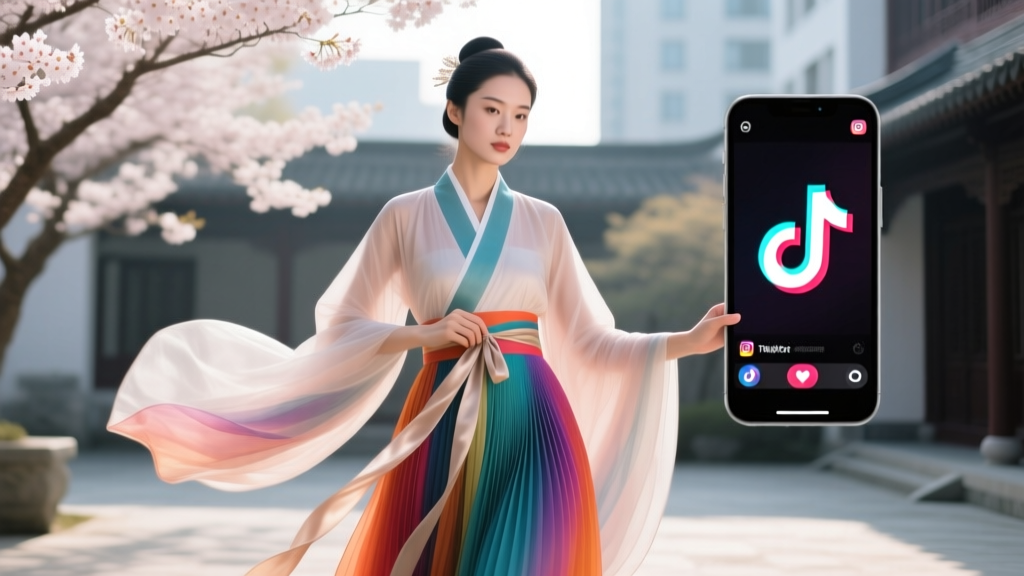
In Xianxia dramas, characters are celestial beings or cultivators. Costumers favor ultra-lightweight fabrics like silk chiffon and organza, utilizing excessive layers of translucent, flowing sleeves that billow dramatically during CGI-heavy flying sequences. Collars are often left open or feature deep V-necks, which is historically inaccurate for traditional Hanfu but visually conveys a sense of otherworldly detachment and freedom.
Conversely, Wuxia dramas focus on mortal martial artists. Here, you will see practical adaptations like Hufu (胡服)—clothing influenced by nomadic horse-riding cultures of the north. These garments feature narrow sleeves, trousers, and leather boots, allowing for acrobatic fight choreography. While a Wuxia hero might wear a dramatic, wide-sleeved Dachang (大氅) cloak for cinematic effect during a standoff, their base layers are usually tightly bound with bracers (hushou) to prevent fabric from catching on weapons.
Fabric and Construction: Screen Costumes vs. Authentic Hanfu
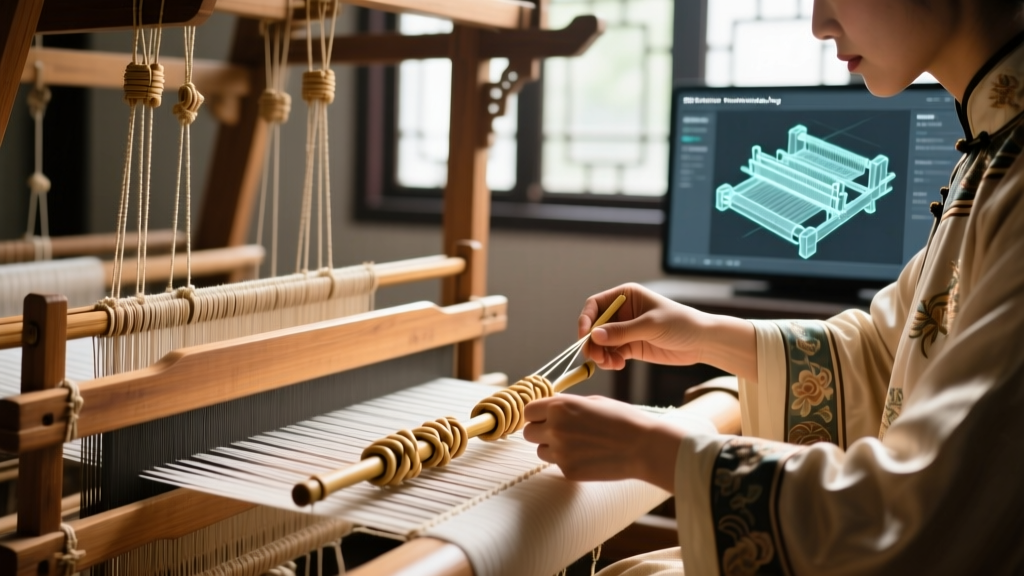
A major point of divergence between a TV costume and authentic Hanfu is the fabric. To understand authentic materials, one must look to institutions like the China Silk Museum, which preserves ancient weaving techniques. Screen costumes are frequently made from cheap polyester blends, matte chiffon, and synthetic brocades that photograph well under harsh studio lights but lack breathability and drape.
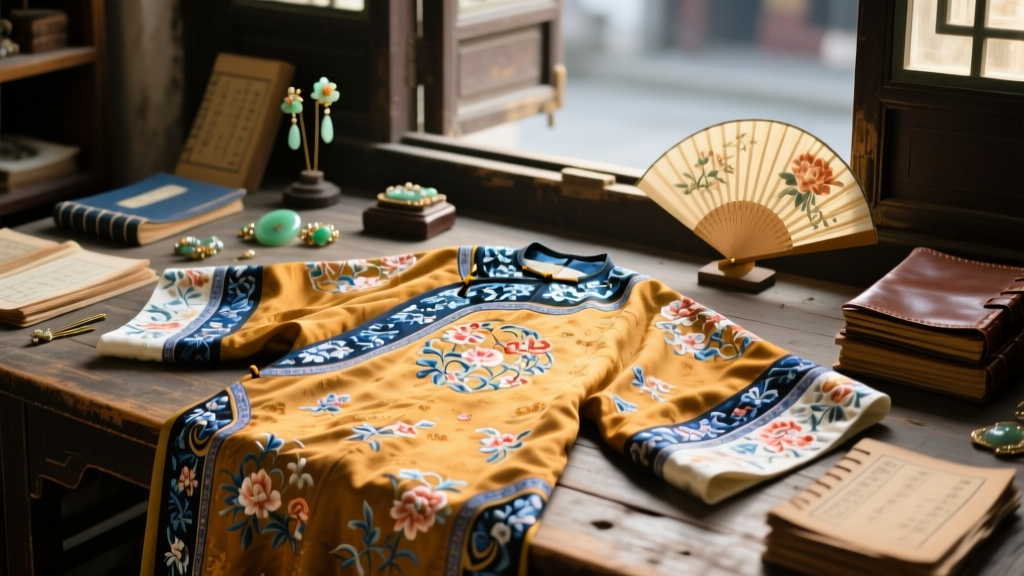
Authentic Hanfu, however, utilizes natural fibers. Summer garments are crafted from silk gauze (luo) or linen, while winter garments utilize heavy silk damask, velvet, or wool. High-end Ming dynasty reproductions often employ Zhuanghua (brocade) or Kesi (cut silk tapestry) weaving techniques, where the patterns are woven directly into the fabric rather than embroidered on top. According to the Metropolitan Museum of Art's Asian textile collections, these historical weaves possess a structural integrity and luminous depth that modern screen-printed polyester simply cannot replicate.
Buyer's Matrix: Sourcing Your First Hanfu Set
If a new Chinese costume drama has inspired you to build your own wardrobe, you must navigate the market carefully. The Hanfu industry has exploded, with reputable brands operating primarily on Taobao and specialized global retailers. Below is a structured guide to help you budget and source your first set.
| Garment Tier | Fabric & Construction | Price Range (USD) | Recommended Use | Notable Brands / Vendors |
|---|---|---|---|---|
| Entry-Level (Budget) | Polyester blends, machine embroidery, basic flat-pattern cuts. Good drape but less breathable. | $40 – $80 | Cosplay, casual conventions, first-time trials. | Shisanyu, Chuanzheng, Dream Hanfu |
| Mid-Range (Enthusiast) | Cotton-linen blends, rayon, faux-silk, detailed woven trims, historically accurate silhouettes. | $90 – $180 | Festivals, cultural events, daily wear, photography. | Zhongzheng Hanfu, Lan Ruo Ting |
| High-End (Museum Grade) | 100% Mulberry silk, real brocade, hand-woven Kesi details, natural dyes, strict Ming/Song replication. | $250 – $800+ | Formal ceremonies, weddings, serious collectors, tea ceremonies. | Ming Huatang, Ting Yue Chu |
Pro-Tip for Beginners: When ordering from Chinese platforms or international proxy agents, always check the size charts meticulously. Traditional Hanfu does not use S/M/L sizing based on Western body molds. Instead, garments are sized by flat lay measurements—specifically chest circumference, sleeve length (measured from the center back of the neck to the wrist), and skirt length. Because Hanfu relies on wrapping and tying, there is more flexibility in the waist, but shoulder and sleeve seams must align correctly to maintain the structural drape.
Cultural Protocols for the Modern Wearer
Wearing Hanfu is not merely an act of historical cosplay; it is an engagement with a living cultural tradition that carries deep philosophical weight. The most critical protocol to remember is the collar alignment. As mentioned, the jiaoling youren (left over right) is the standard for the living. The left side of the garment must cross over the right side, and the ties are secured on the right side of the body.
Reversing this to zuoren (right over left) is strictly reserved for dressing the deceased for burial, or in some historical contexts, worn by 'barbarian' tribes outside the Central Plains. Wearing a right-lapel garment in daily life is considered highly inauspicious and deeply disrespectful to the cultural roots of the dress.
Additionally, when wearing a Mamianqun, ensure the flat, decorated front panel sits perfectly centered on your body. The pleats should fall neatly at your sides. Pair your garments with appropriate under-layers; traditional Hanfu is rarely worn directly against the skin without a base layer (zhongyi), which protects the outer silk from oils and provides a smooth canvas for the wrapping ties. By understanding the difference between a dramatized television costume and the profound, engineered reality of historical Hanfu, you transition from a passive viewer to an informed practitioner of one of Asia's most enduring sartorial legacies.