Styling the Qipao Traditional Chinese Dress: Modern Guide
Beyond the Silhouette: Understanding the Qipao's Architecture
To style the qipao traditional Chinese dress with modern authenticity, one must first understand its architectural construction. Originating in the 1920s as a symbol of female emancipation in Shanghai, the modern qipao evolved from the loose, flowing Manchu changpao into a masterfully tailored garment. Linguistically, the term qipao translates to 'banner robe' in Mandarin, referencing its Manchu origins, while cheongsam means 'long shirt' in Cantonese, popularized by the master tailors of Hong Kong and Guangzhou. According to the Victoria and Albert Museum, the integration of Western darting and bias-cutting techniques in the 1930s allowed the garment to contour to the body while maintaining structural elegance.
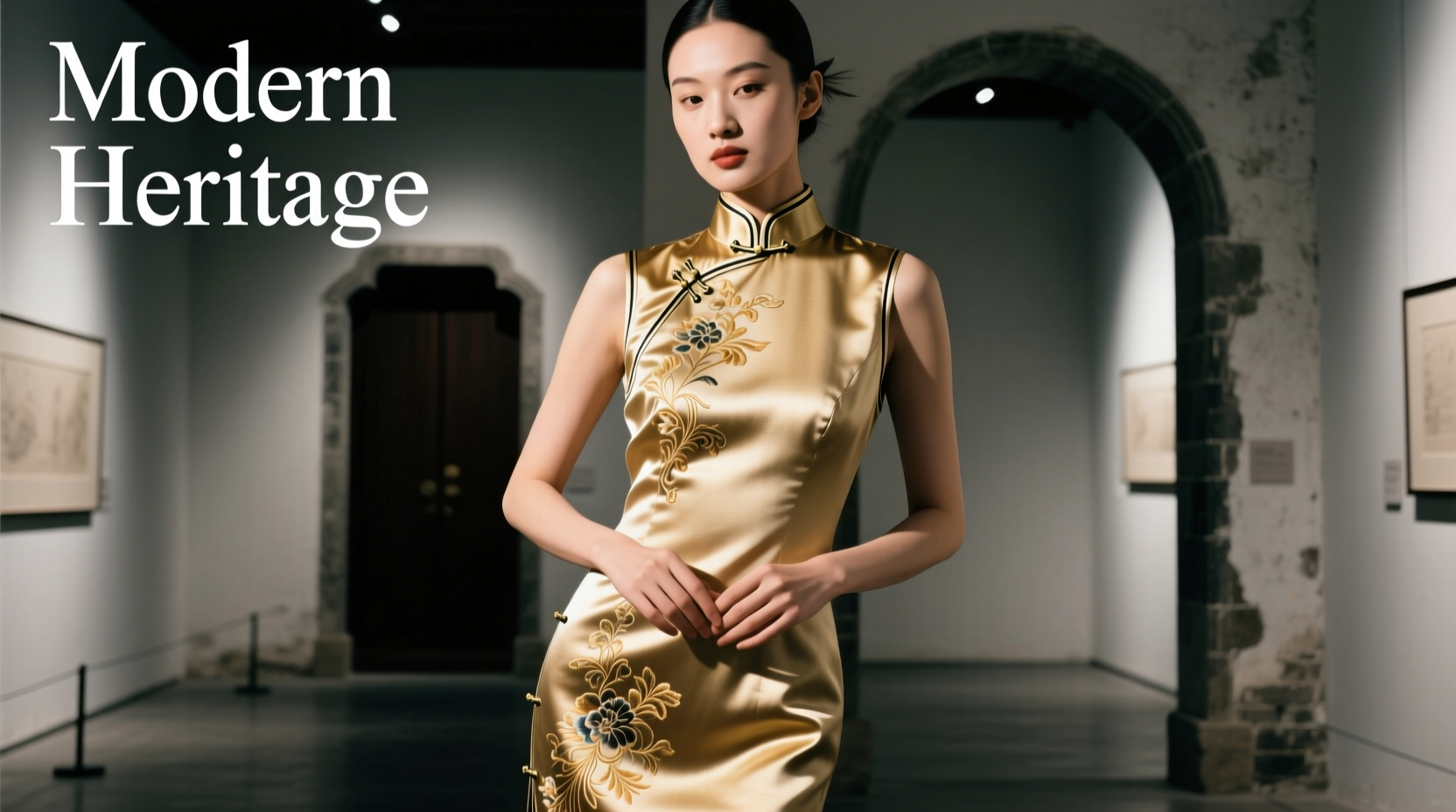
A true qipao is defined by several non-negotiable elements:
- Yuanlingbao (Mandarin Collar): A stiffened, high-standing collar that frames the face. It should sit snugly against the neck without choking, typically measuring 3 to 5 centimeters in height.
- Pankou (Frog Buttons): Hand-knotted silk fasteners. While modern dresses may use hidden zippers for convenience, a bespoke qipao retains functional pankou across the collar and diagonal lapel (the dajin).
- Kaicha (Side Slits): Strategic slits on one or both sides that begin at the knee or mid-thigh, allowing for fluid movement and revealing a glimpse of the leg or tailored trousers beneath.
Textile Selection: From Heritage Weaves to Contemporary Mattes
The fabric dictates the drape, formality, and seasonal appropriateness of the dress. While mass-market iterations often rely on stiff polyester blends, authentic styling requires natural fibers that respond to the body's movement.
Xiangyunsha (Gambiered Canton Gauze)
For the ultimate expression of heritage luxury, Xiangyunsha is unparalleled. This intangible cultural heritage fabric from Guangdong is dyed using yam juice and river mud, resulting in a rich, dark patina with a distinctive, papery rustle. It is highly breathable, making it ideal for humid summers, and typically commands prices starting at $400 per yard.
Silk Brocade (Zhijin) vs. Matte Crepe
Heavy silk brocades woven with metallic threads are traditional for winter and bridal wear. However, for contemporary streetwear or office-appropriate styling, opt for heavy silk crepe de chine or matte charmeuse. These fabrics offer a sophisticated, understated luster that photographs beautifully and drapes elegantly without the theatrical sheen of satin.
Contemporary Styling Frameworks by Occasion
Integrating the qipao traditional Chinese dress into a modern wardrobe requires balancing its inherent formality with contemporary outerwear and footwear. Below is a strategic framework for adapting the garment to various modern settings.
| Occasion | Recommended Fabric & Cut | Outerwear Pairing | Footwear & Accessories |
|---|---|---|---|
| Corporate / Smart Casual | Mid-calf length, matte wool-blend or heavy crepe, subtle geometric patterns. | Tailored oversized blazer or a structured wool trench coat. | Loafers, pointed-toe mules, minimalist gold stud earrings. |
| Evening Gala / Formal | Floor-length or tea-length silk brocade, velvet, or Xiangyunsha. | Faux-fur cropped jacket, velvet opera coat, or silk shawl. | Stiletto pumps, baroque pearl drop earrings, jade bangle. |
| Weekend Streetwear | Mini or knee-length cotton-linen blend, short sleeves, modern prints. | Denim jacket, oversized leather bomber, or chunky knit cardigan. | White leather sneakers, combat boots, layered silver chains. |
| Winter Layering | Long-sleeve velvet or heavy silk, high side slits. | Turtleneck worn underneath, long cashmere duster coat. | Knee-high leather boots, opaque fleece-lined tights. |
Seasonal Adaptations: Wearing the Qipao Year-Round
One of the most frequent questions regarding modern styling is how to wear the qipao outside of the summer months or in climates with harsh winters. The garment's architecture is surprisingly conducive to layering, provided you maintain the integrity of the silhouette.
Spring and Autumn Transitions
During transitional weather, a sleeveless or short-sleeved qipao can be layered over a fitted, ribbed turtleneck. Choose a turtleneck in a complementary neutral tone—such as charcoal, cream, or deep burgundy—rather than a contrasting color that might clash with the dress's pattern. Alternatively, drape a lightweight cashmere wrap or a structured silk scarf over the shoulders, securing it with a vintage brooch.
Winter Styling and Outerwear
For deep winter, velvet is the ultimate textile choice. Velvet qipaos, often lined with silk or insulated cotton, offer incredible warmth and a luxurious, light-absorbing texture that looks stunning under evening lighting. Pair a long-sleeved velvet qipao with a tailored, double-breasted wool overcoat that falls just below the hem of the dress. The contrast between the structured, masculine lines of the overcoat and the fluid, feminine curves of the qipao creates a striking, high-fashion aesthetic. Complete the look with opaque, fleece-lined tights and leather knee-high boots, utilizing the side slits to showcase the footwear without compromising warmth.
Footwear and Accessory Protocols
The most common styling misstep is pairing the qipao with overly traditional or costumey accessories. The goal is to create a dialogue between the garment's history and modern aesthetics.
Footwear
While high heels are a staple for formal events, they are not mandatory. For a chic, Parisian-inspired look, pair a midi qipao with leather Mary Janes or sleek loafers. In cooler months, the side slits (kaicha) are perfectly designed to accommodate knee-high or over-the-knee suede boots, creating a striking, fashion-forward silhouette that maintains modesty while elongating the leg.
Jewelry and Hair
Move beyond the cliché of head-to-toe jade. If wearing jade, choose contemporary settings—such as a single, high-quality imperial jade cabochon set in 18k gold. Baroque pearls, geometric gold cuffs, and minimalist diamond studs complement the high collar beautifully. Because the Mandarin collar draws the eye upward, hair should generally be styled away from the neck. A sleek, low chignon, a modern blunt bob, or a sophisticated French twist allows the pankou and collar architecture to remain the focal point.
Tailoring, Pricing, and Sourcing Authentic Pieces
A qipao is only as good as its fit. Because the garment lacks the structural seaming of Western tailoring (like princess seams), it relies heavily on precise darts and the natural give of the fabric. The Hong Kong Heritage Museum highlights the meticulous 'Shanghai tailoring' technique, where master tailors use a specialized iron-pulling method to shape the fabric directly over the curves of the bust and hips without excessive cutting.
Investment Tiers
- Off-the-Rack / Fast Fashion ($50 - $150): Often made from polyester with non-functional buttons and standardized sizing. Suitable for occasional wear but lacks longevity and proper drape.
- Made-to-Measure ($300 - $800): Offered by specialized boutiques in cities like Shanghai, Hong Kong, and Singapore. You select the fabric, and the tailor adjusts a base pattern to your exact measurements. This is the recommended entry point for a quality garment.
- Bespoke Master Tailor ($1,500 - $5,000+): A fully custom experience involving multiple fittings, hand-rolled hems, custom-knotted pankou, and premium heritage silks. These pieces are heirloom-quality investments.
When sourcing, look for tailors who specialize specifically in the garment. The Metropolitan Museum of Art's extensive archives, notably featured in their China: Through the Looking Glass exhibition, demonstrate how the finest historical examples were constructed with an obsessive attention to pattern matching at the seams—a hallmark of master craftsmanship you should expect from a modern bespoke tailor.
Cultural Respect and Modern Etiquette
As the qipao traditional Chinese dress continues to gain global popularity, it is vital to approach it with cultural reverence. Avoid hyper-sexualized 'costume' versions featuring excessively short hemlines, sheer cut-outs, or cheap synthetic satins, which strip the garment of its dignity. The qipao was pioneered by 1920s female students and intellectuals as a rejection of restrictive, patriarchal clothing norms; it is inherently a garment of empowerment and elegance.
By prioritizing quality textiles, respecting the structural integrity of the collar and slits, and styling the piece with contemporary intentionality, you honor the living history of this iconic Asian garment while making it a vibrant, relevant part of your modern wardrobe.