Styling Chinese Traditional Men's Clothes: 2026 Guide
The Renaissance of Menswear: Beyond the Costume
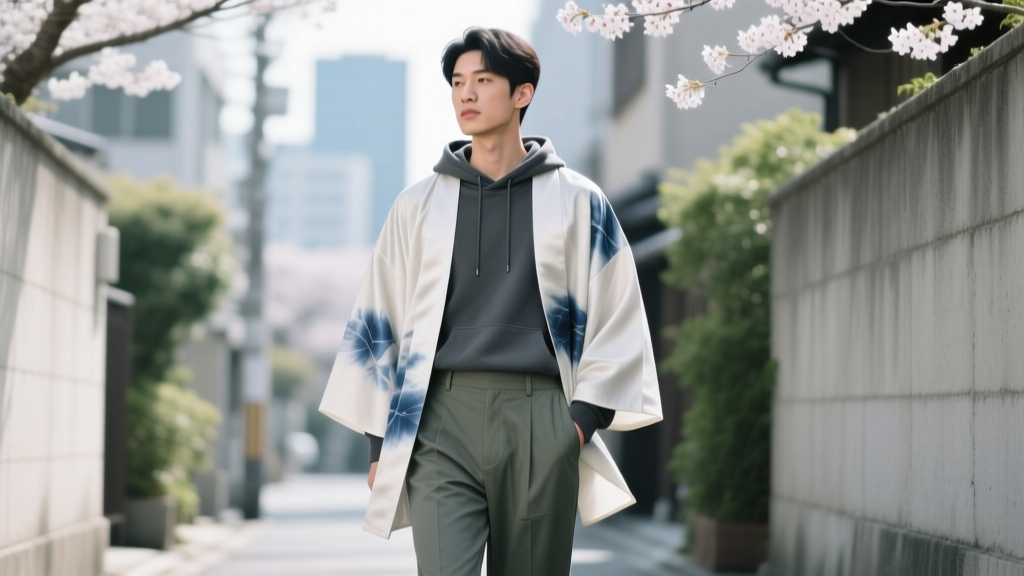
The global resurgence of heritage clothing has brought chinese traditional men's clothes out of historical reenactments and into contemporary street style and formalwear. Driven by the Hanfu Yundong (Hanfu movement) and a broader appreciation for sartorial craftsmanship, modern men are increasingly integrating garments like the Daopao, Tangzhuang, and Changshan into their daily wardrobes. However, transitioning these pieces from historical artifacts to modern staples requires an understanding of their architectural flat-cutting techniques, cultural protocols, and fabric behaviors.
Unlike Western tailoring, which relies on darts and seams to contour the body, traditional Chinese garments are constructed using a flat, T-shaped pattern. This results in a fluid, unstructured drape that prioritizes elegance, movement, and the natural fall of the fabric over rigid body shaping. According to the Metropolitan Museum of Art's Heilbrunn Timeline of Art History, this philosophy reflects deep-seated cultural ideals of harmony between the human form and the natural world.
Core Garments and Their Modern Applications
To successfully style these garments today, one must move past the shiny, mass-produced costumes found in tourist districts and seek out pieces with authentic construction and muted, sophisticated textiles.
The Daopao (道袍): The Scholar's Robe
The Daopao is a quintessential Ming Dynasty (1368–1644) outer robe characterized by its cross-collar, wide sleeves, and distinctive side panels. Historically worn by literati and scholars, its modern appeal lies in its dramatic silhouette and layering potential. The side slits, known as bai (摆), feature internal fabric folds that maintain modesty while allowing for a sweeping, architectural drape when walking.
Modern Styling Tip: Avoid wearing the Daopao as a standalone robe in casual settings, which can look costumey. Instead, treat it as an oversized, structured duster coat. Layer it over a fitted, modern charcoal turtleneck and tailored wool trousers. Ground the fluid silhouette with structured footwear like leather Chelsea boots or derby shoes to create a striking contrast between historical drape and contemporary menswear.
The Tangzhuang (唐装): Structured Elegance
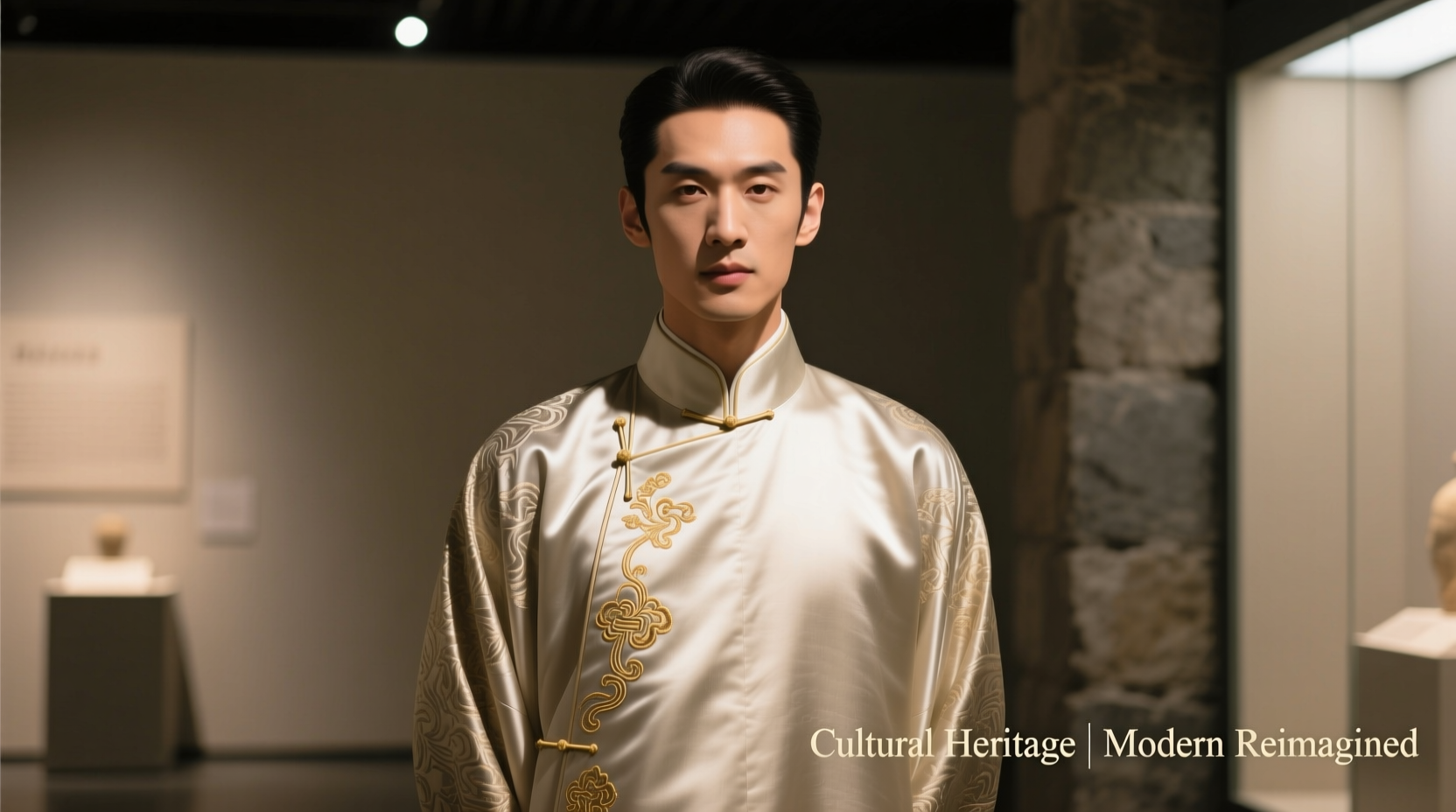
Despite its name translating to 'Tang Suit', the modern Tangzhuang actually evolved from the Qing Dynasty (1636–1912) Magua (horse jacket). It is defined by its mandarin collar and Pankou (knotted frog buttons). While often associated with bright red brocades worn during Lunar New Year, the Tangzhuang can be a highly versatile piece of smart-casual outerwear when reinterpreted in matte fabrics.
Modern Styling Tip: Swap the traditional shiny silk brocade for heavyweight matte linen, raw cotton, or subtle herringbone wool. A navy or olive-green linen Tangzhuang worn unbuttoned at the top over a crisp white Oxford shirt and dark selvedge denim bridges the gap between Eastern heritage and Western workwear. The Victoria and Albert Museum's extensive Asian dress archives highlight how the structural integrity of the Pankou fastenings requires precise tension, meaning a well-fitted Tangzhuang should sit flush against the chest without pulling.
The Changshan (长衫): The Intellectual's Silhouette
The Changshan (long shirt) gained prominence during the Republican era (1912–1949) as the standard daily wear for scholars, teachers, and intellectuals. It is a long, side-fastening gown that falls to the ankles or mid-calf. It represents a bridge between ancient Han traditions and early 20th-century modernity.
Modern Styling Tip: The Changshan is an exceptional alternative to the Western tuxedo or morning coat for high-formality events, particularly cultural ceremonies or evening galas. Opt for a midnight blue or deep plum silk-blend Changshan. Pair it with minimalist leather loafers and a subtle jade or silver lapel pin. The key to wearing the Changshan today is impeccable posture and a tailored fit through the shoulders, ensuring the garment hangs perfectly straight.
Fabric, Fit, and Seasonality Matrix
Selecting the correct textile is paramount. Traditional Chinese garments rely heavily on the weight and weave of the fabric to achieve their intended silhouette. Below is a guide to selecting the right garment and material for modern wear.
| Garment | Historical Era | Formality Level | Ideal Modern Fabric | Est. Price Range (USD) |
|---|---|---|---|---|
| Daopao (Robe) | Ming Dynasty | Semi-Formal / Outerwear | Heavyweight Linen, Wool Blends | $120 - $350 |
| Tangzhuang (Jacket) | Qing / Modern | Smart Casual | Matte Cotton, Raw Silk, Tweed | $60 - $180 |
| Changshan (Long Gown) | Republican Era | Formal / Ceremonial | Mulberry Silk, Jacquard Weave | $150 - $400+ |
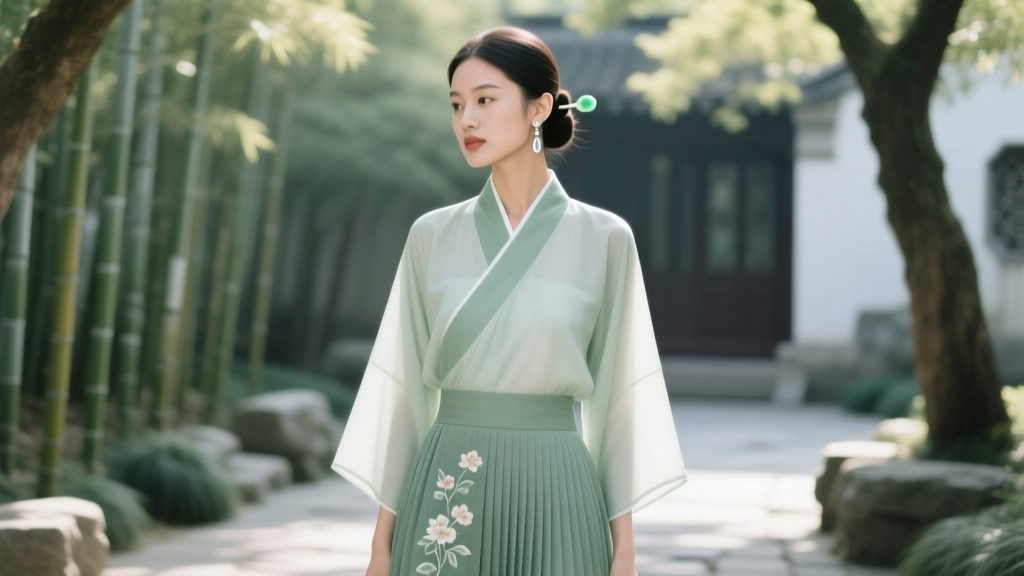
| Ruqun (Top/Skirt) | Han / Tang / Song | Casual / Festival | Lightweight Ramie, Chiffon | $80 - $200 |
Rules of Engagement: Cultural Protocols and Styling Mistakes
When integrating Chinese traditional garments into a modern wardrobe, cultural sensitivity and adherence to historical protocols are non-negotiable. The most critical rule in Hanfu and broader Chinese dress is the direction of the collar.
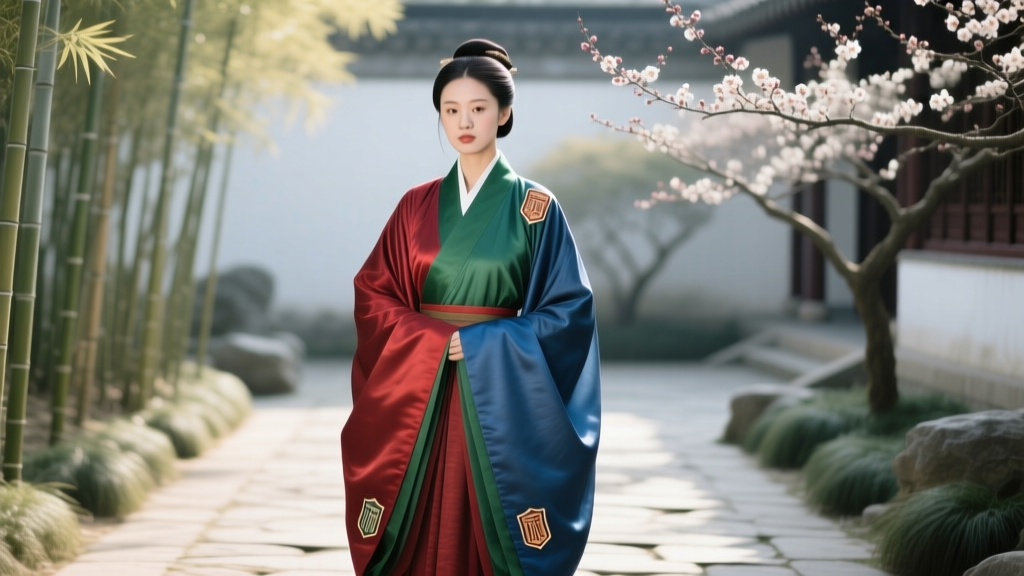
The Golden Rule of Jiaoling Youren (交领右衽): The left side of the collar must always cross over the right side, meaning the right lapel is hidden underneath. This 'right-over-left' configuration is the defining characteristic of the living. The inverse, zuoren (left lapel over right), is strictly reserved for dressing the deceased for burial. Wearing a garment zuoren in daily life is considered highly inauspicious and deeply offensive.
Additionally, color symbolism remains relevant. While modern fashion embraces all palettes, pure white and unadorned coarse hemp are historically associated with mourning and funerary rites in Han culture. For celebratory or daily wear, opt for indigo, celadon, ochre, or deep earth tones. The China National Silk Museum frequently showcases how historical dyeing techniques utilizing indigo and madder root created rich, colorfast garments that avoided the starkness of mourning whites.
Sourcing Authentic Pieces: Navigating the Market
The market for Chinese traditional men's clothes is vast, but quality varies wildly. Mass-market e-commerce platforms are flooded with synthetic, poorly constructed 'costumes' that lack the internal ties and structural panels of authentic garments.
- Entry-Level ($40 - $90): Look for specialized Hanfu brands on platforms like Taobao or Weidian (using proxy shopping services). Focus on cotton and linen blends for daily wear Tangzhuang or Song-style outerwear.
- Mid-Tier Artisans ($100 - $250): Seek out brands that emphasize historical accuracy in their patterning, such as correct sleeve curvature and internal side-slit folding. These brands often use natural dyes and high-grade ramie or raw silk.
- Bespoke and Heritage ($300+): For a Changshan or a formal Daopao, commissioning a piece from a tailor specializing in heritage menswear ensures the flat-cut pattern aligns perfectly with your shoulder slope, preventing the garment from collapsing at the neck.
Ultimately, styling Chinese traditional menswear in the modern era is an exercise in balance. By respecting the architectural drape of the garments, adhering to the sacred geometry of the collar, and grounding historical silhouettes with contemporary footwear and layering, you can cultivate a wardrobe that is both deeply rooted in Asian heritage and strikingly relevant today.