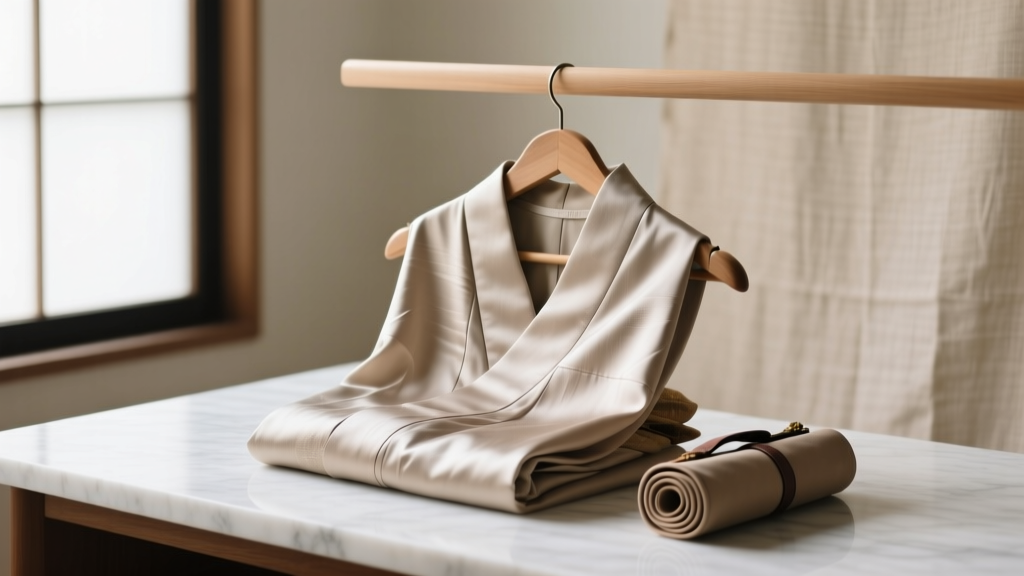
Mochi Hanfu Substyles: Jiangnan Elegance & Modern Aesthetics

The contemporary Hanfu revival movement (Hanfu Yundong) has evolved far beyond strict historical reconstruction. Today, the landscape of traditional Chinese dress is rich with stylistic subgenres that cater to diverse aesthetic preferences. Among the most searched and beloved by younger demographics is Mochi Hanfu. While 'mochi' is not a historical Chinese dynasty or a traditional weaving technique, it has become a vital cultural colloquialism within the modern Hanfu community. It describes a specific substyle characterized by soft, rounded silhouettes, pastel 'macaron' color palettes, and lightweight, flowing textiles.
To understand Mochi Hanfu from a cultural and regional perspective, one must look past the modern internet slang and examine the historical regional aesthetics it romanticizes. Specifically, the Mochi substyle is a contemporary love letter to the Jiangnan (South of the Yangtze River) regional aesthetic and the minimalist elegance of the Song Dynasty (960–1279 CE). This guide explores the regional variations, textile constructions, and cultural nuances that define the Mochi Hanfu substyle.
Beyond the Dynasty: Defining the Mochi Hanfu Substyle
In Chinese internet culture, the term 'mochi' (borrowed from the soft, squishy Japanese rice cake) is used to describe things that are soft, youthful, and pastel-toned. When applied to Hanfu, it denotes a departure from the heavy, rigid, and highly structured ceremonial garments of the Tang or High Ming dynasties. Instead, Mochi Hanfu prioritizes comfort, drape, and an ethereal, understated elegance.
This substyle heavily references the literati culture of the Song Dynasty, a period where the Metropolitan Museum of Art notes that Chinese fashion shifted toward slender, refined, and layered silhouettes. The modern Mochi aesthetic takes these historical cues and adapts them with contemporary pastel dyeing techniques and softer synthetic or blended fabrics, making them accessible for daily wear, campus life, and casual photography.
The Geography of Elegance: Jiangnan vs. Northern Textiles
China's vast geography has historically dictated its textile production and regional clothing styles. The Mochi Hanfu substyle is deeply rooted in the romanticized vision of Jiangnan—a region encompassing cities like Hangzhou, Suzhou, and Nanjing. Historically, Jiangnan was the epicenter of China's silk industry and literati culture. The clothing of this region favored breathability, subtle luster, and intricate but understated embroidery, reflecting the misty, water-town environment.
Conversely, Northern and Capital regions (such as Xi'an and Beijing) experienced harsher winters and were heavily influenced by imperial court protocols. Northern historical garments often utilized heavy brocades (Zhuanghua), thick satins, and bold, high-contrast colors like crimson, indigo, and gold to project authority and retain warmth.
Core Textiles of the Mochi Aesthetic
To achieve the signature 'squishy' and flowing drape of Mochi Hanfu, modern makers rely on specific regional textiles that trace their lineage to Jiangnan weaving centers:
- Luo (罗) Gauze: An openwork silk weave originating from Hangzhou. The China Silk Museum highlights Luo as a premier summer textile, prized for its breathability and matte finish, which perfectly captures the soft Mochi aesthetic without the harsh glare of modern satin.
- Juan (绢) Plain Weave: A tightly woven, lightweight silk that provides structure to inner garments while maintaining a soft hand-feel.
- Matte Crepe & Chiffon: In mid-tier modern Mochi Hanfu, high-quality synthetic crepes are used to mimic the drape of historical silks, allowing for the pastel macaron dyes that define the substyle.
Anatomy of the Soft Silhouette: Garment Construction
A complete Mochi Hanfu ensemble is a masterclass in layered softness. Unlike the voluminous, floor-sweeping sleeves of formal court wear, Mochi garments are tailored for movement and subtle grace. According to archives at the Victoria and Albert Museum, traditional Chinese dress relies on flat-pattern cutting, which naturally creates a fluid drape. Mochi Hanfu leverages this flat-cutting to create rounded, non-restrictive silhouettes.
The Essential Mochi Wardrobe
| Garment Name | Historical Era Inspiration | Mochi Substyle Adaptation | Primary Function |
|---|---|---|---|
| Beizi (褙子) | Song Dynasty | Features straight, open fronts with narrow, soft sleeves. Often made of translucent pastel organza or matte Luo. | Outer jacket / Duster |
| Ru (襦) / Shan (衫) | Song / Ming | Cross-collared or round-collared inner tops in soft, skin-friendly cotton-silk blends. Colors include 'moon white' and 'lotus pink'. | Upper body base layer |
| Mamianqun (马面裙) | Ming Dynasty | The 'horse-face' skirt is adapted using lighter fabrics and softer pleats to avoid stiffness. Pastel gradients replace heavy gold-woven patterns. | Lower body wrap skirt |
| Yunjian (云肩) | Ming / Qing | Cloud shoulders are miniaturized and made with soft tassels and delicate floral embroidery to frame the face gently. | Decorative shoulder piece |
'The beauty of Song attire lies not in the ostentation of gold thread, but in the quiet poetry of the fabric's drape and the subtle harmony of its colors.' — Historical Textile Analysis of the Southern Song Literati
Market Tiers and Collector’s Pricing Matrix
Navigating the modern Hanfu market requires an understanding of pricing tiers, especially for niche substyles like Mochi Hanfu where the difference between a cheap costume and a culturally respectful garment lies in the textile quality and construction. Prices below are estimated based on current market rates from specialized artisans and established Taobao brands.
| Market Tier | Price Range (RMB / USD) | Textile Composition | Construction & Details | Best Use Case |
|---|---|---|---|---|
| Entry-Level | 150 - 350 RMB ($20 - $50) | Polyester chiffon, synthetic crepe, cotton blends. | Machine embroidery, glued pleats, standard sizing. | Daily wear, casual photography, beginners. |
| Mid-Tier Artisan | 400 - 800 RMB ($60 - $115) | Mulberry silk blends, high-grade matte organza, rayon. | Hand-finished pleats, detailed machine/semi-hand embroidery, mother-of-pearl buttons. | Festivals, cultural events, tea ceremonies. |
| Heritage Custom | 1500 - 3000+ RMB ($210 - $420+) | Pure Hangzhou Luo gauze, Xiangyunsha (dyed silk). | Traditional flat-lining, hand-embroidered motifs (e.g., Su embroidery), custom tailoring. | Collectors, formal heritage gatherings, museum displays. |
Styling Protocols and Cultural Etiquette
While Mochi Hanfu is inherently playful and youthful, it is essential to wear it with an understanding of its cultural roots. The Hanfu movement is deeply tied to Chinese cultural identity and historical respect. When styling a Mochi ensemble, avoid mixing it with overtly modern or unrelated cultural accessories (such as pairing it with non-traditional footwear or anime-style props), which can reduce a profound cultural garment to a mere caricature.
Footwear: Pair your soft Mamianqun with traditional cloth boots (Buxue) or modern Mary Janes in neutral tones that complement the pastel palette. Avoid heavy, modern sneakers which disrupt the historical drape of the skirt.
Hair and Accessories: The Mochi aesthetic favors soft, romantic hair styling. Opt for half-up styles adorned with velvet flowers (Ronghua) or delicate pearl hairpins, avoiding the heavy, rigid metal crowns reserved for formal Ming dynasty court wear.
Color Harmony: Stick to the traditional Chinese pastel lexicon. Colors like Yuese (moon white), Qingshui (clear water green), and Taohe (peach pink) maintain the historical integrity of the Jiangnan aesthetic while fulfilling the modern 'mochi' visual requirement.
The Future of Regional Substyles
The emergence of Mochi Hanfu highlights a beautiful evolution in the global appreciation of Asian traditional garments. It proves that historical clothing is not a static museum artifact, but a living, breathing tradition that adapts to the emotional and aesthetic needs of new generations. By understanding the regional geography, historical textiles, and construction techniques that underpin the Mochi substyle, enthusiasts can participate in the Hanfu revival with both stylistic joy and profound cultural respect.