Decoding Ming Hanfu: Symbolism, Motifs, and Cultural Meaning
The Cosmological Architecture of Ming Dress
The Ming Dynasty (1368–1644) represents a pivotal renaissance in Chinese sartorial history. Following the collapse of the Mongol-led Yuan Dynasty, the Hongwu Emperor sought to restore traditional Han Chinese culture, resulting in a highly codified, deeply symbolic system of dress known today as Ming Hanfu. Unlike modern fast fashion, Ming garments were not merely functional or aesthetic; they were wearable cosmological maps, reflecting Confucian morality, social hierarchy, and the harmony between humanity and the natural world.
To understand Ming Hanfu is to read a visual language where every seam, color, and motif carries profound philosophical weight. Today, as the Hanfu movement experiences a global revival, distinguishing between superficial costume and historically grounded cultural attire requires an understanding of these embedded meanings.
Jiaoling Youren and the Zhongfeng
The most fundamental rule of Han clothing is jiaoling youren (交领右衽), the crossing of the collar with the left side over the right. In traditional Chinese philosophy, the left represents the yang (the living, the sun, the east), while the right represents the yin (the deceased, the moon, the west). Dressing left-over-right was a strict cultural boundary separating the civilized living from the dead and the 'barbarian' nomadic tribes who often wore right-over-left for practical horseback-riding reasons.
Equally important is the zhongfeng (中缝), the continuous center back seam that runs from the nape of the neck to the hem. According to the China National Silk Museum, this unbroken line symbolizes upright human character, moral integrity, and the Confucian ideal of walking the 'middle path' without deviation. When a Ming scholar wore a daopao (scholar's robe), the physical garment enforced a posture of dignity and rectitude.
Decoding Auspicious Motifs and Rank Badges
Ming textiles are renowned for their intricate, highly symbolic motifs, woven directly into the fabric rather than merely embroidered on top. These designs served as a visual lexicon of blessings, cosmic balance, and state authority.
The Buzi System: Civil and Military Hierarchy
Perhaps the most strictly regulated symbolic element of Ming official dress was the buzi (补子), or Mandarin square. These embroidered or woven badges were affixed to the front and back of an official's yuanlingpao (round-collar robe). As documented by The Metropolitan Museum of Art, the motifs immediately communicated the wearer's exact rank and department:
- Civil Officials (Birds): Representing literary elegance and peaceful governance. A first-rank official wore the immortal crane, while lower ranks featured golden pheasants, peacocks, or silver pheasants.
- Military Officials (Beasts): Representing martial prowess and courage. The highest ranks wore the mythical qilin or lion, descending to tigers, panthers, and bears for lower ranks.
Wearing a badge above one's station was a severe criminal offense under Ming sumptuary laws, making the buzi a literal matter of life, death, and social order.
The Language of Flora, Fauna, and Rebus
Beyond official court wear, everyday Ming garments for the affluent merchant and gentry classes were covered in auspicious rebuses—visual puns that conveyed blessings. Bats (fu) were woven into cloud collars (yunjian) because the word for bat sounds identical to the word for 'good fortune.' Peonies represented wealth and honor, while lotus flowers symbolized purity and marital harmony. The shou (longevity) character was frequently stylized into round medallions on the shoulders and knees of robes, wrapping the wearer in a protective aura of long life.
The Mamianqun: Structural Symbolism in Motion
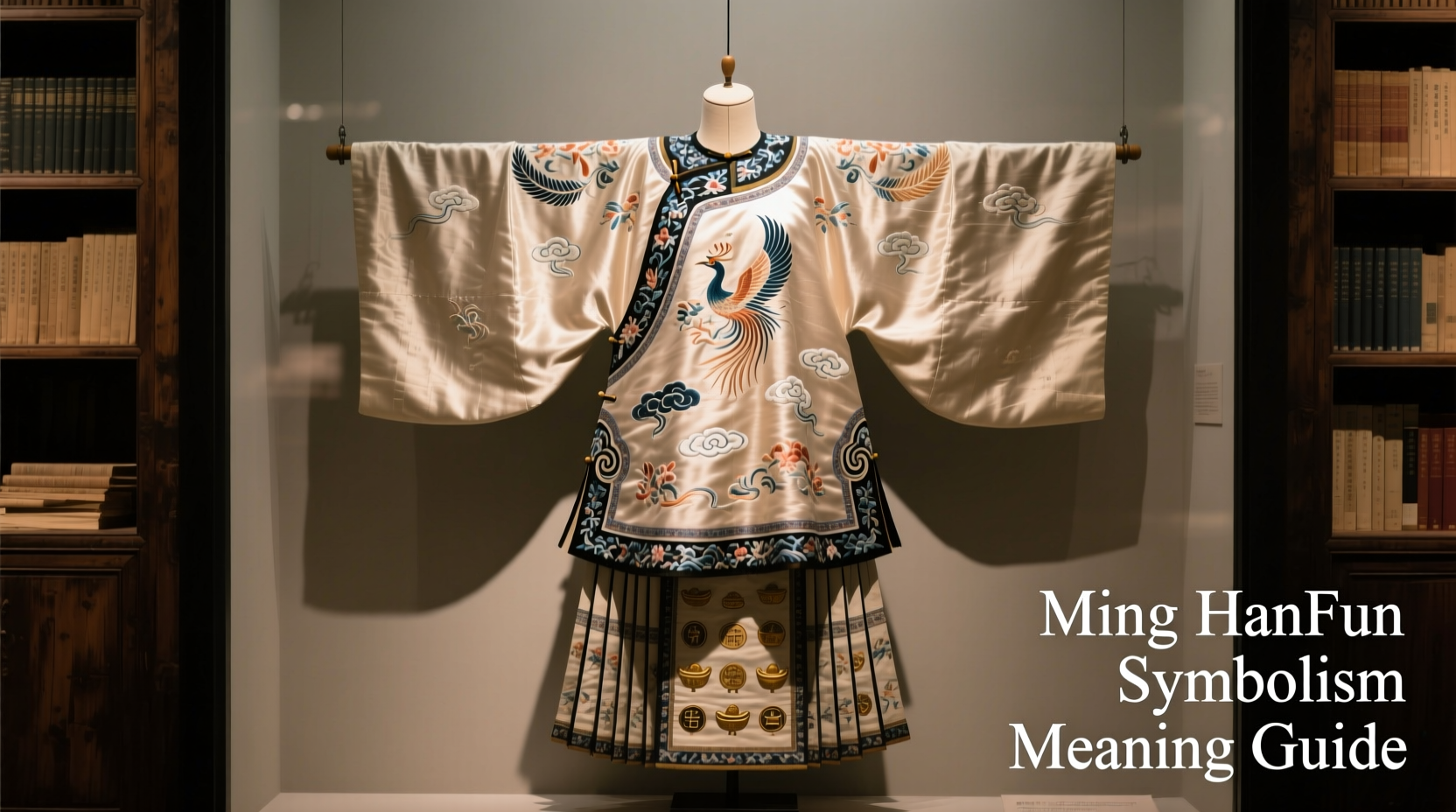
No garment defines the Ming Dynasty silhouette quite like the mamianqun (马面裙), or 'horse-face skirt.' Worn primarily by women, this skirt is a masterclass in flat-pattern cutting and structural symbolism.
The skirt consists of four fabric panels: two flat, unpleated panels at the front and back (the 'horse faces'), and two heavily pleated panels on the sides. This construction is deeply tied to the philosophy of yin and yang. The flat, stable front and back panels represent stillness, earth, and structural foundation (yin), while the dynamic, moving side pleats represent activity, heaven, and flow (yang). When the wearer walks, the pleats fan out in a fluid motion, only to snap back into a perfectly flat, modest silhouette when standing still.
Lanjian Borders and Zhuanghua Weaving
The flat panels of the mamianqun were often framed by lanjian (decorative borders). In high-status Ming skirts, these borders were created using zhuanghua (silk tapestry weave) or kesi (cut silk) techniques. According to textile archives at the Victoria and Albert Museum, kesi is an incredibly labor-intensive method where the weft threads are cut and turned back at the edge of a color block, creating a 'carved' look in the silk. A single authentic Ming-era kesi border featuring dragons and flaming pearls could take an artisan over a year to weave, making these skirts heirloom treasures passed down through generations.
Color Theory and Sumptuary Laws
Color in Ming Hanfu was never arbitrary; it was dictated by the Five Elements theory (Wu Xing) and strict imperial edicts.
- Vermilion (Zhu): Associated with fire, the south, and the Ming imperial family (the surname Zhu literally means vermilion). It was heavily restricted for commoners in the early dynasty.
- Bright Yellow (Huang): The color of the earth element and the center. It was exclusively reserved for the Emperor and the Empress. Even using a yellowish-ochre could invite imperial wrath.
- Indigo and Azure (Qing/Lan): The colors of the scholars and the common people. Derived from natural indigo fermentation, these colors represented humility, growth, and the wood element.
Modern Acquisition: Sourcing Authentic Ming-Style Hanfu
For modern enthusiasts, collectors, and cultural practitioners, acquiring Ming Hanfu requires navigating a market flooded with inaccurate 'costume' pieces. True Ming Hanfu relies on flat cutting (no darts or western tailoring), natural fibers (mulberry silk, hemp, or ramie), and historically accurate loom widths.
Artisan Brands and Price Guide
Below is a guide to sourcing historically grounded Ming Hanfu, reflecting current market standards for authentic construction and traditional weaving techniques.
| Brand / Artisan House | Tier | Price Range (USD) | Specialty & Construction Details |
|---|---|---|---|
| Ming Huatang (明华堂) | Premium Heritage | $400 - $1,500+ | Museum-grade replication. Uses authentic Zhuanghua brocade, Kesi borders, and strict adherence to Ming tomb artifacts. |
| Jingchun (镜水楼台) | High-End Artisan | $200 - $600 | Excellent Mamianqun construction. Focuses on accurate Lanjian weaving and natural silk damask fabrics. |
| Shisi Hanfu (十三余) | Accessible Commercial | $60 - $150 | Mass-market appeal. Good for beginners, though often blends Ming silhouettes with modern fantasy motifs and synthetic blends. |
| Custom Loom Artisans | Bespoke | $800 - $3,000+ | Commissioned Kesi weaving and custom Xiangyunsha dyeing. Requires direct contact with cooperatives in Nanjing or Suzhou. |
Respectful Wear and Cultural Continuity
Wearing Ming Hanfu today is an act of cultural continuity. When styling these garments, it is vital to respect the foundational rules of the dress. Always ensure the collar crosses left-over-right. When tying the skirt, the flat 'horse face' panel must sit perfectly centered on the front and back of the body, with the side pleats aligning symmetrically with your hips.
'Clothing is not merely a covering for the body; it is the boundary where the internal moral universe meets the external social world.' — Adapted from the Book of Rites (Liji), a foundational text guiding Ming sartorial philosophy.
By understanding the profound symbolism woven into every pleat of the mamianqun and every thread of the buzi, modern wearers do more than don a beautiful garment; they participate in a living dialogue with centuries of Asian philosophy, artistry, and identity.