Care Guide for Your Mens Hanfu Dress and Traditional Robes
Decoding the 'Mens Hanfu Dress': Terminology and Silhouettes
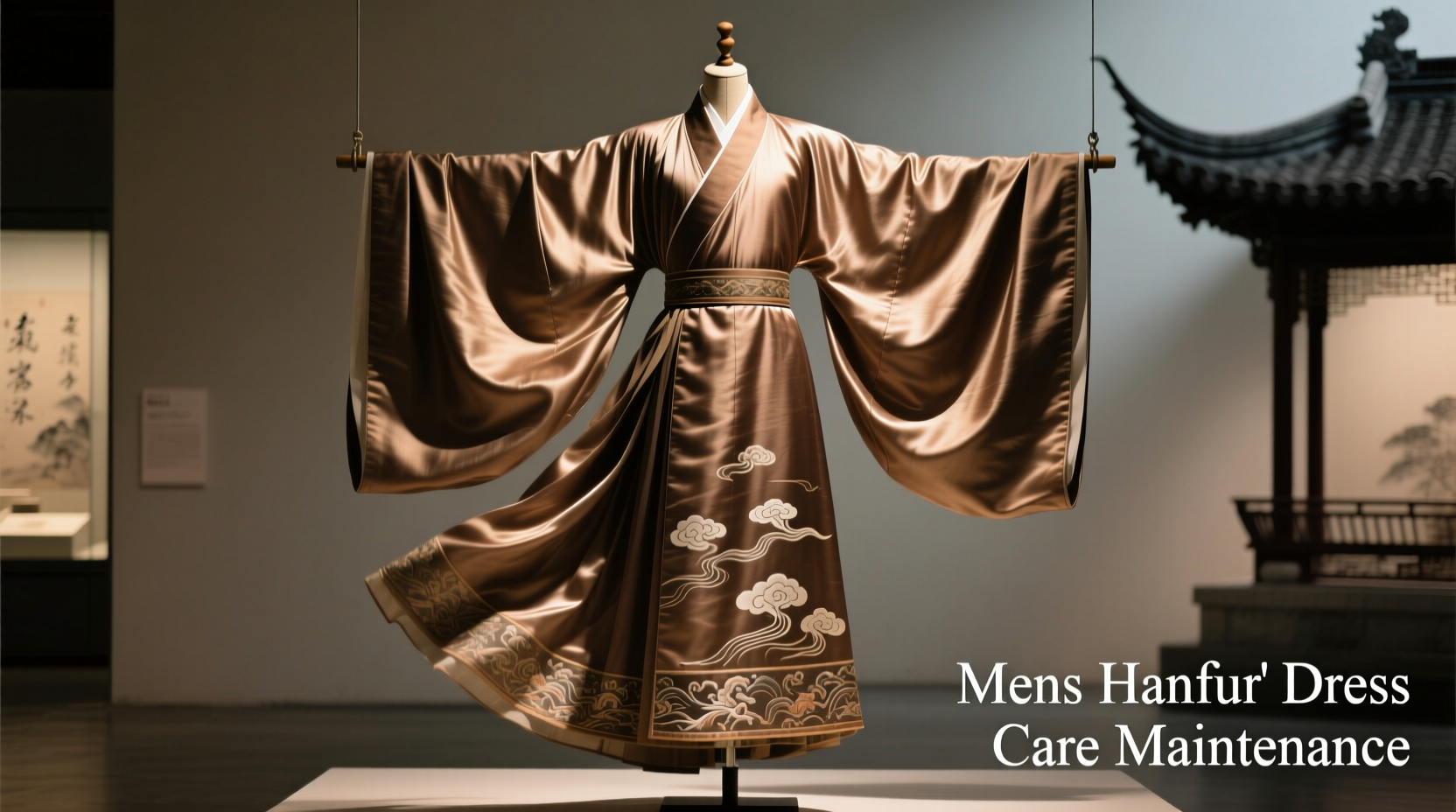
As the global Hanfu revival movement accelerates, international enthusiasts often search for a 'mens hanfu dress' to describe the flowing, full-body garments worn by Han Chinese men. However, in traditional Chinese sartorial terminology, men's garments are rarely classified as 'dresses.' Instead, they are categorized as robes (pao), tunics (ru), and trousers or skirts (ku or chang). The garments that most closely align with the Western search intent for a mens hanfu dress are the Shenyi (深衣, deep robe) and the Daopao (道袍, scholar's robe).
Caring for these garments requires an understanding of their unique structural elements. Unlike Western tailored clothing, traditional Hanfu relies on flat-pattern cutting, wide sleeves (xiu), and intricate hidden pleats (anbai). Whether you own an everyday cotton tunic-skirt ensemble (ruqun) or a ceremonial Ming-dynasty Yisan (曳撒) woven from Xiangyunsha (gambiered Canton gauze), proper maintenance is critical to preserving the fabric's integrity and the garment's historical silhouette.
The Fabric Matrix: Washing Protocols by Material
The Hanfu market offers a vast spectrum of textiles, ranging from affordable everyday blends to museum-grade heritage silks. The price of a mens hanfu dress or robe typically ranges from $60–$150 USD for basic cotton/linen blends, up to $300–$800 USD for authentic Xiangyunsha, and exceeding $1,500 USD for bespoke Songjin (Song brocade). Each fiber demands a distinct care protocol.
| Garment Type & Fabric | Wash Method | Water Temp | Detergent Type | Drying Protocol |
|---|---|---|---|---|
| Everyday Daopao (Cotton/Linen) | Machine (Delicate) or Hand | Cold (Max 30°C) | Mild Liquid Detergent | Hang dry in shade |
| Summer Ruqun (Ramie / Xiabu) | Handwash Only | Cool | pH-Neutral Soap | Flat dry with tension |
| Ceremonial Shenyi (Mulberry Silk) | Spot Clean / Air Out | N/A | N/A (Dry Clean Only if needed) | Away from direct UV light |
| Ming Yisan (Xiangyunsha) | Air / Gentle Wipe | N/A | N/A | Never wring; flat shade dry |
Step-by-Step Handwashing: Protecting the Ling and Xiu
For washable fabrics like raw silk, cotton, and ramie, handwashing is the gold standard. The Victoria and Albert Museum (V&A) emphasizes that historical and traditional textiles should never be subjected to the aggressive agitation of modern washing machines.
1. Pre-Treating the Ling (Collar)
The Ling (collar) experiences the most direct contact with skin oils and sweat. Before submerging the garment, apply a small amount of pH-neutral delicate wash (such as Eucalan or The Laundress Delicate Wash) directly to the inner collar. Gently massage the fabric with your fingertips—never use a bristled brush, which can fray the delicate warp threads of patterned silk.
2. Submersion and Agitation
Fill a basin with cool water and dissolve the detergent. Submerge the mens hanfu dress or robe entirely. Gently press the water through the fabric. Pay special attention to the Xiu (sleeves). Because Hanfu sleeves are often cut in a single continuous piece with the body, the underarm seams bear significant structural tension. Support the weight of the wet fabric to prevent these seams from tearing.
3. Rinsing and Extraction
Rinse thoroughly with cool water until the runoff is clear. Never wring or twist silk or ramie. Instead, roll the garment in a clean, dry microfiber towel to absorb excess moisture. This prevents the fibers from stretching out of their flat-pattern alignment.
Drying and Ironing: Preserving the Anbai Pleats
Drying and pressing are where many enthusiasts accidentally ruin the structural volume of their garments. The Ming dynasty Daopao is famous for its Anbai (hidden side pleats), which create a distinctive A-line silhouette while allowing freedom of movement.
- Drying: Always dry silk and Xiangyunsha away from direct sunlight. UV radiation rapidly degrades sericin (the protein in silk), causing the fibers to become brittle and yellow. Use a wide, padded wooden hanger for robes, or lay them flat on a mesh drying rack.
- Ironing the Anbai: To iron hidden pleats without flattening them, turn the garment inside out. Use a steam iron on the 'Silk' setting. Place a cotton pressing cloth between the iron and the garment. Press lightly along the pleat lines, but avoid dragging the iron, which can cause 'skewing' (where the fabric grain shifts and distorts).
- The Xiangyunsha Exception: Gambiered Canton gauze is coated in iron-rich river mud and potato yam juice during its production in Guangdong. It is naturally antibacterial and odor-resistant. Do not iron Xiangyunsha; simply hang it in a steamy bathroom to release wrinkles naturally.
Archival Storage: Folding vs. Hanging Historical Garments
How you store your collection dictates its lifespan. The Metropolitan Museum of Art's Textile Conservation department notes that gravity is the enemy of heavy, woven textiles over long periods.
'Heavy brocades and garments with extensive metallic thread embroidery should never be stored on hangers for extended periods. The weight of the garment will cause the warp threads to stretch and eventually snap at the shoulders.' — Principles of Textile Conservation.
For everyday cotton and linen mens hanfu dress garments, wide, padded hangers are perfectly acceptable. However, for heavy winter Shenyi lined with brocade or faux fur, archival folding is required.
- Clean the garment thoroughly before storage; residual body oils attract textile pests.
- Line a breathable cotton storage box with acid-free tissue paper.
- Fold the robe along its natural seam lines to avoid creating sharp, unnatural creases (shuang) that can break fibers over time.
- Stuff the sleeves and collar with crumpled acid-free tissue to maintain their three-dimensional shape and prevent deep crushing.
- Include natural cedar blocks or dried mugwort (ai cao) to repel moths. Avoid chemical mothballs, which can react with silk dyes and cause permanent staining.
Professional Conservation and Artisan Repairs
When dealing with high-end heritage garments, such as those sourced from the China National Silk Museum affiliated artisans or premium Suzhou weaving cooperatives, DIY repairs are strongly discouraged. If a seam bursts or the fabric suffers a tear, seek out a professional textile conservator or a specialized Hanfu tailor who understands traditional flat-pattern reconstruction.
Maintaining a mens hanfu dress or robe collection is an act of cultural preservation. By respecting the specific material properties of ramie, mulberry silk, and heritage brocades, you ensure that these garments remain not just beautiful artifacts of the past, but living, wearable expressions of Han culture for generations to come.