Chinese Dress for Man: Varieties, History & Styling Guide
Decoding the Chinese Dress for Man: Beyond the Western Gaze
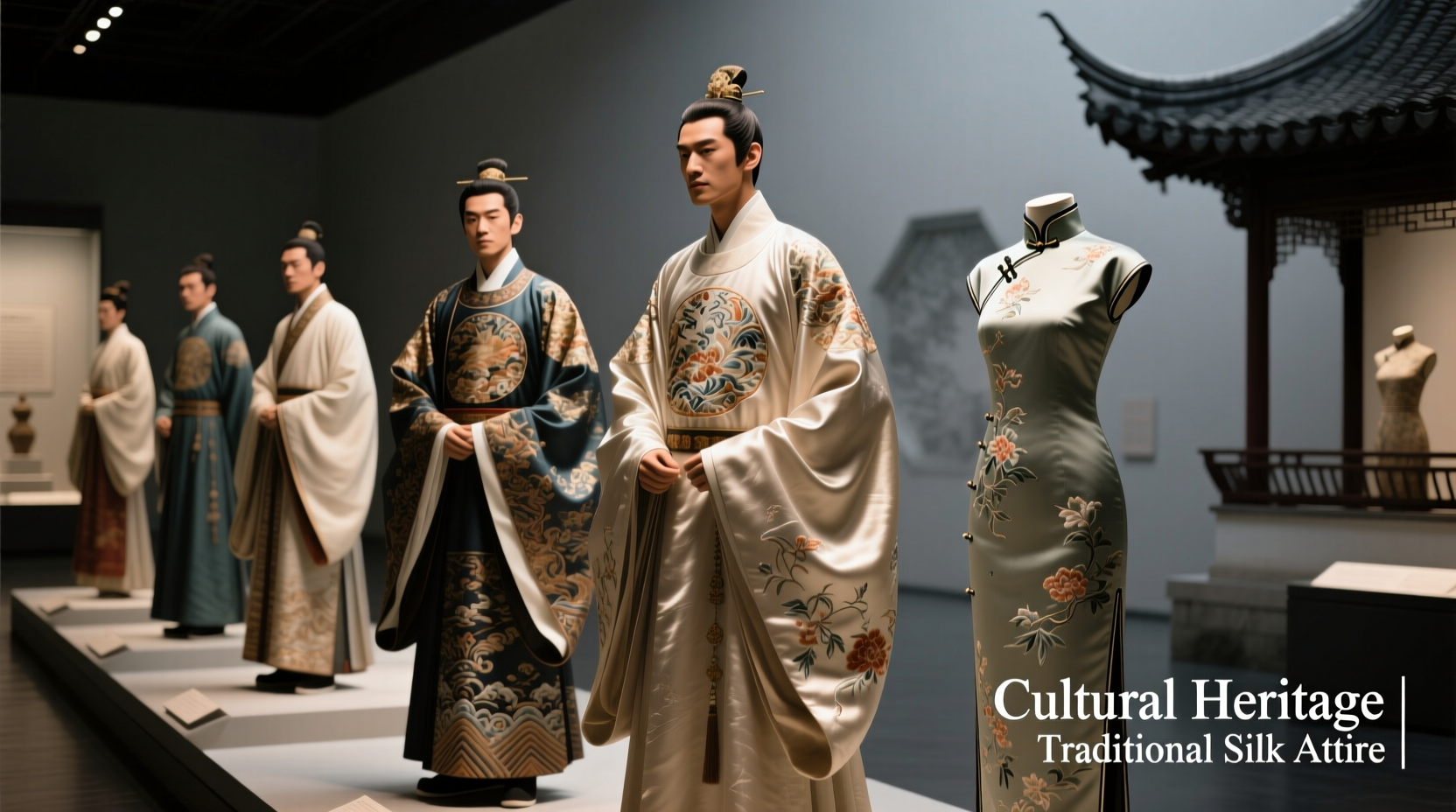
When global audiences search for a traditional chinese dress for man, they frequently encounter a sartorial blind spot. Western fashion history has heavily documented the women’s qipao (cheongsam), yet the rich, structured, and deeply philosophical world of Chinese menswear remains underexplored. Traditional Chinese menswear is not a monolith; it is a dynamic tapestry woven from thousands of years of dynastic shifts, philosophical movements, and regional textile innovations. From the flowing, cross-collared robes of the Han and Ming dynasties to the structured, frog-buttoned jackets of the modern era, understanding these garments requires an appreciation of their architectural construction and cultural weight.
This comprehensive guide compares the primary varieties of traditional Chinese menswear, detailing their historical origins, structural nuances, and how contemporary practitioners and heritage enthusiasts wear them today.
Hanfu: The Scholar’s Daopao and the Philosophy of the Lapel
Hanfu (汉服) refers to the historical clothing of the Han Chinese people, spanning from the Xia Dynasty (c. 2070 BCE) to the early Qing Dynasty (1644 CE). For men, the most iconic and widely revived garment in the modern Hanfu movement is the Daopao (道袍), often translated as the 'Daoist robe,' though it was the standard daily wear for scholars and officials during the Ming Dynasty (1368–1644).
Construction and Cultural Protocol
The defining feature of the Daopao—and Hanfu in general—is the jiaoling youren (交领右衽), or the cross-collar with the right lapel. The left side of the collar crosses over the right side, tying at the right waist. This is not merely an aesthetic choice; it is rooted in Confucian philosophy and ancient cosmological beliefs. In traditional Chinese culture, the left represents life, yang energy, and the living, while the right represents death and yin energy. Wrapping the left over the right is the strict protocol for the living. Reversing this (right over left) is strictly reserved for dressing the deceased for burial. According to the Metropolitan Museum of Art's Heilbrunn Timeline of Art History, these structural elements of Chinese textiles and tailoring reflect a society where clothing was a direct manifestation of cosmic order and social morality.
The Daopao features wide sleeves, a flowing A-line silhouette, and side slits that reveal an inner layer of fabric or trousers. It is typically secured with hidden ties inside the garment and a simple fabric sash on the outside, eschewing buttons entirely to maintain a continuous, unbroken line of fabric.
Changshan and Magua: The Qing Dynasty Silhouette
The transition from the Ming to the Qing Dynasty (1644–1912) brought Manchu rule and a radical shift in menswear. The ruling Manchu class mandated the tifa yifu policy, requiring Han Chinese men to adopt Manchu hairstyles and clothing under penalty of death. This era birthed the Changshan (长衫, 'long shirt') and the Magua (马褂, 'riding jacket').
The Anatomy of the Qing Ensemble
The Changshan is a long, straight-cut robe that falls to the ankles, featuring a high Mandarin collar and a central or side-fastening closure using early fabric knots. Over this, men wore the Magua, a hip-length, front-opening jacket with a rounded collar. Originally designed for horseback riding, the Magua’s side and back slits allowed for ease of movement in the saddle.
By the late 19th and early 20th centuries, the Changshan-Magua combination became the de facto formal wear for Chinese intellectuals, merchants, and politicians. The famous writer Lu Xun and revolutionary Sun Yat-sen were frequently photographed in tailored Changshan. Unlike the flowing, voluminous Hanfu, the Qing silhouette was more columnar, structured, and tailored closer to the body, utilizing heavier brocades and darker, more subdued colors for everyday wear, reserving intricate embroidery for court officials.
Tangzhuang: The Modern 'Tang Suit' Misnomer
If you attend a modern Lunar New Year celebration or a contemporary Chinese wedding, the garment you are most likely to see on men is the Tangzhuang (唐装). Despite the name translating to 'Tang Dynasty clothing,' the Tangzhuang has almost no historical connection to the Tang Dynasty (618–907 CE).
The modern Tangzhuang is actually a hybrid garment created in the late 20th century, heavily inspired by the Qing Dynasty Magua. It gained massive international visibility during the 2001 APEC Summit in Shanghai, where world leaders were photographed wearing matching silk Tangzhuang jackets. Its defining characteristics include the stiff Mandarin collar, the symmetrical front opening, and the use of pankou (盘扣)—elaborate, hand-knotted frog buttons made from silk cord. The Victoria and Albert Museum's Asian Collections frequently highlights the evolution of these knotted closures, noting how the pankou transitioned from purely functional ties in nomadic riding gear to highly decorative, symbolic motifs (such as the longevity knot or the plum blossom knot) in modern tailoring.
Comparative Analysis: Garment Varieties at a Glance
To understand which garment suits a specific cultural or stylistic need, it is essential to compare their structural and historical markers.
| Garment Name | Era of Origin | Collar Style | Closure Method | Modern Context & Usage |
|---|---|---|---|---|
| Daopao (Hanfu) | Ming Dynasty (1368–1644) | Cross-collar (Left over Right) | Inner ties, outer fabric sash | Cultural festivals, Hanfu movement, tea ceremonies, martial arts. |
| Changshan | Qing Dynasty (1644–1912) | Mandarin (Stand) Collar | Pankou (Frog buttons) on side/front | Traditional martial arts uniforms, historical dramas, elder formal wear. |
| Magua | Qing Dynasty (1644–1912) | Mandarin (Stand) Collar | Central Pankou buttons | Layering piece over Changshan, wedding groom attire. |
| Tangzhuang | Modern (Late 20th Century) | Mandarin (Stand) Collar | Decorative Pankou knots | Lunar New Year, diaspora celebrations, political diplomacy. |
| Zhongshan Suit | Republic Era (1920s) | Turn-down or Mandarin | Western-style buttons, 4 pockets | State functions, formal political attire (Mao suit). |
Mastering the Textiles: Xiangyunsha and Song Brocade
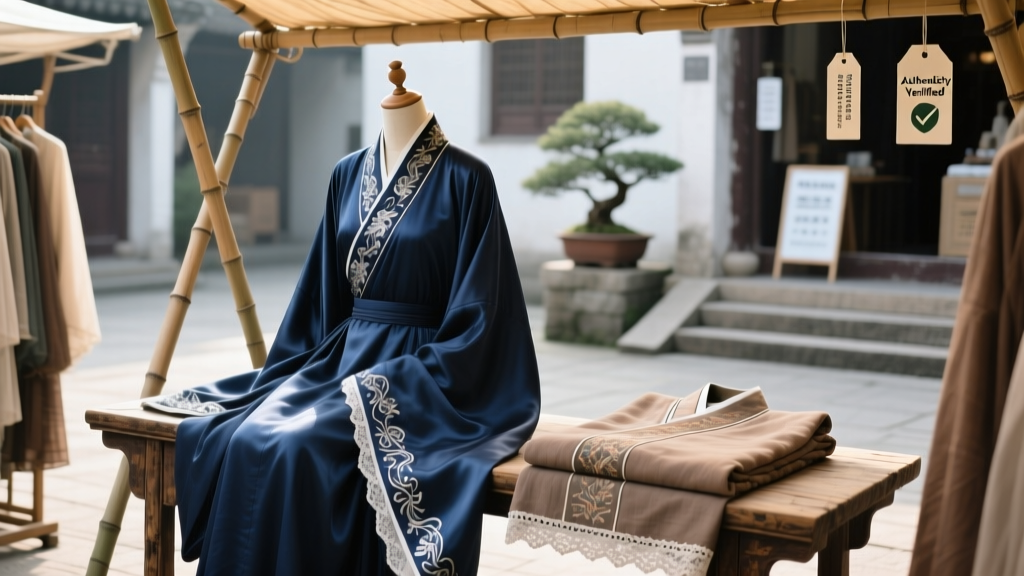
The authenticity and value of a traditional chinese dress for man are inextricably linked to its textile composition. Mass-produced polyester blends flood the tourist markets, but true heritage garments rely on specialized, regional weaving and dyeing techniques.
Xiangyunsha (Perfumed Cloud Gauze)
Originating from the Guangdong province, Xiangyunsha (香云纱) is one of the most expensive and labor-intensive silks in the world, often used for high-end Changshan and Hanfu. The silk is dyed using the tannin-rich juice of the Dioscorea cirrhosa (薯莨) tuber, then coated with iron-rich river mud from the Pearl River Delta. The chemical reaction between the tannins and the iron creates a dark, lustrous, slightly crisp fabric that is naturally water-resistant, antibacterial, and incredibly cooling in humid climates. A genuine Xiangyunsha Changshan can easily command prices between $400 and $1,200 USD due to the weeks of sun-baking and mud-coating required.
Song Brocade (Song Jin)
For formal Tangzhuang and wedding Magua, Song Brocade from Suzhou is the textile of choice. Characterized by its matte finish, intricate geometric patterns, and subtle color palettes, Song Brocade provides a structured drape that holds the stiff Mandarin collar and heavy pankou knots perfectly in place without wrinkling.
A Buyer’s Guide: Sourcing, Pricing, and Styling
Acquiring a traditional Chinese garment requires navigating a market split between fast-fashion costumes and artisanal heritage wear. Here is a practical framework for buyers.
Price Tiers and What to Expect
- Entry-Level / Fast Fashion ($30 – $80 USD): Typically made from polyester blends or rayon. The pankou knots are often faux (machine-stitched or glued) rather than hand-knotted. Suitable for casual costume parties but lacks breathability and cultural authenticity.
- Mid-Tier / Heritage Brands ($120 – $350 USD): Brands specializing in the Hanfu revival or modern neo-Chinese fashion. You will find genuine linen, raw silk, and cotton-linen blends. Collars are properly structured, and closures are functional, hand-tied pankou.
- Bespoke / Artisanal ($500 – $2,000+ USD): Custom-tailored Changshan or Daopao utilizing heritage textiles like Xiangyunsha or Zhangzhou velvet. This tier involves precise measurements for the shoulder drop and sleeve drape, ensuring the garment moves harmoniously with the body.
Styling Protocols for the Modern Wearer
When styling a traditional chinese dress for man in a contemporary setting, balance is key. If wearing a full Daopao, pair it with traditional cloth boots or minimalist leather loafers; avoid modern athletic sneakers, which disrupt the garment's historical drape. For a Tangzhuang or Magua, it can be worn over a high-quality, neutral-toned merino wool turtleneck in the winter, bridging the gap between Qing-era tailoring and modern menswear. Always ensure the garment is immaculately pressed—traditional silks and linens demand meticulous care to maintain their dignified silhouette.
Preserving a Living Heritage
The landscape of Chinese menswear is not a static museum exhibit; it is a living, breathing tradition. The contemporary Hanfu movement, driven largely by Gen Z and Millennial enthusiasts in China and the global diaspora, has pushed for historical accuracy in patterning and textile production. By understanding the profound differences between a Ming Dynasty Daopao and a modern Tangzhuang, wearers can engage with these garments not as exotic novelties, but as profound expressions of history, philosophy, and artisanal mastery. Whether you are sourcing a bespoke Changshan for a wedding or studying the cross-collar geometry of the Hanfu, you are participating in the preservation of one of the world's most complex sartorial legacies.