What Is a Mandarin Collar? Symbolism, History, and Meaning
Decoding the Standing Collar: What Is a Mandarin Collar?
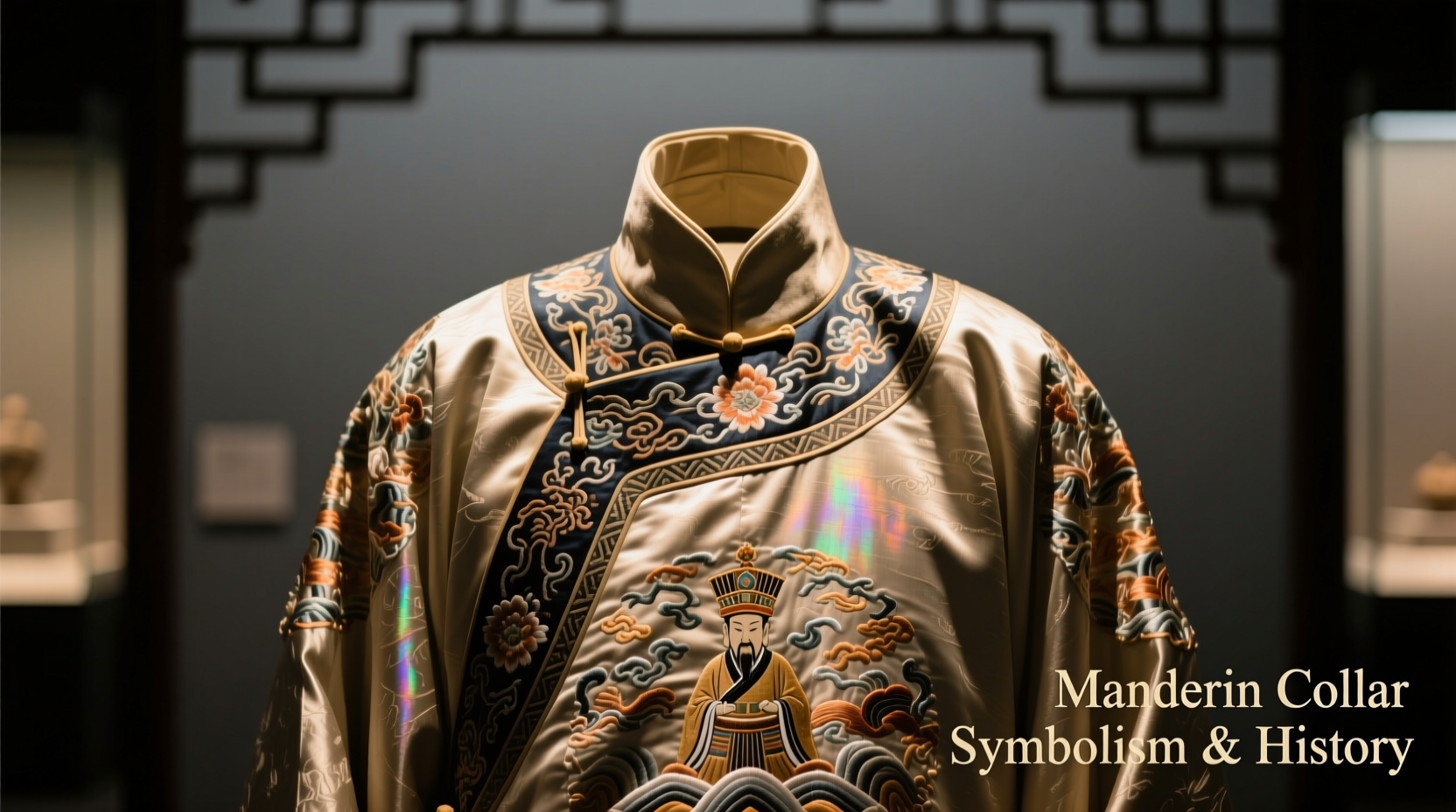
When studying the evolution of Asian sartorial traditions, a common question arises among historians and modern menswear enthusiasts: what is a mandarin collar, and why does it carry such profound cultural weight? In Western fashion terminology, the 'mandarin collar' refers to a short, unfolded, stand-up collar that starts at the base of the neck and rises vertically, typically meeting at the center front or overlapping slightly. However, this Western exonym barely scratches the surface of the garment's true identity.
In native Chinese terminology, this design is more accurately described as a liling (standing collar) or associated with the yuanling (round collar) of historical robes. Far from being a mere stylistic choice, the standing collar is a canvas of political history, bureaucratic authority, and post-colonial identity across Asia. To understand its significance, we must look beyond the tailoring and examine the deep symbolism woven into its vertical band.
The Anatomy and Construction of the Liling
Before exploring its cultural meaning, it is essential to understand the physical construction of the collar. Unlike the Western shirt collar, which features a folded lapel and a distinct collar stand, the traditional standing collar is a single, continuous band.
Key Structural Elements
- Height and Proportion: Authentic historical and bespoke standing collars typically range from 1.5 to 2 inches (3.8 to 5 cm) in height. This specific measurement is designed to frame the jawline without restricting the movement of the neck.
- Interfacing and Stiffness: To maintain its upright posture, the collar band is heavily fused with stiff canvas or modern thermoplastic interfacing. In high-end bespoke tailoring, horsehair canvas is hand-padded to create a gentle curve that follows the natural cylinder of the human neck.
- Fastening Mechanisms: Traditional garments like the changshan (long shirt) utilize woven silk frog buttons (pankou) or hidden hook-and-eye closures. Modern iterations, such as the contemporary Nehru jacket or Mao suit, often employ hidden metal hooks or a single top button to maintain a seamless, unbroken vertical line.
Historical Origins: Bureaucrats, Emperors, and Etymology
The English term 'Mandarin' is derived from the Portuguese word mandar (to command or order), which was used by European traders to describe the scholar-officials of the Ming and Qing dynasties. Therefore, the 'mandarin collar' is intrinsically linked to the dress of the Chinese imperial bureaucracy.
During the Qing Dynasty (1636–1912), Manchu rulers enforced strict sumptuary laws. The standing collar was a prominent feature of the changshan and the magua (riding jacket). According to the Metropolitan Museum of Art's archives on Chinese fashion, the rigid, high-collared garments of the Qing court were designed to project an aura of stoicism, discipline, and moral uprightness. The closed neck symbolized a containment of one's inner spirit and a strict adherence to Confucian propriety and Manchu martial discipline.
The Rejection of the Western Lapel
As Western imperialism encroached upon Asia in the 19th and early 20th centuries, the Western suit and its open, lapelled collar became a symbol of foreign dominance and capitalist modernity. The standing collar, by contrast, became a visual anchor for anti-imperialist sentiment and national pride. It represented a 'closed' cultural boundary, resisting the assimilation of Western sartorial norms.
Cross-Cultural Evolution and Political Symbolism
The standing collar did not remain confined to the Qing court; it evolved into a powerful political and cultural symbol across the Asian continent, adapting to the unique socio-political climates of different nations.
The Zhongshan Suit (Mao Suit) and Egalitarianism
Following the fall of the Qing Dynasty, Sun Yat-sen introduced the Zhongshan suit (often known in the West as the Mao suit). The suit featured a stiff, standing collar with a hooked closure. Symbolically, this collar represented a rejection of both the feudal extravagance of the Qing court and the bourgeois individualism of the Western suit. It projected a vision of modern, egalitarian nationalism. Later adopted by Mao Zedong, the collar became a global symbol of communist revolution, proletarian unity, and austere anti-fashion.
The Nehru Jacket and Post-Colonial Indian Identity
In India, a variation of the standing collar became synonymous with Jawaharlal Nehru, India’s first Prime Minister. The Nehru jacket, based on the traditional achkan or sherwani, features a rounded standing collar known as a bandhgala. For Nehru, wearing this collar was a deliberate political statement. As noted by cultural historians at the Victoria and Albert Museum, Nehru used indigenous dress to assert Indian sovereignty and reject the Western business suit, which he viewed as a relic of British colonial rule. The collar symbolized dignity, self-reliance, and a modernized indigenous identity.
The Vietnamese Áo Dài and Modesty
In Vietnam, the standing collar is a defining feature of the Áo Dài, the national garment worn by both men and women. The high, stiff collar of the Áo Dài (typically 1 to 1.5 inches high) symbolizes modesty, elegance, and respectability. In Vietnamese cultural protocol, the closed collar ensures that the wearer maintains a dignified posture, as slouching causes the stiff band to dig uncomfortably into the neck, physically enforcing graceful body language.
Comparison Chart: Standing Collar Variations Across Asia
To understand the regional nuances of the standing collar, it is helpful to compare its manifestation across different cultural garments.
| Garment Name | Native Term | Collar Height | Primary Symbolism | Typical Fabrication |
|---|---|---|---|---|
| Qing Official Robe | Changshan / Bufu | 1.5 - 2.0 inches | Bureaucratic authority, imperial discipline | Silk brocade, heavy damask |
| Mao Suit | Zhongshan Zhuang | 1.5 - 1.75 inches | Egalitarianism, anti-imperialism, revolution | Wool serge, heavy cotton twill |
| Nehru Jacket | Bandhgala / Achkan | 1.25 - 1.5 inches | Post-colonial sovereignty, national pride | Raw silk, linen, fine wool |
| Vietnamese Tunic | Áo Dài | 1.0 - 1.5 inches | Modesty, elegance, cultural continuity | Lightweight silk, brocade, voile |
Sourcing and Styling: A Practical Buying Guide
For those looking to incorporate the standing collar into a modern wardrobe, understanding where to source authentic garments and how to style them is crucial. The market ranges from mass-produced fast fashion to exquisite bespoke tailoring.
Where to Source Authentic Garments
- Shanghai and Hong Kong Bespoke Tailors: For a modern Zhongshan or contemporary standing-collar jacket, bespoke tailors in Hong Kong (such as those in the Central district) or Shanghai's South Bund Fabric Market offer unparalleled craftsmanship. Expect to pay between $400 and $900 USD for a fully canvassed, custom-made jacket using premium Italian wool or Chinese silk blends.
- Hoi An, Vietnam: For an authentic Áo Dài, the tailors of Hoi An are world-renowned. A custom-fitted silk Áo Dài with a perfectly structured standing collar can be commissioned for $60 to $150 USD, depending on the silk grade and embroidery complexity.
- Indian Heritage Brands: For a high-quality Bandhgala, look to established Indian heritage brands like Tarun Tahiliani or Sabyasachi, or specialized menswear boutiques in New Delhi. Prices for designer ready-to-wear pieces typically range from $300 to $1,200 USD.
Styling Protocols and Cultural Respect
When wearing a standing collar garment, it is important to respect its cultural origins. Avoid pairing traditional garments like the Áo Dài or Changshan with overly casual Western streetwear, as this dilutes the garment's inherent formality. Furthermore, ensure the collar fits correctly; a standing collar that gaps away from the neck or chokes the wearer indicates poor pattern drafting. The collar should lightly graze the skin, allowing for the insertion of one finger between the neck and the fabric.
Conclusion: The Enduring Legacy of the Vertical Band
So, what is a mandarin collar? It is far more than a minimalist alternative to the Western shirt collar. It is a profound sartorial artifact that has witnessed the rise and fall of empires, the birth of modern Asian republics, and the ongoing negotiation of cultural identity in a globalized world. Whether it appears on the silk Áo Dài of a Vietnamese bride, the wool Zhongshan suit of a statesman, or the linen Bandhgala of an Indian groom, the standing collar remains a powerful symbol of dignity, heritage, and quiet authority.