Ladies Chinese Costume Guide: Hanfu, Qipao & Varieties

Beyond 'Costume': Decoding Chinese Women's Sartorial Heritage
When international shoppers and cultural enthusiasts search for a 'ladies chinese costume,' they are often met with a confusing array of theatrical outfits, Halloween apparel, and mass-produced caricatures. However, in the realm of authentic cultural dress, the term 'costume' falls short. In China, traditional clothing is referred to as fuzhuang (apparel) or by specific historical and regional names. These garments are not relics of the past; they are living traditions undergoing massive revivals, supported by meticulous historical research and modern artisan cooperatives.
To truly appreciate and purchase authentic Chinese women's clothing, one must understand the distinct lineages of Han Chinese dress (Hanfu), the Manchu-influenced Republican-era Qipao, and the vibrant textile traditions of China's diverse ethnic minorities. This guide deconstructs these varieties, offering deep insights into construction, fabric composition, and practical buying frameworks.
The Hanfu Spectrum: Dynastic Silhouettes and Construction
Hanfu refers to the traditional dress of the Han ethnic majority, spanning over three millennia. Unlike Western tailoring, which relies on darts and complex 3D pattern cutting to hug the body, traditional Hanfu utilizes a flat-pattern cutting system. Garments are constructed from rectangular pieces of fabric, minimizing waste and allowing the drape of the textile to dictate the silhouette. A universal hallmark of Hanfu is the jiaoling youren—a cross-collar that wraps left over right, a sartorial rule deeply tied to ancient Chinese cosmology and respect for the living.
Tang Dynasty (618–907 AD): The Qixiong Ruqun
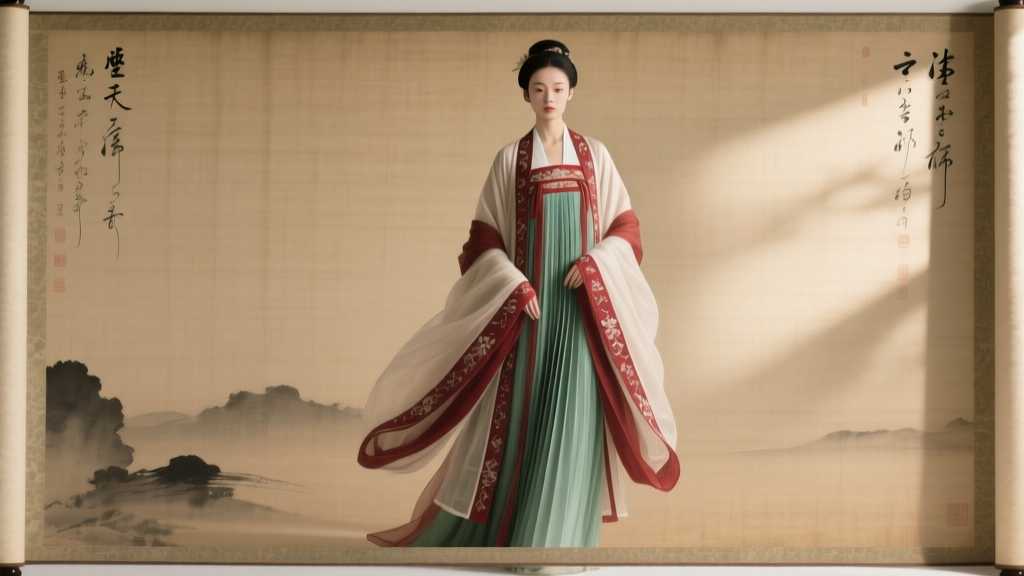
The Tang Dynasty was an era of cosmopolitan openness, heavily influenced by Silk Road trade. The iconic ladies' garment of this period is the Qixiong Ruqun, a chest-high skirt tied with long, flowing sashes just below the shoulders, paired with a short-sleeved or long-sleeved top (ru). Tang silhouettes celebrate volume and fluidity. Authentic replicas today often utilize lightweight silk chiffons or organzas to mimic the translucent layering seen in Tang-era murals at the Dunhuang caves. For modern styling, the Banbi (a short half-sleeve jacket) is frequently layered over the top for practical modesty.
Ming Dynasty (1368–1644 AD): The Mamianqun and Aoqun
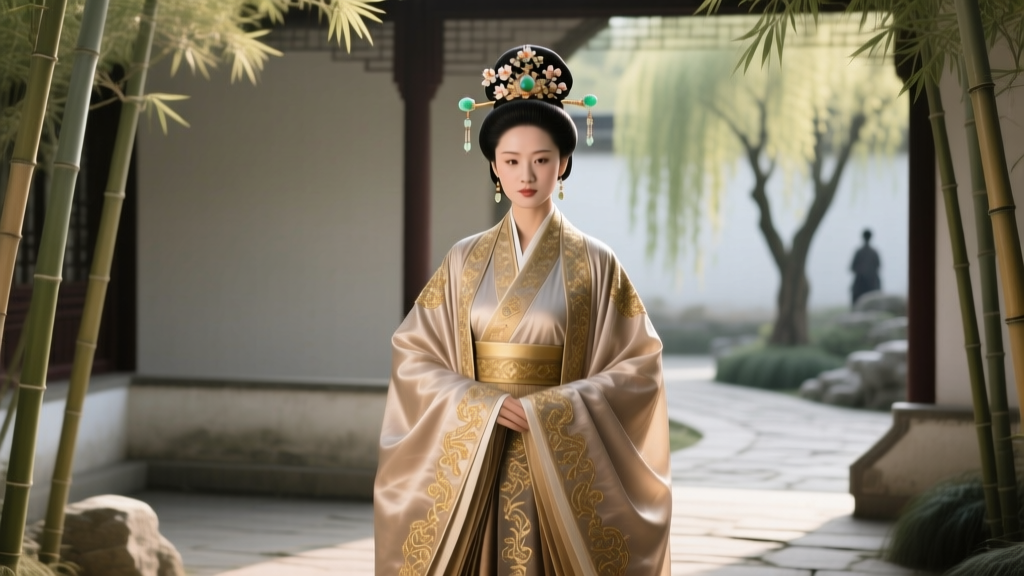
Ming dynasty clothing is characterized by structural elegance and modesty. The defining lower garment is the Mamianqun, or 'horse-face skirt.' This wrap skirt features flat, unpleated front and back panels (the 'horse faces') with heavily pleated side panels. This ingenious construction allows for ease of movement while maintaining a dignified, A-line silhouette when standing still. The upper garment, the Ao, is a lined or padded jacket with a stand-up collar or a cross-collar, often fastened with intricate metal or jade buttons. Today, the Ming-style Mamianqun has become a staple in the modern Hanfu revival, frequently paired with contemporary blouses for office-appropriate wear.
The Qipao (Cheongsam): Evolution of the Iconic Form-Fitting Dress
While Hanfu represents ancient antiquity, the Qipao (known in Cantonese as the Cheongsam) is the global ambassador of 20th-century Chinese elegance. Its roots lie in the loose, A-line qizhuang worn by Manchu women during the Qing Dynasty (1636–1912). However, the modern Qipao was born in 1920s Shanghai, where tailors fused traditional Chinese aesthetics with Western Art Deco and modern tailoring techniques.
The structural genius of the Shanghai Qipao lies in its introduction of Western darts and set-in sleeves, transforming a flat, boxy garment into a form-fitting silhouette that celebrates the natural curves of the female body. Key construction elements include:
- Pankou (Frog Fasteners): Hand-knotted silk buttons that serve both functional and decorative purposes, often shaped into floral or auspicious motifs.
- Kaicha (Side Slits): Strategic slits on one or both sides of the skirt, originally designed for ease of movement and horseback riding, now providing a subtle, elegant allure.
- Yuanling (Mandarin Collar): A stiff, stand-up collar that elongates the neck and frames the face.
According to exhibitions curated by institutions like The Metropolitan Museum of Art, the 1930s Qipao represents a pinnacle of sartorial diplomacy, where the choice of textile—such as crepe de chine or velvet—signaled a woman's modernity and social standing.
Regional & Ethnic Varieties: Miao Silverwork and Uyghur Atlas Silk
China's 55 recognized ethnic minorities possess profoundly distinct textile traditions that are often overlooked in mainstream searches for Chinese dress. The Miao (Hmong) people of Guizhou province are renowned for their indigo-dyed pleated skirts and breathtaking silverwork. A traditional Miao festival 'costume' for women can weigh over 10 kilograms, adorned with intricate silver horn headdresses, necklaces, and embroidered motifs that serve as a visual language recording clan history and mythology.
In the northwest, Uyghur women wear dresses crafted from Atlas silk. Atlas is a vibrant, blurred-edge ikat silk created through a complex resist-dyeing process on the warp threads before weaving. The resulting patterns feature bold, contrasting colors like emerald green, saffron yellow, and crimson, reflecting the vibrant aesthetic of the Silk Road. As documented by the China National Silk Museum, the preservation of Atlas weaving techniques is a vital component of Central Asian intangible cultural heritage.
Comparative Matrix: Fabric, Occasion, and Price Guide
Understanding the practical applications and market values of these garments is crucial for collectors, brides, and cultural enthusiasts. The table below outlines the core differences across major varieties.
| Garment Type | Historical Era / Origin | Key Construction Feature | Best Occasion | Price Range (USD) |
|---|---|---|---|---|
| Tang Qixiong Ruqun | Tang Dynasty (618–907) | Chest-high tie, flat-cut draping | Summer festivals, photography, casual wear | $60 - $180 |
| Ming Mamianqun | Ming Dynasty (1368–1644) | Pleated side panels, flat front/back | Office wear, winter ceremonies, weddings | $120 - $450 (Silk Brocade) |
| Shanghai Qipao | 1920s Republic Era | Western darts, pankou, kaicha slits | Evening galas, weddings, formal dinners | $250 - $2,500+ (Bespoke) |
| Uyghur Atlas Dress | Silk Road / Xinjiang | Ikat warp-dyeing, voluminous tiered skirts | Cultural festivals, dance performances | $80 - $250 |
| Xiangyunsha Qipao | Modern / Guangdong | River-mud and yam-dyed scented silk | High-end luxury events, heritage collecting | $800 - $3,500+ |
Sourcing Authentic Garments: Artisan Cooperatives vs. Mass Market
When sourcing a genuine ladies Chinese garment, buyers must navigate between mass-market e-commerce and authentic artisans. Mass-produced 'qipaos' sold for under $40 typically utilize polyester blends, machine-stamped frog buttons, and lack the internal bias-binding that allows a true Qipao to stretch and recover over the body's curves.
For authentic Hanfu, look to specialized domestic brands and artisan cooperatives that consult with historians from institutions like the Victoria and Albert Museum or Donghua University's textile archives. Brands specializing in Ming dynasty replicas will use genuine Shu brocade or Song brocade, which feature complex jacquard weaves rather than printed patterns. A high-quality, daily-wear Hanfu set made from breathable linen or cotton-linen blends will typically cost between $80 and $150.
For the ultimate luxury investment, seek out Xiangyunsha (scented cloud gauze). This rare silk from Guangdong is dyed using the juice of the Dioscorea cirrhosa tuber and coated with iron-rich river mud, resulting in a dark, crackled, water-resistant fabric that feels like soft leather and rustles like leaves. Because the dyeing process relies entirely on specific humidity and sunlight conditions, Xiangyunsha is produced in limited batches, making it one of the most expensive and culturally significant silks in the world.
Ultimately, whether you are draping a Tang dynasty shawl, stepping into a structured Ming skirt, or commissioning a bespoke Shanghai Qipao, treating these garments with the respect of high fashion and historical artifact elevates them far beyond the reductive label of 'costume.' They are wearable archives of Asian civilization.