The "Korean Qipao" Myth: Hanbok vs Cheongsam Event Guide

Untangling the "Korean Qipao" Search Anomaly
When planning for a formal gala, cultural festival, or wedding, many enthusiasts and event-goers search for a "Korean qipao." This phrase represents a fascinating intersection of search engine habits and East Asian sartorial appreciation. However, from a historical and cultural taxonomy perspective, a traditional "Korean qipao" does not exist. The qipao (or cheongsam) is a distinctly Chinese garment with Manchu and Shanghainese roots, while the hanbok (or Chosŏn-ot) is the traditional dress of the Korean peninsula.
Blending these terms usually stems from a genuine desire to find elegant, structured East Asian formalwear. To honor the rich heritage of both cultures, this occasion and event guide untangles the misnomer, providing a deep-dive comparison between the Chinese qipao and the Korean hanbok. Whether you are attending a diplomatic banquet, a traditional wedding, or a high-fashion cultural gala, understanding the distinct anatomy, fabric composition, and etiquette of these two titans of Asian dress is essential for respectful and stunning styling.
The Chinese Qipao (Cheongsam): Shanghai Glamour and Structured Elegance
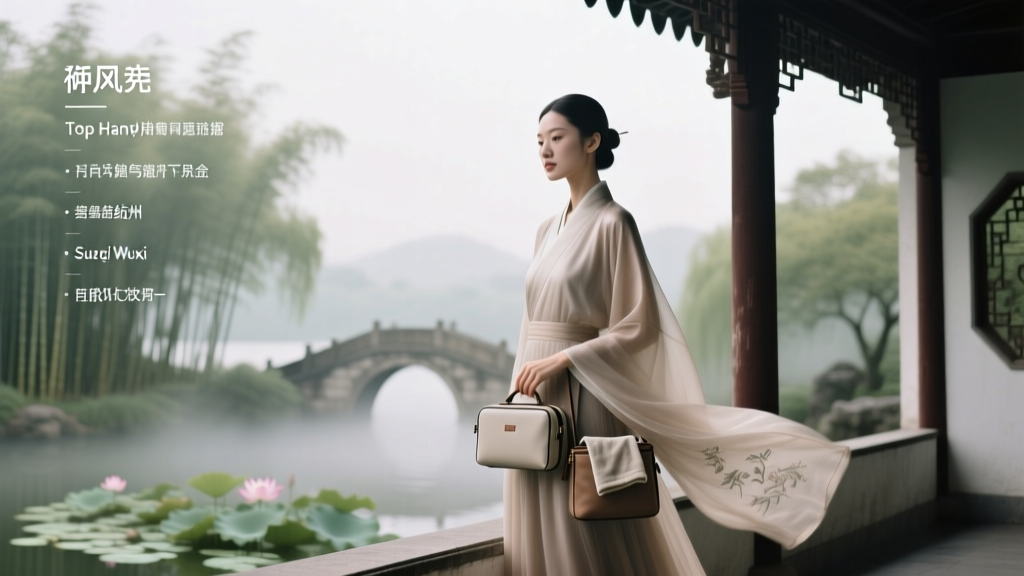
The qipao, known in Cantonese as the cheongsam, evolved dramatically in the 1920s and 1930s in Shanghai. According to the Victoria and Albert Museum's Asian Collections, the modern qipao was born from a desire among progressive Chinese women to adopt a streamlined, one-piece silhouette that mirrored Western flapper dresses while retaining indigenous sartorial markers.
Anatomy and Construction
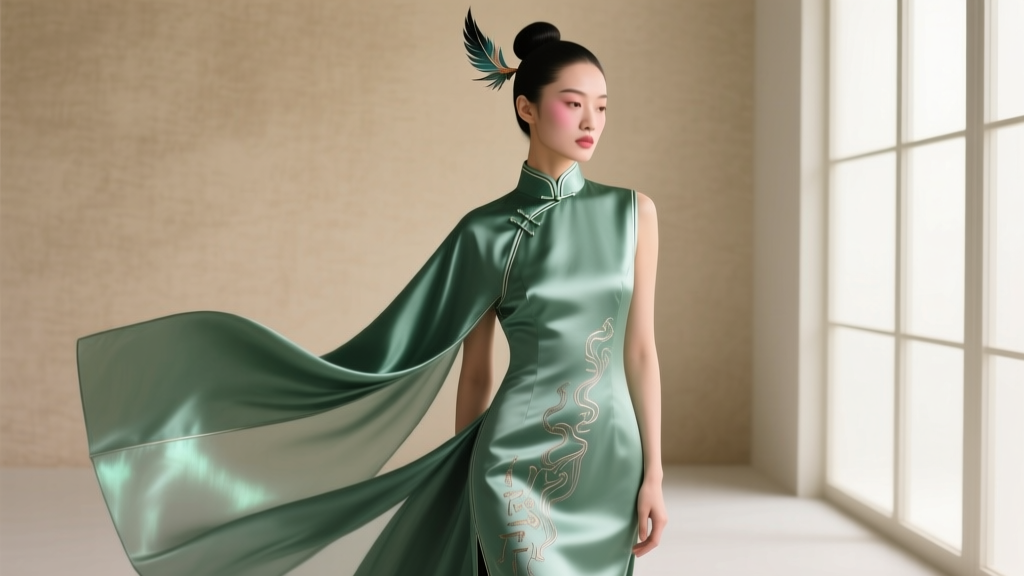
The hallmark of the qipao is its architectural precision. It features a liling (mandarin collar) that frames the neck, and a diagonal or curved front flap secured by pankou (hand-knotted frog fasteners). The kaicha (side slits) were originally introduced for ease of movement and horseback riding during the Qing Dynasty, but in modern iterations, they provide a striking glimpse of the leg during formal events. A master-crafted qipao requires a meticulous bespoke fitting, utilizing up to 20 distinct body measurements to ensure the silk brocade molds to the wearer without restricting breath.
The Korean Hanbok (Chosŏn-ot): Joseon Dynasty Fluidity
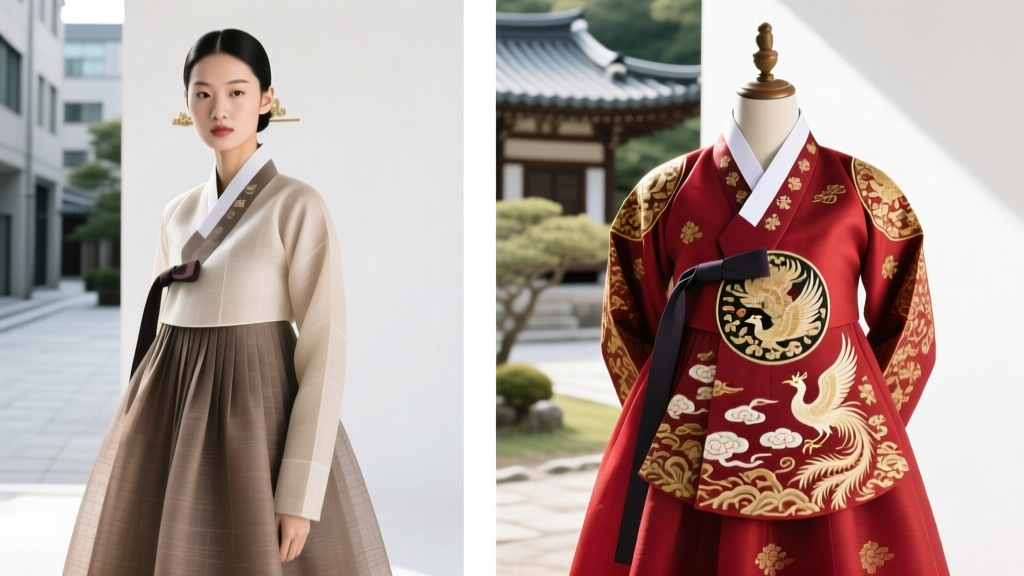
In stark contrast to the body-hugging qipao, the Korean hanbok is celebrated for its voluminous, architectural grace. As documented by the National Museum of Korea, the hanbok's foundational silhouette was solidified during the Joseon Dynasty (1392–1897). It is designed to obscure the natural contours of the body, instead creating a bell-like, floating shape that emphasizes the wearer's dignity and movement.
Anatomy and Construction
The women's formal hanbok consists primarily of the jeogori (a cropped, short jacket) and the chima (a high-waisted, wrap-around skirt). The jeogori features a crisp white detachable collar called the dongjeong, which frames the face and signifies purity. The garment is secured not by knots or buttons, but by the goreum—a long, flowing silk ribbon tied in a specific asymmetrical bow over the chest. The chima is heavily pleated at the waistband, requiring yards of fabric to achieve the iconic, sweeping volume that billows beautifully when the wearer walks or dances.
Event Matrix: Choosing Your East Asian Formalwear
Selecting between a qipao and a hanbok depends heavily on the nature of the event, the desired silhouette, and the level of physical mobility required. Below is a structured guide to matching the garment to the occasion.
| Event Type | Chinese Qipao (Cheongsam) | Korean Hanbok (Chosŏn-ot) | Styling & Mobility Notes |
|---|---|---|---|
| Black-Tie Gala / Red Carpet | Highly Recommended | Less Common (unless themed) | Floor-length velvet or silk brocade qipao offers a sleek, red-carpet-ready silhouette. High heels pair seamlessly. |
| Traditional Wedding (Guest) | Appropriate (avoid red/white) | Highly Recommended | Hanbok is standard for Korean weddings. Opt for pastel chimas. Avoid wearing white (reserved for the bride) or deep red. |
| Cultural Festivals (Lunar New Year) | Appropriate | Highly Recommended | Hanbok is traditionally worn for Seollal (Korean Lunar New Year) and Chuseok. Qipao is worn for Chinese New Year banquets. |
| Cocktail Party / Dinner | Highly Recommended | Modern/Modified Hanbok | A midi-length qipao is perfect for dining. Traditional hanbok skirts can be cumbersome at tight dining tables. |
| Tea Ceremonies | Appropriate (midi length) | Highly Recommended | Both are excellent, but the hanbok's flowing sleeves and seated volume align beautifully with floor-cushion tea etiquette. |
Fabric, Sourcing, and Investment Tiers
Authentic East Asian formalwear is an investment in artisanal craftsmanship. Fast-fashion replicas often utilize stiff polyester that ruins the drape and cultural integrity of the garments. When sourcing authentic pieces, consider the following textile traditions and price ranges.
Chinese Textiles and Pricing
High-end qipaos are frequently crafted from Xiangyunsha (Canton gauze), a rare, mud-dyed silk that produces a distinctive crackled, leather-like texture, or heavy silk brocade woven with metallic threads. According to the China National Silk Museum, authentic Xiangyunsha requires a complex, multi-week dyeing process using iron-rich river mud and薯莨 (shulang) yam juice. Price Range: A bespoke, hand-embroidered qipao from a master tailor in Shanghai or Hong Kong typically ranges from $800 to $3,500 USD, while high-quality ready-to-wear silk versions start around $250 USD.
Korean Textiles and Pricing
Formal hanboks utilize Myeongju (traditional Korean silk) for winter and autumn events, and Mosi (fine ramie) for summer. The silk is often dyed using natural botanical methods, yielding soft, luminescent pastel hues. The goreum (ribbon) and jeogori may feature delicate gold-leaf stamping (geumbak) bearing auspicious symbols like peonies or cranes. Price Range: A custom-tailored, natural-silk hanbok from a recognized artisan in Seoul's Bukchon Hanok Village generally costs between $400 and $1,800 USD. Modern, fusion hanboks designed for easier event wear can be found for $120 to $300 USD.
The Rise of Sino-Korean Fusion Couture
While a historical "Korean qipao" is a myth, the contemporary fashion landscape has birthed genuine Sino-Korean fusion garments. Avant-garde designers in Seoul and Shanghai are increasingly crossing pollinating these silhouettes. You will now find modern couture that pairs the structured liling (mandarin collar) and pankou fasteners of the qipao with the voluminous, empire-waist chima skirt of the hanbok. These fusion pieces are highly sought after for editorial shoots, avant-garde galas, and by diaspora brides looking to honor mixed Chinese-Korean heritage. When purchasing fusion wear, ensure the designer explicitly credits both cultural lineages to avoid accusations of cultural homogenization.
Cultural Etiquette and Styling Protocols
Wearing traditional garments to an event requires adherence to specific styling protocols to maintain cultural respect and physical comfort.
Undergarments and Foundations
The hanbok requires specific foundational layers. A sokchima (underskirt) or modern petticoat is mandatory to support the heavy outer chima and prevent it from collapsing against the legs. For the qipao, seamless, nude-toned slip dresses are essential, as the side slits (kaicha) can reveal the upper thigh when sitting or climbing stairs.
Accessories: Norigae vs. Jade Pendants
Accessorizing must align with the garment's origin. A hanbok is traditionally accessorized with a norigae—a decorative pendant tied to the goreum ribbon or waist, often featuring jade, coral, or amber, which historically signified the wearer's social status. Conversely, a qipao is best complemented by a jade bangle, a silk hand fan, or a delicate jade pendant worn on a long silk cord. Mixing these accessories (e.g., tying a Korean norigae to a Chinese qipao collar) is a styling faux pas that blurs distinct cultural boundaries.
Hair and Footwear
For the hanbok, hair is traditionally swept up into a low bun or braid, often adorned with a binyeo (ornamental hairpin). Footwear should consist of traditional kkotsin (silk shoes) or modest, low-heeled pumps. The qipao pairs elegantly with an intricate updo to highlight the mandarin collar, and is traditionally worn with high heels to elongate the silhouette and complement the side slits.
"To understand East Asian dress is to understand the philosophy of the cultures that created them. The qipao celebrates the architectural beauty of the human form, while the hanbok celebrates the space between the body and the fabric, allowing the wearer to move like a flowing river." — Curatorial Notes on Asian Sartorial History
Final Thoughts for the Event-Goer
While the internet may conflate terms into a "Korean qipao," the discerning event-goer knows that true elegance lies in cultural accuracy. By understanding the distinct lineages, construction techniques, and event appropriateness of both the Chinese cheongsam and the Korean hanbok, you can select a garment that not only makes a stunning visual impact but also pays deep, respectful homage to Asia's extraordinary textile heritage.