Kimono: Japanese or Chinese? Origins Guide

When exploring the rich tapestry of Asian traditional garments, one of the most common questions asked by newcomers to the space is: is a kimono japanese or chinese? The short and definitive answer is that the kimono is unequivocally Japanese. However, the confusion is understandable. Western fashion media has historically misused the word 'kimono' as a catch-all term for any Asian wrap garment, robe, or cardigan. Furthermore, early Japanese clothing was heavily influenced by Chinese Hanfu during the Tang Dynasty, leading to shared ancestral DNA in their silhouettes.
To truly appreciate and style these garments today, we must first decouple them, understand their unique architectural constructions, and learn how to integrate them into a modern wardrobe with cultural respect and sartorial elegance. This guide will clarify the origins of the kimono, introduce its Chinese counterparts, and provide actionable styling frameworks for contemporary wear.
Decoding the Silhouettes: A Comparative Anatomy
Before attempting to style these garments, it is vital to understand the structural differences that define them. The kimono relies on a T-shaped, straight-seam construction that wraps left over right, while Chinese garments like the Hanfu and Qipao utilize entirely different pattern-cutting techniques, collars, and fastening systems.
| Garment | Cultural Origin | Defining Silhouette & Structure | Key Fastening Elements | Modern Styling Application |
|---|---|---|---|---|
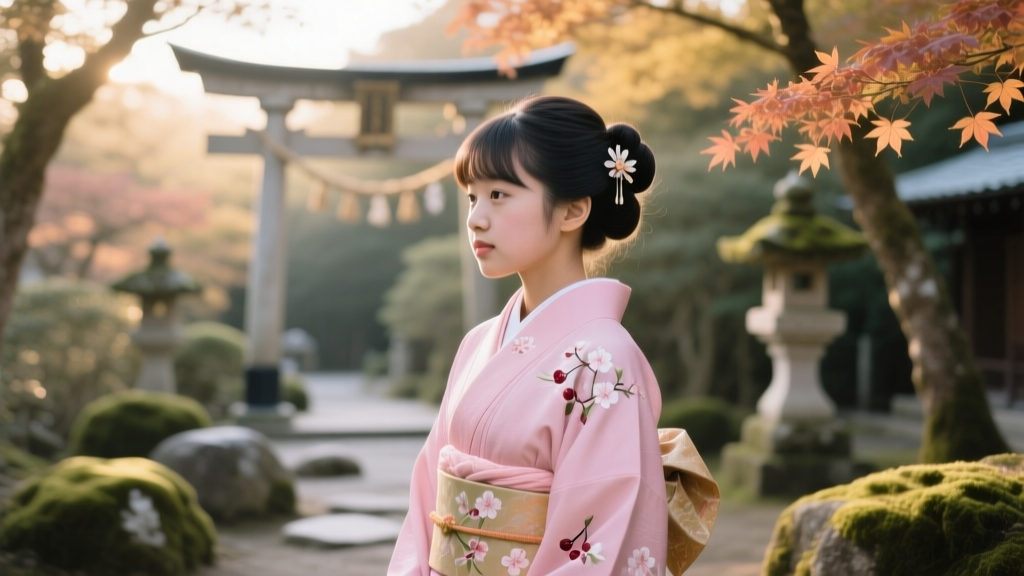
| Kimono | Japan | T-shaped, straight vertical seams, wide draped sleeves (sode). | Obi (wide sash), Obijime (cord), Obidome (clasp). | Worn as statement outerwear, or deconstructed via Haori jackets over denim. |
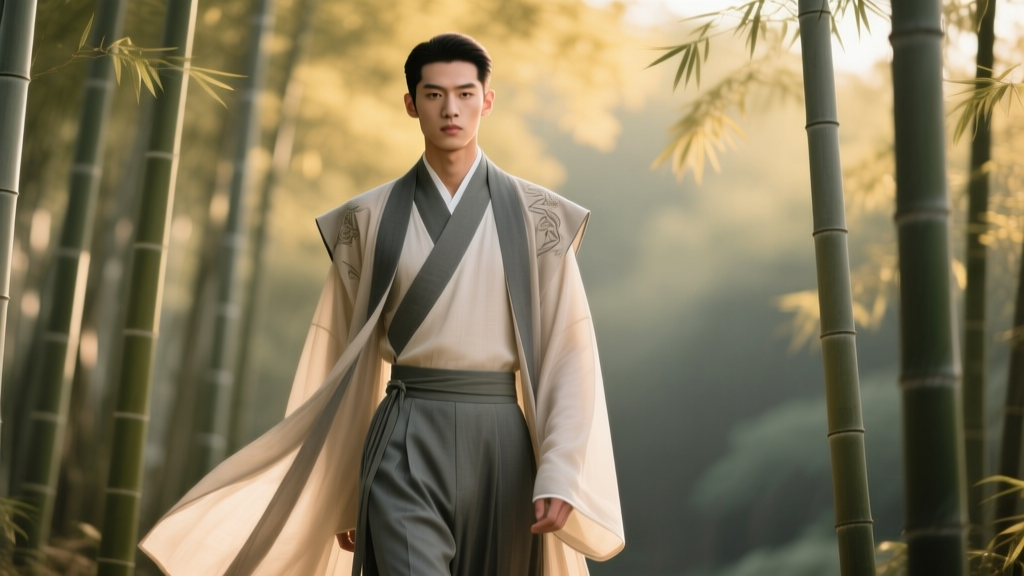
| Hanfu | China (Han Ethnicity) | Cross-collar (jiaoling), wide sleeves, pleated wrap skirts (qun). | Silk sashes, fabric ties, no buttons on traditional forms. | Mamianqun (horse-face skirt) paired with modern knitwear or tailored blazers. |
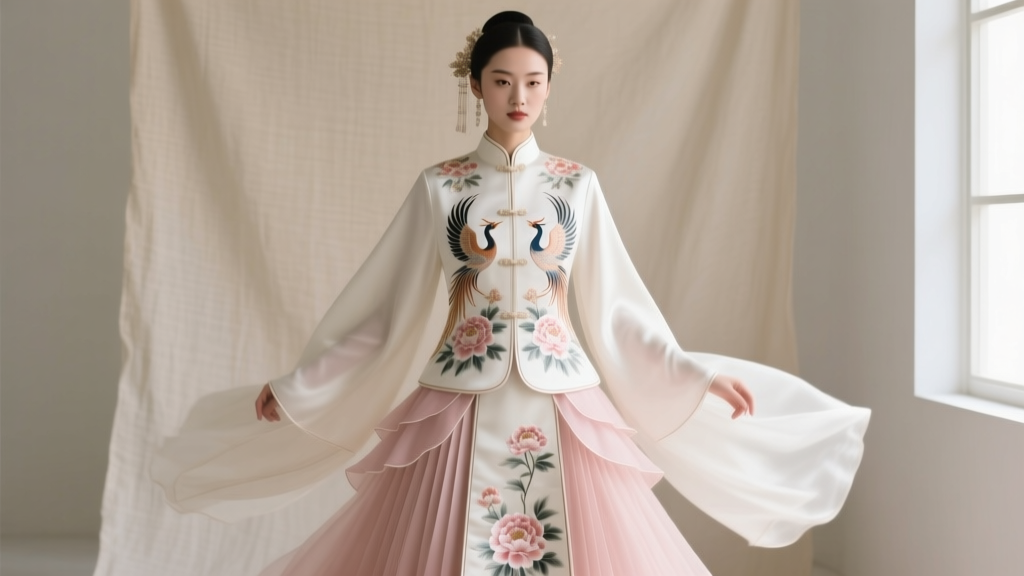
| Qipao / Cheongsam | China (Manchu/Republic Era) | Form-fitting, high Mandarin collar, side slits, A-line or pencil cut. | Pankou (knotted frog buttons), hidden side zippers. | Worn as elegant evening wear, or adapted as sleeveless tunic tops over wide-leg trousers. |
The Japanese Kimono: Construction and Contemporary Styling
The Japanese kimono is a masterclass in zero-waste pattern making. Unlike Western tailoring, which cuts fabric to curve around the body, the kimono is constructed from straight bolts of fabric (called a tanmono), resulting in a garment that is essentially a wearable canvas. According to The Metropolitan Museum of Art's Heilbrunn Timeline, the kimono evolved from the kosode (small sleeves) of the Muromachi period, eventually becoming the primary outer garment for all genders and classes by the Edo period (1615–1868).
Modern Styling: The Haori and Obi Integration
Wearing a full, formal kimono requires the intricate art of kitsuke (dressing), which involves multiple layers, padding, and precise folding. For modern, everyday styling, we look to the garment's modular components:
- The Haori Jacket: The haori is a hip- or thigh-length kimono-style jacket. In contemporary street style, a vintage silk haori worn open over a monochromatic turtleneck and tailored trousers creates a striking juxtaposition of fluid heritage silk and structured modern wool.
- The Obi Belt: A Nagoya obi or Hanhaba obi (half-width sash) can be repurposed as a wide statement belt over a minimalist trench coat or a high-waisted maxi dress. This honors the textile's beauty without requiring full traditional dressing.
- Footwear Pairings: Traditional zori sandals are designed for tabi (split-toe socks). In modern styling, pairing a shortened, casual cotton yukata or jinbei with minimalist leather slides or sleek ankle boots bridges the gap between Edo-period comfort and 21st-century urban aesthetics.
Chinese Equivalents: Hanfu and Qipao in the Modern Wardrobe
If the kimono is Japanese, what are the Chinese equivalents? China's sartorial history is vast, but two garments dominate the modern cultural renaissance: the ancient Hanfu and the 20th-century Qipao.
Hanfu and the Mamianqun Renaissance
Hanfu refers to the historical clothing of the Han Chinese, characterized by its flowing lines, cross-collars (always wrapping left over right), and lack of buttons. The most adaptable piece for modern styling is the Mamianqun, or 'horse-face skirt.' Originating in the Ming Dynasty, this wrap skirt features flat front and back panels with deeply pleated sides. As noted by the Victoria and Albert Museum (V&A), Chinese textile traditions like intricate brocade weaving make these skirts highly prized. Styling Tip: Pair a woven, mid-calf Mamianqun with a fitted, modern ribbed sweater and a leather belt. The architectural pleats provide volume that balances beautifully with slim-fitting contemporary tops.
The Qipao (Cheongsam): Tailored Elegance
Unlike the flowing Hanfu, the Qipao (known in Cantonese as Cheongsam) is a product of 1920s Shanghai, blending traditional Manchu robe elements with Western darting and tailoring to accentuate the figure. It features the iconic Mandarin collar and pankou (frog knot) fastenings. Styling Tip: For a modern, breathable approach, seek out 'separates' Qipao tops made from linen or lightweight Xiangyunsha (mud silk). Wear them untucked over wide-leg linen trousers for an effortless, sophisticated silhouette that respects the garment's origins while adapting to modern climates.
Sourcing Authentically: Price Ranges and Artisans
A crucial part of respectful styling is knowing where and how to source these garments, avoiding fast-fashion knockoffs that appropriate sacred or culturally significant motifs. Here is a realistic pricing guide for authentic pieces:
- Japanese Kimono & Haori: Vintage silk haori can be found at specialized recyclers in Kyoto or online curators for $40 to $150 USD. New, artisan-woven formal kimono (such as those featuring Nishijin-ori brocade or Yuzen dyeing) range from $1,500 to over $10,000 USD. The Kyoto National Museum frequently highlights the immense labor required for these traditional dyeing techniques, justifying the investment.
- Chinese Hanfu Sets: High-quality, daily-wear Hanfu sets (top and skirt) from reputable heritage brands range from $80 to $250 USD. Custom-tailored pieces utilizing authentic Song brocade or genuine silk can exceed $600 USD.
- Custom Qipao: While mass-produced polyester versions exist for under $50, a bespoke Qipao made by a master tailor in Shanghai or Hong Kong, featuring hand-rolled hems and genuine silk brocade, typically costs between $400 and $1,200 USD.
Cultural Protocols: The Rules of Respectful Wear
When integrating Asian heritage garments into your wardrobe, understanding the 'rules' of wear is just as important as the styling itself. This transforms an outfit from potential cultural appropriation into informed cultural appreciation.
'The left-over-right rule is not merely a fashion choice; it is a profound cultural boundary. In both Japanese and Chinese traditions, wrapping the garment right-over-left is strictly reserved for dressing the deceased for burial.' - Sartorial Historians of East Asian Textiles.
The Golden Rule of Wrapping: Whether you are tying a Japanese kimono, a casual yukata, or a traditional Chinese Hanfu robe, the left side of the garment must always cross over the right side. Reversing this is a severe cultural faux pas associated with funeral rites.
Motif Awareness: Be mindful of the patterns you wear. In Japanese textiles, motifs like the crane (tsuru) or specific family crests (kamon) carry deep familial and auspicious meanings. In Chinese textiles, dragons with five claws were historically reserved for the Emperor, while bats and peonies symbolize luck and wealth. Understanding the language of these textiles allows you to wear them with intention and respect.
Final Thoughts on Heritage Styling
So, is a kimono Japanese or Chinese? It is proudly Japanese, born from a unique island evolution of continental influences. Meanwhile, China offers the majestic Hanfu and the sleek Qipao. By learning the distinct architectures of these garments, investing in authentic artisan pieces, and adhering to cultural protocols, you can seamlessly weave the profound beauty of Asian textile history into your modern, everyday life.