Japanese Kimono Dress History: Fabric & Craftsmanship Guide

When exploring japanese kimono dress history, Western audiences often search for the evolution of a 'dress.' However, to truly understand this garment, we must look beyond the silhouette and examine the masterful textiles that define it. The word kimono (着物) literally translates to 'thing to wear' (ki = wear, mono = thing). Its history is not merely a timeline of fashion, but a profound chronicle of Japanese sericulture, weaving innovation, and dyeing chemistry. From the imperial courts of the Heian period to the bustling artisan districts of the Edo period, the kimono is a canvas of living heritage.
The Etymology and Evolution: From Kosode to Modern Silhouette
The direct ancestor of the modern kimono is the kosode (小袖), meaning 'small sleeves.' During the Heian period (794–1185), the aristocracy wore the jūnihitoe, a breathtakingly heavy ensemble of up to twelve layers of unlined silk robes, where the subtle color combinations at the cuffs and hems conveyed seasonal awareness and poetic refinement. However, it was the kosode—originally an undergarment for the elite and outerwear for commoners—that eventually emerged as the primary outer garment by the Muromachi period (1336–1573).
As the kosode transitioned into the modern kimono, the placement of the decorative focus shifted. According to the Victoria and Albert Museum's extensive textile archives, the Edo period (1603–1867) marked a radical shift where the garment's surface became a unified, panoramic canvas for artistic expression, moving away from the localized embroidery of earlier centuries.
The Loom and the Brush: Edo Period Textile Revolutions
The Edo period was the crucible of Japanese textile mastery. Strict sumptuary laws dictated which classes could wear certain fabrics and colors. In response, urban merchants cultivated an aesthetic known as iki (粋)—a subtle, understated elegance that hid extraordinary craftsmanship and expensive dyes on the interior linings or within micro-patterns, allowing wearers to flout regulations without overt ostentation.
Yuzen-zome and the Art of Resist Dyeing
In the late 17th century, a Kyoto fan painter named Miyazaki Yuzensai revolutionized textile decoration with Yuzen-zome. This technique utilizes a rice-paste resist (itome-nori) applied through brass stencils or painted freehand. The paste acts as a dam, preventing dyes from bleeding into adjacent areas. This allowed artisans to paint highly detailed, pictorial landscapes, flowing water motifs, and seasonal flora directly onto the silk, mimicking the brushstrokes of a scroll painting. Today, tegaki-yuzen (hand-painted Yuzen) remains one of the most expensive and revered dyeing techniques in Kyoto and Kanazawa.
Nishijin-ori: Kyoto’s Brocade Legacy
While Yuzen focuses on the brush, Nishijin-ori (Nishijin weaving) focuses on the loom. Originating in the Nishijin district of Kyoto, this technique involves dyeing the silk threads before weaving them into complex brocades, often incorporating flattened gold and silver paper threads (kinran and ginran). The creation of a single Nishijin obi (sash) can take months, utilizing specialized Jacquard looms or traditional drawlooms that require a weaver and a 'harness puller' working in tandem. The Metropolitan Museum of Art's Heilbrunn Timeline frequently highlights Nishijin textiles as pinnacles of global weaving complexity, noting their structural density and metallic brilliance.
A Cartography of Craft: Regional Textile Masterworks
Japan’s varied topography and microclimates birthed distinct regional textile traditions. A true appreciation of japanese kimono dress history requires understanding these localized masterworks, many of which are protected as Intangible Cultural Properties.
| Region | Textile / Technique | Material & Characteristics | Approx. Price Range (USD) |
|---|---|---|---|
| Amami Oshima (Kagoshima) | Oshima Tsumugi | Pongee silk. Threads are dyed using ironwood (techi) ash and iron-rich mud, creating a colorfast, wrinkle-resistant black/brown fabric with intricate kasuri (ikat) patterns. | $3,000 – $15,000+ |
| Kanazawa (Ishikawa) | Kaga Yuzen | Silk. A regional variation of Yuzen characterized by realistic botanical motifs, subtle shading (bokashi), and the deliberate inclusion of 'insect-eaten' leaf motifs to reflect nature's impermanence. | $4,500 – $20,000+ |
| Uonuma (Niigata) | Echigo Jofu | High-quality ramie (hemp). Woven in heavy snow regions, the fabric is bleached on snowfields (yukisarashi), utilizing ozone generated by melting snow to whiten the fibers naturally. | $2,000 – $8,000 |
| Yuki (Ibaraki) | Yuki Tsumugi | Silk floss. Hand-spun without twisting, creating a remarkably lightweight, warm, and soft pongee. Recognized by UNESCO as an Intangible Cultural Heritage. | $5,000 – $25,000+ |
The Architecture of the Garment: Tanmono and Zero-Waste Tailoring
Unlike Western tailoring, which cuts fabric into curved shapes and discards the scraps, the kimono is an exercise in geometric, zero-waste engineering. The garment is constructed from a single bolt of fabric called a tanmono (反物). A standard tanmono measures approximately 36 centimeters (14 inches) in width and 12 meters (13 yards) in length.
This bolt is cut into straight, rectangular panels: two for the main body, two for the sleeves, and narrower strips for the collar and overlapping front panels (okumi). Because the pieces are sewn together using flat-felled seams and running stitches, the kimono can be entirely disassembled, washed, re-dyed, and re-sewn. This modularity meant that a single high-quality silk bolt could be passed down through generations, re-tailored to fit different family members or repurposed into futon covers or haori jackets when the silk eventually frayed.
'The kimono is not merely clothing; it is an architectural space that the wearer inhabits. The fabric dictates the drape, the season, and the social dialogue of the wearer.' — Traditional Kyoto Artisan Cooperative Proverb
Navigating the Market: Sourcing, Provenance, and Pricing
For collectors, historians, and enthusiasts looking to acquire authentic pieces, understanding the modern market is crucial. The industry is bifurcated into the vintage/recycle market and the contemporary artisan market.
Vintage vs. Contemporary Artisan Pieces
Vintage (Recycle Shops): Japan has a thriving secondhand market, with chains like Tansu-ya and countless independent vintage shops in Tokyo's Jimbocho or Kyoto's Shijo districts. Here, one can find mid-20th-century silk komon (everyday patterned kimono) or tsukesage (semi-formal) garments ranging from $50 to $300 USD. When buying vintage, inspect the collar and hem for jimi (soil stains) and check the silk for 'shattering' (dry rot), which compromises the structural integrity of the fabric.
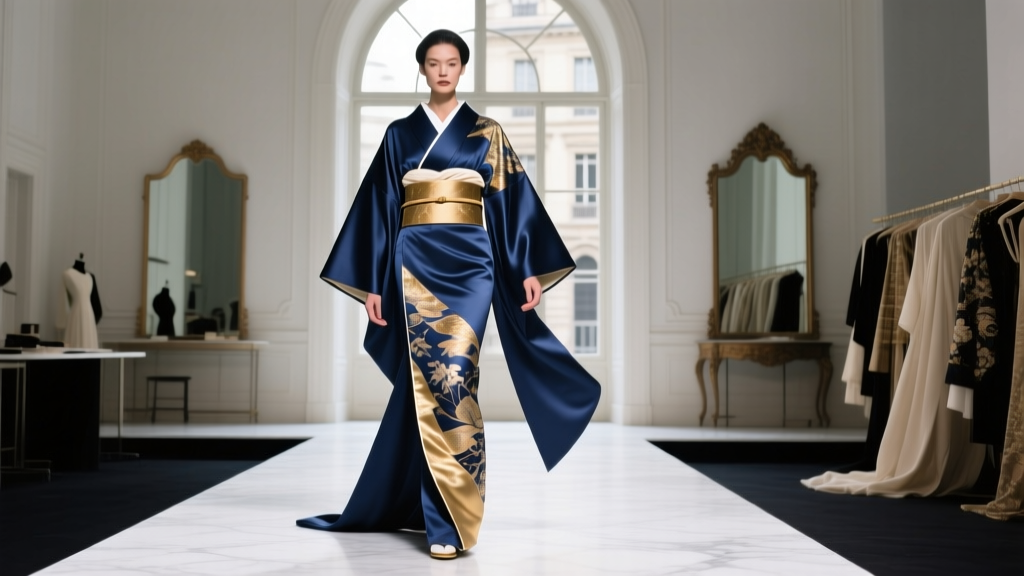
Contemporary Artisan (Gofuku-ya): Purchasing a newly commissioned, hand-woven and hand-dyed kimono from a traditional gofuku-ya (silk merchant) is a bespoke process. It involves selecting the tanmono, commissioning the family crests (kamon) to be hand-dyed, and precise measurements for tailoring (oshaku). A complete, formal ensemble—including a hand-painted Kaga Yuzen kimono, a Nishijin brocade fukuro obi, and necessary undergarments (nagajuban)—can easily exceed $15,000 to $30,000 USD. This price reflects the hundreds of hours of specialized labor across multiple artisan guilds, from the silk reelers in Gunma to the dyers in Kyoto.
Ultimately, studying the history of the kimono through its fabrics reveals a civilization that elevated textile production to high art. Whether it is the mud-dyed resilience of Oshima Tsumugi or the painted poetry of Yuzen silk, the true legacy of the garment lives on in the hands of the artisans who continue to weave and dye Japan's cultural identity.