Accurate Hanfu: Dynastic Styles Compared

The global resurgence of traditional Chinese clothing has evolved significantly over the last decade. While early iterations of the modern Hanfu movement often leaned into fantastical, cinema-inspired designs (known as xianxia or guwen styles), contemporary enthusiasts and scholars are increasingly prioritizing historically accurate hanfu. Known in Chinese as fugu (复古, meaning 'restoring antiquity'), this approach relies on rigorous archaeological evidence, museum textiles, and historical paintings to reconstruct garments exactly as they were worn by past dynasties.
Understanding historically accurate hanfu requires moving beyond generic 'ancient Chinese dress' tropes. It demands an appreciation for distinct dynastic silhouettes, traditional flat-pattern cutting, and authentic textile weaving techniques. This guide compares the major varieties of historically accurate hanfu across three pivotal eras—the Tang, Song, and Ming dynasties—providing a comprehensive framework for collectors, cultural historians, and sartorial enthusiasts.
The Anatomy of Authenticity: Construction and Cutting Principles
Before comparing dynastic styles, one must understand the foundational rules of traditional Han tailoring. Historically accurate hanfu is defined by its flat-pattern cutting (平面裁剪). Unlike Western tailoring, which uses darts, curved armholes, and shoulder seams to mold fabric to the body's three-dimensional contours, traditional Hanfu is constructed from straight, rectangular panels of fabric.
- Zhongfeng (中缝): The center back seam. Because historical looms produced narrow fabric widths (typically 40-60 cm), garments were constructed by joining two panels down the center back, symbolizing uprightness and moral integrity.
- Jiaoling Youren (交领右衽): The cross-collar, right-over-left lapel. The left side of the garment crosses over the right and ties at the right waist. This is a non-negotiable hallmark of Han clothing; reversing it (left-over-right) was historically reserved for the deceased or certain non-Han ethnic groups.
- No Shoulder Seams: The sleeve and bodice are cut from a single continuous piece of fabric, creating a graceful, sloping shoulder line that relies on the drape of the textile rather than structural padding.
Dynastic Varieties: A Comparative Analysis
The term 'Hanfu' encompasses over three millennia of sartorial evolution. However, the modern fugu market predominantly focuses on three distinct golden ages of Chinese textile history, each offering vastly different silhouettes and cultural philosophies.
Tang Dynasty (618–907 CE): Cosmopolitan Volume and Silk Road Influence
Tang dynasty hanfu is characterized by its bold silhouettes, high waistlines, and cosmopolitan flair, reflecting an empire deeply connected to the Silk Road. Historically accurate Tang garments eschew the stiff, heavily embroidered robes of later eras in favor of fluid, lightweight silks that drape dynamically.
The quintessential Tang female ensemble is the Qixiong Ruqun (齐胸襦裙), a chest-high skirt tied securely above the bust, paired with a shan (衫, a lightweight, often sheer upper garment). Another defining piece is the Banbi (半臂), a short-sleeved jacket worn over the upper garment. According to textile archives at the Metropolitan Museum of Art's Asian Textile Collection, Tang weavers heavily utilized weft-faced compound twills (often influenced by Sogdian and Central Asian weavers), resulting in vibrant, large-scale floral and geometric motifs.
Song Dynasty (960–1279 CE): Minimalism and Literati Elegance
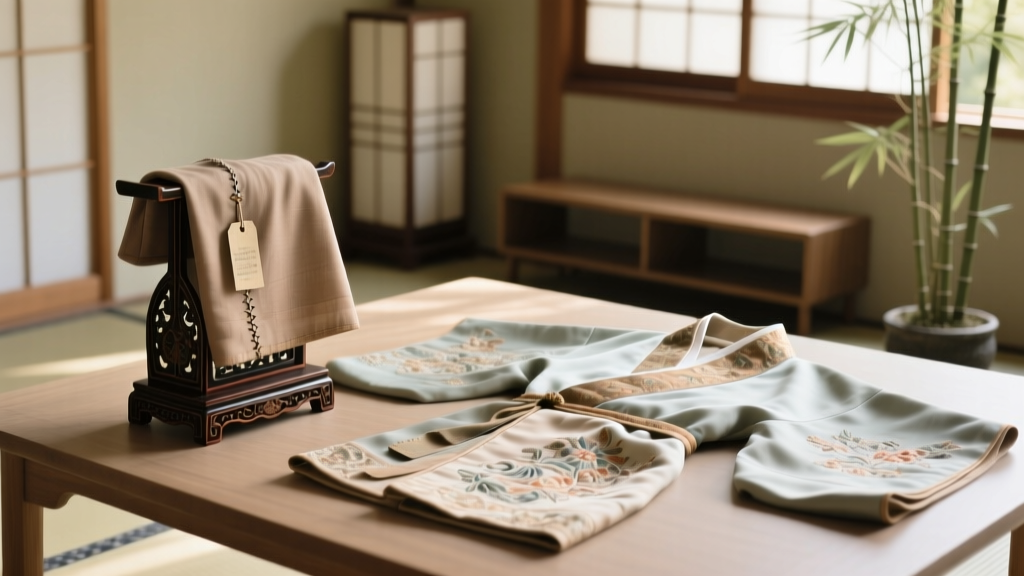
In stark contrast to Tang exuberance, Song dynasty hanfu reflects the influence of Neo-Confucianism, favoring restraint, slender silhouettes, and understated elegance. The color palette shifts toward muted, earthy tones: celadon, pale lotus, smoky grey, and ivory.
The defining garment of this era is the Beizi (褙子), a long, parallel-collared outer jacket with side slits that extend up to the armpit. It is worn open over a narrow-sleeved inner top and a pleated skirt or trousers. Song garments rely heavily on the quality of the weave rather than overt embellishment. Subtle woven patterns, such as small floral sprigs or geometric lattices, are historically accurate. The aesthetic is deeply tied to the literati class, valuing intellectual refinement over ostentatious wealth.
Ming Dynasty (1368–1644 CE): Structure, Ceremony, and Woven Gold
The Ming dynasty represents the zenith of structured, ceremonial Hanfu. Following the expulsion of the Mongol Yuan dynasty, the Ming court rigorously codified dress regulations to restore 'traditional' Han rituals. Ming silhouettes are voluminous, grounded, and heavily layered.
For women, the Aoqun (袄裙) ensemble dominates. This features an ao (袄), a lined, cross-collared or round-collared jacket with distinctive pipa-shaped sleeves (wide at the shoulder, tapering to a narrow cuff), worn over the iconic Mamianqun (马面裙, horse-face skirt). The Mamianqun is a marvel of historical engineering: it features flat, unpleated front and back panels (the 'horse faces') with deep, overlapping pleats on the sides, allowing for both modesty and ease of movement. According to exhibitions hosted by the Palace Museum (Forbidden City), Ming textiles frequently employed Zhuanghua (妆花), a complex brocade technique weaving gold and silver threads directly into the silk, creating heavy, opulent garments that held their shape without modern interfacing.
Textile Composition: Identifying Authentic Fabrics
A historically accurate hanfu is only as authentic as its fabric. Modern mass-market hanfu often relies on polyester chiffon or satin, which drape incorrectly and lack historical precedent. True fugu garments utilize specific traditional textiles:
"The revival of historical weaving techniques, such as Luo (gauze) and Song Jin (Song brocade), has been instrumental in elevating the Hanfu movement from costume play to serious textile preservation." — China National Silk Museum
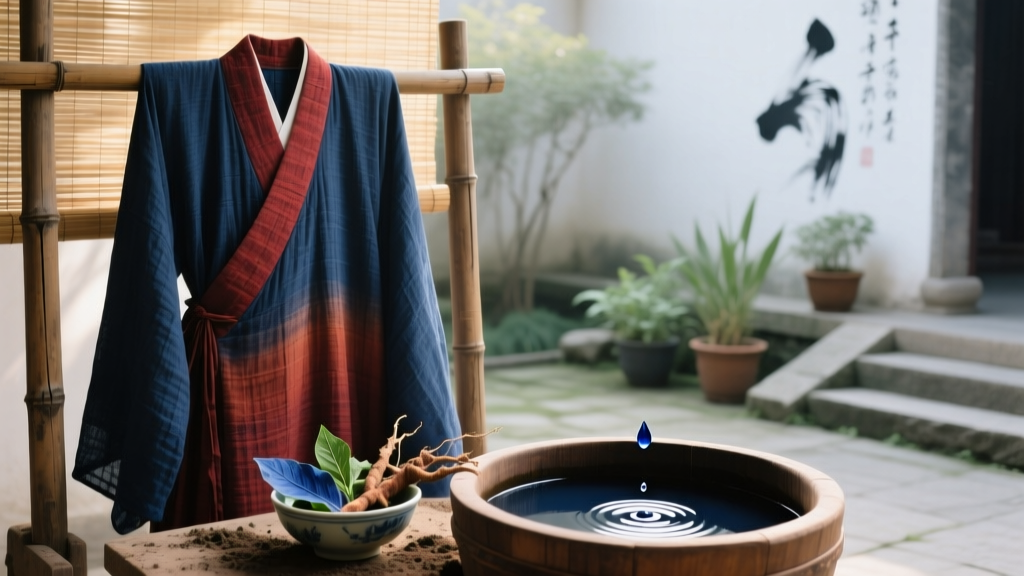
- Xiangyunsha (香云纱): Also known as Gambiered Canton gauze. This is a highly prized, labor-intensive silk dyed with yam juice and mud, resulting in a dark, rustling fabric with a water-resistant, leather-like finish. It is historically accurate for late Ming and Qing summer garments.
- Lu (罗) and Luo-Gauze: Complex leno-weave silks that create breathable, sheer fabrics with structural stability, essential for accurate Tang and Song summer layering.
- Song Jin (宋锦): A specific type of brocade originating in the Song dynasty, characterized by its soft, flexible texture and intricate, repeating geometric and floral patterns, often used for Ming dynasty jacket collars and cuffs.
Sourcing and Pricing: The Market for Fugu Hanfu
Acquiring historically accurate hanfu requires navigating a tiered market. Below is a comparative framework for buyers seeking authentic garments, detailing what to expect in terms of construction, materials, and investment.
| Market Tier | Characteristics & Accuracy | Price Range (USD) | Notable Makers / Brands |
|---|---|---|---|
| Mass Market | Polyester blends, simplified cutting (often featuring modern darts or zippers), historically inaccurate proportions. | $30 - $80 | Generic e-commerce sellers, fast-fashion Hanfu brands. |
| Mid-Tier Authentic | Correct flat-pattern cutting, natural fibers (cotton, linen, basic silk), accurate collar angles and sleeve shapes. | $120 - $350 | Shihan, Zhongling, Tingyue. |
| Museum-Grade Replica | Meticulous replication of specific archaeological finds. Use of Xiangyunsha, real gold thread, hand-woven brocades, and traditional loom widths. | $500 - $2,500+ | Ming Huatang, Xian Niang, custom artisan cooperatives. |
When evaluating a high-end purchase, always request the pingpu (flat lay) measurements. Historically accurate makers will provide the exact flat dimensions of the garment, including the sleeve span (often exceeding 200 cm for Ming formalwear) and the precise width of the collar guard (yuan).
Wearing Protocols and Cultural Context
Owning historically accurate hanfu is only half the equation; wearing it correctly is a matter of cultural respect and historical literacy. The layering system is paramount. A traditional Ming ensemble, for example, requires a base layer of white cotton undergarments (zhongyi), followed by the inner skirt, the outer skirt (Mamianqun), and finally the lined jacket (ao).
Furthermore, the tying mechanisms must be respected. Authentic hanfu does not use buttons, snaps, or velcro as primary closures (though Ming garments did utilize metal or jade zijinkou interlocking buttons at the collar). The garment is secured using internal and external silk ties (xidai). Tying these securely requires practice, as the tension must be distributed evenly to maintain the garment's drape without restricting breathing or movement.
Conclusion: The Value of Sartorial Preservation
The pursuit of historically accurate hanfu is more than a fashion trend; it is an act of material culture preservation. By understanding the distinct architectural differences between a flowing Tang banbi, a minimalist Song beizi, and a structured Ming mamianqun, enthusiasts contribute to the safeguarding of ancient textile engineering. Whether you are investing in a museum-grade Ming Huatang replica or carefully selecting a mid-tier Song linen set, prioritizing historical accuracy ensures that the profound legacy of Han sartorial tradition is worn with the dignity and precision it deserves.