Historical Chinese Clothing: Dynasty Hanfu Guide

The Anatomy of Historical Chinese Clothing: Beyond the Silhouette
To truly understand historical Chinese clothing, one must look past the sweeping silhouettes and examine the profound structural philosophy that governed garment construction for millennia. The overarching term for the traditional dress of the Han Chinese is Hanfu (汉服). Unlike Western tailoring, which relies on darts and seams to contour the body, historical Chinese clothing was fundamentally geometric. Garments were constructed from rectangular panels of woven fabric, minimizing waste and honoring the integrity of the textile.
The most defining characteristic of Hanfu is the jiaoling youren (交领右衽), or the crossed collar with the right lapel. The left side of the garment crosses over the right, securing at the waist with sashes rather than buttons. This specific orientation is not merely aesthetic; it is deeply rooted in Chinese cosmology and cultural respect. The left lapel over the right (youren) represents life, yang energy, and civilization. Conversely, the right over the left (zuoren) was strictly reserved for dressing the deceased or was associated with nomadic tribes outside the Central Plains. Wearing a garment with the wrong lapel orientation today is considered a severe cultural faux pas.
Core Garment Typologies
- Shenyi (深衣): A one-piece, full-body robe that connects the upper and lower garments. It was heavily codified in the Book of Rites and favored during the Han Dynasty for its modesty and structural harmony.
- Ruqun (襦裙): A two-piece ensemble consisting of a cross-collared top (ru) and a wrap-around skirt (qun). This style dominated women's fashion for centuries, with the waistline shifting dramatically depending on the dynasty.
- Aoqun (袄裙): A jacket-and-skirt combination that became prominent in the Ming Dynasty, featuring heavier fabrics, stand-up collars, and metal or jade buttons.
Chronological Evolution: A Dynasty-by-Dynasty Breakdown
The evolution of historical Chinese clothing is a visual record of shifting philosophies, trade routes, and socio-political climates. Below is a structured breakdown of how the Hanfu silhouette transformed across China's major imperial eras.
| Dynasty | Defining Silhouette & Garments | Cultural & Textile Context |
|---|---|---|
| Han (202 BC–220 AD) | Wide sleeves, Shenyi robes, low waistlines, curved hems. | Heavily influenced by Confucian rites. Ramie for commoners, early brocades for nobility. Colors were relatively subdued, utilizing deep reds and blacks. |
| Tang (618–907 AD) | Qixiong ruqun (chest-high skirts), open collars, wide stoles, voluminous sleeves. | A cosmopolitan era driven by Silk Road trade. Incorporated Persian and Central Asian motifs. Women's fashion was bold, allowing for exposed décolletage and vibrant, contrasting colors. |
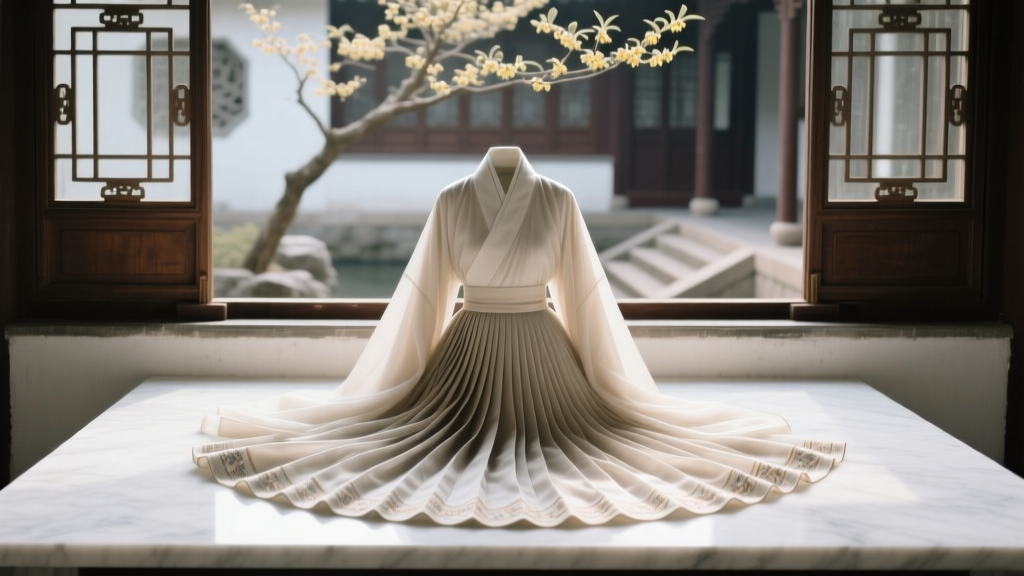
| Song (960–1279 AD) | Slender silhouettes, Beizi (long outer coats), pleated skirts, narrow sleeves. | Influenced by Neo-Confucianism, which favored restraint, modesty, and intellectualism. Color palettes shifted to soft, muted pastels and monochromatic schemes. |
| Ming (1368–1644 AD) | Mamianqun (horse-face skirts), stand-up collars, Aoqun ensembles, wide hemlines. | A return to Han-centric traditions after Mongol rule. Characterized by heavy, opulent silk brocades, intricate weaving, and the use of metallic buttons. |
According to the Metropolitan Museum of Art's Heilbrunn Timeline, the Ming Dynasty represented a zenith in Chinese textile production, where the imperial weaving bureaus produced silks of unprecedented complexity, heavily utilizing gold and silver threads to denote strict sumptuary laws and social hierarchies.
Textile Mastery: Silk, Ramie, and the Art of Natural Dyeing
Historical Chinese clothing cannot be divorced from the textiles that birthed it. While silk is the most globally recognized Chinese fabric, the historical reality is far more nuanced. Commoners and scholars alike frequently wore garments woven from ramie (Chinese grass) and hemp, which offered breathable, durable alternatives for the humid southern climates.
For the elite, silk weaving techniques reached astonishing levels of complexity:
- Kesi (Cut Silk): A tapestry-weave technique where the weft threads are discontinuous, creating sharp, painterly boundaries between colors. Kesi was so labor-intensive that it was often used for imperial dragon robes and high-ranking ceremonial garments.
- Xiangyunsha (Gambiered Canton Gauze): Originating in Guangdong province, this unique textile involves dyeing silk with the tannin-rich juice of the gambier plant and then coating it with iron-rich river mud. The chemical reaction creates a luxurious, rustling fabric that is naturally water-resistant, antimicrobial, and features a distinct dark brown hue on one side and a black sheen on the other.
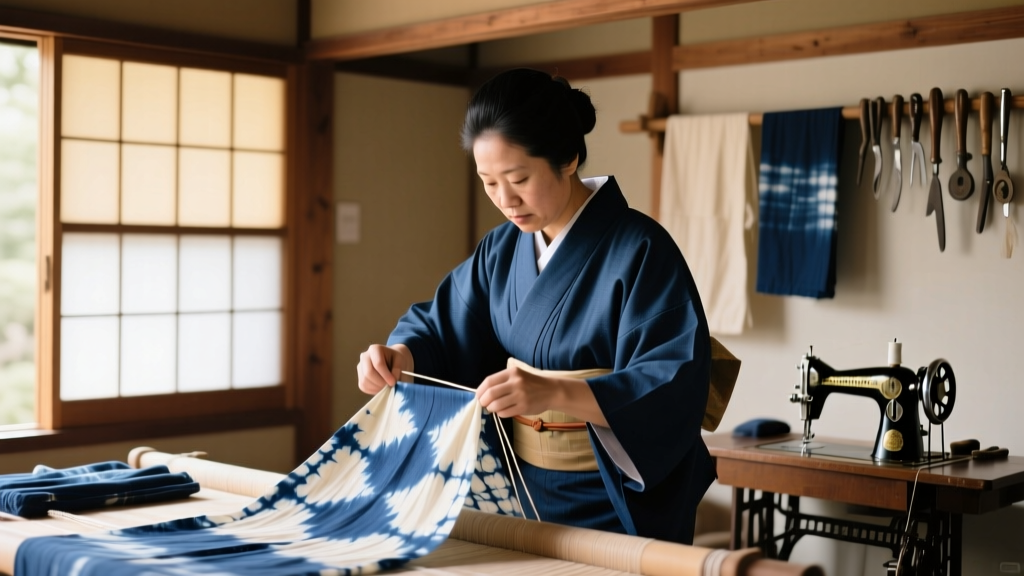
Natural dyeing was an exact science. The Victoria and Albert Museum's extensive Chinese textile archives highlight the use of madder root for deep reds, indigo for blues, and the rare safflower for vibrant pinks. The imperial yellow, reserved exclusively for the Emperor, was derived from the bark of the Amur cork tree, symbolizing the earth and the center of the cosmos.
Sourcing Authentic Historical Chinese Clothing Today
The modern 'Hanfu Movement' has sparked a massive revival of historical Chinese clothing, transitioning it from museum artifacts to living streetwear. However, the market is flooded with inaccurate, mass-produced costumes. For cultural practitioners and enthusiasts seeking authentic reproductions, understanding the market tiers is essential.
Buying Guide and Price Tiers
- Entry-Level / Commercial Grade ($40 - $100 USD / 300 - 700 RMB): Brands like Shisanyu offer accessible, historically inspired pieces. While the silhouettes are generally correct, these garments often utilize polyester blends, machine embroidery, and simplified patterns. Ideal for casual wear and beginners.
- Mid-Tier / Restoration Grade ($150 - $400 USD / 1,000 - 3,000 RMB): Brands such as Minghuatang specialize in rigorous historical accuracy. They study surviving Ming Dynasty artifacts to recreate exact weave structures, authentic metal button hardware, and historically accurate color palettes. Fabrics are typically genuine silk, linen, or high-grade cotton.
- Bespoke / Museum-Grade Artisan ($800 - $2,500+ USD): Commissioning from master weavers or specialized ateliers. This tier includes hand-loomed Kesi, authentic Xiangyunsha, and hand-embroidered motifs using traditional silk floss and gold-wrapped threads. These are investment pieces meant for ceremonial use or archival preservation.
When purchasing, always verify the 'lapel rule' in product photos. Reputable Hanfu merchants will explicitly state the historical era they are referencing and provide citations from archaeological reports or museum archives to prove the accuracy of their patterns.
Cultural Protocols and Wearing Guidelines
As noted in cultural analyses by the Smithsonian Magazine, the Hanfu revival is deeply tied to a search for cultural identity among Chinese youth. Therefore, wearing historical Chinese clothing requires a respectful approach to its living heritage.
Essential Protocols for the Modern Wearer
- The Collar Rule: Always ensure the left collar crosses over the right (youren). Double-check this in mirrors, as reflections can cause confusion.
- Hair and Grooming: Historically, unbound, loose hair was associated with barbarism or mourning. When wearing Hanfu, it is culturally appropriate to tie the hair up using traditional accessories like jade hairpins, wooden zan (single prong pins), or silk ribbons.
- Occasion Matching: Do not wear opulent, heavily embroidered Ming Dynasty ceremonial robes (like the Dashan) to casual, everyday settings. Reserve heavy brocades for festivals, weddings, and tea ceremonies, opting for simpler Song Dynasty Beizi or cotton Ming Dynasty Aoqun for daily wear.
- Footwear: While modern shoes are often worn out of necessity, traditional cloth boots with upturned toes or embroidered flat cloth shoes maintain the historical integrity of the silhouette, particularly when wearing the floor-sweeping Mamianqun.
By understanding the structural philosophy, historical evolution, and textile mastery behind historical Chinese clothing, wearers and collectors can engage with Hanfu not merely as a fashion trend, but as a profound continuation of a millennia-old cultural dialogue.